Map of France showing where the Stower arms are recorded
The Stower arms were recorded in Alsace, c. 1663.
Alsace lay between France and the German lands and belonged to both at different times. Its families held small estates and served whichever side ruled, and men who served in arms carried arms of their own.
This is where the arms were entered in the register. Families often moved to other parts of the country, so the same name can turn up in more than one region.
The body that granted and recorded arms in France in this period.
Louis XIV of France
Sovereign of the period
Louis XIV of France
1643–1715
Reigning in France when the Stower arms are first recorded.
How Arms Worked in France
In France, a coat of arms was a mark of honor that passed down through the male line to all legitimate descendants. Families often used the same shield without changes to show their shared heritage. If a branch wanted to stand out, they could add a small mark to their shield to show their specific place in the family tree.
Granting authority
The Juge d'armes de France acted as the official authority that regulated and verified coats of arms across the country.
How they got arms
Families typically inherited their arms from ancestors, though they could also receive them through royal grants or by proving their noble status.
Where arms were recorded
Coats of arms were officially recorded in the Armorial Général de France, which began its main collection in the year 1696.
The family's standing
Recorded among the armigerous families of Alsace.
Origin & History of the Stower Family in France
The family name Stower has deep roots in the Alsace region of France, where records confirm members of the family were living as early as 1663. During this period, Alsace was a unique cultural crossroads located between the French and German spheres of influence. The name likely originated as a descriptive term for a person who worked with wood or served as a forest warden, reflecting the importance of the dense forests in the Vosges mountains to the local economy. Families in this area often lived in small agricultural villages where they maintained strong ties to the land for many generations. As the region transitioned through various political changes during the seventeenth century, the Stower family remained part of the local community, contributing to the agricultural and social development of their home province.
Meaning of the Stower family crest colors & symbols
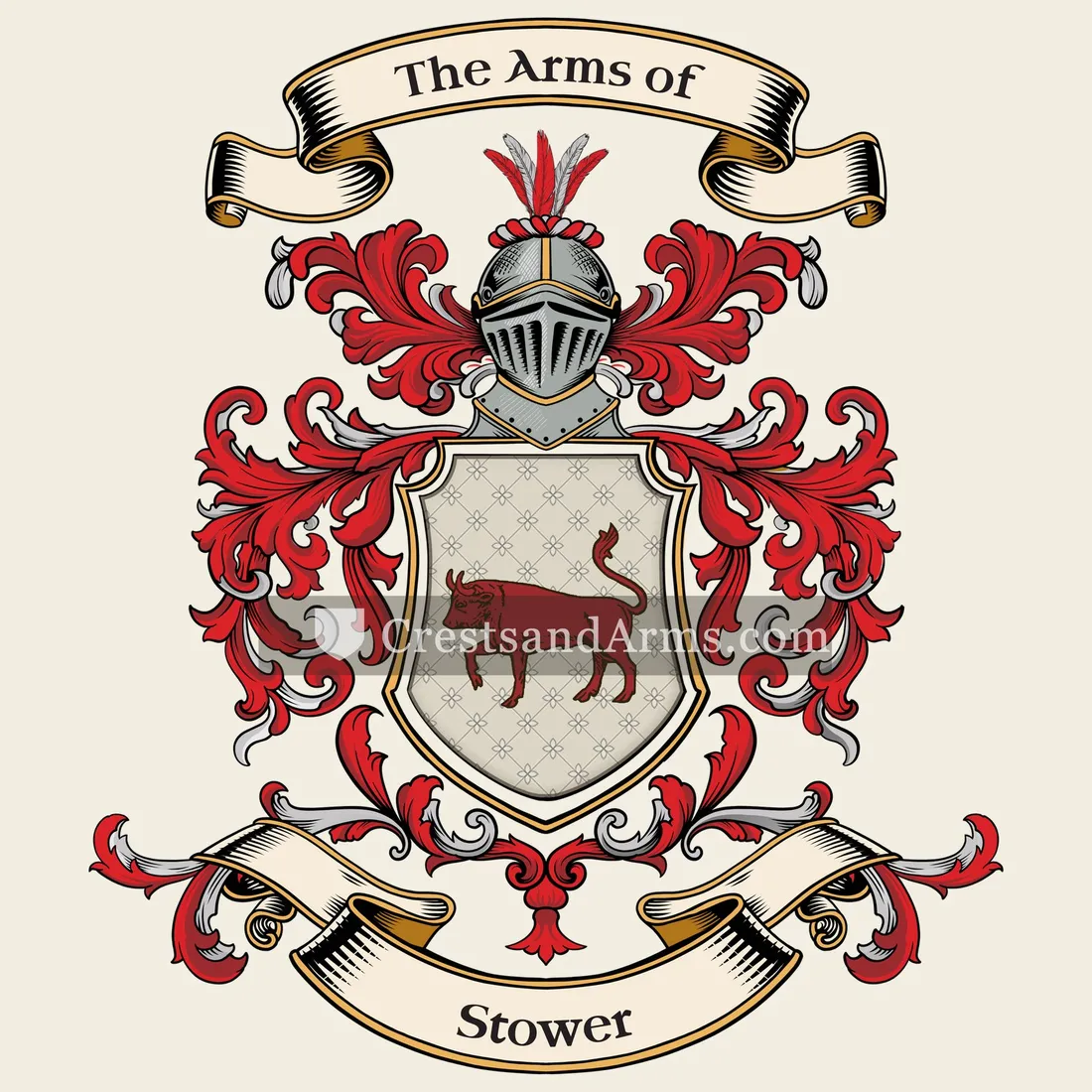
Symbols on this shield
bullValour and generosity
Colours
Silver (Argent)Means: Peace and sincerity
Red (Gules)Means: Military strength
Historical info
Source
J. B. Rietstap, Armorial Général, Gouda: G. B. van Goor Zonen, 1884–87
Blazon (the actual original written record)
“D'arg. à un boeuf naiss. de gu.”
SwitzerlandGenève, c. 1745
Digital archive packCoat of arms PNG, gold border print PDF, vector SVG and the certificate of authenticity. Sent to your email in minutes.
Map of Switzerland showing where the Stower arms are recorded
The Stower arms were recorded in Genève, c. 1745.
This is where the arms were entered in the register. Families often moved to other parts of the country, so the same name can turn up in more than one region.
The body that granted and recorded arms in Switzerland in this period.
How Arms Worked in Switzerland
In Switzerland, coats of arms were not restricted to the nobility and were often adopted by common citizens and families. These symbols were passed down through generations to show family identity. When branches of a family grew, they often changed small details of the design to distinguish their own line from the original group.
Granting authority
Cantonal and civic authorities managed the use of coats of arms within their specific regions and local jurisdictions.
How they got arms
Families typically assumed their own coats of arms based on local custom rather than receiving them from a central monarch.
Where arms were recorded
Arms were recorded in various cantonal and civic registers starting from the fourteenth century throughout the Swiss region.
The family's standing
Recorded among the armigerous families of Switzerland.
Origin & History of the Stower Family in Switzerland
The history of the Stower family in Switzerland is deeply rooted in the vibrant intellectual and social life of Geneva during the mid-eighteenth century. By 1745, records confirm that family members were established residents of this city, which served as a major crossroads for European trade and enlightenment thought. During this period, Geneva was a self-governing republic that attracted skilled craftspeople and professionals from across the continent. The Stower name likely emerged from occupational roots, as the term often related to individuals who managed the movement of goods or worked in specialized labor roles near waterways. As the family integrated into Genevan society, they became part of a community that valued education, civic participation, and the meticulous keeping of parish and municipal records. Their presence in the city during this era suggests they were part of the growing middle class that helped sustain the local economy and the unique political identity of the Genevan republic.
Stower Meaning & Related Branches
Root word
Estour
Old French term for a storm or a violent disturbance.
This name
StowerAn occupational or descriptive name for a person with a tempestuous or stormy temperament.
also spelled
Storer
Documented Sources
J. B. Rietstap, Armorial Général, Gouda: G. B. van Goor Zonen, 1884–87
Archives départementales du Bas-Rhin, Registres paroissiaux de la commune de [Village Name] (1663)
Boehler, Jean-Michel, Une société rurale en milieu rhénan: La paysannerie de la plaine d'Alsace (1648-1789), 1995
Grasser, Jean-Paul, L'Alsace de 1648 à 1789, 1986
Digital archive packCoat of arms PNG, gold border print PDF, vector SVG and the certificate of authenticity. Sent to your email in minutes.


 bendDefence, and the scarf of a commander
 bendDefence, and the scarf of a commander
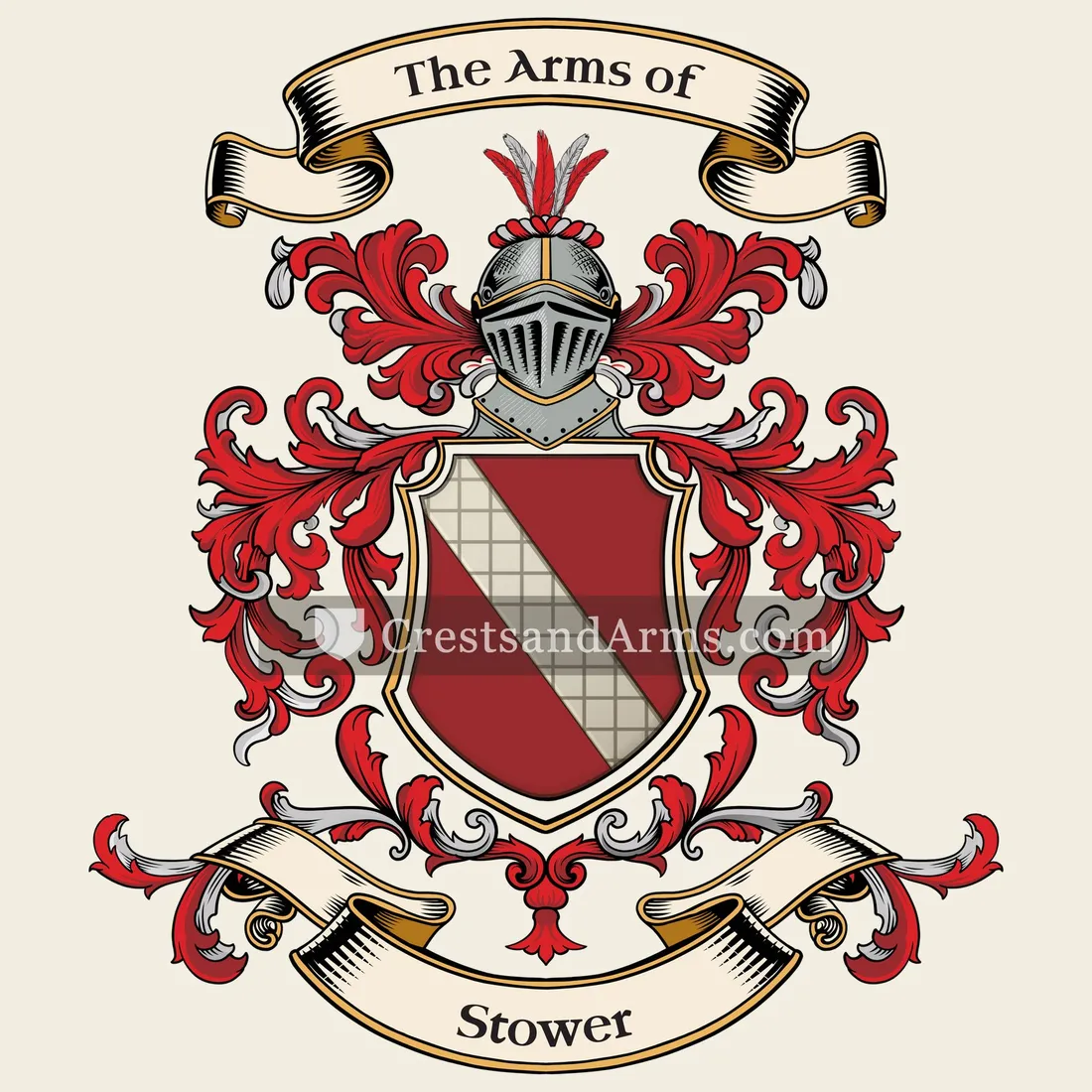


 bullValour and generosity