Map of Germany showing where the Strasser arms are recorded
The Strasser arms were recorded in Bavaria, c. 1765.
Bavaria was a country of old landed families and walled market towns. Estates passed down the same line for centuries, and both the landowners and the leading townsmen kept arms, which is why so many Bavarian names sit in the registers.
This is where the arms were entered in the register. Families often moved to other parts of the country, so the same name can turn up in more than one region.
The body that granted and recorded arms in Germany in this period.
Francis I, Holy Roman Emperor
Sovereign of the period
Francis I, Holy Roman Emperor
1745–1765
Reigning in Germany when the Strasser arms are first recorded.
How Arms Worked in Germany
In the Holy Roman Empire, coats of arms were often granted to individuals by the Emperor or his representatives. These arms were then passed down through the generations to all legitimate descendants of the original holder. Younger branches of a family usually kept the same shield design without needing to change it, as the arms belonged to the entire lineage.
Granting authority
The Holy Roman Emperor held the sole power to grant new coats of arms throughout his vast imperial territories.
How they got arms
Families typically obtained their coats of arms through a formal imperial grant or by proving their noble status to the authorities.
Where arms were recorded
These grants were officially recorded in the Imperial Chancery registers, which began keeping formal records of such honors during the Middle Ages.
The family's standing
Recorded among the armigerous families of Bavaria.
Origin & History of the Strasser Family in Germany
The surname Strasser is a classic example of a topographic name, which means it was originally given to people based on where they lived. In the German language, the word *Strasse* refers to a road or a street. During the Middle Ages, the name was likely used to describe someone who lived near a main road, a busy trade route, or a path that led through a town. By the time records confirm the family’s presence in Bavaria in 1765, the name had already been established for generations as a way to identify families who settled along these vital transportation networks. Because these roads were the centers of commerce and travel, families with this name were often integrated into the local economy as traders, farmers, or travelers. This connection to the landscape helped the name spread across the southern German regions, where it became a common way to distinguish neighbors in growing rural and urban communities.
Meaning of the Strasser family crest colors & symbols
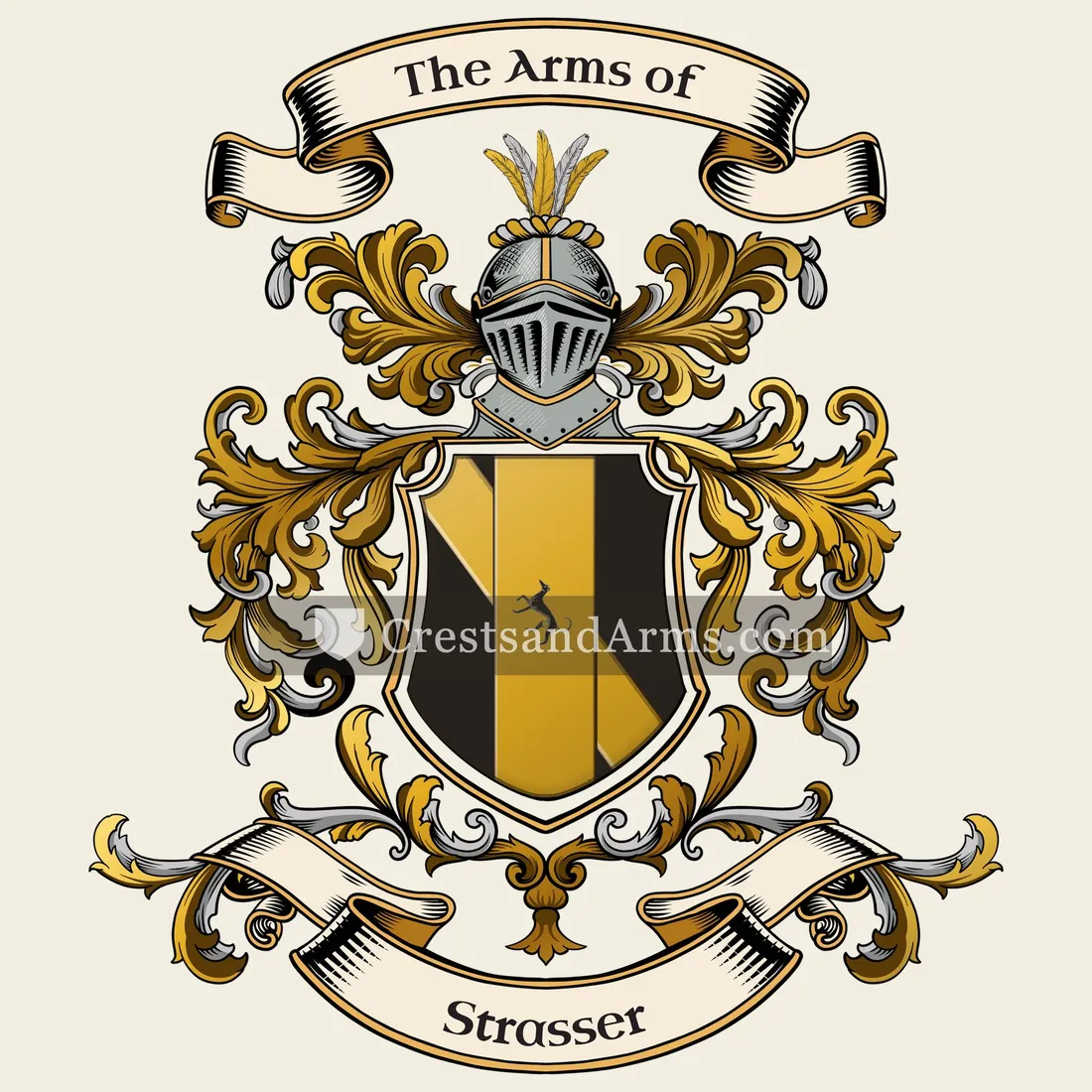
Symbols on this shield
bendDefence, and the scarf of a commander
greyhoundCourage, vigilance and loyalty
Colours
Black (Sable)Means: Constancy
Gold (Or)Means: Generosity
Historical info
Source
J. B. Rietstap, Armorial Général, Gouda: G. B. van Goor Zonen, 1884–87
Blazon (the actual original written record)
“De sa. à cinq vergettes d'or; à la bande d'or, br. sur le tout et ch. d'un lévrier”
AustriaLinz Aut, c. 1772
Digital archive packCoat of arms PNG, gold border print PDF, vector SVG and the certificate of authenticity. Sent to your email in minutes.
Map of Austria showing where the Strasser arms are recorded
The Strasser arms were recorded in Linz Aut, c. 1772.
This is where the arms were entered in the register. Families often moved to other parts of the country, so the same name can turn up in more than one region.
Region
Linz
Town
Linz Aut
First recorded
1772
Granting Authority for the Strasser Arms
Imperial and Royal chancery
Sodacan · CC BY-SA 3.0
The body that granted and recorded arms in Austria in this period.
Joseph II, Holy Roman Emperor
Sovereign of the period
Joseph II, Holy Roman Emperor
1765–1790
Reigning in Germany when the Strasser arms are first recorded.
How Arms Worked in Austria
Austrian coats of arms were often linked directly to noble titles granted by the Emperor. These symbols belonged to the entire family line rather than just one individual. When a family grew, new branches kept the original design without needing to change it. This system allowed all members of a noble house to share the same identity across many generations.
Granting authority
The Imperial and Royal chancery managed all heraldic matters and controlled the official granting of arms throughout the Austrian lands.
How they got arms
Families typically received their arms through a formal imperial decree that often accompanied the elevation of a person to noble status.
Where arms were recorded
Official records of these grants were kept in the Imperial Register of Nobility which began its formal documentation process in 1453.
The family's standing
Recorded among the armigerous families of Austria.
Origin & History of the Strasser Family in Austria
The surname Strasser is a topographic name that originated from the Middle High German word *strāze*, which translates to street or road. In the context of early Austrian history, this name was typically given to families who lived near a main road, a paved path, or a busy marketplace. By the time records confirm the family presence in Linz in 1772, the name had already been established for generations as a way to identify people by their specific location within a town or village. In the eighteenth century, Linz was a vital hub for trade along the Danube River. Families like the Strassers often held roles connected to this commerce, such as merchants, innkeepers, or skilled tradespeople who relied on the constant flow of travelers moving through the city. Because the name describes a physical location rather than a specific job, it suggests that the early ancestors were settled members of the community who were well-known to their neighbors by the path or street where their home was situated.
Strasser Meaning & Related Branches
Root word
Strass
A street, road, or paved way.
This name
StrasserAn occupational or habitational name for someone who lived by or worked on a street.
also spelled
Straser
Strassier
Related arms
Auckamasimilar arms
Kaiserrecorded with Strasser, same area
Pistoriusrecorded with Strasser, same area
Schönslederrecorded with Strasser, same area
Documented Sources
J. B. Rietstap, Armorial Général, Gouda: G. B. van Goor Zonen, 1884–87
Bahlow, Hans, Deutsches Namenlexikon: Familien- und Vornamen nach Ursprung und Sinn erklärt, 1967
Heintze, Albert, Die deutschen Familiennamen, geschichtlich, geographisch, sprachlich, 1903


 bendDefence, and the scarf of a commander
 bendDefence, and the scarf of a commander
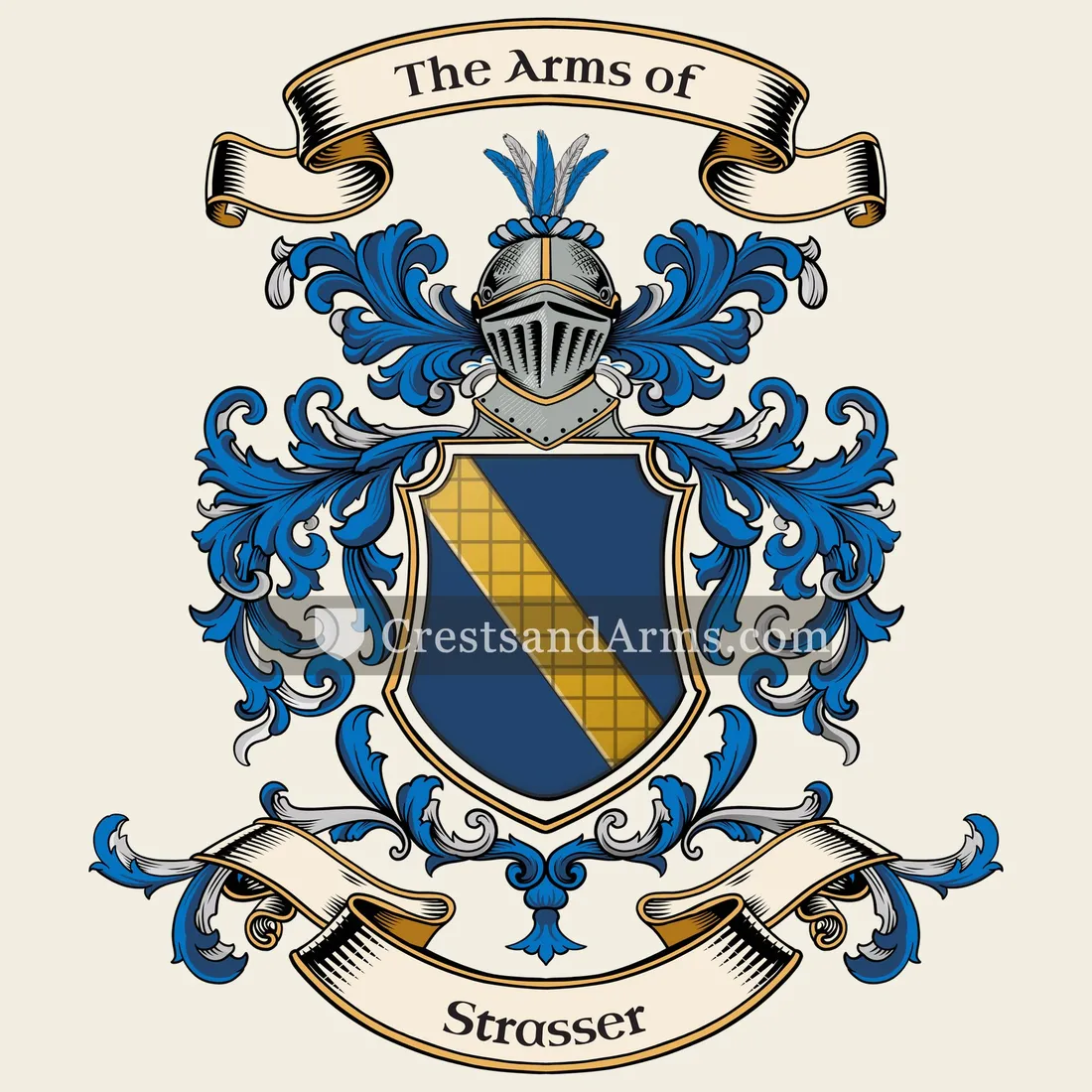


 greyhoundCourage, vigilance and loyalty