Map of France showing where the Strauch arms are recorded
The Strauch arms were recorded in France, c. 1663.
Arms such as these were typically recorded in Bretagne.
More families held coats of arms in Bretagne than anywhere else in France. The land was divided into many small estates rather than a few large ones, so far more households counted as gentry, and each needed a shield of its own to be told apart.
This is where the arms were entered in the register. Families often moved to other parts of the country, so the same name can turn up in more than one region.
The body that granted and recorded arms in France in this period.
Louis XIV of France
Sovereign of the period
Louis XIV of France
1643–1715
Reigning in France when the Strauch arms are first recorded.
How Arms Worked in France
In France, a coat of arms was a mark of honor that passed down through the male line to all legitimate descendants. Families often used the same shield without changes to show their shared heritage. If a branch wanted to stand out, they could add a small mark to their shield to show their specific place in the family tree.
Granting authority
The Juge d'armes de France acted as the official authority that regulated and verified coats of arms across the country.
How they got arms
Families typically inherited their arms from ancestors, though they could also receive them through royal grants or by proving their noble status.
Where arms were recorded
Coats of arms were officially recorded in the Armorial Général de France, which began its main collection in the year 1696.
The family's standing
Recorded among the armigerous families of France.
Origin & History of the Strauch Family in France
The family name Strauch carries a distinct history that reflects the movement of people across European borders during the seventeenth century. While the name is often associated with Germanic roots, its presence in the Brittany region of France by 1663 suggests a story of migration and integration into local French society. During this period, Brittany served as a vital hub for trade and maritime activity, which likely drew families from various regions to settle in its coastal towns. Early members of the Strauch family in this area would have navigated a unique cultural landscape, blending their ancestral heritage with the traditions of the Breton people. By establishing themselves in this province, these early settlers became part of the local administrative and social records that document the steady growth of families in pre-revolutionary France. This transition from their origins to the western shores of France highlights how individual families contributed to the diverse demographic fabric of the country long before modern borders were strictly defined.
Coat of Arms & Family Crest Details
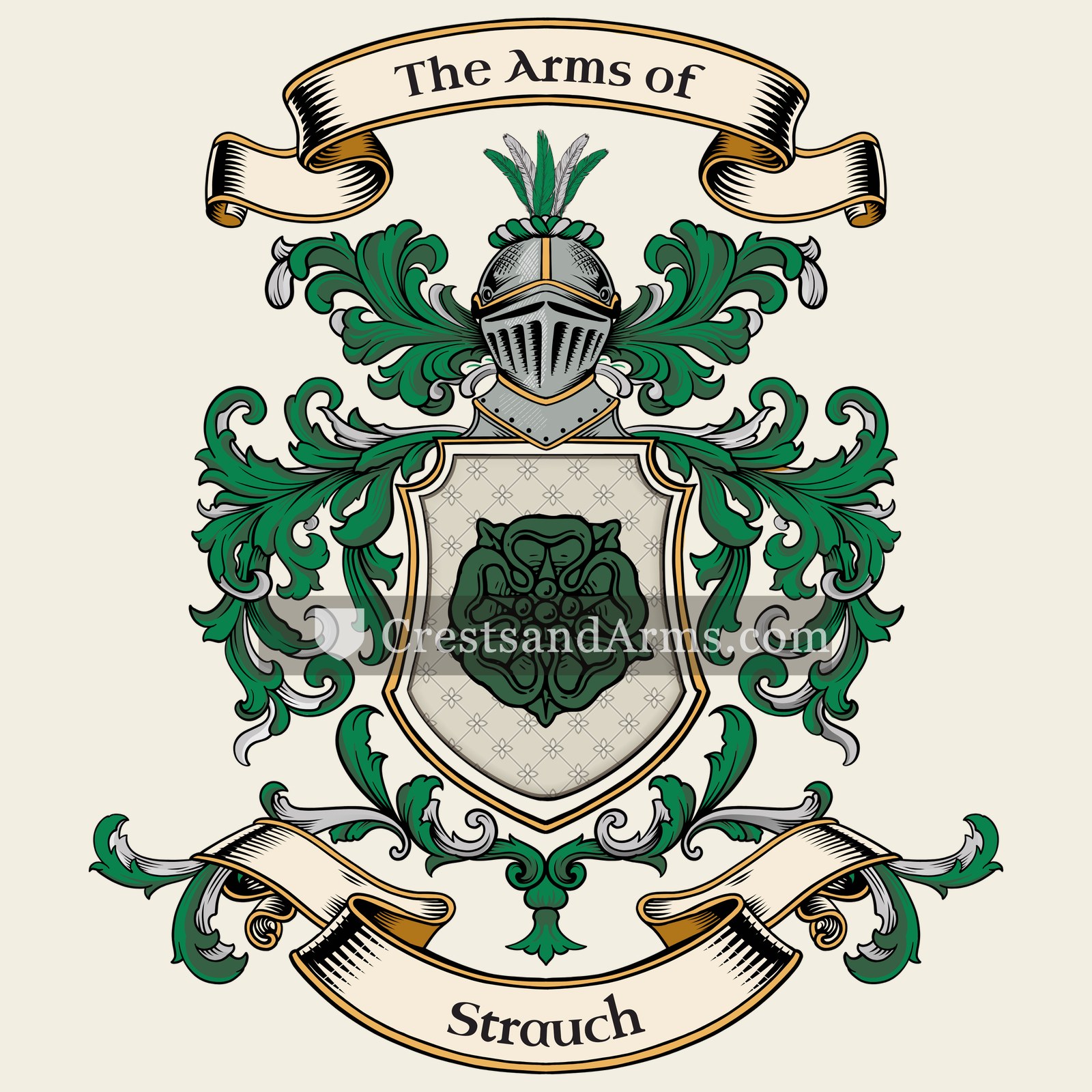
Symbols on this shield
roseThe seventh son, and beauty with grace
Colours
Silver (Argent)Means: Peace and sincerity
Green (Vert)Means: Hope
Historical info
Source
J. B. Rietstap, Armorial Général, Gouda: G. B. van Goor Zonen, 1884–87
Blazon (the actual original written record)
“D'arg. une branche de rosier de sin., feuillée du même et fleurie de trois roses de gu. C.: la branche, entre deux prob. coupées alt. de gu. et d'arg. L.: à dextre d'arg. et de gu., à sen. d'or et d'azur.”
GermanyNuremberg, c. 1765
Digital archive packCoat of arms PNG, gold border print PDF, vector SVG and the certificate of authenticity. Sent to your email in minutes.
Map of Germany showing where the Strauch arms are recorded
The Strauch arms were recorded in Nuremberg, c. 1765.
This is where the arms were entered in the register. Families often moved to other parts of the country, so the same name can turn up in more than one region.
The body that granted and recorded arms in Germany in this period.
Francis I, Holy Roman Emperor
Sovereign of the period
Francis I, Holy Roman Emperor
1745–1765
Reigning in France when the Strauch arms are first recorded.
How Arms Worked in Germany
In the Holy Roman Empire, coats of arms were often granted to individuals by the Emperor or his representatives. These arms were then passed down through the generations to all legitimate descendants of the original holder. Younger branches of a family usually kept the same shield design without needing to change it, as the arms belonged to the entire lineage.
Granting authority
The Holy Roman Emperor held the sole power to grant new coats of arms throughout his vast imperial territories.
How they got arms
Families typically obtained their coats of arms through a formal imperial grant or by proving their noble status to the authorities.
Where arms were recorded
These grants were officially recorded in the Imperial Chancery registers, which began keeping formal records of such honors during the Middle Ages.
The family's standing
Recorded among the armigerous families of Germany.
Origin & History of the Strauch Family in Germany
The surname Strauch finds its roots in the German language, where the word originally referred to a shrub or a thicket. In the medieval period, names were often chosen to describe a person's physical surroundings or their trade, and this name likely identified someone who lived near a dense patch of bushes or a small wooded area. By the time the family was firmly established in Nuremberg in 1765, the city had long been a major center for trade and skilled craftsmanship in the Holy Roman Empire. Families living in Nuremberg during the eighteenth century often participated in the city's famous guilds, which controlled the production of metalwork, clocks, and scientific instruments. As residents of this influential urban hub, the Strauch family would have been part of a society that valued education, record-keeping, and professional specialization. This environment allowed families to maintain a stable presence in the region for generations as they contributed to the economic and social life of the city.
Related Branches & Arms
Root word
Strūc
A Germanic term referring to a bush, shrub, or thicket.
This name
StrauchA topographic name for someone who lived near a bush or a dense thicket.
also spelled
Strouch
Strowch
Related arms
de Veersimilar arms
Schmidtdensimilar arms
Champorcinrecorded with Strauch, same area
Reichenfelsrecorded with Strauch, same area
Documented Sources
J. B. Rietstap, Armorial Général, Gouda: G. B. van Goor Zonen, 1884–87
Archives Départementales d'Ille-et-Vilaine, Registres paroissiaux et d'état civil
Archives Départementales du Finistère, Série E, État civil et registres paroissiaux
Galliot, Marcel, L'immigration étrangère en France sous l'Ancien Régime, 1954
Digital archive packCoat of arms PNG, gold border print PDF, vector SVG and the certificate of authenticity. Sent to your email in minutes.


 fessThe military belt, and readiness to serve
 treeLife, endurance and deep roots
 martletA younger son, who must win his own land
 fessThe military belt, and readiness to serve
 treeLife, endurance and deep roots
 martletA younger son, who must win his own land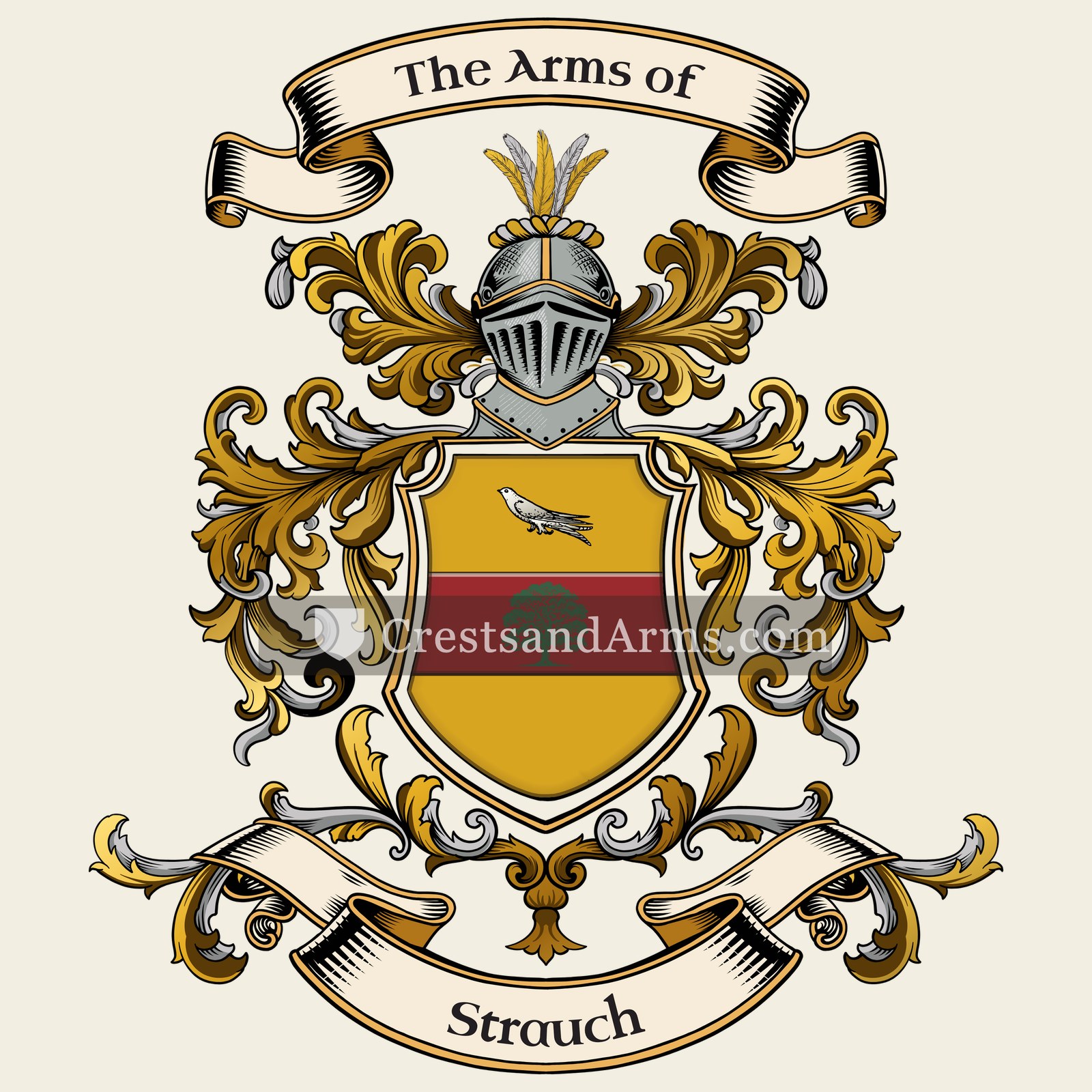


 roseThe seventh son, and beauty with grace