Map of Germany showing where the Strawser arms are recorded
The Strawser arms were recorded in Bavaria, c. 1765.
Bavaria was a country of old landed families and walled market towns. Estates passed down the same line for centuries, and both the landowners and the leading townsmen kept arms, which is why so many Bavarian names sit in the registers.
This is where the arms were entered in the register. Families often moved to other parts of the country, so the same name can turn up in more than one region.
The body that granted and recorded arms in Germany in this period.
Francis I, Holy Roman Emperor
Sovereign of the period
Francis I, Holy Roman Emperor
1745–1765
Reigning in Germany when the Strawser arms are first recorded.
How Arms Worked in Germany
In the Holy Roman Empire, coats of arms were often granted to individuals by the Emperor or his representatives. These arms were then passed down through the generations to all legitimate descendants of the original holder. Younger branches of a family usually kept the same shield design without needing to change it, as the arms belonged to the entire lineage.
Granting authority
The Holy Roman Emperor held the sole power to grant new coats of arms throughout his vast imperial territories.
How they got arms
Families typically obtained their coats of arms through a formal imperial grant or by proving their noble status to the authorities.
Where arms were recorded
These grants were officially recorded in the Imperial Chancery registers, which began keeping formal records of such honors during the Middle Ages.
The family's standing
Recorded among the armigerous families of Bavaria.
Origin & History of the Strawser Family in Germany
The family name Strawser, often appearing in historical records as Strasser or Strasserin, finds its roots in the German-speaking regions of Central Europe. The name is occupational in origin, derived from the Middle High German word "strasze," which refers to a road or a street. Historically, this suggests that the earliest ancestors bearing this name were likely people who lived near a main road, worked as road builders, or served as travelers and merchants who spent much of their lives on the move. By the time the family was documented in the Bavarian region in 1765, they were part of a society deeply connected to the land and the local trade routes that defined the economy of the Holy Roman Empire. These early family members lived during a time of significant social change in Bavaria, where rural families often maintained strong ties to their local parishes and agricultural traditions. As the name spread through the German states, it evolved in spelling to reflect the local dialects of the regions where these families settled and built their lives.
Meaning of the Strawser family crest colors & symbols
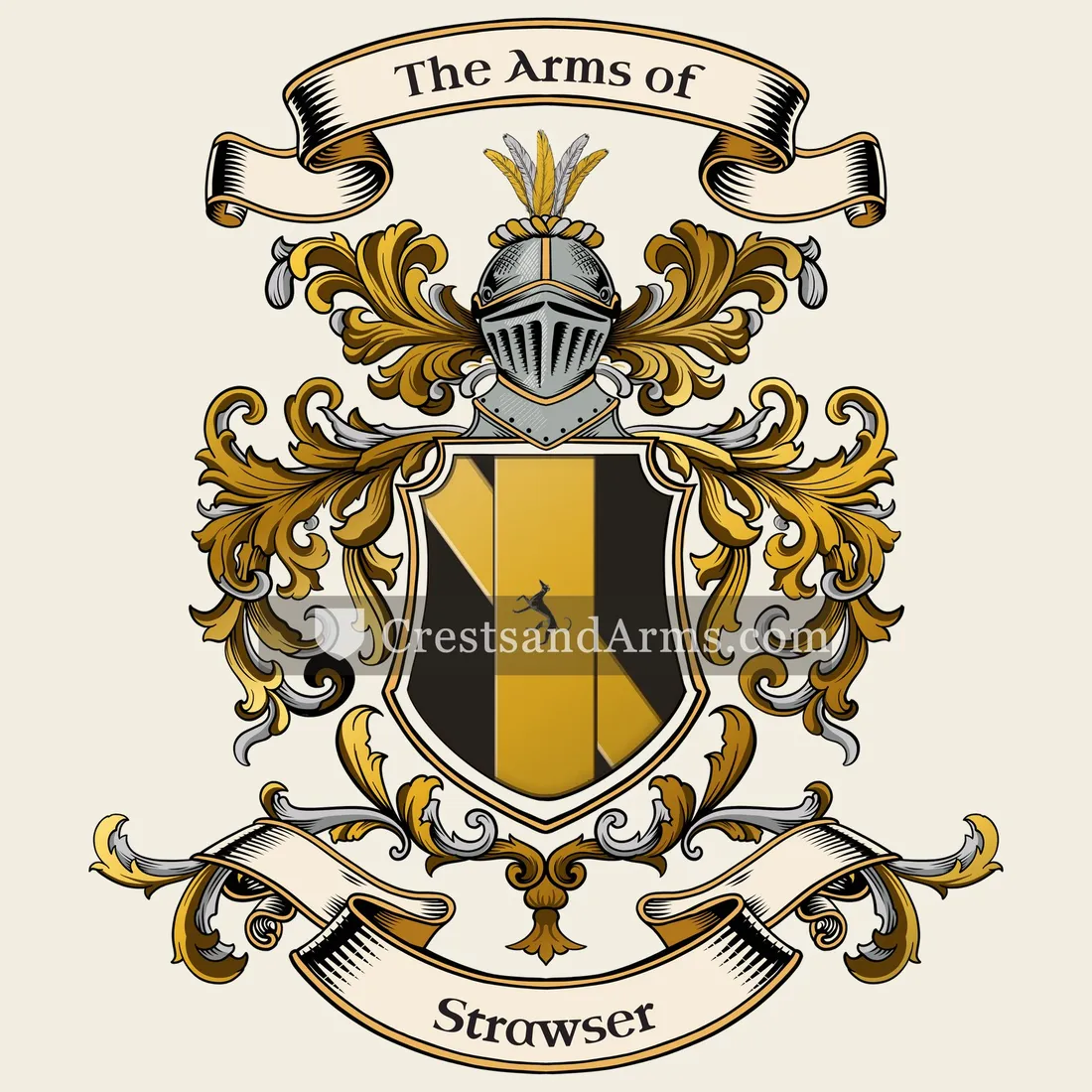
Symbols on this shield
bendDefence, and the scarf of a commander
greyhoundCourage, vigilance and loyalty
Colours
Black (Sable)Means: Constancy
Gold (Or)Means: Generosity
Historical info
Source
J. B. Rietstap, Armorial Général, Gouda: G. B. van Goor Zonen, 1884–87
Blazon (the actual original written record)
“De sa. à cinq vergettes d'or; à la bande d'or, br. sur le tout et ch. d'un lévrier”
AustriaLinz Aut, c. 1772
Digital archive packCoat of arms PNG, gold border print PDF, vector SVG and the certificate of authenticity. Sent to your email in minutes.
Map of Austria showing where the Strawser arms are recorded
The Strawser arms were recorded in Linz Aut, c. 1772.
This is where the arms were entered in the register. Families often moved to other parts of the country, so the same name can turn up in more than one region.
Region
Linz
Town
Linz Aut
First recorded
1772
Granting Authority for the Strawser Arms
Imperial and Royal chancery
Sodacan · CC BY-SA 3.0
The body that granted and recorded arms in Austria in this period.
Joseph II, Holy Roman Emperor
Sovereign of the period
Joseph II, Holy Roman Emperor
1765–1790
Reigning in Germany when the Strawser arms are first recorded.
How Arms Worked in Austria
Austrian coats of arms were often linked directly to noble titles granted by the Emperor. These symbols belonged to the entire family line rather than just one individual. When a family grew, new branches kept the original design without needing to change it. This system allowed all members of a noble house to share the same identity across many generations.
Granting authority
The Imperial and Royal chancery managed all heraldic matters and controlled the official granting of arms throughout the Austrian lands.
How they got arms
Families typically received their arms through a formal imperial decree that often accompanied the elevation of a person to noble status.
Where arms were recorded
Official records of these grants were kept in the Imperial Register of Nobility which began its formal documentation process in 1453.
The family's standing
Recorded among the armigerous families of Austria.
Origin & History of the Strawser Family in Austria
The Strawser family name has deep roots in the historical landscape of Austria, particularly within the city of Linz. By the year 1772, records confirm that members of the family were already established residents of this bustling Danube river port. During this period, Linz served as a vital center for trade and craftsmanship, which likely influenced the family's daily life and professional pursuits. The name itself is thought to be a variation of older Germanic terms linked to agricultural labor or the processing of straw, suggesting that the family may have originally been involved in farming or specialized trade work. As the family integrated into the urban environment of Linz, they became part of the social fabric of the Habsburg Empire, living through a time of significant administrative and cultural change in Central Europe. Their presence in the city archives during the late 18th century highlights their role as long-standing members of the local community.
Strawser Meaning & Related Branches
Root word
Stras
A street or paved road.
This name
StrawserAn occupational surname for someone who lived near or worked on a street.
also spelled
Straser
Strassier
Documented Sources
J. B. Rietstap, Armorial Général, Gouda: G. B. van Goor Zonen, 1884–87
Bahlow, Hans, Deutsches Namenlexikon: Familien- und Vornamen nach Ursprung und Sinn erklärt, 1967
Heintze, Albert, Die deutschen Familiennamen: geschichtlich, geographisch, sprachlich, 1903


 bendDefence, and the scarf of a commander
 bendDefence, and the scarf of a commander
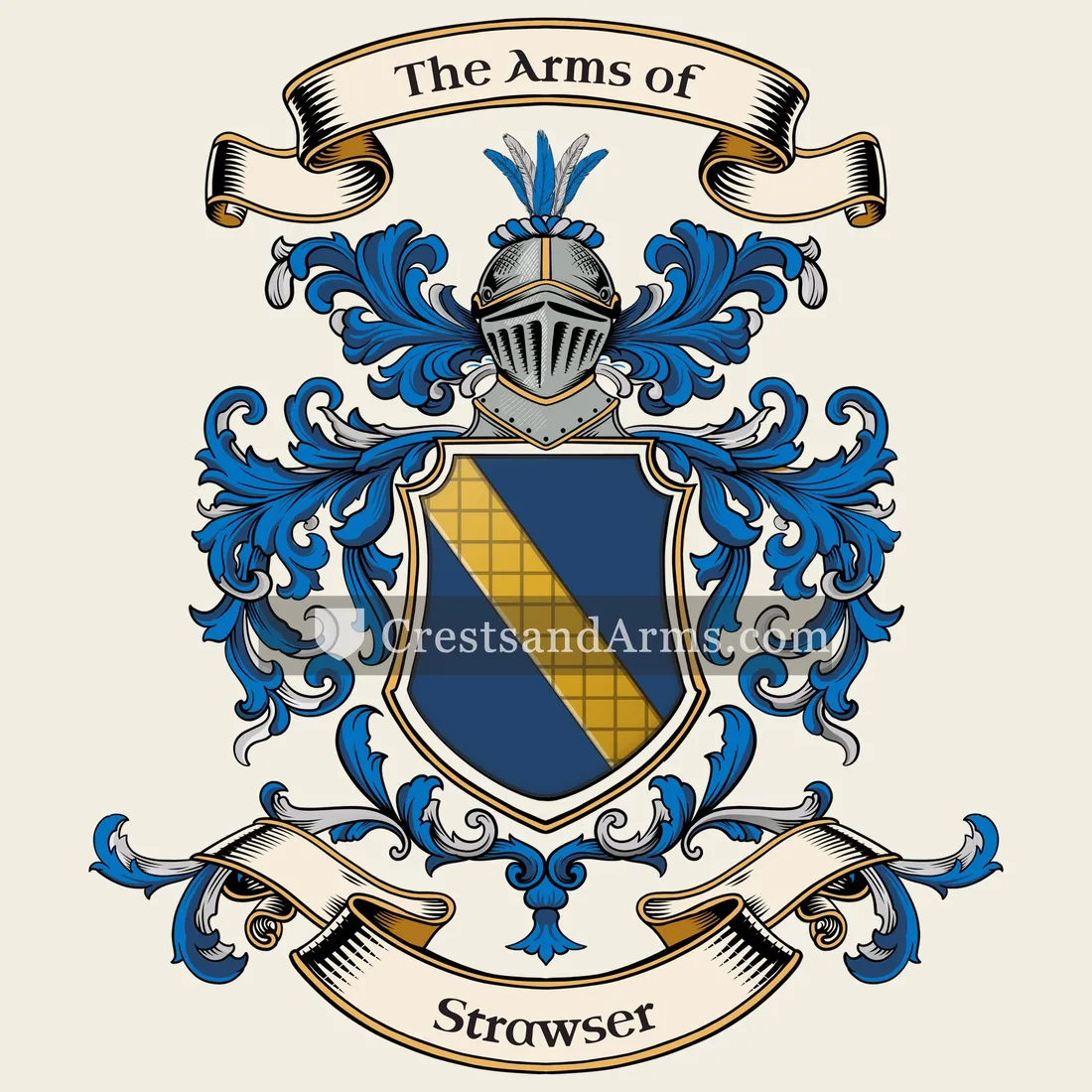


 greyhoundCourage, vigilance and loyalty