Map of France showing where the Sway arms are recorded
The Sway arms were recorded in France, c. 1313.
Arms such as these were typically recorded in Bretagne.
More families held coats of arms in Bretagne than anywhere else in France. The land was divided into many small estates rather than a few large ones, so far more households counted as gentry, and each needed a shield of its own to be told apart.
This is where the arms were entered in the register. Families often moved to other parts of the country, so the same name can turn up in more than one region.
The body that granted and recorded arms in France in this period.
Philip IV of France
Sovereign of the period
Philip IV of France
1285–1314
Reigning in France when the Sway arms are first recorded.
How Arms Worked in France
In France, a coat of arms was a mark of honor that passed down through the male line to all legitimate descendants. Families often used the same shield without changes to show their shared heritage. If a branch wanted to stand out, they could add a small mark to their shield to show their specific place in the family tree.
Granting authority
The Juge d'armes de France acted as the official authority that regulated and verified coats of arms across the country.
How they got arms
Families typically inherited their arms from ancestors, though they could also receive them through royal grants or by proving their noble status.
Where arms were recorded
Coats of arms were officially recorded in the Armorial Général de France, which began its main collection in the year 1696.
The family's standing
Recorded among the armigerous families of France.
Origin & History of the Sway Family in France
The history of the Sway family name in France begins in the rugged coastal region of Bretagne. Official records confirm that members of the family were living in this area as early as 1313. At that time, Bretagne was a semi-independent duchy with its own unique language and customs that set it apart from the rest of France. Families like the Sways often lived in small rural communities where they worked the land or served in local administrative roles. Because the region was heavily influenced by maritime trade and constant interaction with neighboring territories, the family likely adapted to a society that valued both local tradition and regional independence. Over the following centuries, the name became woven into the fabric of Breton life as the family navigated the shifting political landscape of the Middle Ages.
Meaning of the Sway family crest colors & symbols
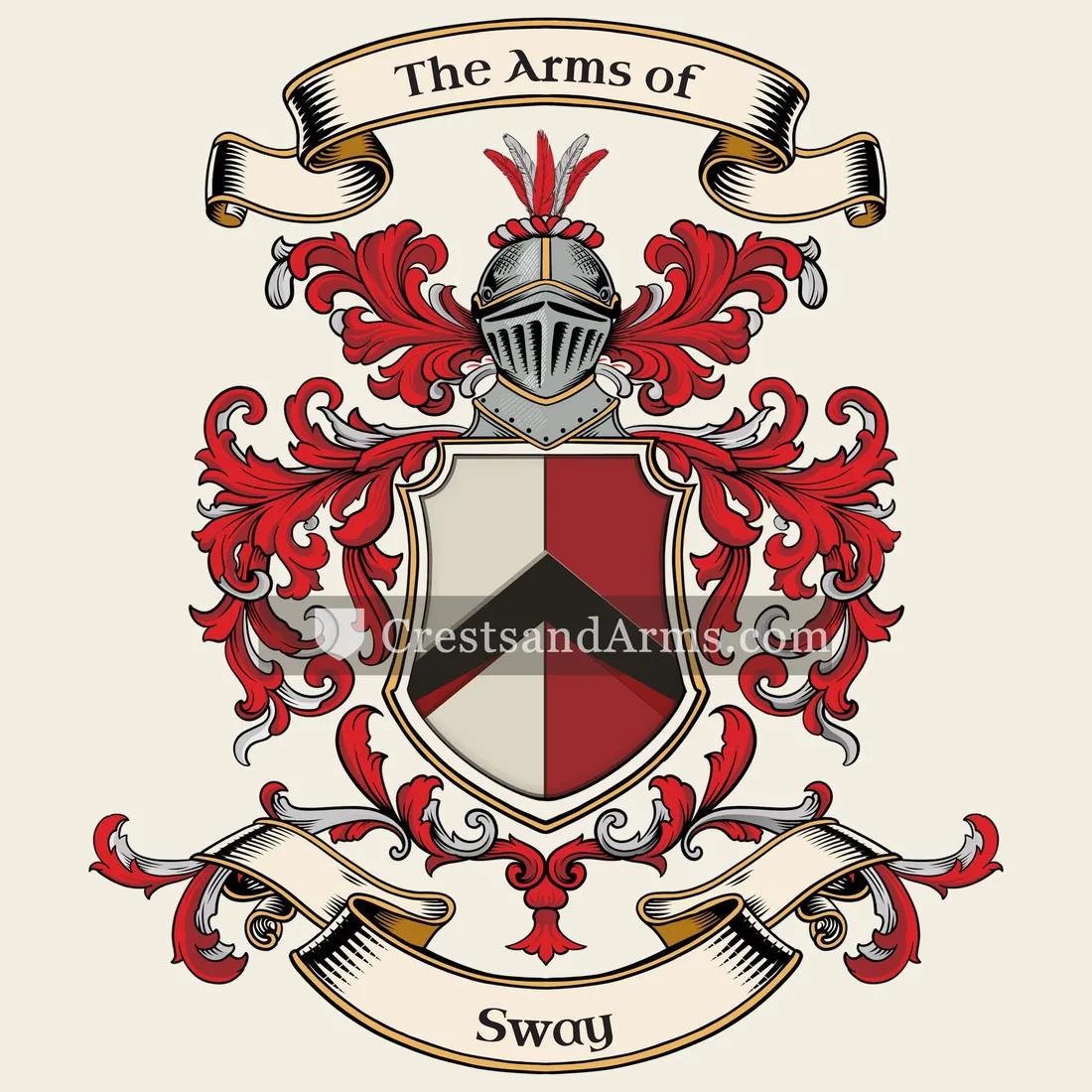
Symbols on this shield
chevronProtection, and faithful service completed
Colours
Silver (Argent)Means: Peace and sincerity
Red (Gules)Means: Military strength
Historical info
Source
Sir Bernard Burke, The General Armory of England, Scotland, Ireland and Wales, London: Harrison & Sons, 1884
Blazon (the actual original written record)
“Per pale ar. and gu. three chevrons, each charged with a chev. couped all counterchanged”
LincolnLincoln, c. 1619
Digital archive packCoat of arms PNG, gold border print PDF, vector SVG and the certificate of authenticity. Sent to your email in minutes.
Map of England showing where the Sway arms are recorded
The Sway arms were recorded in Lincoln, c. 1619.
Lincolnshire was rich farming country, and its wealth was spread across many middling families. Households of that size bought land and took arms, and the county holds a large share of English names.
This is where the arms were entered in the register. Families often moved to other parts of the country, so the same name can turn up in more than one region.
The body that granted and recorded arms in England in this period.
James VI and I
Sovereign of the period
James VI and I
1603–1625
Reigning in France when the Sway arms are first recorded.
How Arms Worked in England
English heraldry allowed arms to be shared by all legitimate descendants of the original owner. These symbols were treated as personal property that moved through the generations to all children. While the eldest son kept the original design, other family members could use the same shield without needing to change it or register their own unique versions.
Granting authority
The College of Arms in London has regulated the use of coats of arms throughout England and Wales since 1484.
How they got arms
Families typically obtained their coats of arms through a formal grant from the Crown or by proving their ancient right to them.
Where arms were recorded
All official coats of arms are recorded in the registers kept at the College of Arms, which date back to the fifteenth century.
The family's standing
Recorded among the armigerous families of Lincoln.
Origin & History of the Sway Family in England
The surname Sway is deeply rooted in the historical landscape of Lincolnshire, where records confirm the family was established by at least 1619. During the early seventeenth century, the name likely emerged as a descriptive identifier for individuals living near specific geographical landmarks or within particular local communities. In the context of English naming conventions from this era, families often settled in stable agricultural regions like Lincoln, where they contributed to the local economy and social structure. As the family grew, they became part of the fabric of the East Midlands, living through a period of significant social change in England. By tracing their presence back to this early date, we see a family that was well-integrated into the local parish life and the daily routines of a historic English cathedral city.
Sway Meaning & Related Branches
Root word
Suave
Derived from the Latin word suavis meaning sweet or pleasant.
This name
SwayA topographic or habitational name referring to someone living near a pleasant or agreeable location.
also spelled
Sais
Saye
Seye
Documented Sources
J. B. Rietstap, Armorial Général, Gouda: G. B. van Goor Zonen, 1884–87
Archives départementales d'Ille-et-Vilaine, Série E: Familles, seigneuries et terres
Poter, Arthur, La Bretagne au Moyen Âge, 1985
Jones, Michael, The Creation of Brittany: A Late Medieval State, 1988
Digital archive packCoat of arms PNG, gold border print PDF, vector SVG and the certificate of authenticity. Sent to your email in minutes.


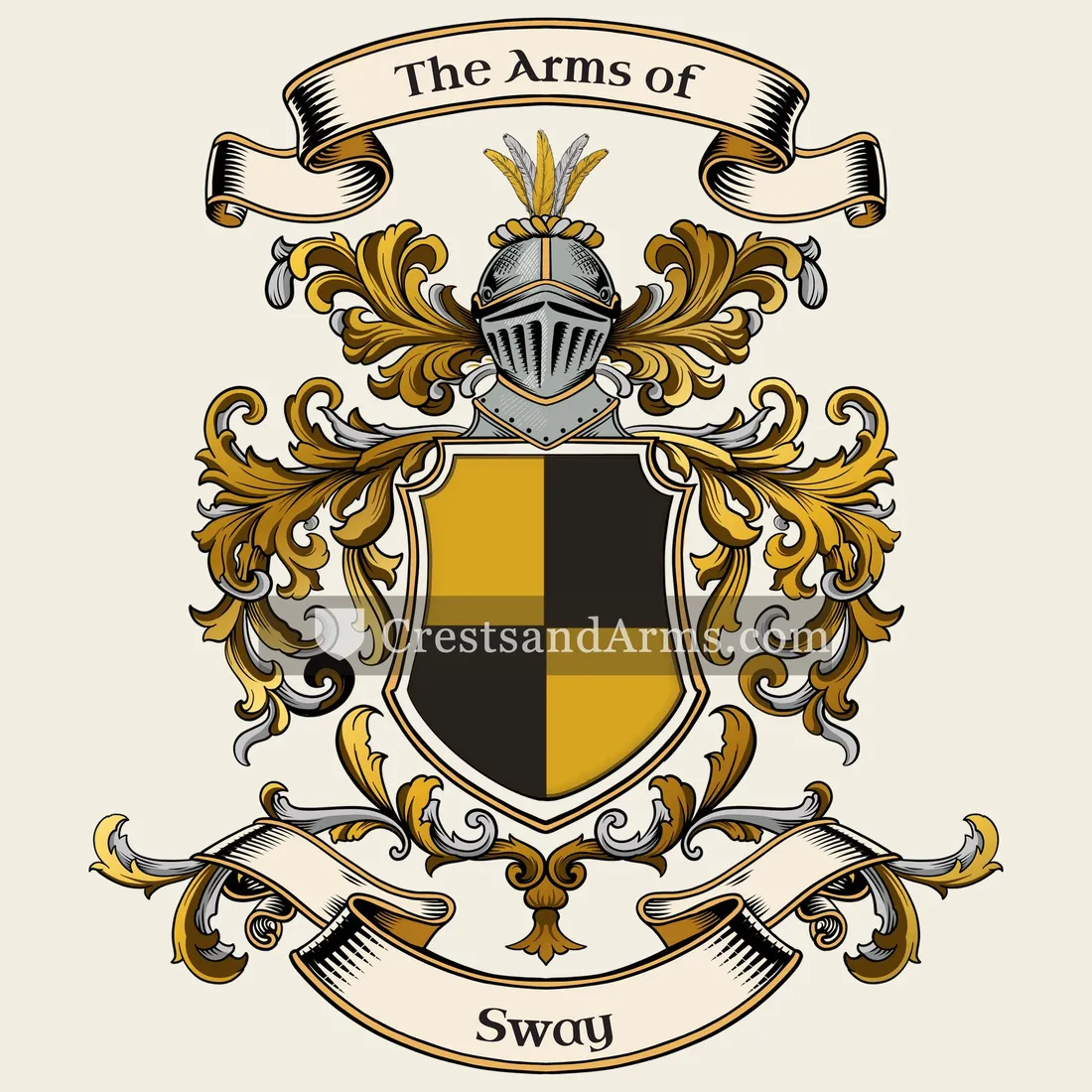


 chevronProtection, and faithful service completed