Map of Denmark showing where the Swope arms are recorded
The Swope arms were recorded in Denmark, c. 1722.
Arms such as these were typically recorded in Sjaælland.
Zealand held the Danish court, the crown's offices and Copenhagen itself. Families who served the king kept estates within reach of it, and royal service was the ordinary route to a coat of arms.
This is where the arms were entered in the register. Families often moved to other parts of the country, so the same name can turn up in more than one region.
The body that granted and recorded arms in Denmark in this period.
Frederik IV of Denmark
Sovereign of the period
Frederik IV of Denmark
1699–1730
Reigning in Denmark when the Swope arms are first recorded.
How Arms Worked in Denmark
Danish heraldry during this period was closely tied to noble status and royal favor rather than being open to all citizens. Arms were typically granted by the monarch to individuals, and these symbols were then shared by all members of the noble house. If a family line died out, the right to use those specific arms ended with them.
Granting authority
The Danish royal chancery held the power to issue and regulate official coats of arms for the kingdom.
How they got arms
Families usually received their arms through a formal royal grant that confirmed their noble status and rights.
Where arms were recorded
These grants were officially recorded in the Danish Royal Chancery records starting in the sixteenth century.
The family's standing
Recorded among the armigerous families of Denmark.
Origin & History of the Swope Family in Denmark
The history of the Swope name in Denmark begins with the movement of families across the Baltic region during the early eighteenth century. By 1722, records confirm that members of the family were established on the island of Sjaælland, which served as a central hub for trade and administration in the Danish kingdom. During this era, the name was often recorded in local parish registers as families navigated the transition from rural agricultural life to the growing urban centers near Copenhagen. These early Swopes were likely part of a broader migration of craftsmen and laborers who moved between Northern Germany and the Danish islands to find work in a changing economy. Their presence in Sjaælland suggests they were integrated into the local community through church life and regional labor guilds, which were essential for maintaining social standing and employment at the time. This period of settlement laid the foundation for the family to establish deep roots within the Danish landscape before many individuals eventually sought opportunities further abroad.
Coat of Arms & Family Crest Details
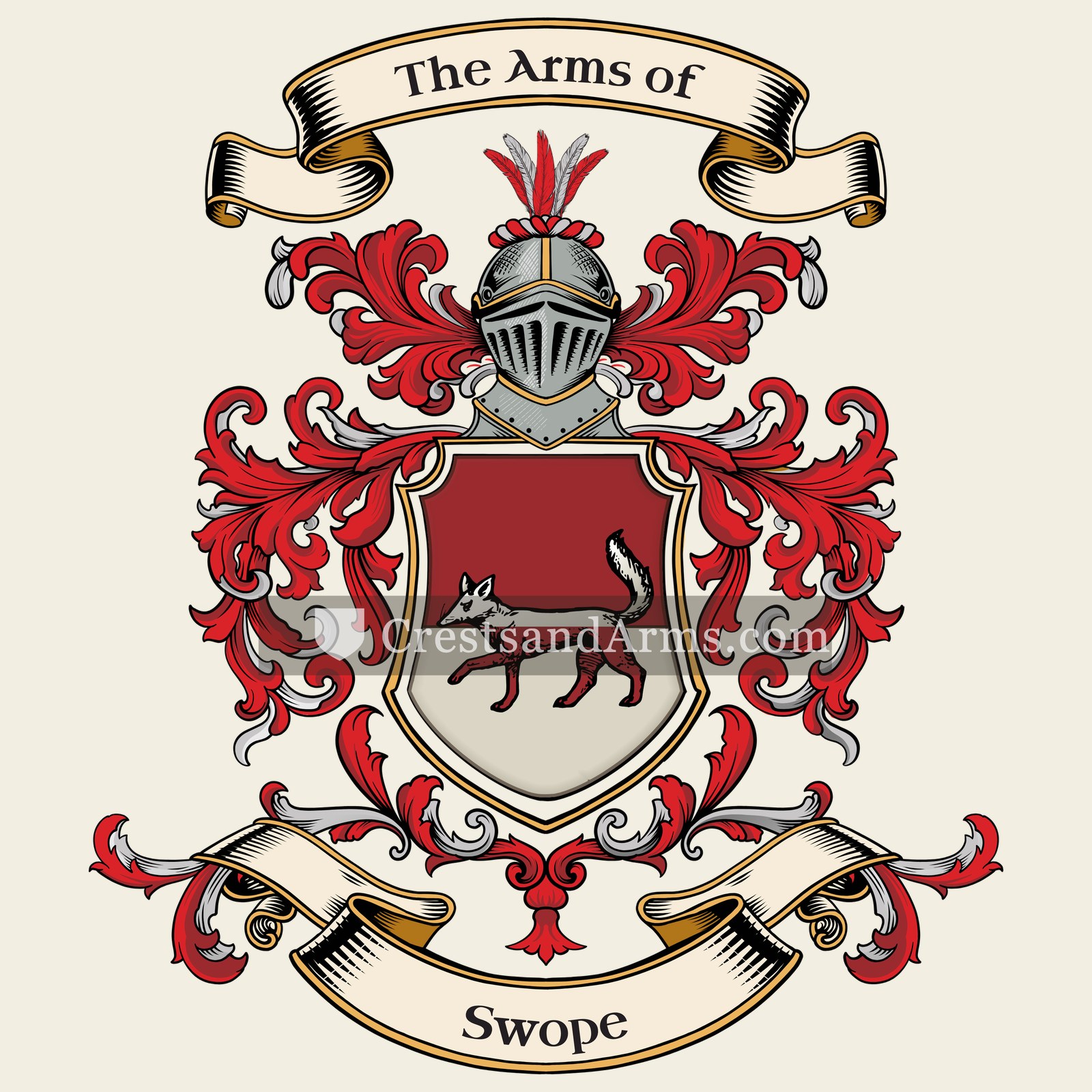
Symbols on this shield
foxWit and wisdom in defence
Colours
Red (Gules)Means: Military strength
Silver (Argent)Means: Peace and sincerity
Historical info
Source
J. B. Rietstap, Armorial Général, Gouda: G. B. van Goor Zonen, 1884–87
Blazon (the actual original written record)
“Coupé de gu. sur arg.; à un renard (dolce) ramp. de l'un en l'autre. Cq. cour. C.: une panthère iss. d'arg.”
DalmatiaDalmatia, c. 1775
Digital archive packCoat of arms PNG, gold border print PDF, vector SVG and the certificate of authenticity. Sent to your email in minutes.
Map of Italy showing where the Swope arms are recorded
The Swope arms were recorded in Dalmatia, c. 1775.
Dalmatia was a string of walled towns along the Adriatic coast, each with its own leading families. Sea trade made them wealthy, and the towns kept lists of the houses entitled to arms.
This is where the arms were entered in the register. Families often moved to other parts of the country, so the same name can turn up in more than one region.
The body that granted and recorded arms in Italy in this period.
Alvise Giovanni Mocenigo
Sovereign of the period
Alvise Giovanni Mocenigo
1763–1778
Reigning in Denmark when the Swope arms are first recorded.
How Arms Worked in Italy
In the Italian states, coats of arms were often used by noble families to show their status and history. These symbols were passed down through the generations to all legitimate male descendants. Younger branches of a family usually kept the original design but sometimes added small changes to distinguish their specific line from the main branch.
Granting authority
Various local rulers and city governments controlled the use of coats of arms across the different Italian states.
How they got arms
Families often assumed their own arms or received them as official grants from local lords, popes, or city councils.
Where arms were recorded
Arms were recorded in local city archives or private family books rather than in one single national register.
The family's standing
Recorded among the armigerous families of Dalmatia.
Origin & History of the Swope Family in Italy
The history of the Swope name in the Adriatic region is deeply connected to the movement of people across the borders of the Venetian Republic and the Austrian Empire. By 1775, records indicate that family members were established in Dalmatia, a coastal area known for its mix of Slavic and Italian cultural influences. During this era, the name likely evolved from local linguistic variations as families navigated the complex trade routes between the Italian peninsula and the Balkan ports. These early ancestors were part of a mobile population that relied on maritime commerce and regional diplomacy to sustain their livelihoods. Living in Dalmatia allowed the family to act as a bridge between different Mediterranean cultures, which shaped their identity long before the name became more common in other parts of the world.
Related Branches & Arms
Root word
Schwabe
A person originating from the Swabia region of Germany.
This name
SwopeAn occupational or habitational name for someone who migrated from the historical Swabian territory.
also spelled
Sope
Documented Sources
J. B. Rietstap, Armorial Général, Gouda: G. B. van Goor Zonen, 1884–87
Rigsarkivet (Danish National Archives), Kirkebøger for Sjaælland (Parish Registers for Sjaælland), 1722
Jensen, Jørgen Steen, Danske navne gennem 500 år (Danish names through 500 years), 1998
Trap, J.P., Kongeriget Danmark (The Kingdom of Denmark), 1906
Digital archive packCoat of arms PNG, gold border print PDF, vector SVG and the certificate of authenticity. Sent to your email in minutes.


 cupFaith, office, and a trust discharged
 roseThe seventh son, and beauty with grace
 cupFaith, office, and a trust discharged
 roseThe seventh son, and beauty with grace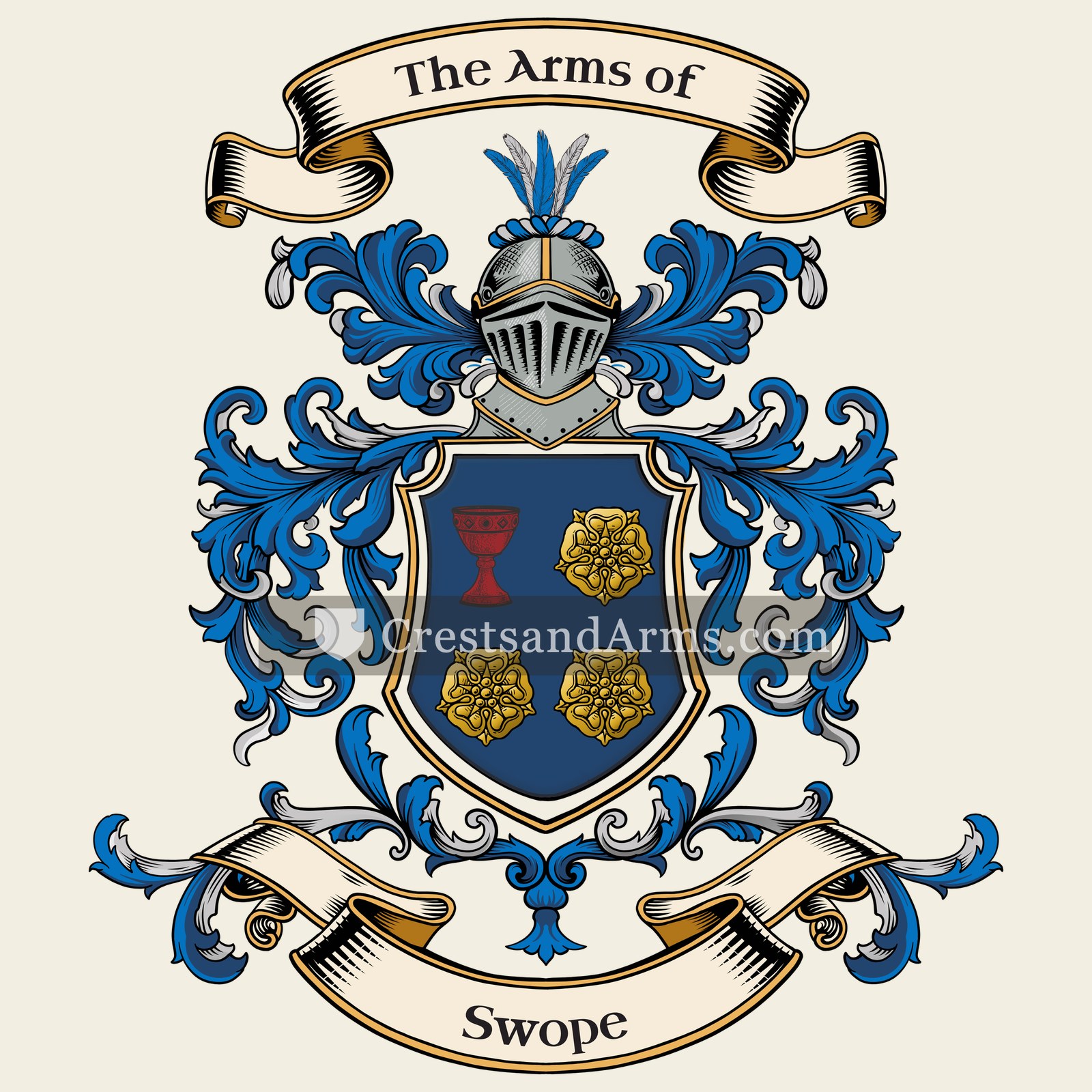


 foxWit and wisdom in defence