Map of Germany showing where the Tabora arms are recorded
The Tabora arms were recorded in Silesia, c. 1765.
Silesia was farming country in the east of the German lands, held in large estates by families who stayed put for generations. Owning land was what entitled a family to arms, so the region fills a good deal of the register.
This is where the arms were entered in the register. Families often moved to other parts of the country, so the same name can turn up in more than one region.
The body that granted and recorded arms in Germany in this period.
Francis I, Holy Roman Emperor
Sovereign of the period
Francis I, Holy Roman Emperor
1745–1765
Reigning in Germany when the Tabora arms are first recorded.
How Arms Worked in Germany
In the Holy Roman Empire, coats of arms were often granted to individuals by the Emperor or his representatives. These arms were then passed down through the generations to all legitimate descendants of the original holder. Younger branches of a family usually kept the same shield design without needing to change it, as the arms belonged to the entire lineage.
Granting authority
The Holy Roman Emperor held the sole power to grant new coats of arms throughout his vast imperial territories.
How they got arms
Families typically obtained their coats of arms through a formal imperial grant or by proving their noble status to the authorities.
Where arms were recorded
These grants were officially recorded in the Imperial Chancery registers, which began keeping formal records of such honors during the Middle Ages.
The family's standing
Recorded among the armigerous families of Silesia.
Origin & History of the Tabora Family in Germany
The history of the Tabora family in Germany is deeply rooted in the region of Silesia, where records confirm their presence as early as 1765. During the eighteenth century, Silesia was a diverse territory undergoing significant social and economic shifts under Prussian rule. Families like the Taboras often lived in agricultural or trade-focused communities where surnames were frequently tied to local geography or specific occupations. The name itself likely evolved from older linguistic roots common to Central Europe, reflecting the movement of people across the borders of modern-day Germany, Poland, and the Czech Republic. By settling in this area, the early members of the family became part of a complex regional history defined by the transition of lands and the development of local village life. These ancestors were likely craftsmen or farmers who helped build the social fabric of their towns during a time of great change in the German lands.
Coat of Arms & Family Crest Details
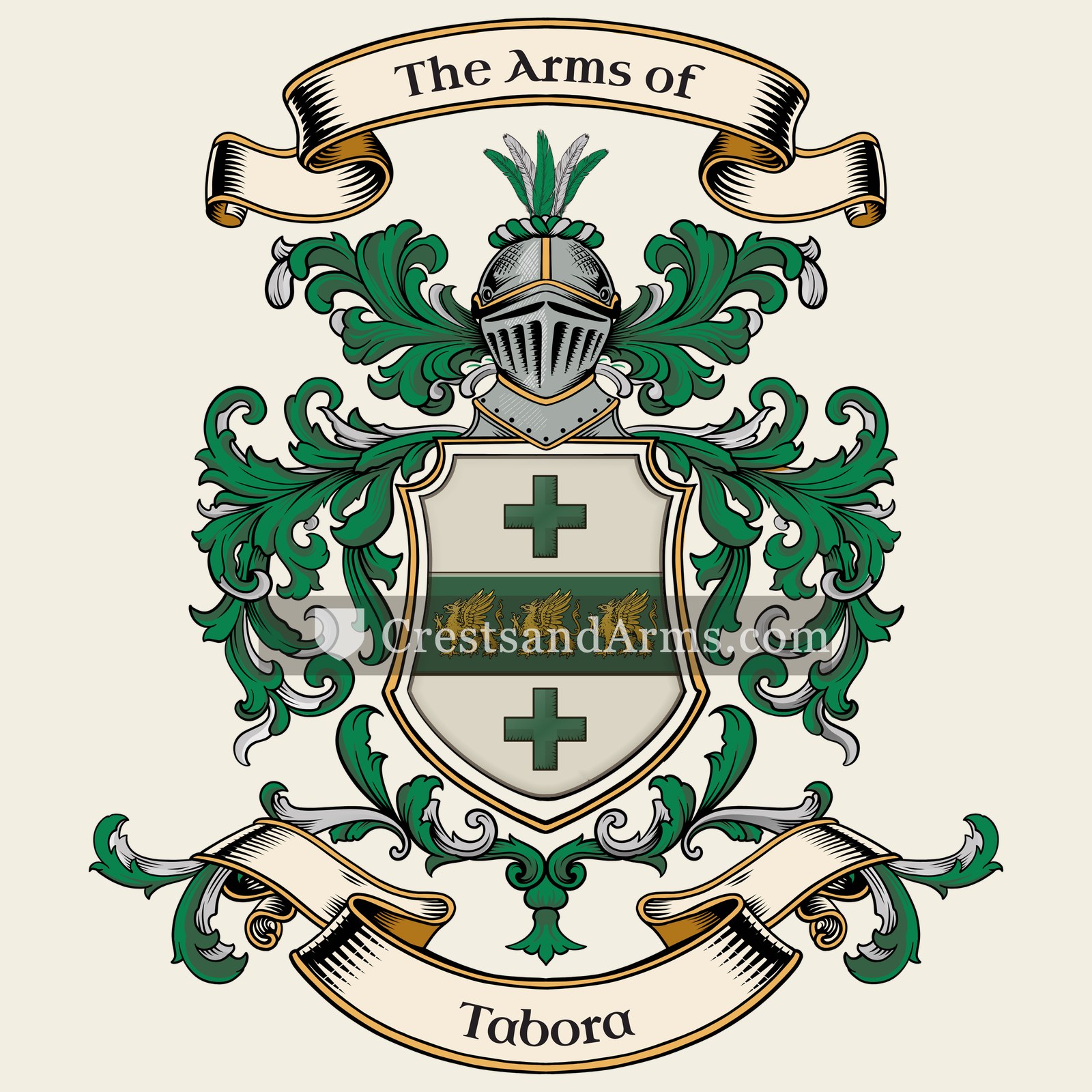
Symbols on this shield
fessThe military belt, and readiness to serve
cross symbolChristian faith and service
griffinValour and vigilance, guarding great treasure
Colours
Silver (Argent)Means: Peace and sincerity
Green (Vert)Means: Hope
Gold (Or)Means: Generosity
Historical info
Source
Sir Bernard Burke, The General Armory of England, Scotland, Ireland and Wales, London: Harrison & Sons, 1884
Blazon (the actual original written record)
“Ar. on a fess betw. two crosses patonce vert three gryphons' heads couped or”
Englandc. 1620
Digital archive packCoat of arms PNG, gold border print PDF, vector SVG and the certificate of authenticity. Sent to your email in minutes.
Map of England showing where the Tabora arms are recorded
The Tabora arms were recorded in England, c. 1620.
Arms such as these were typically recorded in York.
Yorkshire is the largest of the English counties, and it held more gentry families than any other. Land there was split among a great many households rather than a few, so a great many of them carried arms.
This is where the arms were entered in the register. Families often moved to other parts of the country, so the same name can turn up in more than one region.
The body that granted and recorded arms in England in this period.
James VI and I
Sovereign of the period
James VI and I
1603–1625
Reigning in Germany when the Tabora arms are first recorded.
How Arms Worked in England
English heraldry allowed arms to be shared by all legitimate descendants of the original owner. These symbols were treated as personal property that moved through the generations to all children. While the eldest son kept the original design, other family members could use the same shield without needing to change it or register their own unique versions.
Granting authority
The College of Arms in London has regulated the use of coats of arms throughout England and Wales since 1484.
How they got arms
Families typically obtained their coats of arms through a formal grant from the Crown or by proving their ancient right to them.
Where arms were recorded
All official coats of arms are recorded in the registers kept at the College of Arms, which date back to the fifteenth century.
The family's standing
Recorded among the armigerous families of England.
Origin & History of the Tabora Family in England
The history of the Tabora name in England begins with a small but distinct presence in the city of York during the early seventeenth century. By 1620, records indicate that members of the family were already established within this historic northern hub. During this period, York served as a vital center for trade and religious life, and families like the Taboras often integrated into the local merchant or artisan classes. While the name itself may have roots that stretch toward continental Europe, its appearance in English parish registers suggests that these early settlers were quickly adapting to the social and economic rhythms of the city. Their presence in York during the reign of King James I highlights a time when families were beginning to settle into more permanent urban identities, leaving behind the first written traces of their lineage in the local archives.
Related Branches & Arms
Root word
Tabor
A drum or a mountain peak of biblical significance.
This name
TaboraA topographic name for someone living near a mountain or a professional drummer.
also spelled
Tabour
Taber
Documented Sources
J. B. Rietstap, Armorial Général, Gouda: G. B. van Goor Zonen, 1884–87
State Archive in Wrocław (Archiwum Państwowe we Wrocławiu), Akta stanu cywilnego parafii rzymskokatolickiej w Świdnicy
Knie, Johann Georg, Alphabetisch-statistisch-topographische Uebersicht der Dörfer, Flecken, Städte und anderen Orte der Königl. Preuß. Provinz Schlesien, 1845
Zimmermann, Friedrich Albert, Beyträge zur Beschreibung von Schlesien, 1783
Digital archive packCoat of arms PNG, gold border print PDF, vector SVG and the certificate of authenticity. Sent to your email in minutes.


 arrowReadiness for battle, and affliction endured
 stagPeace and harmony, and one who will not fight unprovoked
 arrowReadiness for battle, and affliction endured
 stagPeace and harmony, and one who will not fight unprovoked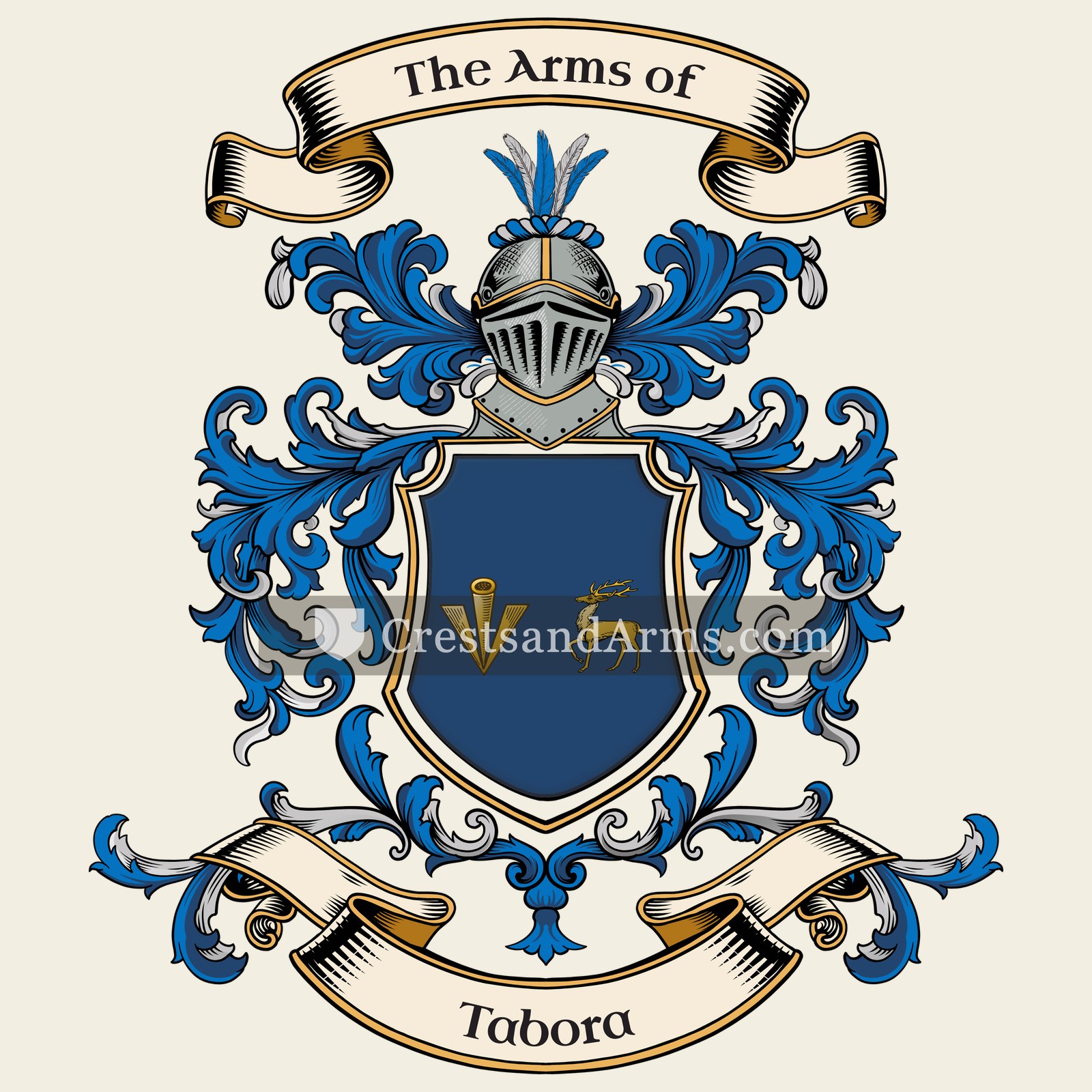


 fessThe military belt, and readiness to serve
 cross symbolChristian faith and service
 griffinValour and vigilance, guarding great treasure