Map of Germany showing where the Tanner arms are recorded
The Tanner arms were recorded in Schwäbisch-Hall Wurt, c. 1765.
This is where the arms were entered in the register. Families often moved to other parts of the country, so the same name can turn up in more than one region.
The body that granted and recorded arms in Germany in this period.
Francis I, Holy Roman Emperor
Sovereign of the period
Francis I, Holy Roman Emperor
1745–1765
Reigning in Germany when the Tanner arms are first recorded.
How Arms Worked in Germany
In the Holy Roman Empire, coats of arms were often granted to individuals by the Emperor or his representatives. These arms were then passed down through the generations to all legitimate descendants of the original holder. Younger branches of a family usually kept the same shield design without needing to change it, as the arms belonged to the entire lineage.
Granting authority
The Holy Roman Emperor held the sole power to grant new coats of arms throughout his vast imperial territories.
How they got arms
Families typically obtained their coats of arms through a formal imperial grant or by proving their noble status to the authorities.
Where arms were recorded
These grants were officially recorded in the Imperial Chancery registers, which began keeping formal records of such honors during the Middle Ages.
The family's standing
Recorded among the armigerous families of Germany.
Origin & History of the Tanner Family in Germany
The surname Tanner is a classic occupational name that originated in the Middle Ages to describe a person who worked as a tanner of leather. In the German-speaking regions, this profession was essential to local economies because leather was required for everything from footwear and clothing to heavy-duty equipment for farming and trade. By the time members of the family were documented in the town of Schwäbisch-Hall in 1765, the name had been established for centuries as a reflection of a skilled trade passed down through generations. The city of Schwäbisch-Hall was a significant center for commerce and salt production, making it a logical place for families involved in leather processing to settle and thrive. As these families lived and worked in the region, they became integrated into the social fabric of the town, contributing to the local craft guilds that regulated the quality and trade of leather goods. This history highlights how a simple professional title evolved into a lasting family identity that connected individuals to the industrial life of their community.
Coat of Arms & Family Crest Details
Symbols on this shield
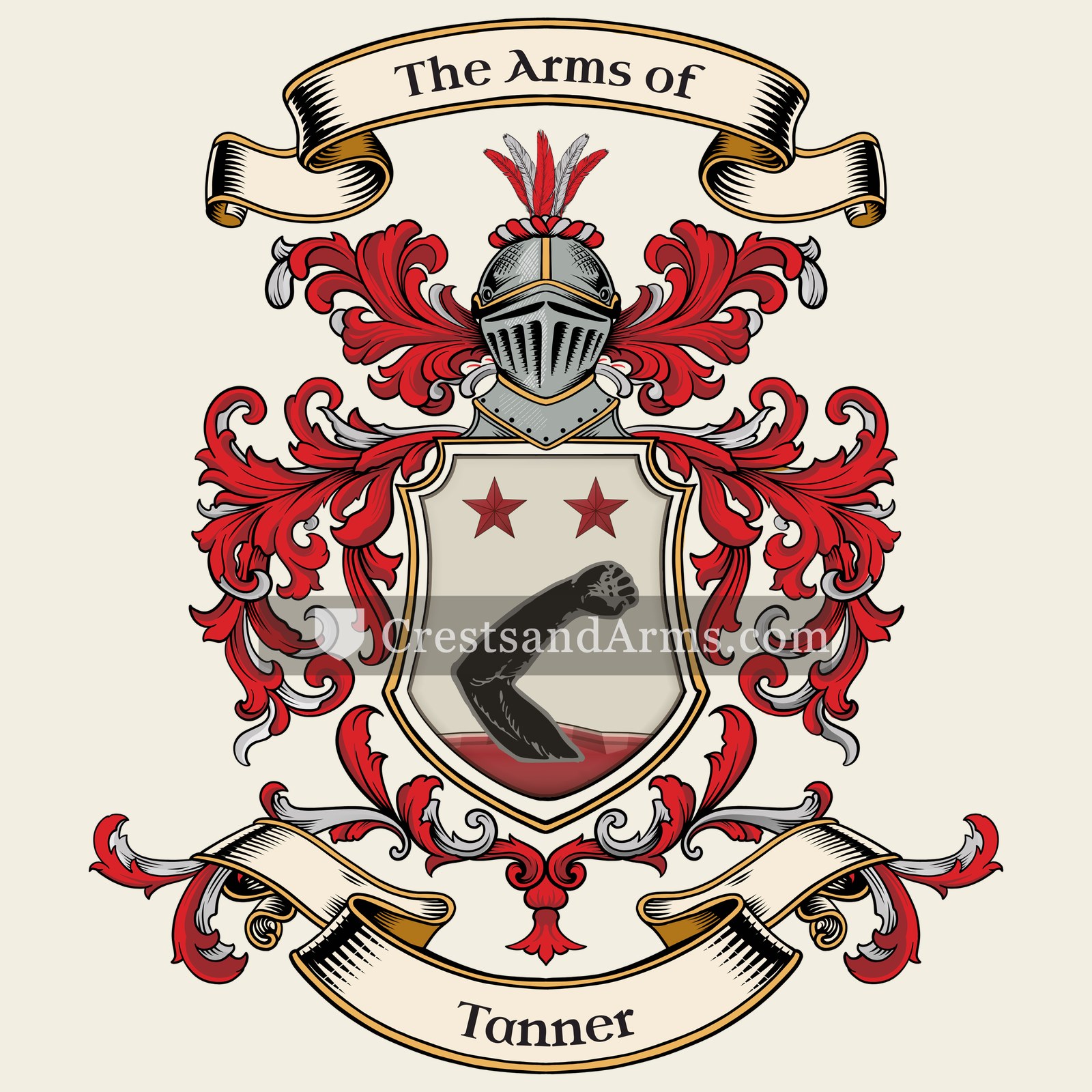
mountThe ground held, and steadfastness upon it
armA person of action, industrious and laborious
mulletThe third son, and a divine quality from above
Colours
Silver (Argent)Means: Peace and sincerity
Red (Gules)Means: Military strength
Historical info
Source
J. B. Rietstap, Armorial Général, Gouda: G. B. van Goor Zonen, 1884–87
Blazon (the actual original written record)
“D'arg. à un senestrochère, arm. d'arg., mouv. du flanc, la main de carn. empoignant le fût d'un sapin de sin., posé sur un tertre de gu. et accosté en chef de deux étoiles du même. C.: un sapin de sin., entre deux prob. d'arg.”
SwitzerlandBerne, c. 1745
Digital archive packCoat of arms PNG, gold border print PDF, vector SVG and the certificate of authenticity. Sent to your email in minutes.
Map of Switzerland showing where the Tanner arms are recorded
The Tanner arms were recorded in Berne, c. 1745.
This is where the arms were entered in the register. Families often moved to other parts of the country, so the same name can turn up in more than one region.
The body that granted and recorded arms in Switzerland in this period.
How Arms Worked in Switzerland
In Switzerland, coats of arms were not restricted to the nobility and were often adopted by common citizens and families. These symbols were passed down through generations to show family identity. When branches of a family grew, they often changed small details of the design to distinguish their own line from the original group.
Granting authority
Cantonal and civic authorities managed the use of coats of arms within their specific regions and local jurisdictions.
How they got arms
Families typically assumed their own coats of arms based on local custom rather than receiving them from a central monarch.
Where arms were recorded
Arms were recorded in various cantonal and civic registers starting from the fourteenth century throughout the Swiss region.
The family's standing
Recorded among the armigerous families of Switzerland.
Origin & History of the Tanner Family in Switzerland
The surname Tanner is an occupational name that identifies the trade of leather tanning, a vital industry in medieval and early modern Europe. In Switzerland, the name became well-established as families moved into towns to practice specialized crafts. By 1745, records confirm that members of the Tanner family were active residents of the city of Berne. During this period, the city was a powerful center of trade and politics, and families like the Tanners often held roles that contributed to the local economy. Because tanning required significant amounts of water and space, these families frequently settled near rivers or on the outskirts of city walls. Their presence in Berne reflects a broader trend of skilled workers settling in urban hubs to gain social and economic stability. Over generations, the name transitioned from a simple description of a worker’s job into a permanent family identity that persisted through the centuries in the Swiss cantons.
Coat of Arms & Family Crest Details
Symbols on this shield
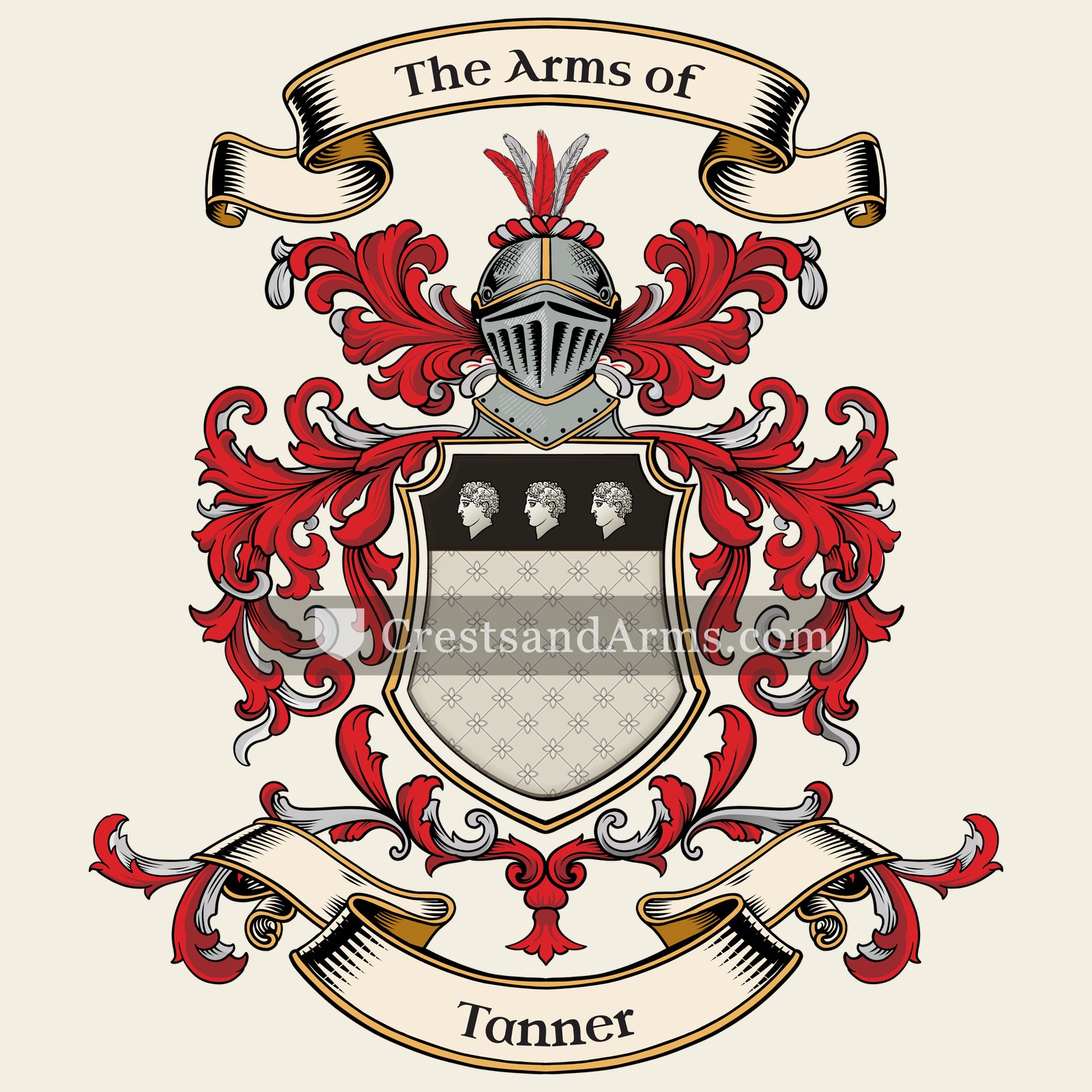
chiefAuthority, wisdom and dominion
savages head affrontyAn enemy overcome
Colours
Silver (Argent)Means: Peace and sincerity
Black (Sable)Means: Constancy
Historical info
Source
Sir Bernard Burke, The General Armory of England, Scotland, Ireland and Wales, London: Harrison & Sons, 1884
Blazon (the actual original written record)
“Ar. on a chief sa. three Moors' heads in profile couped at the neck sa. banded about the temples of the first and gu”
CornwallBrannell · Cornwall, c. 1620
Digital archive packCoat of arms PNG, gold border print PDF, vector SVG and the certificate of authenticity. Sent to your email in minutes.
Map of England showing where the Tanner arms are recorded
The Tanner arms were recorded in Cornwall, c. 1620.
Cornwall was a county apart, with its own language and its own tight-knit gentry. Tin and the sea made money there, and families who made it bought land, which is what brought arms with it.
This is where the arms were entered in the register. Families often moved to other parts of the country, so the same name can turn up in more than one region.
The body that granted and recorded arms in England in this period.
James VI and I
Sovereign of the period
James VI and I
1603–1625
Reigning in Germany when the Tanner arms are first recorded.
How Arms Worked in England
English heraldry allowed arms to be shared by all legitimate descendants of the original owner. These symbols were treated as personal property that moved through the generations to all children. While the eldest son kept the original design, other family members could use the same shield without needing to change it or register their own unique versions.
Granting authority
The College of Arms in London has regulated the use of coats of arms throughout England and Wales since 1484.
How they got arms
Families typically obtained their coats of arms through a formal grant from the Crown or by proving their ancient right to them.
Where arms were recorded
All official coats of arms are recorded in the registers kept at the College of Arms, which date back to the fifteenth century.
The family's standing
Recorded among the armigerous families of Cornwall.
Origin & History of the Tanner Family in England
The surname Tanner is an occupational name that emerged in medieval England to identify individuals who worked in the leather industry. During the Middle Ages, the process of turning animal hides into leather was known as tanning, and those who performed this labor were essential to the local economy. Because leather was used for everything from footwear and clothing to saddles and armor, tanners were common figures in villages and towns across the country. By the early seventeenth century, the name had become well-established among families in Cornwall. Records from 1620 confirm that members of the Tanner family were living in this region during a time of significant social and economic change in England. These early ancestors likely contributed to the local trade networks of the Cornish coast, helping to maintain the vital leather supplies needed for daily life and maritime work.
Tanner Meaning & Related Branches
Root word
tann
Old High German word for a fir tree or forest.
This name
TannerAn occupational surname for a person who tanned animal hides into leather.
also spelled
Taner
Tannier
Tannar
Tannor
Related arms
Thannervariant spelling
Bevanrecorded with Tanner, same area
Bruererecorded with Tanner, same area
Cornwallrecorded with Tanner, same area
Documented Sources
J. B. Rietstap, Armorial Général, Gouda: G. B. van Goor Zonen, 1884–87
Heintze, Albert. Die deutschen Familiennamen: geschichtlich, geographisch, sprachlich. 1903
Bahlow, Hans. Deutsches Namenlexikon: Familien- und Vornamen nach Ursprung und Sinn erklärt. 1967
Stadtarchiv Schwäbisch Hall. Bürgerbücher und Einwohnerverzeichnisse der Reichsstadt Schwäbisch Hall. 1765
Digital archive packCoat of arms PNG, gold border print PDF, vector SVG and the certificate of authenticity. Sent to your email in minutes.


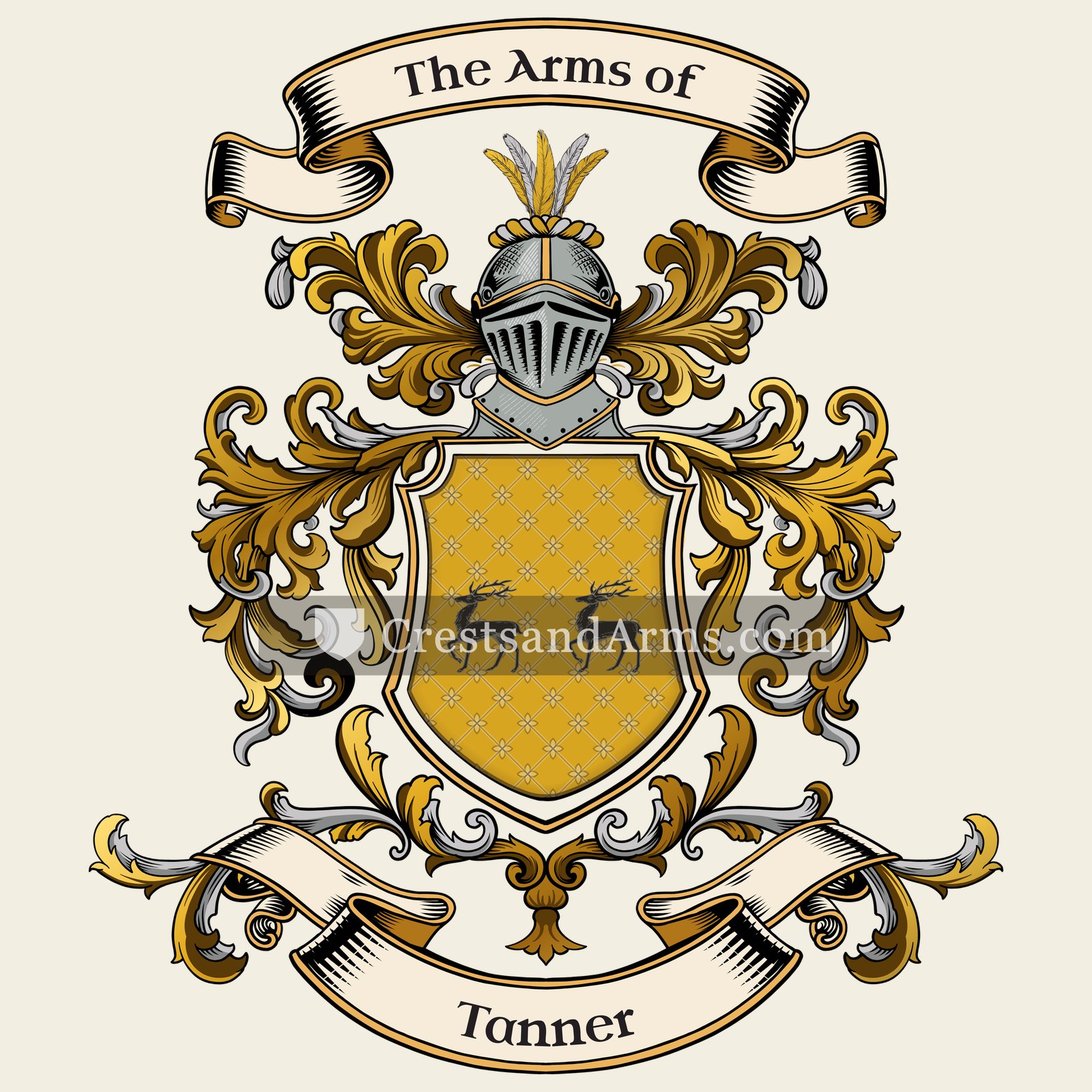
 stagPeace and harmony, and one who will not fight unprovoked
 stagPeace and harmony, and one who will not fight unprovoked


 mountThe ground held, and steadfastness upon it
 armA person of action, industrious and laborious
 mulletThe third son, and a divine quality from above

 chiefAuthority, wisdom and dominion
 savages head affrontyAn enemy overcome