Map of Spain showing where the Tavira arms are recorded
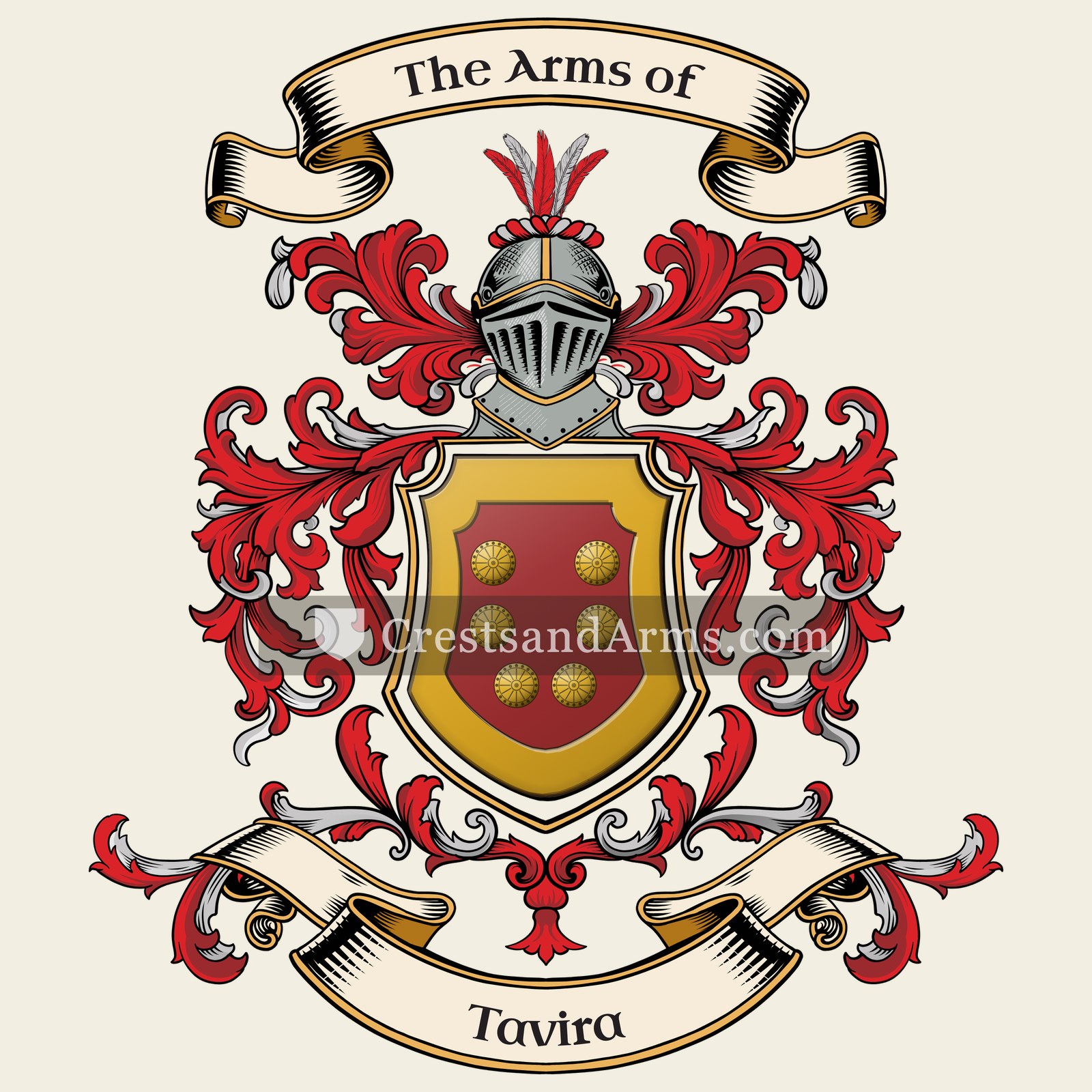
The Tavira arms were recorded in Biscaye, c. 1722.
This is where the arms were entered in the register. Families often moved to other parts of the country, so the same name can turn up in more than one region.
The body that granted and recorded arms in Spain in this period.
Philip V of Spain
Sovereign of the period
Philip V of Spain
1714–1724
Reigning in Spain when the Tavira arms are first recorded.
How Arms Worked in Spain
In Spain, a coat of arms was considered a form of property that belonged to the entire family line. These arms were passed down from a father to all his children equally. Younger branches of the family usually kept the original design without needing to add any special marks to distinguish their specific line.
Granting authority
The Cronista Rey de Armas was the official body that regulated and granted coats of arms throughout Spain.
How they got arms
Families often obtained their arms through royal grants or by proving their noble status to the official heraldic authority.
Where arms were recorded
Coats of arms were officially recorded in the registers of the Cronista Rey de Armas starting in 1496.
The family's standing
Recorded among the armigerous families of Spain.
Origin & History of the Tavira Family in Spain
The family name Tavira finds its roots in the rugged landscape of the Iberian Peninsula, with significant historical ties to the Basque region. By the year 1722, records confirm that members of the family were firmly established in Biscaye, a province known for its distinct culture and maritime traditions. During this era, families in the region were often deeply connected to the local land and the evolving social structures of the Spanish Crown. The name itself is thought to be topographic, likely derived from the old word *tabira*, which refers to a place near a river or a ford. This suggests that the earliest ancestors were people who lived near a specific water crossing, eventually adopting the location as a way to identify their household. As these individuals moved through the Basque country, they contributed to the local economy and community life, leaving behind a legacy that is preserved in regional parish registers and administrative documents from the eighteenth century.
Related Branches & Arms
Root word
Tabira
Basque term referring to a place near a river or ford.
This name
TaviraA topographic surname identifying someone who lived near a specific river crossing or ford.
also spelled
Tavyra
Tavirra
Taviras
Taveera
Documented Sources
J. B. Rietstap, Armorial Général, Gouda: G. B. van Goor Zonen, 1884–87
Archivo Histórico Eclesiástico de Bizkaia, Archivo Parroquial de la Diócesis de Bilbao
Archivo General de Simancas, Registro del Sello de Corte
Mikel Belasko, Diccionario etimológico de los nombres de los pueblos, villas y ciudades de Navarra, 1999
Endika de Mogrobejo, Diccionario hispano de apellidos y blasones, 1995
Digital archive packCoat of arms PNG, gold border print PDF, vector SVG and the certificate of authenticity. Sent to your email in minutes.


 roundelA coin, and one who has been to the crusades
 roundelA coin, and one who has been to the crusades