Map of Spain showing where the Tejada arms are recorded
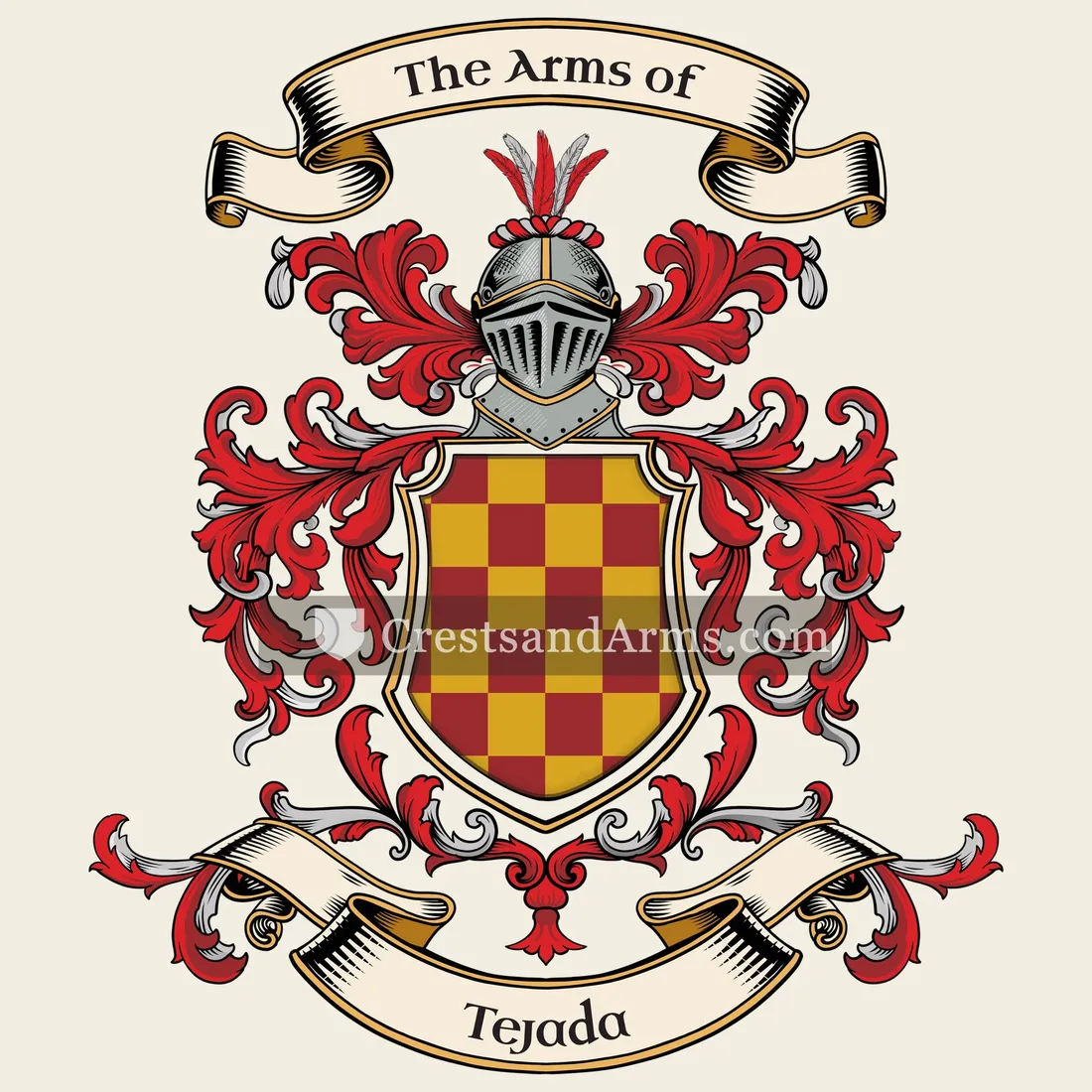
The Tejada arms were recorded in Spain, c. 1722.
Arms such as these were typically recorded in Castile.
Castile was the heart of Spain and the source of most of its noble families. Land won in the long wars against the Moors was granted out to fighting men, and a man granted land was granted arms along with it.
This is where the arms were entered in the register. Families often moved to other parts of the country, so the same name can turn up in more than one region.
The body that granted and recorded arms in Spain in this period.
Philip V of Spain
Sovereign of the period
Philip V of Spain
1714–1724
Reigning in Spain when the Tejada arms are first recorded.
How Arms Worked in Spain
In Spain, a coat of arms was considered a form of property that belonged to the entire family line. These arms were passed down from a father to all his children equally. Younger branches of the family usually kept the original design without needing to add any special marks to distinguish their specific line.
Granting authority
The Cronista Rey de Armas was the official body that regulated and granted coats of arms throughout Spain.
How they got arms
Families often obtained their arms through royal grants or by proving their noble status to the official heraldic authority.
Where arms were recorded
Coats of arms were officially recorded in the registers of the Cronista Rey de Armas starting in 1496.
The family's standing
Recorded among the armigerous families of Spain.
Origin & History of the Tejada Family in Spain
The surname Tejada originates from the rugged landscapes of the Castile region in Spain. Etymologists believe the name is topographic, derived from the Spanish word *tejeda*, which refers to a grove of yew trees. Families bearing this name were likely identified by their proximity to these distinct, long-living trees that were often found in the mountainous terrain of the Iberian Peninsula. By the early 18th century, records confirm that members of the Tejada family were well-established residents of Castile. During this period, the family was part of the social fabric of rural and provincial Spanish life, where surnames were frequently tied to the specific geography or natural landmarks of a person’s home village. This connection to the land suggests that the early Tejadas were deeply rooted in the agricultural and pastoral traditions of the Castilian heartland.
Tejada Meaning & Related Branches
Root word
teja
derived from the Latin tegula meaning a roof tile
This name
Tejadaa topographic name for someone who lived near a place where roof tiles were manufactured
also spelled
Tejadas
Tejad
Tehada
Documented Sources
J. B. Rietstap, Armorial Général, Gouda: G. B. van Goor Zonen, 1884–87
Moll, Francesc de Borja. Els llinatges catalans: Catalunya, País Valencià, Illes Balears. 1959
Pescador del Hoyo, María del Carmen. Apellidos en España. 1996
Archivo General de Simancas, Registro del Sello de Corte
Digital archive packCoat of arms PNG, gold border print PDF, vector SVG and the certificate of authenticity. Sent to your email in minutes.


 chequyConstancy, and the counting-board
 chequyConstancy, and the counting-board