A record of documented arms, meaning and origin, researched for the Temple family lines. Documented in 3 countries.
Reg. 7059 · French, T–V
Coat of Arms & Family Crest Details
Symbols on this shield
cross symbolChristian faith and service
fessThe military belt, and readiness to serve
pileWell-doing, and a mark of distinction
paleMilitary strength, and a fortified defence
roundelA coin, and one who has been to the crusades
eagleNobility, strength and a keen mind
lionCourage, strength and royalty
Colours
Green (Vert)Means: Hope
Gold (Or)Means: Generosity
Silver (Argent)Means: Peace and sincerity
Black (Sable)Means: Constancy
Red (Gules)Means: Military strength
Historical info
Source
J. B. Rietstap, Armorial Général, Gouda: G. B. van Goor Zonen, 1884–87
Blazon (the actual original written record)
“Coupé d'un trait, parti de deux autres, qui font six quartiers: aux 1 et 6 de sin. à la croix d'arg., ch. de cinq tourt. de gu. (Grenville); au 2 éc., d'or à l'aigle de sa. (Leofric, comte de Mercia), et d'arg. à deux fasces de sa., ch. chacune de trois martinets d'or (Temple); au 3 d'herm. à deux fasces de gu. (Nugent); au 4 d'arg. à la croix de sa., ch. d'une tête de léopard d'or (Brydges); au 5 d'or à la pile de gu. (Chandos). C.: 1° une gerbe de sin. (Grenville); 2° un martinet d'or, soutenu d'une couronne du même (Temple); 3° un buste de vieillard de profil, tort. d'arg. et d'azur, hab. d'un palé d'arg. et de gu., semé de tourteaux-besants de l'un à l'autre (Brydges); 4° un buste de Sarasin au nat., posé de front, tort. d'arg. et de sa. (Chandos). S.: à dextre un lion coupé-enclavé d'or sur gu.; à sen. un cheval d'arg. semé d'aigles de sa. D.: TEMPLA QUAM DILECTA.”
Francec. 1725
Digital archive packCoat of arms PNG, gold border print PDF, vector SVG and the certificate of authenticity. Sent to your email in minutes.
Map of France showing where the Temple arms are recorded
The Temple arms were recorded in France, c. 1725.
Arms such as these were typically recorded in Bretagne.
More families held coats of arms in Bretagne than anywhere else in France. The land was divided into many small estates rather than a few large ones, so far more households counted as gentry, and each needed a shield of its own to be told apart.
This is where the arms were entered in the register. Families often moved to other parts of the country, so the same name can turn up in more than one region.
The body that granted and recorded arms in France in this period.
Louis XV of France
Sovereign of the period
Louis XV of France
1715–1774
Reigning in France when the Temple arms are first recorded.
How Arms Worked in France
In France, a coat of arms was a mark of honor that passed down through the male line to all legitimate descendants. Families often used the same shield without changes to show their shared heritage. If a branch wanted to stand out, they could add a small mark to their shield to show their specific place in the family tree.
Granting authority
The Juge d'armes de France acted as the official authority that regulated and verified coats of arms across the country.
How they got arms
Families typically inherited their arms from ancestors, though they could also receive them through royal grants or by proving their noble status.
Where arms were recorded
Coats of arms were officially recorded in the Armorial Général de France, which began its main collection in the year 1696.
The family's standing
Recorded among the armigerous families of France.
Origin & History of the Temple Family in France
The family name Temple carries a deep connection to the historical landscape of France, particularly within the region of Bretagne. By the early eighteenth century, records confirm that members of the family were well-established in this area by 1725. The name itself often points to a historical association with the Knights Templar, a famous medieval order that held vast lands and properties across the French countryside. Families who lived near these religious sites or served on their estates frequently adopted the name to identify their place of residence or their professional ties to the order. As these individuals settled in Bretagne, they integrated into the local community, contributing to the social and agricultural life of the province. Over time, the name evolved from a simple geographical marker into a lasting family legacy that reflected the complex religious and social history of medieval and early modern France.
Coat of Arms & Family Crest Details
Symbols on this shield
chevronProtection, and faithful service completed
crescentHonour by the sovereign, and the second son
martletA younger son, who must win his own land
Colours
Silver (Argent)Means: Peace and sincerity
Black (Sable)Means: Constancy
Red (Gules)Means: Military strength
Historical info
Source
Sir Bernard Burke, The General Armory of England, Scotland, Ireland and Wales, London: Harrison & Sons, 1884
Blazon (the actual original written record)
“Ar. on a chev. sa. betw. three crescents gu. five martlets of the first”
WarwickWarwick, c. 1569
Digital archive packCoat of arms PNG, gold border print PDF, vector SVG and the certificate of authenticity. Sent to your email in minutes.
Map of England showing where the Temple arms are recorded
The Temple arms were recorded in Warwick, c. 1569.
Warwickshire lay in the middle of England, and its landed families were spread evenly across it rather than gathered in one corner. A great many held a single manor each, and each of those holdings brought its own claim to arms.
This is where the arms were entered in the register. Families often moved to other parts of the country, so the same name can turn up in more than one region.
The body that granted and recorded arms in England in this period.
Elizabeth I of England
Sovereign of the period
Elizabeth I of England
1558–1603
Reigning in France when the Temple arms are first recorded.
How Arms Worked in England
English heraldry allowed arms to be shared by all legitimate descendants of the original owner. These symbols were treated as personal property that moved through the generations to all children. While the eldest son kept the original design, other family members could use the same shield without needing to change it or register their own unique versions.
Granting authority
The College of Arms in London has regulated the use of coats of arms throughout England and Wales since 1484.
How they got arms
Families typically obtained their coats of arms through a formal grant from the Crown or by proving their ancient right to them.
Where arms were recorded
All official coats of arms are recorded in the registers kept at the College of Arms, which date back to the fifteenth century.
The family's standing
Recorded among the armigerous families of Warwick.
Origin & History of the Temple Family in England
The surname Temple is a locative name, which means it was originally given to people who lived near or worked on land associated with the Knights Templar. This military order held vast amounts of property across England during the Middle Ages, and those who resided on these estates often took the name to identify their connection to the order. By the time the family was firmly established in Warwick in 1569, the name had evolved from a simple description of residence into a formal hereditary surname. During this era, families in the Warwickshire region were often involved in local governance and agriculture, reflecting the transition of the name from its religious origins to a settled life in the English countryside. The presence of the family in Warwick during the sixteenth century suggests they had successfully integrated into the local community and established a lasting identity that persisted long after the original military order had faded from power.
Coat of Arms & Family Crest Details
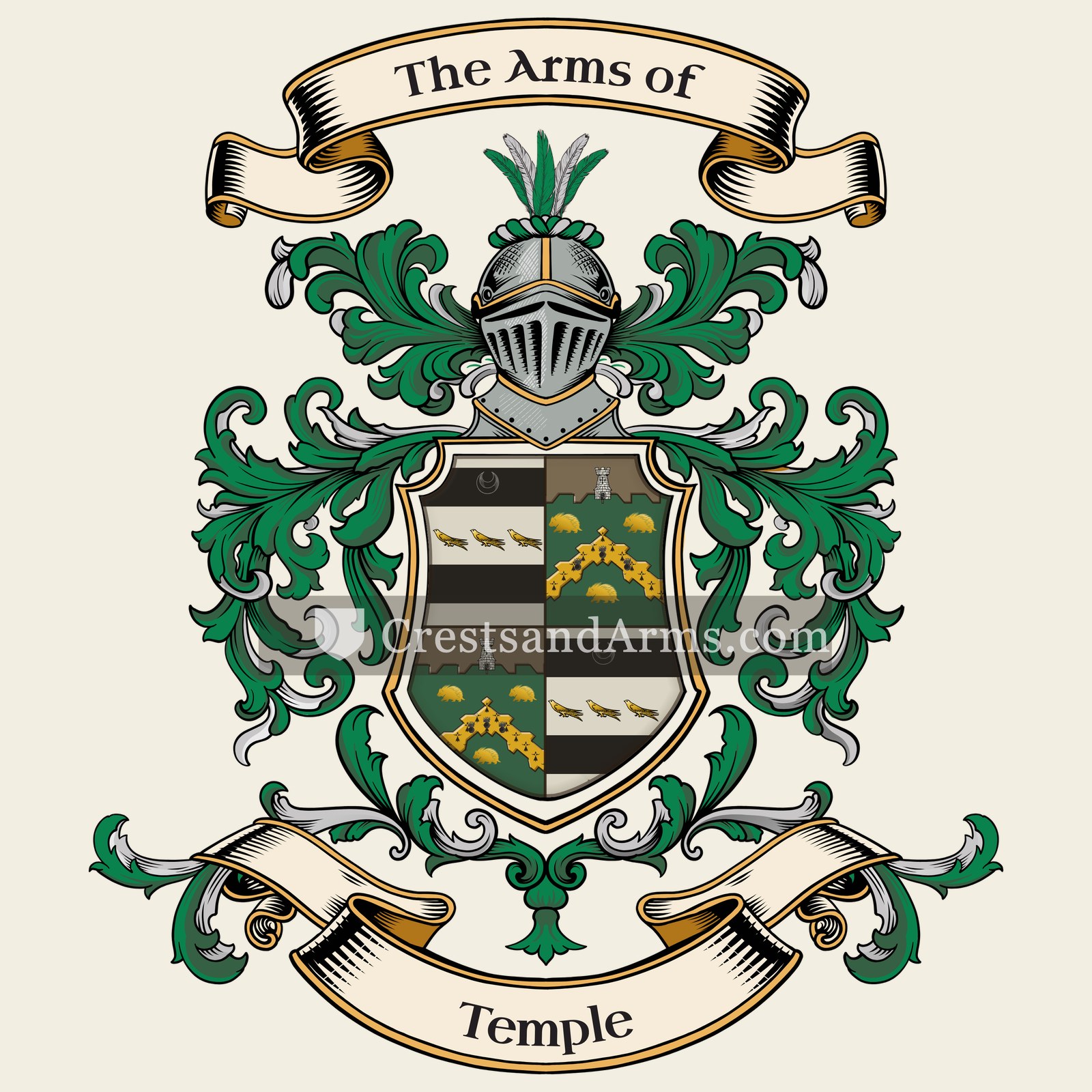
Symbols on this shield
chevronProtection, and faithful service completed
chiefAuthority, wisdom and dominion
martletA younger son, who must win his own land
crescentHonour by the sovereign, and the second son
hedgehogA provident provider
bombOne who has faced a great siege
towerGrandeur and solidity, and a stronghold defended
Colours
Silver (Argent)Means: Peace and sincerity
Green (Vert)Means: Hope
Black (Sable)Means: Constancy
ErmineMeans: Dignity
Gold (Or)Means: Generosity
Historical info
Source
Sir Bernard Burke, The General Armory of England, Scotland, Ireland and Wales, London: Harrison & Sons, 1884
Blazon (the actual original written record)
“Quarterly, 1st and 4th, ar. two bars sa. each charged with three martlets or, a crescent for diff., for TEMPLE; 2nd and 3rd, vert on a chev. embattled erminois betw. three hedgehogs or, as many bombs sa. fired ppr. on a chief of augmentation the gates and fortress of Seringapatam all ppr., for HARRIS”
WestmeathWaterstown · Westmeath, c. 1852
Digital archive packCoat of arms PNG, gold border print PDF, vector SVG and the certificate of authenticity. Sent to your email in minutes.
Map of Ireland showing where the Temple arms are recorded
The Temple arms were recorded in Westmeath, c. 1852.
Westmeath was midland grazing country in Ireland, taken by Norman families and held for centuries. Its estates were large and passed down whole, and unbroken tenure brought arms with it.
This is where the arms were entered in the register. Families often moved to other parts of the country, so the same name can turn up in more than one region.
The body that granted and recorded arms in Ireland in this period.
Victoria
Sovereign of the period
Victoria
1837–1901
Reigning in France when the Temple arms are first recorded.
How Arms Worked in Ireland
The Ulster King of Arms granted coats of arms to individuals who proved their social standing and good character. These symbols were typically inherited by all legitimate descendants of the original holder. If a family branch wanted a unique look, they could apply for a specific change to their design through the office to ensure their identity remained distinct.
Granting authority
The Ulster King of Arms acted as the official body that regulated and issued all coats of arms throughout Ireland.
How they got arms
Families obtained their arms through formal grants issued by the office after proving their eligibility and paying the required fees.
Where arms were recorded
All official grants were recorded in the registers held by the Ulster King of Arms starting from the year 1552.
The family's standing
Recorded among the armigerous families of Westmeath.
Origin & History of the Temple Family in Ireland
The history of the Temple family in Ireland is deeply connected to the social and land-based shifts that occurred during the nineteenth century. By 1852, records confirm that members of the family were established in County Westmeath, a region known for its rich agricultural landscape and complex history of land ownership. The name itself is thought to have originated from a connection to the Knights Templar, a medieval military order that held significant property across Europe and Ireland. As these religious orders were dissolved or integrated into local society, the name was often adopted by those who lived on or worked the lands once managed by the order. In the context of Westmeath, the family likely integrated into the local community as tenant farmers or tradespeople during a time when Ireland was recovering from the Great Famine. Their presence in the county reflects the broader movement of families who sought stability and work in the rural midlands during a period of intense economic transition.
Related Branches & Arms
Root word
Templum
A Latin term referring to a sacred space or sanctuary.
This name
TempleA topographic name for someone who lived near or worked at a religious house or church.
also spelled
Temply
Related arms
Cowperrecorded with Temple, same area
Greinvilerecorded with Temple, same area
Handockrecorded with Temple, same area
Holbecherecorded with Temple, same area
Documented Sources
J. B. Rietstap, Armorial Général, Gouda: G. B. van Goor Zonen, 1884–87
Archives départementales d'Ille-et-Vilaine, Série B (Fonds de la juridiction de Rennes)
Guillot, Olivier, Le pouvoir et l'administration au temps des premiers Capétiens, 1978
Demurger, Alain, Les Templiers, une chevalerie chrétienne au Moyen Âge, 2005
Digital archive packCoat of arms PNG, gold border print PDF, vector SVG and the certificate of authenticity. Sent to your email in minutes.


 cross symbolChristian faith and service
 fessThe military belt, and readiness to serve
 pileWell-doing, and a mark of distinction
 paleMilitary strength, and a fortified defence
 roundelA coin, and one who has been to the crusades
 eagleNobility, strength and a keen mind
 lionCourage, strength and royalty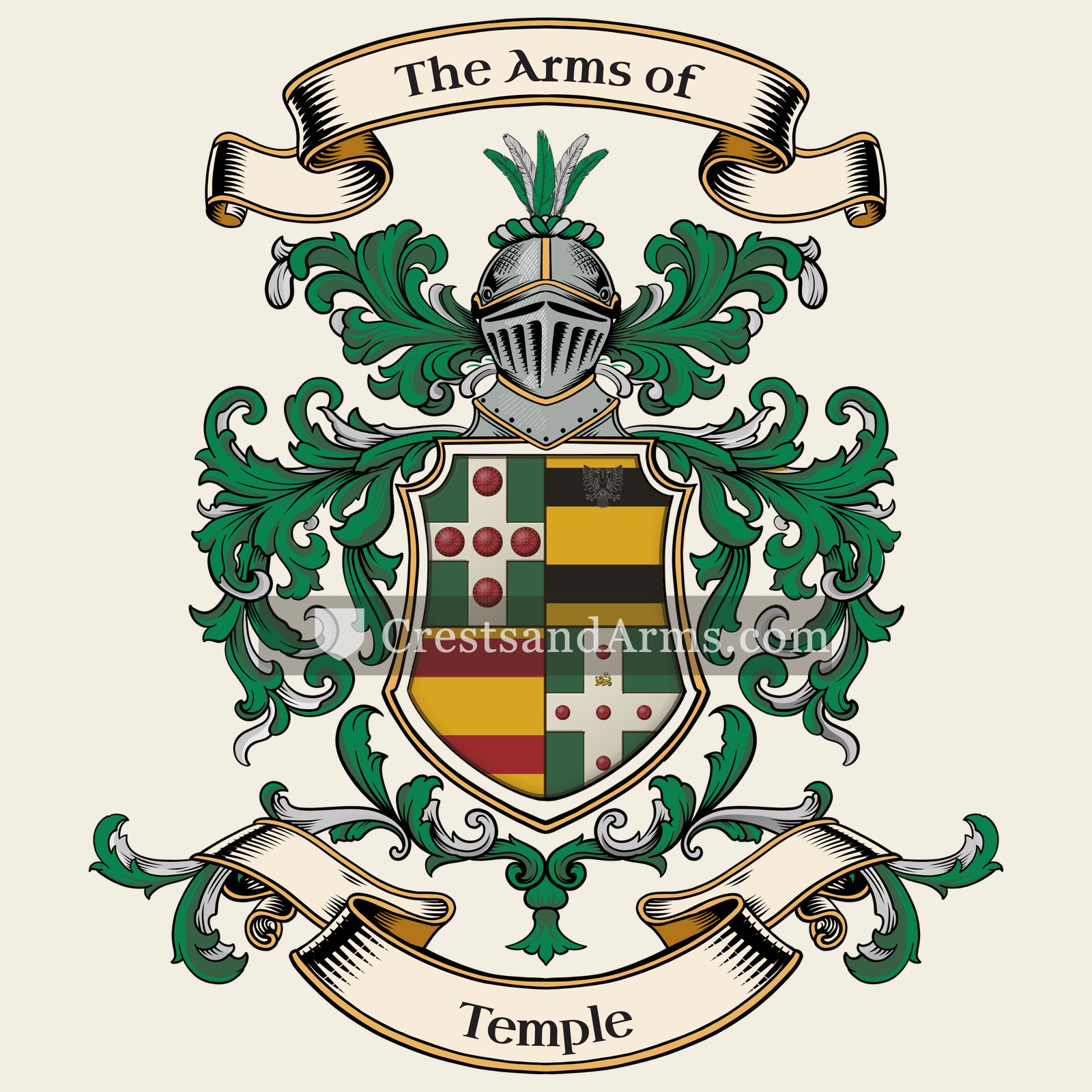


 chevronProtection, and faithful service completed
 crescentHonour by the sovereign, and the second son
 martletA younger son, who must win his own land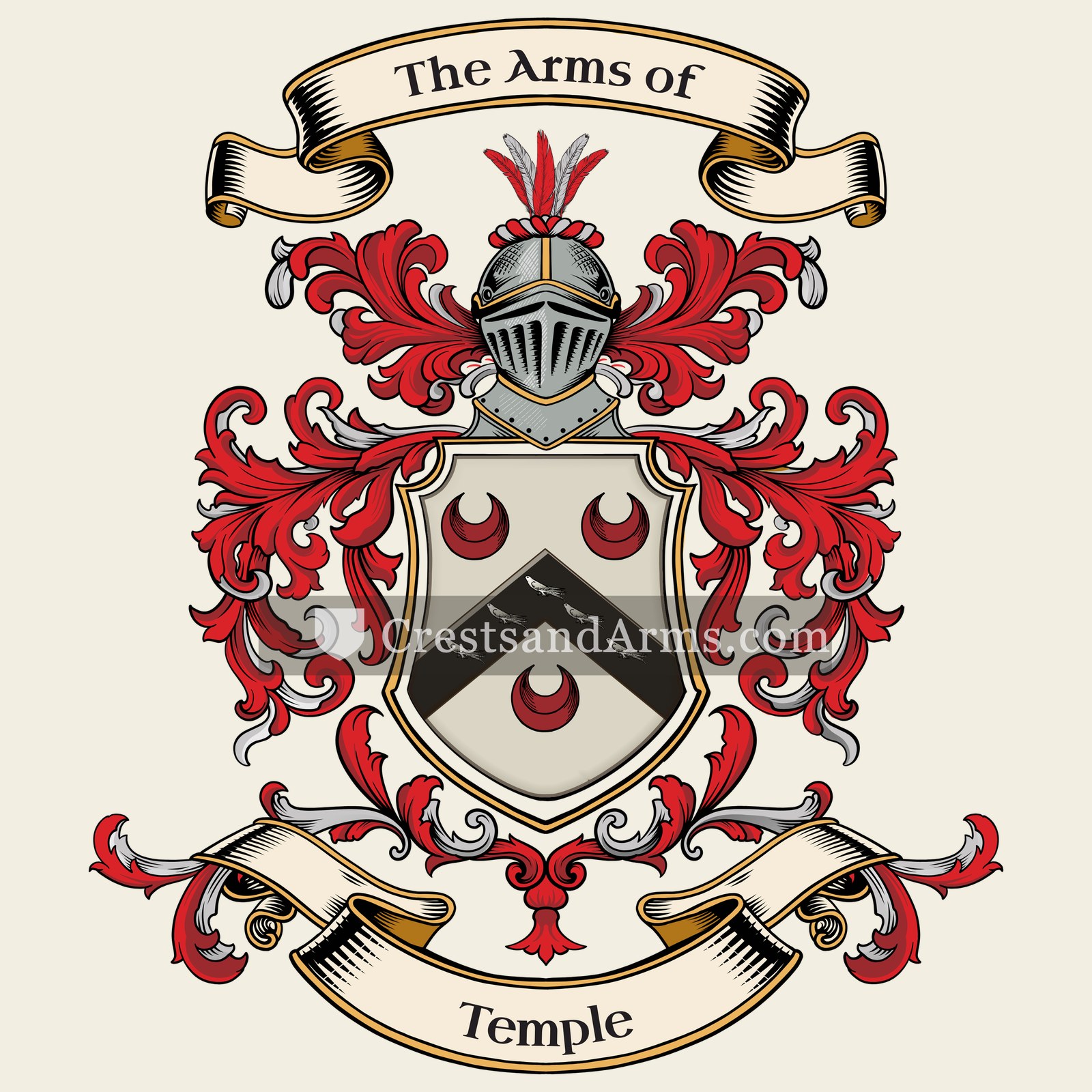


 chiefAuthority, wisdom and dominion
 hedgehogA provident provider
 bombOne who has faced a great siege
 towerGrandeur and solidity, and a stronghold defended