Map of Spain showing where the Terry arms are recorded
The Terry arms were recorded in Spain, c. 1722.
Arms such as these were typically recorded in Castile.
Castile was the heart of Spain and the source of most of its noble families. Land won in the long wars against the Moors was granted out to fighting men, and a man granted land was granted arms along with it.
This is where the arms were entered in the register. Families often moved to other parts of the country, so the same name can turn up in more than one region.
The body that granted and recorded arms in Spain in this period.
Philip V of Spain
Sovereign of the period
Philip V of Spain
1714–1724
Reigning in Spain when the Terry arms are first recorded.
How Arms Worked in Spain
In Spain, a coat of arms was considered a form of property that belonged to the entire family line. These arms were passed down from a father to all his children equally. Younger branches of the family usually kept the original design without needing to add any special marks to distinguish their specific line.
Granting authority
The Cronista Rey de Armas was the official body that regulated and granted coats of arms throughout Spain.
How they got arms
Families often obtained their arms through royal grants or by proving their noble status to the official heraldic authority.
Where arms were recorded
Coats of arms were officially recorded in the registers of the Cronista Rey de Armas starting in 1496.
The family's standing
Recorded among the armigerous families of Spain.
Origin & History of the Terry Family in Spain
The history of the Terry family in Spain is deeply connected to the migration of Irish merchants who sought new opportunities in the Iberian Peninsula during the eighteenth century. By 1722, records confirm that members of the family were already established in the region of Castile, where they integrated into the local economy and social structure. These early settlers often transitioned from their origins in the British Isles to become prominent figures in Spanish trade and administration. They frequently adapted to their new environment by forming alliances with local merchant houses and participating in the vibrant commercial life of the Spanish interior. Over time, the family name became synonymous with a successful blend of Irish heritage and Spanish civic life, as they navigated the complex political landscape of the era to secure their status within the kingdom.
Meaning of the Terry family crest colors & symbols
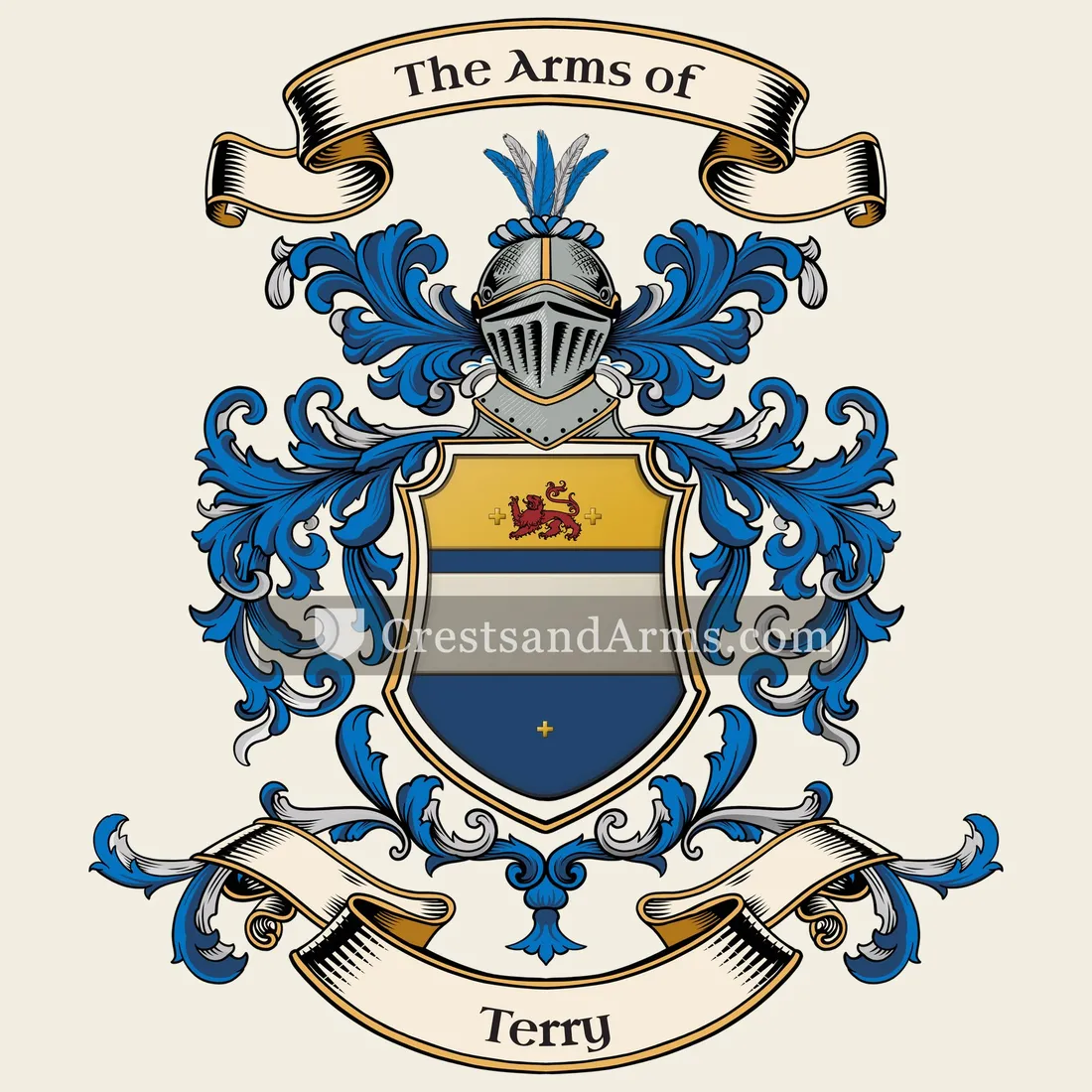
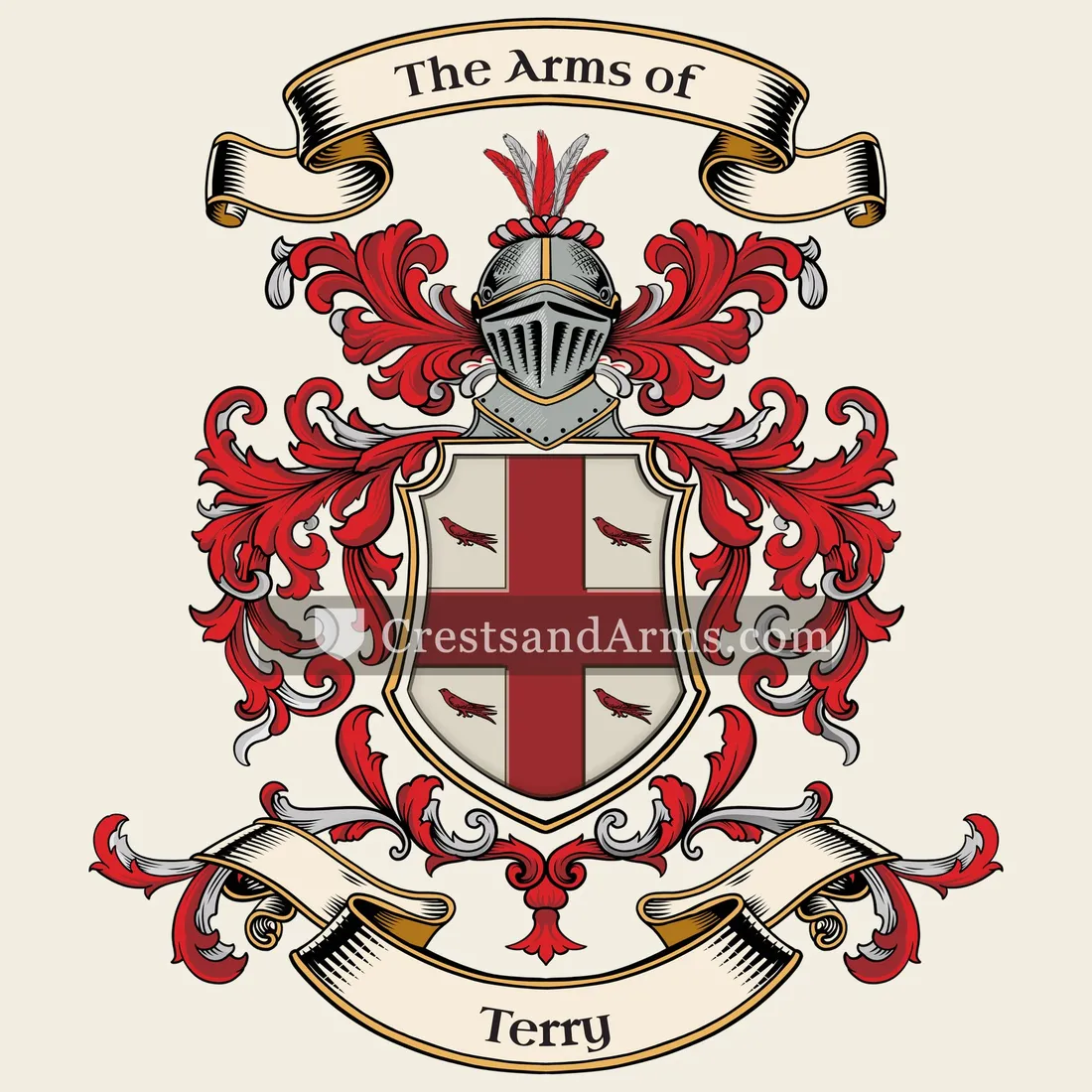
Symbols on this shield
fessThe military belt, and readiness to serve
cross symbolChristian faith and service
chiefAuthority, wisdom and dominion
lionCourage, strength and royalty
Colours
Blue (Azure)Means: Loyalty and truth
Silver (Argent)Means: Peace and sincerity
Gold (Or)Means: Generosity
Red (Gules)Means: Military strength
Historical info
Source
Sir Bernard Burke, The General Armory of England, Scotland, Ireland and Wales, London: Harrison & Sons, 1884
Blazon (the actual original written record)
“Az. a fess ar. betw. three crosses crosslet or, on a chief of the last a demi lion ramp. gu”
CorkBaghyoghis · Cork, c. 1645
Digital archive packCoat of arms PNG, gold border print PDF, vector SVG and the certificate of authenticity. Sent to your email in minutes.
Map of Ireland showing where the Terry arms are recorded
The Terry arms were recorded in Cork, c. 1645.
Cork was the largest county in Ireland, with a great harbour and a wide farming hinterland. Both English settlers and older Irish families held land there, and holding land is what brought a family into the records.
This is where the arms were entered in the register. Families often moved to other parts of the country, so the same name can turn up in more than one region.
The body that granted and recorded arms in Ireland in this period.
Charles I of England
Sovereign of the period
Charles I of England
1625–1649
Reigning in Spain when the Terry arms are first recorded.
How Arms Worked in Ireland
The Ulster King of Arms granted coats of arms to individuals who proved their social standing and good character. These symbols were typically inherited by all legitimate descendants of the original holder. If a family branch wanted a unique look, they could apply for a specific change to their design through the office to ensure their identity remained distinct.
Granting authority
The Ulster King of Arms acted as the official body that regulated and issued all coats of arms throughout Ireland.
How they got arms
Families obtained their arms through formal grants issued by the office after proving their eligibility and paying the required fees.
Where arms were recorded
All official grants were recorded in the registers held by the Ulster King of Arms starting from the year 1552.
The family's standing
Recorded among the armigerous families of Cork.
Origin & History of the Terry Family in Ireland
The Terry family established a significant presence in County Cork by the mid-seventeenth century, where they became prominent figures in the social and economic life of the region. By 1645, members of the family were deeply integrated into the merchant class of Cork City, often serving in municipal roles and participating in the active trade networks that connected Ireland to continental Europe. The name itself is thought to be an anglicized version of older Gaelic surnames, or it may have arrived in Ireland through Norman settlers who moved across the Irish Sea during the medieval period. Regardless of its exact linguistic origin, the family successfully navigated the complex political shifts of the 1600s by maintaining strong ties to the urban centers of the south. Their influence during this era was defined by their involvement in local governance and their ability to adapt to the changing landscape of seventeenth-century Ireland.
Terry Meaning & Related Branches
Root word
Theodoricus
A Germanic name meaning ruler of the people.
This name
TerryDerived from a diminutive form of names starting with Theod, signifying a powerful leader or ruler.
also spelled
Terrey
Terrie
Related arms
Tirrysimilar arms
Terreyvariant spelling
Ayalarecorded with Terry, same area
Floriorecorded with Terry, same area
Documented Sources
Sir Bernard Burke, The General Armory of England, Scotland, Ireland and Wales, London: Harrison & Sons, 1884
O'Connor, Patrick, The Irish in Spain, 1999
Archivo General de Simancas, Secretaría de Estado, Legajo 2453
Archivo Histórico Nacional, Sección de Estado, Expedientes de la Orden de Carlos III
Digital archive packCoat of arms PNG, gold border print PDF, vector SVG and the certificate of authenticity. Sent to your email in minutes.


 cross symbolChristian faith and service
 martletA younger son, who must win his own land
 cross symbolChristian faith and service
 martletA younger son, who must win his own land


 fessThe military belt, and readiness to serve
 chiefAuthority, wisdom and dominion
 lionCourage, strength and royalty