Map of Portugal showing where the Texeira arms are recorded
The Texeira arms were recorded in Portugal, c. 1706.
Arms such as these were typically recorded in Lisboa.
Lisbon was the seat of the Portuguese crown and the port its wealth came through. Families made rich by trade and by service to the king took arms, and the crown's heralds recorded them there.
This is where the arms were entered in the register. Families often moved to other parts of the country, so the same name can turn up in more than one region.
The body that granted and recorded arms in Portugal in this period.
Peter II of Portugal
Sovereign of the period
Peter II of Portugal
1683–1706
Reigning in Portugal when the Texeira arms are first recorded.
How Arms Worked in Portugal
In Portugal, a coat of arms was a family possession that passed from a father to his children. Every legitimate descendant had the right to use the family shield without needing to change it. Younger branches of the family kept the original design, though they sometimes added small symbols to distinguish their specific line from the main branch.
Granting authority
The Cartório da Nobreza acted as the official body that managed and regulated noble titles and coats of arms in Portugal.
How they got arms
Families typically inherited their arms through bloodline, though they could also receive new grants from the crown for distinguished service.
Where arms were recorded
Coats of arms were officially recorded in the books of the Cartório da Nobreza starting in the year 1512.
The family's standing
Recorded among the armigerous families of Portugal.
Origin & History of the Texeira Family in Portugal
The surname Teixeira is a topographic name that originated in the northern regions of Portugal, derived from the Portuguese word *teixo*, which refers to the yew tree. In the early centuries of the kingdom, families often adopted names based on the natural landmarks or trees found on their ancestral lands. By the time members of the family were documented in Lisboa in 1706, the name had already spread from its rural roots into the urban centers of the Portuguese empire. During the eighteenth century, Lisboa was a bustling hub of trade and administration, and families like the Teixeiras were often part of the growing professional or merchant classes that helped sustain the city. Their presence in the capital during this era suggests a transition from local landholders to citizens integrated into the broader social and economic life of the Portuguese nation.
Coat of Arms & Family Crest Details
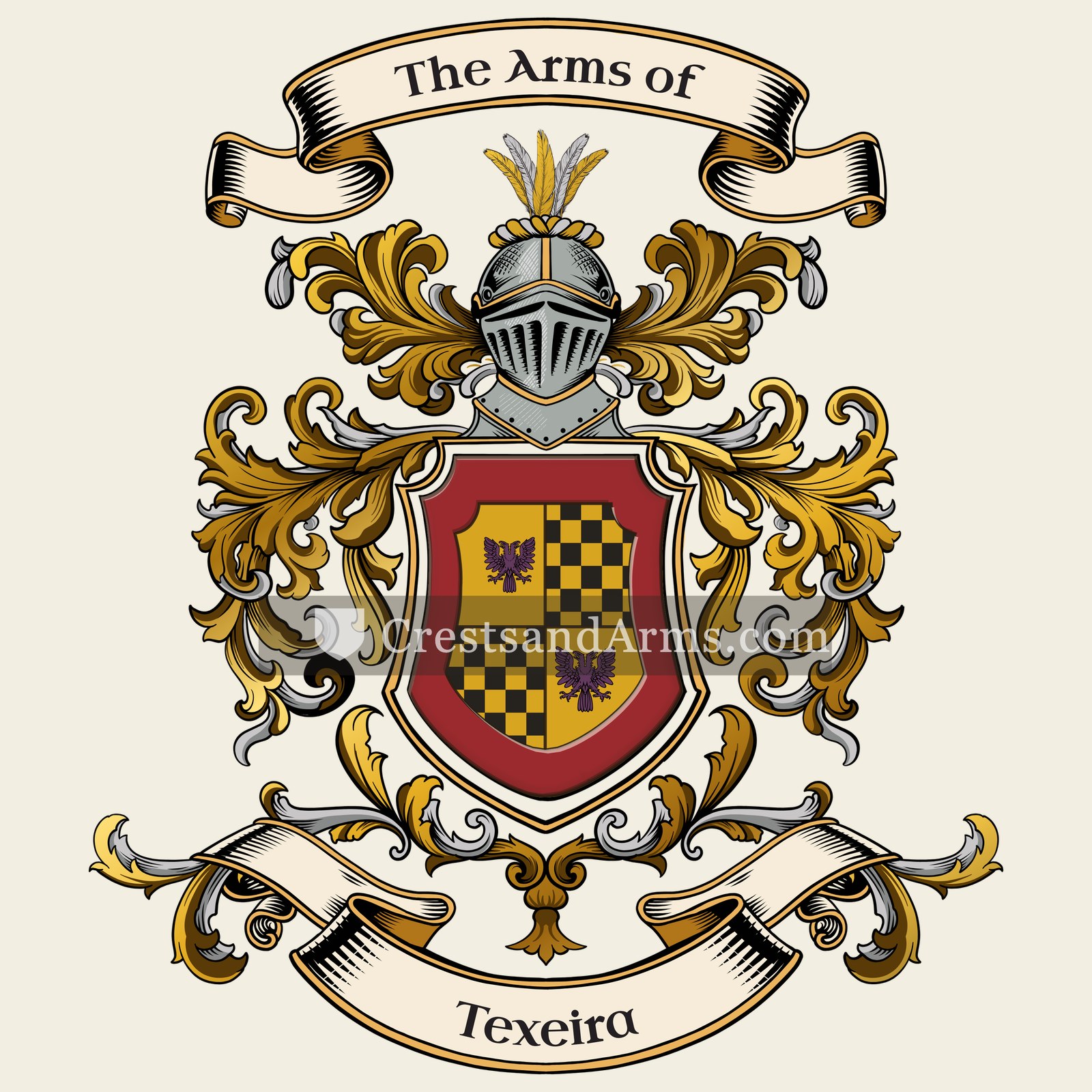
Symbols on this shield
chequyConstancy, and the counting-board
eagleNobility, strength and a keen mind
Colours
Gold (Or)Means: Generosity
Red (Gules)Means: Military strength
Purple (Purpure)Means: Royal majesty
Historical info
Source
J. B. Rietstap, Armorial Général, Gouda: G. B. van Goor Zonen, 1884–87
Blazon (the actual original written record)
“Ec.: aux 1 et 4 d'or à l'aigle de pourpre; aux 2 et 3 échiq. d'or et de sa., de seize points. L'écu entouré d'une bord. de gu., ch. de huit S d'arg. C.: cinq pl. d'aut. de sa., d'or, de gu., d'arg. et de sa. L.: à dextre d'or, de gu. et de sa.; à sen. d'arg., de gu. et de sa. [V. Sampayo.]”
NetherlandsAmsterdam, c. 1815
Digital archive packCoat of arms PNG, gold border print PDF, vector SVG and the certificate of authenticity. Sent to your email in minutes.
Map of Netherlands showing where the Texeira arms are recorded
The Texeira arms were recorded in Amsterdam, c. 1815.
This is where the arms were entered in the register. Families often moved to other parts of the country, so the same name can turn up in more than one region.
Region
Amsterdam
Town
Amsterdam
First recorded
1815
Granting Authority for the Texeira Arms
Hoge Raad van Adel
Photograph made by me · CC BY-SA 3.0
The body that granted and recorded arms in Netherlands in this period.
William I of the Netherlands
Sovereign of the period
William I of the Netherlands
1815–1840
Reigning in Portugal when the Texeira arms are first recorded.
How Arms Worked in Netherlands
In the Netherlands, coats of arms were often used by noble families and those who held specific public offices. These arms were passed down through the generations to legitimate descendants. Younger branches of a family usually kept the original design without needing to add special marks. This system ensured that the family identity remained clear and consistent over many years.
Granting authority
The Hoge Raad van Adel is the official body that regulates and manages noble titles and coats of arms in the Netherlands.
How they got arms
Families typically obtained their coats of arms through official royal grants or by proving their long-standing historical use of the symbols.
Where arms were recorded
Coats of arms are officially recorded in the registers held by the Hoge Raad van Adel, which began its work in 1814.
The family's standing
Recorded among the armigerous families of Netherlands.
Origin & History of the Texeira Family in Netherlands
The history of the Texeira family in the Netherlands is deeply connected to the vibrant trade and migration patterns of the early nineteenth century. By 1815, members of the family were firmly established in Amsterdam, a city that served as a major global hub for commerce and cultural exchange. During this period, the family name became associated with the city's growing merchant class, as many individuals with this surname participated in the economic recovery that followed the Napoleonic Wars. The presence of the Texeira family in Amsterdam reflects a broader trend of families moving to the Netherlands to seek new opportunities in finance and international shipping. As they integrated into Dutch society, they contributed to the urban development of the capital while maintaining the distinct identity associated with their name. Their documented presence in 1815 provides a clear starting point for tracing how the family adapted to the social and economic shifts occurring in the Netherlands during the nineteenth century.
Texeira Meaning & Related Branches
Root word
Taxus
Latin term for the yew tree.
This name
TexeiraA topographic name for someone who lived near a yew tree or a yew forest.
also spelled
Teixeiras
Teixeir
Tayshera
Tayshira
Documented Sources
J. B. Rietstap, Armorial Général, Gouda: G. B. van Goor Zonen, 1884–87
Machado, José Pedro. Dicionário Onomástico Etimológico da Língua Portuguesa. 1981
Arquivo Nacional da Torre do Tombo. Registos Paroquiais de Lisboa. 1706
Digital archive packCoat of arms PNG, gold border print PDF, vector SVG and the certificate of authenticity. Sent to your email in minutes.


 cross symbolChristian faith and service
 cross symbolChristian faith and service
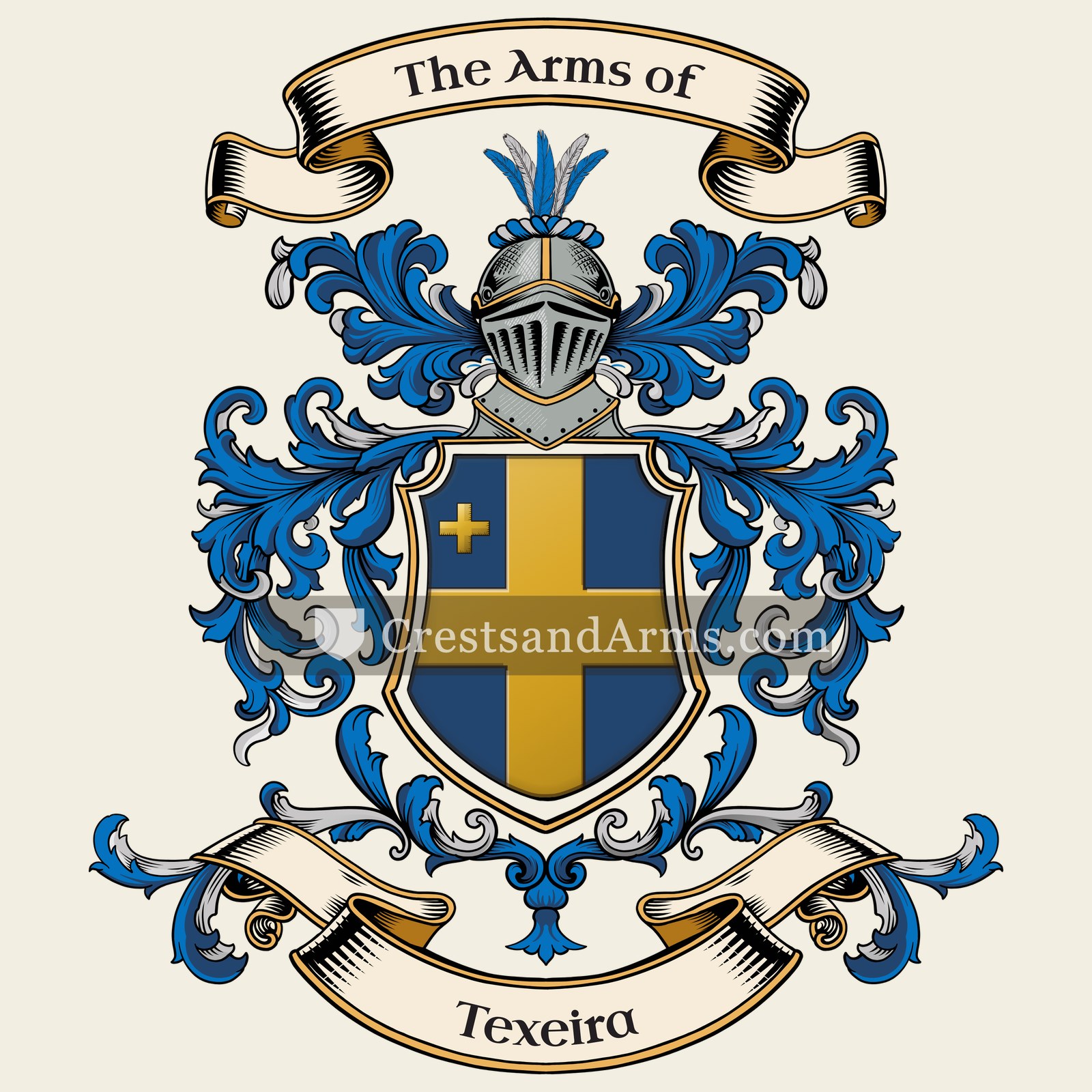


 chequyConstancy, and the counting-board
 eagleNobility, strength and a keen mind