Map of France showing where the Thibeault arms are recorded
The Thibeault arms were recorded in Flandre, c. 1663.
Flandre grew rich on cloth, and its towns were among the busiest in Europe. Merchant families bought land with their profits and took arms to go with it, so trade put as many names in the registers here as land did.
This is where the arms were entered in the register. Families often moved to other parts of the country, so the same name can turn up in more than one region.
The body that granted and recorded arms in France in this period.
Louis XIV of France
Sovereign of the period
Louis XIV of France
1643–1715
Reigning in France when the Thibeault arms are first recorded.
How Arms Worked in France
In France, a coat of arms was a mark of honor that passed down through the male line to all legitimate descendants. Families often used the same shield without changes to show their shared heritage. If a branch wanted to stand out, they could add a small mark to their shield to show their specific place in the family tree.
Granting authority
The Juge d'armes de France acted as the official authority that regulated and verified coats of arms across the country.
How they got arms
Families typically inherited their arms from ancestors, though they could also receive them through royal grants or by proving their noble status.
Where arms were recorded
Coats of arms were officially recorded in the Armorial Général de France, which began its main collection in the year 1696.
The family's standing
Recorded among the armigerous families of Flandre.
Origin & History of the Thibeault Family in France
The surname Thibeault originates from the ancient Germanic personal name Theudobald, which combines the elements for people and bold. Over many centuries, this name evolved through various linguistic shifts in France to become a common identifier for families. By the mid-seventeenth century, the name was well-established in the northern region of Flandre. Historical records confirm that members of the Thibeault family were active in this area by 1663. During this period, families in northern France often lived in close-knit communities defined by agriculture and trade. The movement of these individuals across the region was frequently documented through parish registers and local administrative papers. These early records provide a clear link between the family and the social landscape of seventeenth-century France.
Meaning of the Thibeault family crest colors & symbols
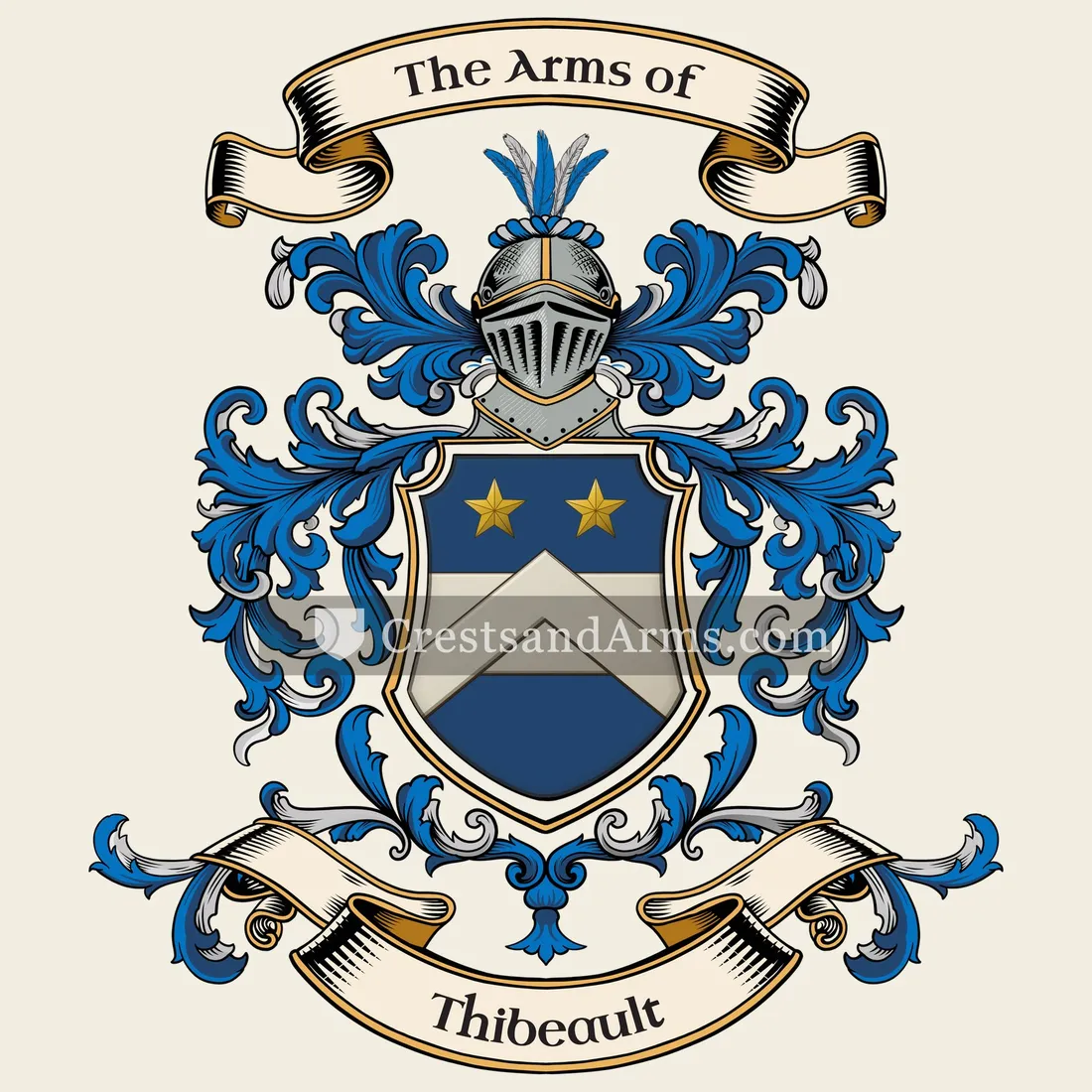
Symbols on this shield
fessThe military belt, and readiness to serve
chevronProtection, and faithful service completed
mulletThe third son, and a divine quality from above
Colours
Blue (Azure)Means: Loyalty and truth
Silver (Argent)Means: Peace and sincerity
Gold (Or)Means: Generosity
Historical info
Source
J. B. Rietstap, Armorial Général, Gouda: G. B. van Goor Zonen, 1884–87
Blazon (the actual original written record)
“D'azur à la fasce d'arg., acc. en chef de deux étoiles d'or et en p. d'un chev. du sec. C.: une étoile d'or, entre un vol à l'antique.”
BelgiumYpres, c. 1737
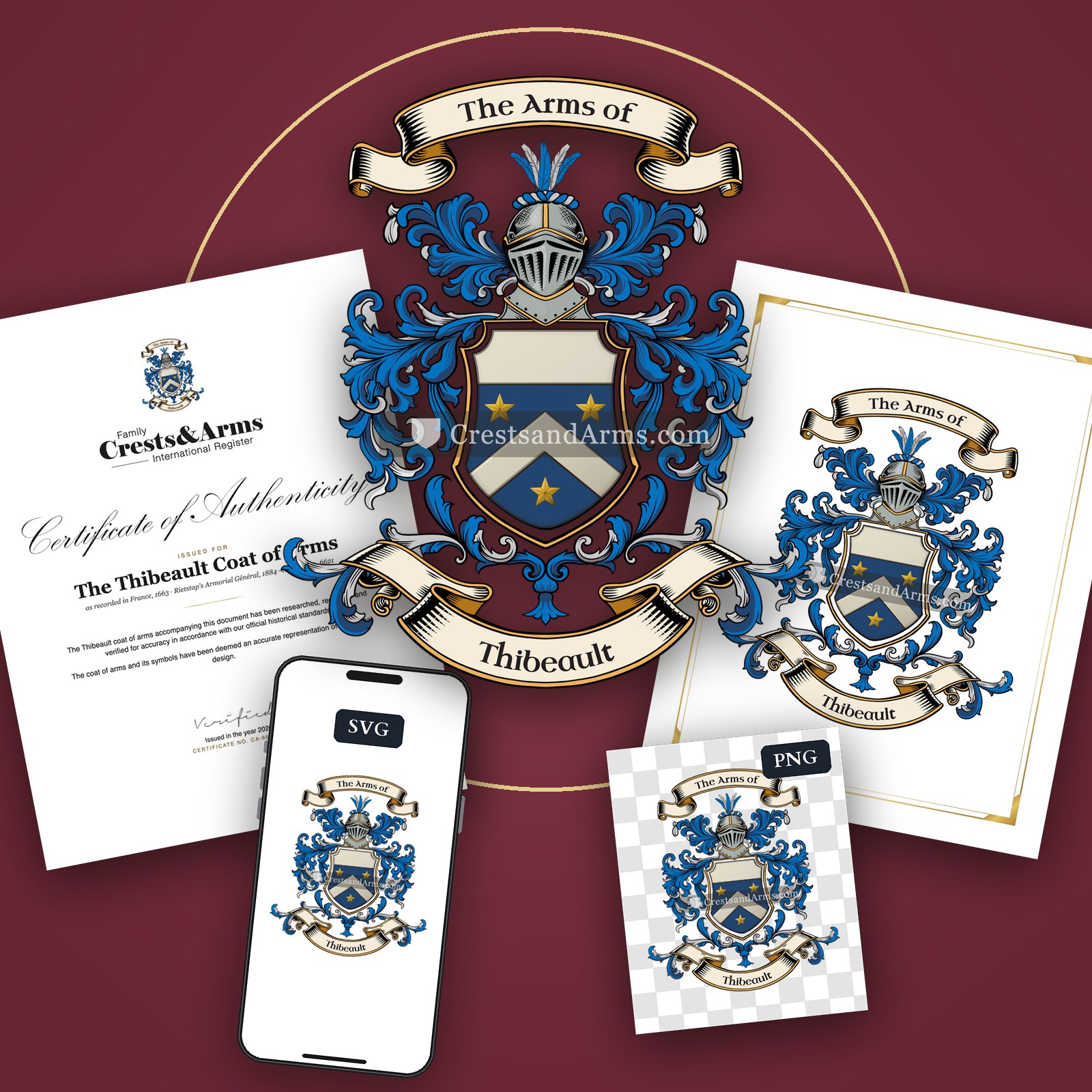
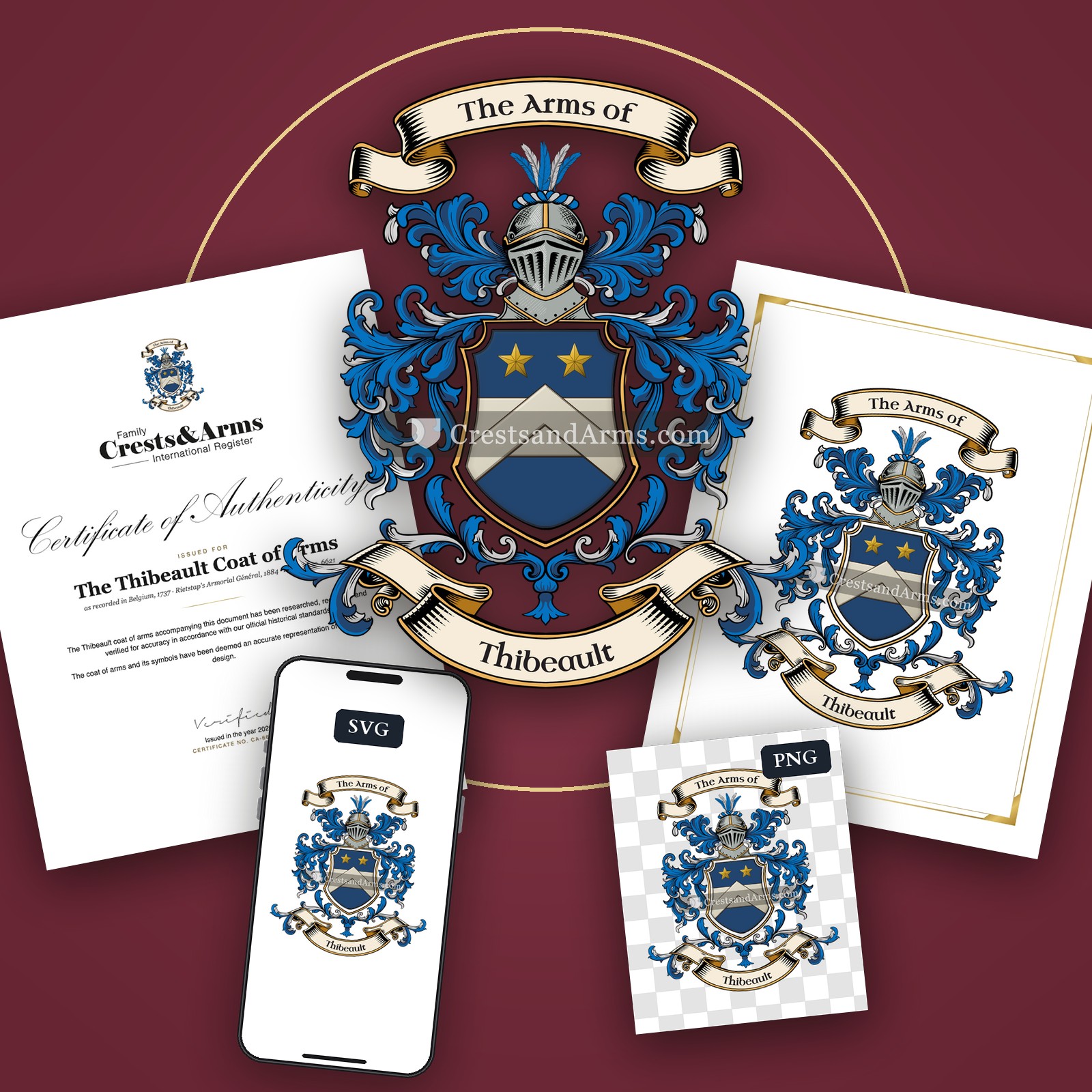
Digital archive packCoat of arms PNG, gold border print PDF, vector SVG and the certificate of authenticity. Sent to your email in minutes.
Map of Belgium showing where the Thibeault arms are recorded
The Thibeault arms were recorded in Ypres, c. 1737.
This is where the arms were entered in the register. Families often moved to other parts of the country, so the same name can turn up in more than one region.
The body that granted and recorded arms in Belgium in this period.
Charles VI, Holy Roman Emperor
Sovereign of the period
Charles VI, Holy Roman Emperor
1711–1740
Reigning in France when the Thibeault arms are first recorded.
How Arms Worked in Belgium
In Belgium, a coat of arms is considered personal property that is passed down through the male line to legitimate descendants. Families often use the same shield design across generations to show their shared heritage. If a branch of the family wants to change the design, they must apply for an official update to their specific version of the arms.
Granting authority
The Conseil héraldique is the official body that regulates and approves all coats of arms in Belgium.
How they got arms
Families obtain their coats of arms through formal royal grants or by confirming their historical right to use existing designs.
Where arms were recorded
All approved coats of arms are officially recorded in the public registers of the Conseil héraldique since 1844.
The family's standing
Recorded among the armigerous families of Belgium.
Origin & History of the Thibeault Family in Belgium
The surname Thibeault traces its roots to the Germanic name Theudobald, which combines the elements for people and bold. By the time the family established a documented presence in the historic city of Ypres in 1737, the name had evolved through centuries of linguistic shifts in the Low Countries. During the eighteenth century, Ypres served as a vital center for the textile trade and regional administration. Families like the Thibeaults often held roles within the local merchant class or artisanal guilds that defined the city’s economy. Living in a strategic hub like Ypres meant that the family was likely influenced by the constant movement of people and goods across the border regions of modern-day Belgium and France. This environment shaped the family’s identity as they navigated the social and economic changes of the Enlightenment era. Their presence in the city records reflects a period where the family was firmly integrated into the urban fabric of Flanders.
Thibeault Meaning & Related Branches
Root word
Theobald
Derived from the Germanic elements meaning people and bold or brave.
This name
ThibeaultA French patronymic surname signifying a descendant of someone named Theobald.
also spelled
Thibaut
Teebo
Tibo
Documented Sources
J. B. Rietstap, Armorial Général, Gouda: G. B. van Goor Zonen, 1884–87
Dauzat, Albert. Dictionnaire étymologique des noms et prénoms de France. 1951
Morlet, Marie-Thérèse. Dictionnaire étymologique des noms de famille. 1991
Digital archive packCoat of arms PNG, gold border print PDF, vector SVG and the certificate of authenticity. Sent to your email in minutes.


 chevronProtection, and faithful service completed
 chiefAuthority, wisdom and dominion
 mulletThe third son, and a divine quality from above
 chevronProtection, and faithful service completed
 chiefAuthority, wisdom and dominion
 mulletThe third son, and a divine quality from above
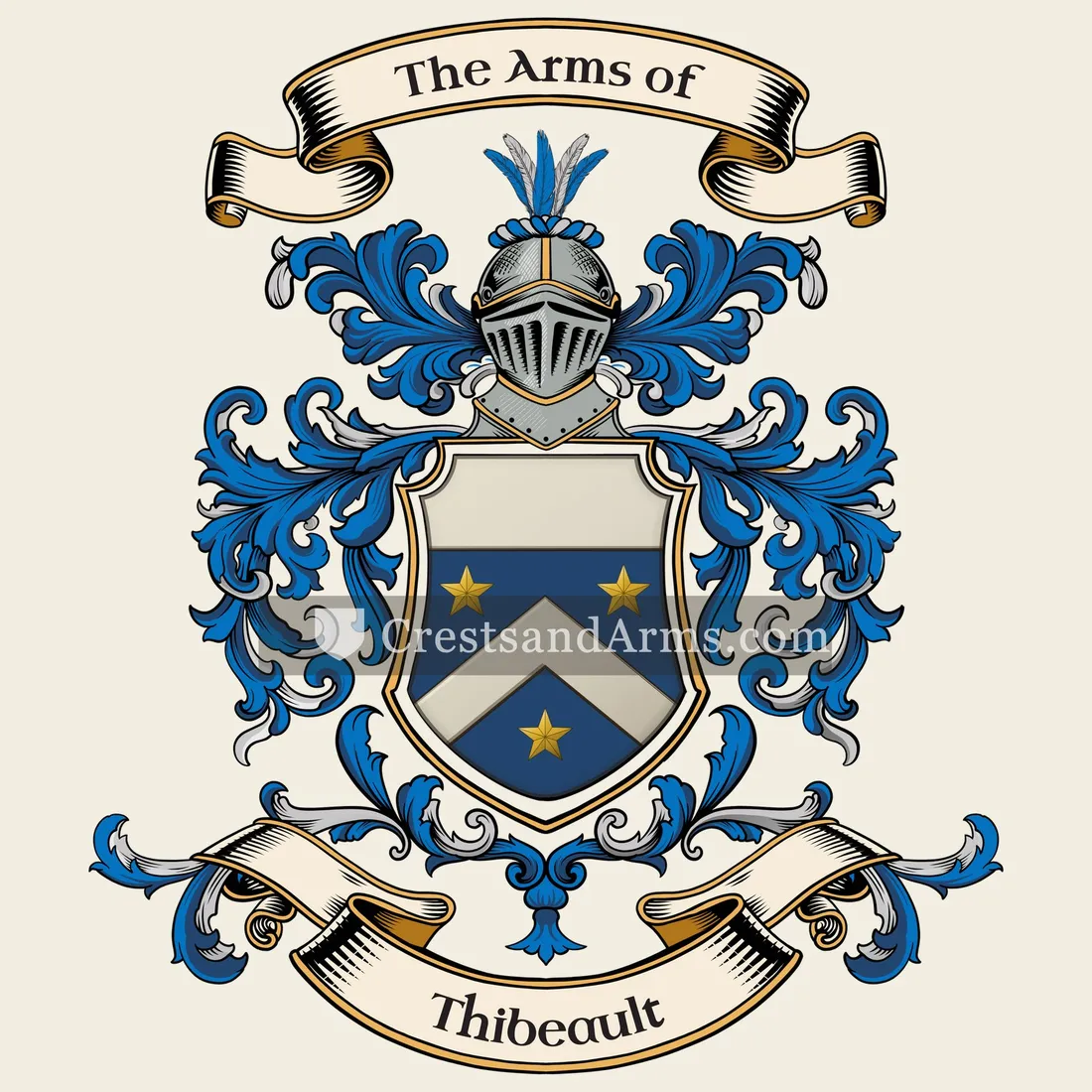


 fessThe military belt, and readiness to serve