Map of Netherlands showing where the Thierry arms are recorded
The Thierry arms were recorded in Netherlands, c. 1815.
Arms such as these were typically recorded in Friesland.
Friesland was low, wet country on the northern coast of the Netherlands, farmed by families who had held the same land for centuries. Free landholders were unusually common there, and a free landholder could carry arms.
This is where the arms were entered in the register. Families often moved to other parts of the country, so the same name can turn up in more than one region.
Region
Friesland
First recorded
1815
Granting Authority for the Thierry Arms
Hoge Raad van Adel
Photograph made by me · CC BY-SA 3.0
The body that granted and recorded arms in Netherlands in this period.
William I of the Netherlands
Sovereign of the period
William I of the Netherlands
1815–1840
Reigning in Netherlands when the Thierry arms are first recorded.
How Arms Worked in Netherlands
In the Netherlands, coats of arms were often used by noble families and those who held specific public offices. These arms were passed down through the generations to legitimate descendants. Younger branches of a family usually kept the original design without needing to add special marks. This system ensured that the family identity remained clear and consistent over many years.
Granting authority
The Hoge Raad van Adel is the official body that regulates and manages noble titles and coats of arms in the Netherlands.
How they got arms
Families typically obtained their coats of arms through official royal grants or by proving their long-standing historical use of the symbols.
Where arms were recorded
Coats of arms are officially recorded in the registers held by the Hoge Raad van Adel, which began its work in 1814.
The family's standing
Recorded among the armigerous families of Netherlands.
Origin & History of the Thierry Family in Netherlands
The family name Thierry has deep roots in European history, originating as a variation of the Germanic name Theodoric, which translates to ruler of the people. While the name is often associated with French origins, its presence in the Netherlands became firmly established by the early 19th century. Records confirm that members of the Thierry family were living in the province of Friesland by 1815, a period marked by significant administrative changes as the Netherlands transitioned into a unified kingdom. During this time, the Dutch government began standardizing civil registrations, which required families to formally document their surnames for the first time. The presence of the Thierry name in the northern region of Friesland suggests that these ancestors were part of the broader movement of people across European borders, likely settling in the area for trade or professional opportunities. By integrating into the local Frisian community, the family became part of the unique cultural and linguistic landscape of the northern Netherlands, carrying a name that reflects a long history of leadership and migration.
Meaning of the Thierry family crest colors & symbols
Symbols on this shield
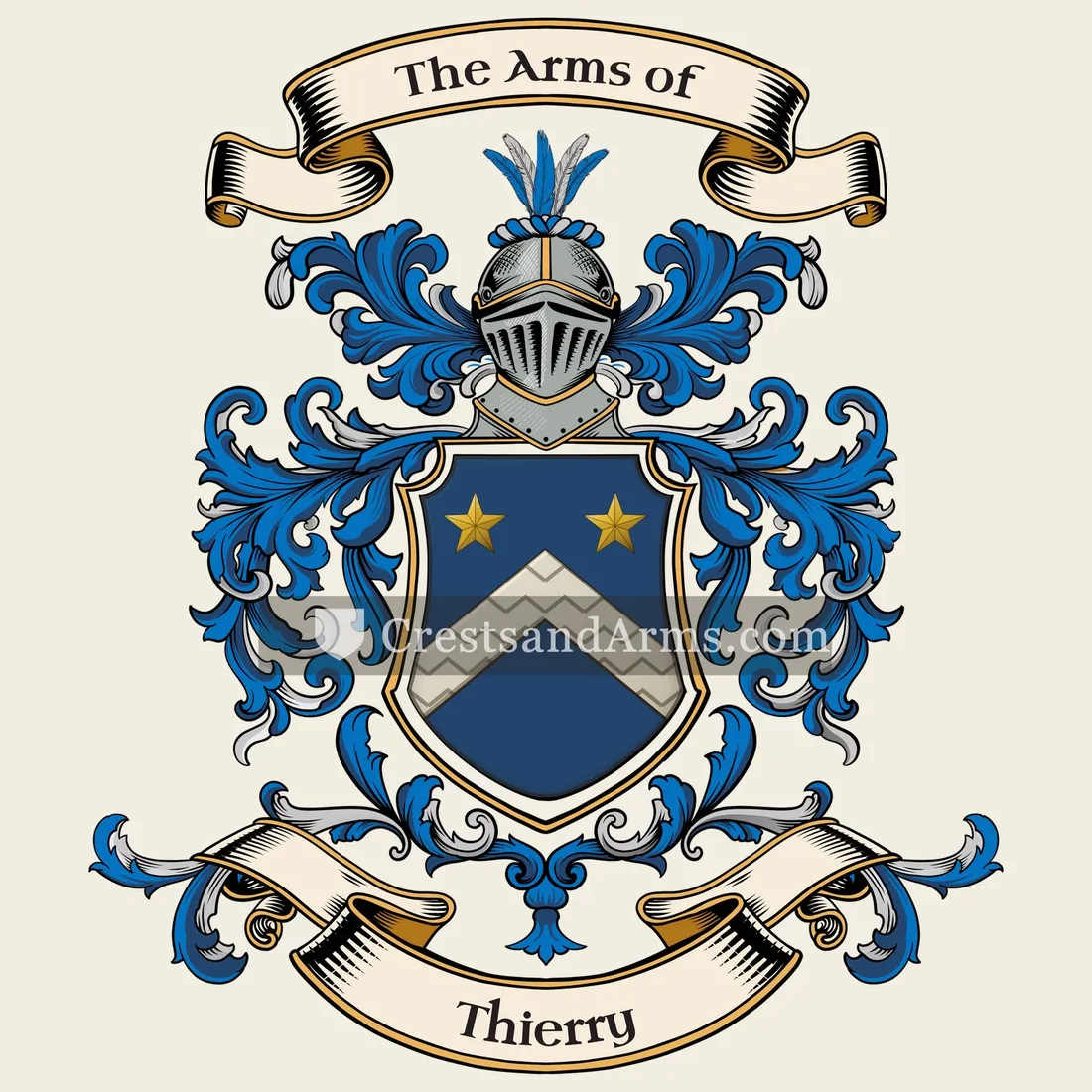
chevronProtection, and faithful service completed
mulletThe third son, and a divine quality from above
Colours
Blue (Azure)Means: Loyalty and truth
Silver (Argent)Means: Peace and sincerity
Gold (Or)Means: Generosity
Historical info
Source
J. B. Rietstap, Armorial Général, Gouda: G. B. van Goor Zonen, 1884–87
Blazon (the actual original written record)
“D'azur au chev. d'arg., acc. en chef de deux étoiles d'or et en p.”
Belgiumc. 1606
Digital archive packCoat of arms PNG, gold border print PDF, vector SVG and the certificate of authenticity. Sent to your email in minutes.
Map of Belgium showing where the Thierry arms are recorded
The Thierry arms were recorded in Belgium, c. 1606.
Arms such as these were typically recorded in Brabant.
Brabant lay at the heart of the Low Countries, where the trade routes met. Its towns were wealthy and its landowners many, and both kinds of family kept arms, which is why the region is so heavily represented.
This is where the arms were entered in the register. Families often moved to other parts of the country, so the same name can turn up in more than one region.
The body that granted and recorded arms in Belgium in this period.
Philip III of Spain
Sovereign of the period
Philip III of Spain
1598–1621
Reigning in Netherlands when the Thierry arms are first recorded.
How Arms Worked in Belgium
In Belgium, a coat of arms is considered personal property that is passed down through the male line to legitimate descendants. Families often use the same shield design across generations to show their shared heritage. If a branch of the family wants to change the design, they must apply for an official update to their specific version of the arms.
Granting authority
The Conseil héraldique is the official body that regulates and approves all coats of arms in Belgium.
How they got arms
Families obtain their coats of arms through formal royal grants or by confirming their historical right to use existing designs.
Where arms were recorded
All approved coats of arms are officially recorded in the public registers of the Conseil héraldique since 1844.
The family's standing
Recorded among the armigerous families of Belgium.
Origin & History of the Thierry Family in Belgium
The surname Thierry traces its roots to the ancient Germanic name Theodoric, which translates to ruler of the people. By the early seventeenth century, the family had established a notable presence in the Duchy of Brabant, a region that now spans parts of modern-day Belgium. Records from 1606 confirm that members of the Thierry family were active participants in the social and economic life of this territory during a time of significant political transition. As the region navigated the complexities of the Spanish Netherlands, families like the Thierry line often served in local administrative roles or engaged in the vibrant trade networks that defined Brabant. Their endurance in the area suggests they were well-integrated into the local community, contributing to the development of the towns and villages that would eventually form the heart of the Belgian state.
Meaning of the Thierry family crest colors & symbols
Symbols on this shield
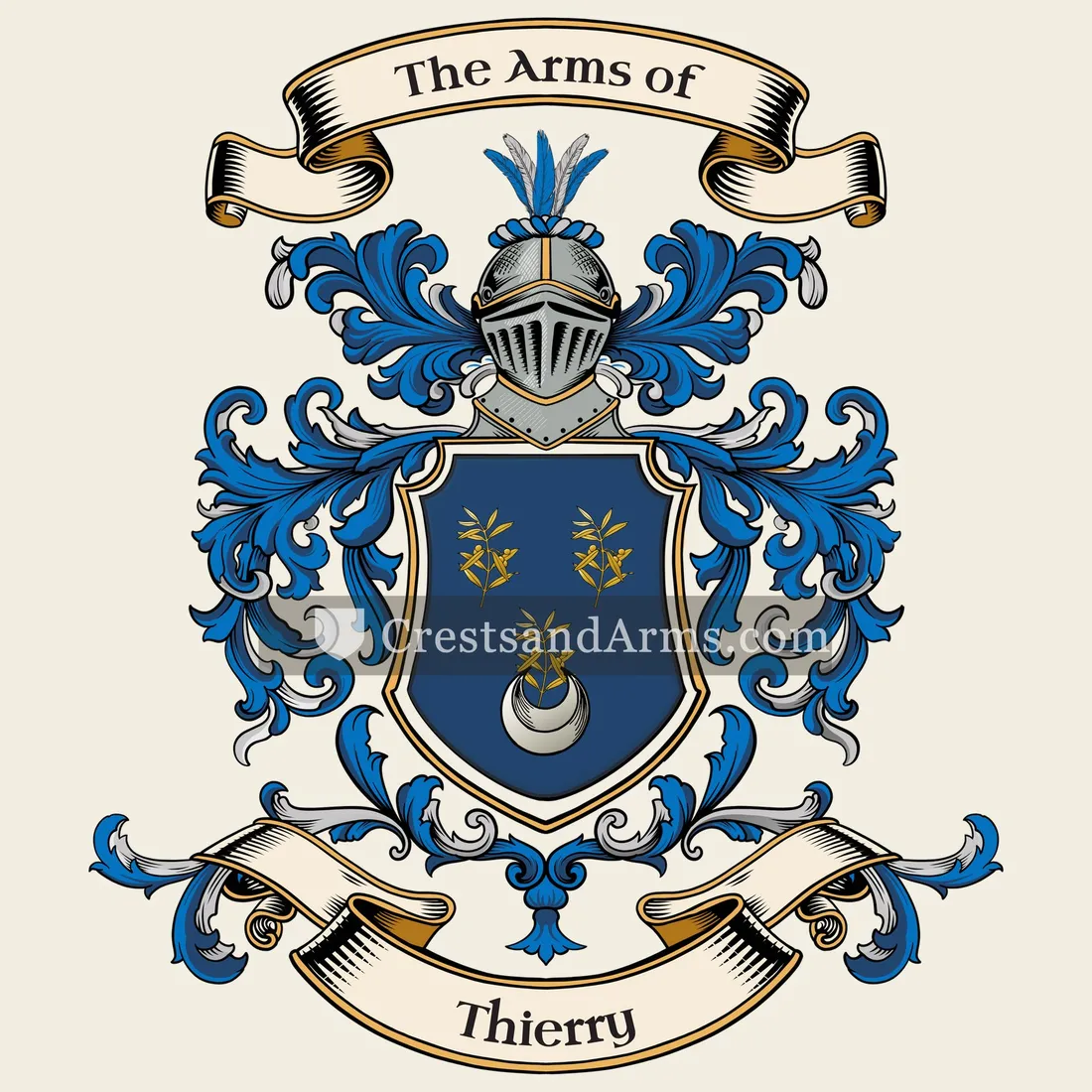
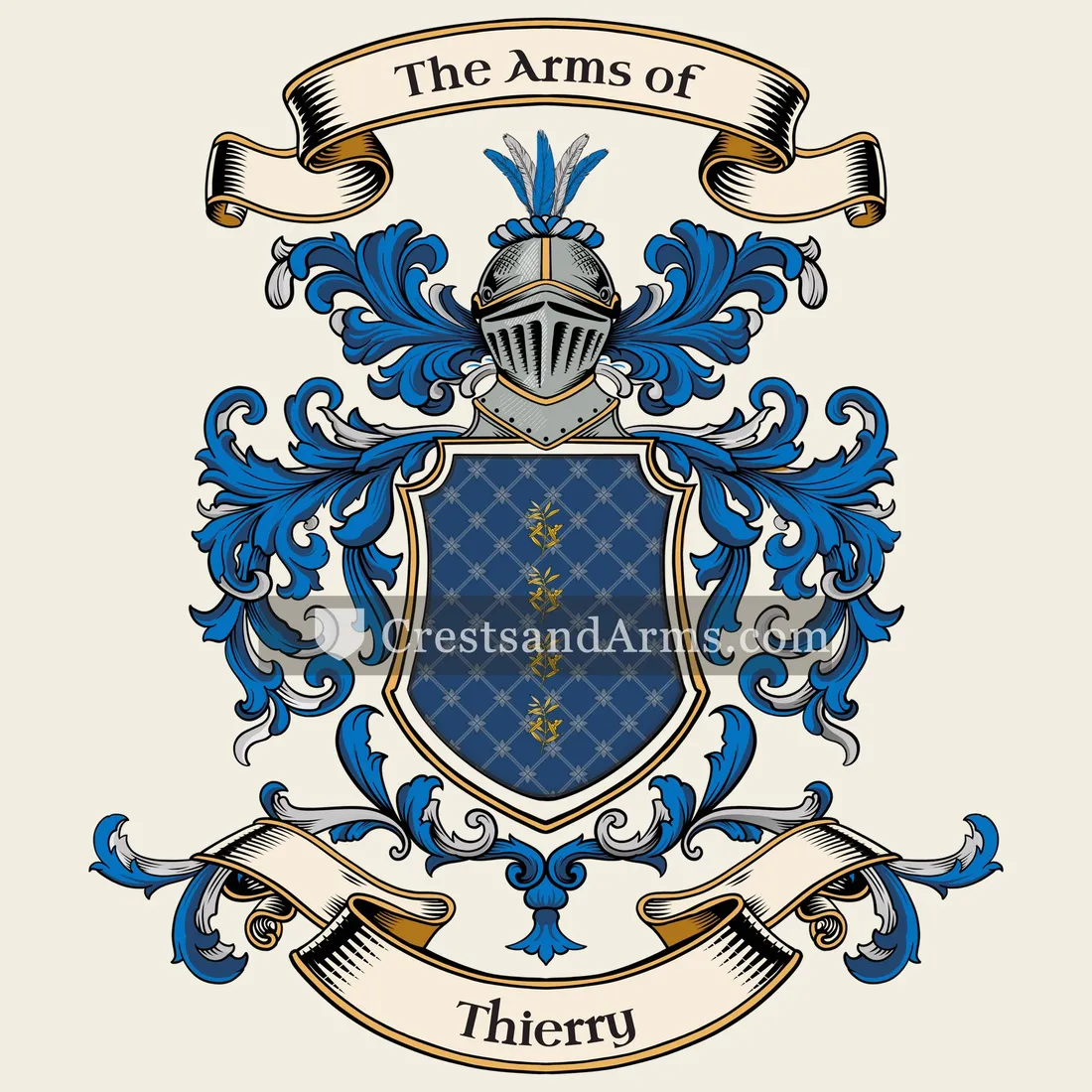
branchPeace, and new growth
crescentHonour by the sovereign, and the second son
Colours
Blue (Azure)Means: Loyalty and truth
Gold (Or)Means: Generosity
Silver (Argent)Means: Peace and sincerity
Historical info
Source
J. B. Rietstap, Armorial Général, Gouda: G. B. van Goor Zonen, 1884–87
Blazon (the actual original written record)
“D'azur à trois rameaux d'olivier d'or, acc. en p. d'un croiss. d'arg.”
Ile-de-FranceIle-de-France, c. 1663
Digital archive packCoat of arms PNG, gold border print PDF, vector SVG and the certificate of authenticity. Sent to your email in minutes.
Map of France showing where the Thierry arms are recorded
The Thierry arms were recorded in Ile-de-France, c. 1663.
Ile-de-France is the country around Paris, and proximity to the court mattered. Families who served the crown were rewarded with land near it, and land near the capital carried arms almost as a matter of course.
This is where the arms were entered in the register. Families often moved to other parts of the country, so the same name can turn up in more than one region.
The body that granted and recorded arms in France in this period.
Louis XIV of France
Sovereign of the period
Louis XIV of France
1643–1715
Reigning in Netherlands when the Thierry arms are first recorded.
How Arms Worked in France
In France, a coat of arms was a mark of honor that passed down through the male line to all legitimate descendants. Families often used the same shield without changes to show their shared heritage. If a branch wanted to stand out, they could add a small mark to their shield to show their specific place in the family tree.
Granting authority
The Juge d'armes de France acted as the official authority that regulated and verified coats of arms across the country.
How they got arms
Families typically inherited their arms from ancestors, though they could also receive them through royal grants or by proving their noble status.
Where arms were recorded
Coats of arms were officially recorded in the Armorial Général de France, which began its main collection in the year 1696.
The family's standing
Recorded among the armigerous families of Ile-de-France.
Origin & History of the Thierry Family in France
The name Thierry traces its roots to the ancient Germanic name Theodoric, which translates to ruler of the people. By the time the family established a documented presence in the Île-de-France region in 1663, the name had become deeply integrated into the social fabric of northern France. During this period, the Île-de-France served as the political and cultural heart of the kingdom under the reign of Louis XIV. Families like the Thierrys were often part of the hardworking tiers état, or third estate, which included skilled tradespeople, farmers, and local administrators who kept the region running. Because the name was derived from a popular royal and saintly figure, it was widely adopted across different social classes, allowing the family to blend into the bustling life of the French countryside and growing towns. Their presence in this specific region suggests they were part of the stable population that witnessed the transformation of France into a centralized absolute monarchy during the seventeenth century.
Thierry Meaning & Related Branches
Root word
Theodoric
Derived from Germanic elements meaning people and ruler.
This name
ThierryA French and Dutch variant signifying a ruler of the people.
also spelled
Thieri
Tierry
Teeree
Related arms
Thierivariant spelling
Thieryvariant spelling
Documented Sources
J. B. Rietstap, Armorial Général, Gouda: G. B. van Goor Zonen, 1884–87
Tresoar (Fries Historisch en Letterkundig Centrum), Burgerlijke Stand van Friesland
Digital archive packCoat of arms PNG, gold border print PDF, vector SVG and the certificate of authenticity. Sent to your email in minutes.


 branchPeace, and new growth
 branchPeace, and new growth


 chevronProtection, and faithful service completed
 mulletThe third son, and a divine quality from above


 crescentHonour by the sovereign, and the second son