Map of Netherlands showing where the Torso arms are recorded
The Torso arms were recorded in Netherlands, c. 1815.
Arms such as these were typically recorded in Friesland.
Friesland was low, wet country on the northern coast of the Netherlands, farmed by families who had held the same land for centuries. Free landholders were unusually common there, and a free landholder could carry arms.
This is where the arms were entered in the register. Families often moved to other parts of the country, so the same name can turn up in more than one region.
Region
Friesland
First recorded
1815
Granting Authority for the Torso Arms
Hoge Raad van Adel
Photograph made by me · CC BY-SA 3.0
The body that granted and recorded arms in Netherlands in this period.
William I of the Netherlands
Sovereign of the period
William I of the Netherlands
1815–1840
Reigning in Netherlands when the Torso arms are first recorded.
How Arms Worked in Netherlands
In the Netherlands, coats of arms were often used by noble families and those who held specific public offices. These arms were passed down through the generations to legitimate descendants. Younger branches of a family usually kept the original design without needing to add special marks. This system ensured that the family identity remained clear and consistent over many years.
Granting authority
The Hoge Raad van Adel is the official body that regulates and manages noble titles and coats of arms in the Netherlands.
How they got arms
Families typically obtained their coats of arms through official royal grants or by proving their long-standing historical use of the symbols.
Where arms were recorded
Coats of arms are officially recorded in the registers held by the Hoge Raad van Adel, which began its work in 1814.
The family's standing
Recorded among the armigerous families of Netherlands.
Origin & History of the Torso Family in Netherlands
The history of the Torso family in the Netherlands is rooted in the northern province of Friesland, where records confirm their presence by 1815. During this period, the region was undergoing significant administrative changes following the end of French rule and the establishment of the Kingdom of the Netherlands. Families in Friesland often lived in close-knit rural communities where surnames were tied to local geography or specific occupations. The name Torso likely emerged from these traditional naming patterns, reflecting the linguistic influences common to the Frisian people. As the Dutch government began to standardize civil registration during the early 19th century, the Torso family became part of a formal system that documented births, marriages, and deaths with new precision. This transition helped solidify the family identity within the Frisian landscape, marking their transition from local inhabitants to documented citizens of the newly formed Dutch state.
Coat of Arms & Family Crest Details
Symbols on this shield
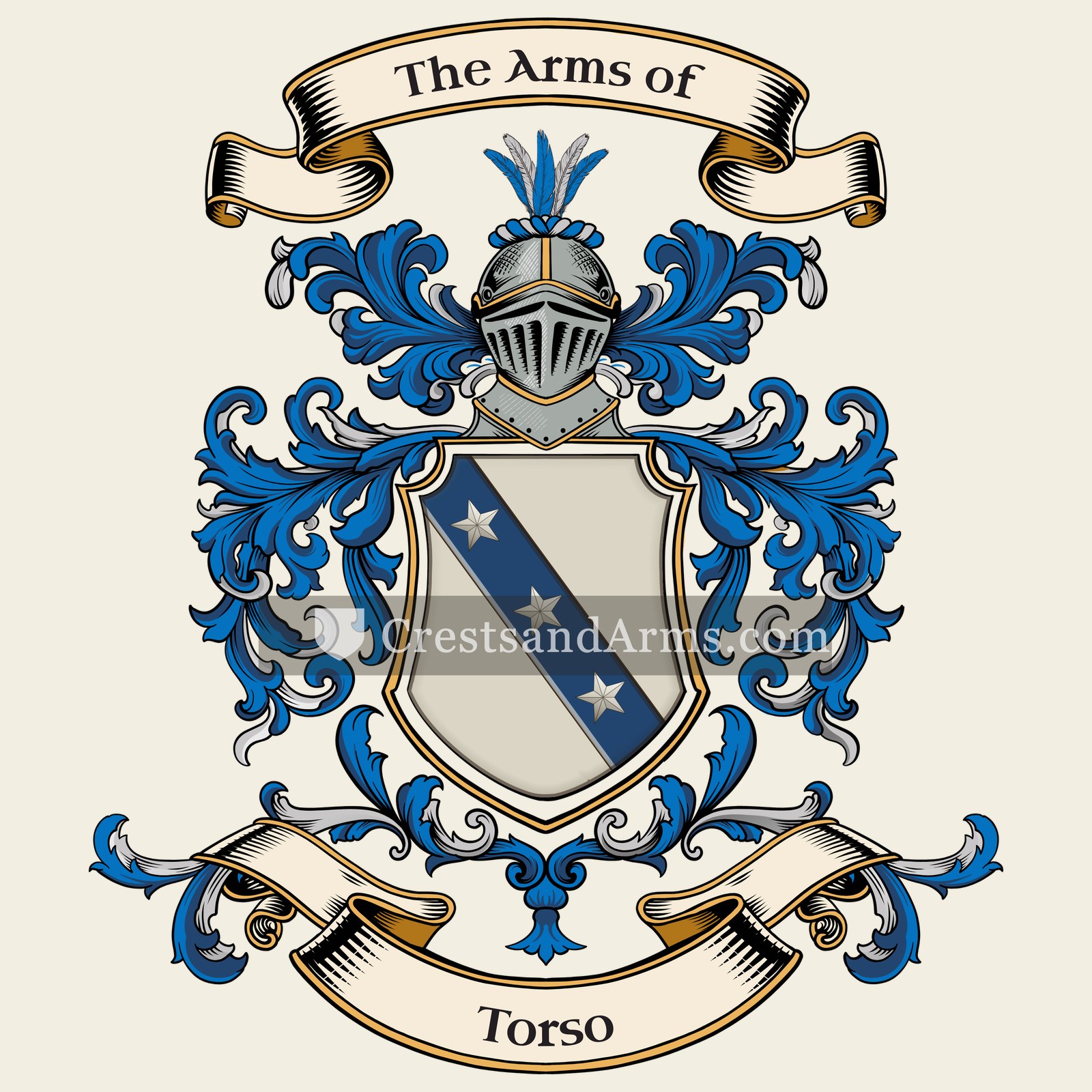
bendDefence, and the scarf of a commander
mulletThe third son, and a divine quality from above
Colours
Silver (Argent)Means: Peace and sincerity
Blue (Azure)Means: Loyalty and truth
Historical info
Source
Sir Bernard Burke, The General Armory of England, Scotland, Ireland and Wales, London: Harrison & Sons, 1884
Blazon (the actual original written record)
“Ar. on a bend az. three mullets of the first”
EdinburghInverleith · Edinburgh, c. 1748
Digital archive packCoat of arms PNG, gold border print PDF, vector SVG and the certificate of authenticity. Sent to your email in minutes.
Map of Scotland showing where the Torso arms are recorded
The Torso arms were recorded in Edinburgh, c. 1748.
Edinburgh was the seat of Scotland's government, its courts and its heralds. Families with business there settled nearby, and being close to where arms were recorded is exactly why so many of them appear.
This is where the arms were entered in the register. Families often moved to other parts of the country, so the same name can turn up in more than one region.
The body that granted and recorded arms in Scotland in this period.
George II of Great Britain
Sovereign of the period
George II of Great Britain
1727–1760
Reigning in Netherlands when the Torso arms are first recorded.
How Arms Worked in Scotland
Scottish heraldry is unique because it treats a coat of arms as a piece of personal property protected by law. Only one person can own a specific design at any given time. When a family grows, the head keeps the original shield while other relatives must apply for their own distinct version with slight changes to prove their specific identity.
Granting authority
The Court of the Lord Lyon acts as the official body that regulates and controls all heraldic matters throughout Scotland.
How they got arms
Individuals obtain a legal right to their arms through a formal petition process that confirms their identity and family connection.
Where arms were recorded
All valid coats of arms are officially entered into the Public Register of All Arms and Bearings starting from 1672.
The family's standing
Recorded among the armigerous families of Edinburgh.
Origin & History of the Torso Family in Scotland
The history of the Torso family in Scotland is deeply rooted in the urban landscape of Edinburgh during the mid-eighteenth century. By 1748, records confirm that members of the family were established residents of the city, living during a time when Edinburgh was undergoing significant social and physical changes. The name itself likely originated as a descriptive nickname, a common practice in medieval naming conventions where individuals were identified by their physical build or stature. As the family integrated into the Scottish capital, they participated in the daily life of a growing mercantile center. Their presence in the city archives suggests they were part of the expanding middle class that helped shape the local economy and community life of the era. Through their documented activities in the city, the Torso family contributed to the rich tapestry of Edinburgh's historical population.
Torso Meaning & Related Branches
Root word
Thors
Derived from the Old Norse god of thunder, Thor.
This name
TorsoA patronymic surname indicating descent from a person named Thor or Thors.
also spelled
Tour
Tourse
Toursy
Toor
Toures
Documented Sources
J. B. Rietstap, Armorial Général, Gouda: G. B. van Goor Zonen, 1884–87
AlleFriezen, Burgerlijke Stand van de provincie Friesland (1811-1950)
Nationaal Archief, Registers van de Burgerlijke Stand
Tresoar, Friese familienamen: een overzicht (2005)
Meertens, P.J., De Nederlandse familienamen: ontstaan en betekenis (1947)
Digital archive packCoat of arms PNG, gold border print PDF, vector SVG and the certificate of authenticity. Sent to your email in minutes.


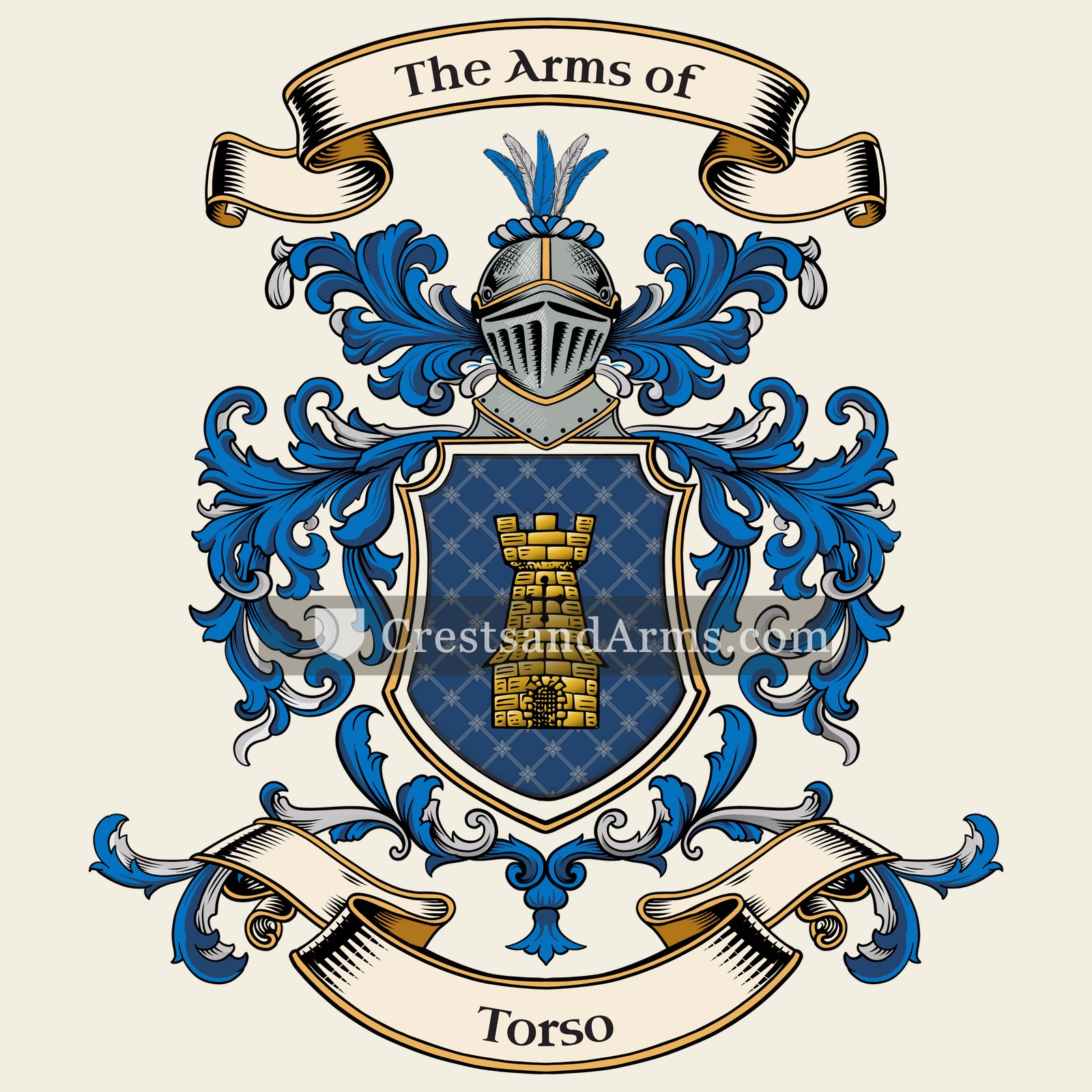
 towerGrandeur and solidity, and a stronghold defended
 towerGrandeur and solidity, and a stronghold defended


 bendDefence, and the scarf of a commander
 mulletThe third son, and a divine quality from above