Map of Netherlands showing where the Trillo arms are recorded
The Trillo arms were recorded in Netherlands, c. 1815.
Arms such as these were typically recorded in Friesland.
Friesland was low, wet country on the northern coast of the Netherlands, farmed by families who had held the same land for centuries. Free landholders were unusually common there, and a free landholder could carry arms.
This is where the arms were entered in the register. Families often moved to other parts of the country, so the same name can turn up in more than one region.
Region
Friesland
First recorded
1815
Granting Authority for the Trillo Arms
Hoge Raad van Adel
Photograph made by me · CC BY-SA 3.0
The body that granted and recorded arms in Netherlands in this period.
William I of the Netherlands
Sovereign of the period
William I of the Netherlands
1815–1840
Reigning in Netherlands when the Trillo arms are first recorded.
How Arms Worked in Netherlands
In the Netherlands, coats of arms were often used by noble families and those who held specific public offices. These arms were passed down through the generations to legitimate descendants. Younger branches of a family usually kept the original design without needing to add special marks. This system ensured that the family identity remained clear and consistent over many years.
Granting authority
The Hoge Raad van Adel is the official body that regulates and manages noble titles and coats of arms in the Netherlands.
How they got arms
Families typically obtained their coats of arms through official royal grants or by proving their long-standing historical use of the symbols.
Where arms were recorded
Coats of arms are officially recorded in the registers held by the Hoge Raad van Adel, which began its work in 1814.
The family's standing
Recorded among the armigerous families of Netherlands.
Origin & History of the Trillo Family in Netherlands
The history of the Trillo family in the Netherlands is rooted in the northern province of Friesland, where records confirm their presence by 1815. During this period, the Netherlands was undergoing significant social changes as it transitioned into the United Kingdom of the Netherlands following the Napoleonic era. The name Trillo is distinct from typical Frisian surnames, which often ended in the suffix "-ma" or "-stra" to denote family lineage. Its presence in this region suggests that the family may have been part of the mobile population of the time, perhaps arriving through trade routes or military movements that connected the northern provinces to broader European networks. By the early 19th century, the family became integrated into the local administrative systems, which required formal registration of births, marriages, and deaths under the newly standardized civil code. This documentation provides a clear starting point for tracing their lives as they established themselves within the unique cultural and linguistic landscape of the Frisian countryside.
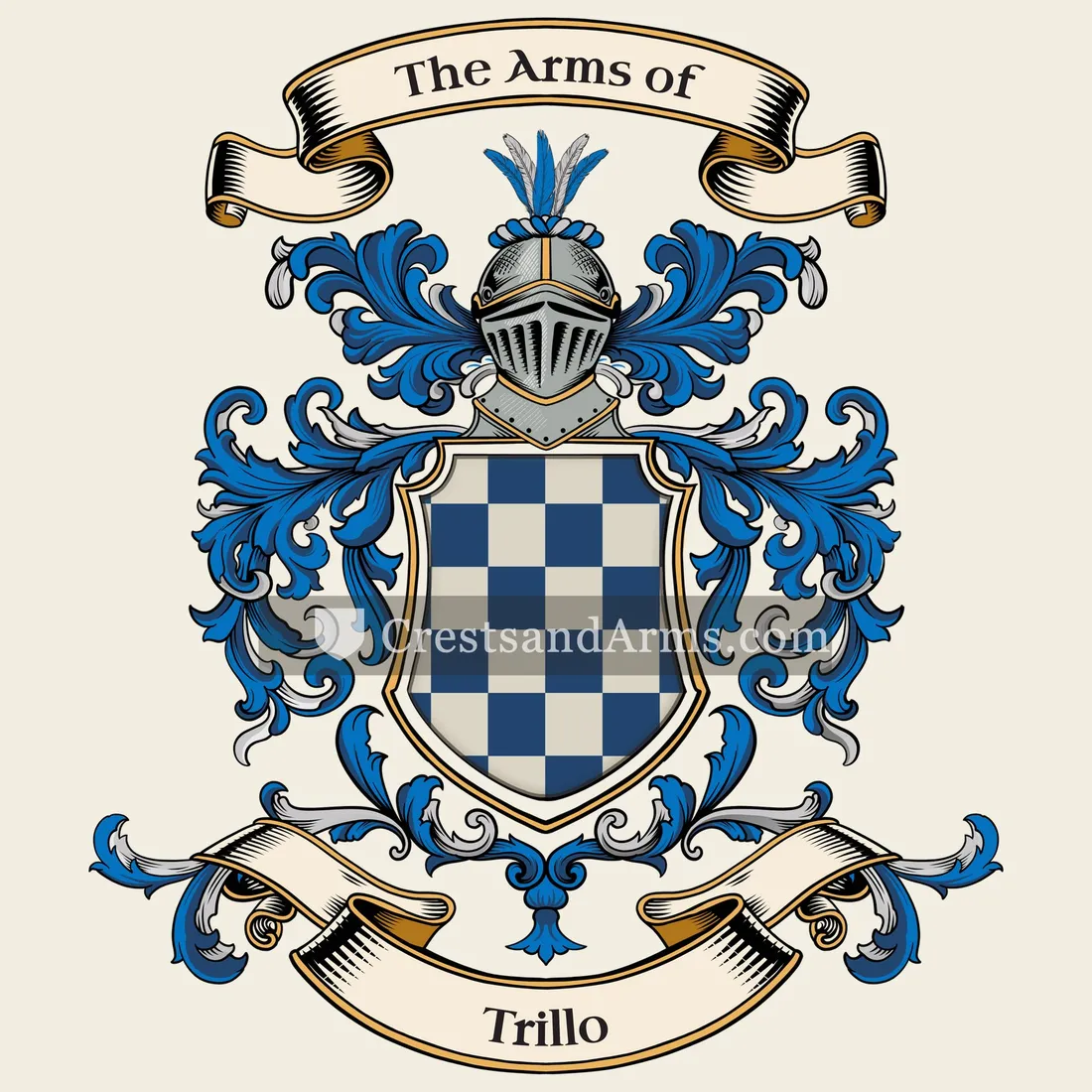
Meaning of the Trillo family crest colors & symbols
Symbols on this shield
chequyConstancy, and the counting-board
Colours
Silver (Argent)Means: Peace and sincerity
Blue (Azure)Means: Loyalty and truth
Historical info
Source
J. B. Rietstap, Armorial Général, Gouda: G. B. van Goor Zonen, 1884–87
Blazon (the actual original written record)
“Echiq. d'arg. et d'azur de douze points.”
CastileCastile, c. 1722
Digital archive packCoat of arms PNG, gold border print PDF, vector SVG and the certificate of authenticity. Sent to your email in minutes.
Map of Spain showing where the Trillo arms are recorded
The Trillo arms were recorded in Castile, c. 1722.
Castile was the heart of Spain and the source of most of its noble families. Land won in the long wars against the Moors was granted out to fighting men, and a man granted land was granted arms along with it.
This is where the arms were entered in the register. Families often moved to other parts of the country, so the same name can turn up in more than one region.
The body that granted and recorded arms in Spain in this period.
Philip V of Spain
Sovereign of the period
Philip V of Spain
1714–1724
Reigning in Netherlands when the Trillo arms are first recorded.
How Arms Worked in Spain
In Spain, a coat of arms was considered a form of property that belonged to the entire family line. These arms were passed down from a father to all his children equally. Younger branches of the family usually kept the original design without needing to add any special marks to distinguish their specific line.
Granting authority
The Cronista Rey de Armas was the official body that regulated and granted coats of arms throughout Spain.
How they got arms
Families often obtained their arms through royal grants or by proving their noble status to the official heraldic authority.
Where arms were recorded
Coats of arms were officially recorded in the registers of the Cronista Rey de Armas starting in 1496.
The family's standing
Recorded among the armigerous families of Castile.
Origin & History of the Trillo Family in Spain
The surname Trillo originates from the northern regions of Spain, specifically gaining prominence within the historical territory of Castile. Etymologically, the name is linked to the Spanish word "trillo," which refers to a threshing sledge used in traditional agriculture to separate grain from stalks. This suggests that the earliest families bearing this name were likely involved in the rural economy or lived in areas where grain production was the primary way of life. By the early 18th century, records confirm that the Trillo family had established a firm presence in the Castilian heartland. During this period, the family was deeply integrated into the local social fabric, often appearing in parish registers and municipal documents that tracked the movement and growth of the population. Their history reflects the broader experience of many Spanish families who transitioned from agrarian roots into the documented administrative life of the Spanish kingdom.
Trillo Meaning & Related Branches
Root word
Trillium
Latin term for a three-petaled flower or a triple grouping.
This name
TrilloA topographic surname referring to someone living near a specific three-part landmark or field.
also spelled
Tryllo
Trillio
Trillou
Trilo
Documented Sources
J. B. Rietstap, Armorial Général, Gouda: G. B. van Goor Zonen, 1884–87
Tresoar (Fries Historisch en Letterkundig Centrum), Burgerlijke Stand van Friesland (Civil Registry of Friesland), 1811–1950
H.K. Schippers, De burgerlijke stand in Friesland: Een historisch overzicht, 1988
Digital archive packCoat of arms PNG, gold border print PDF, vector SVG and the certificate of authenticity. Sent to your email in minutes.


 mulletThe third son, and a divine quality from above
 mulletThe third son, and a divine quality from above
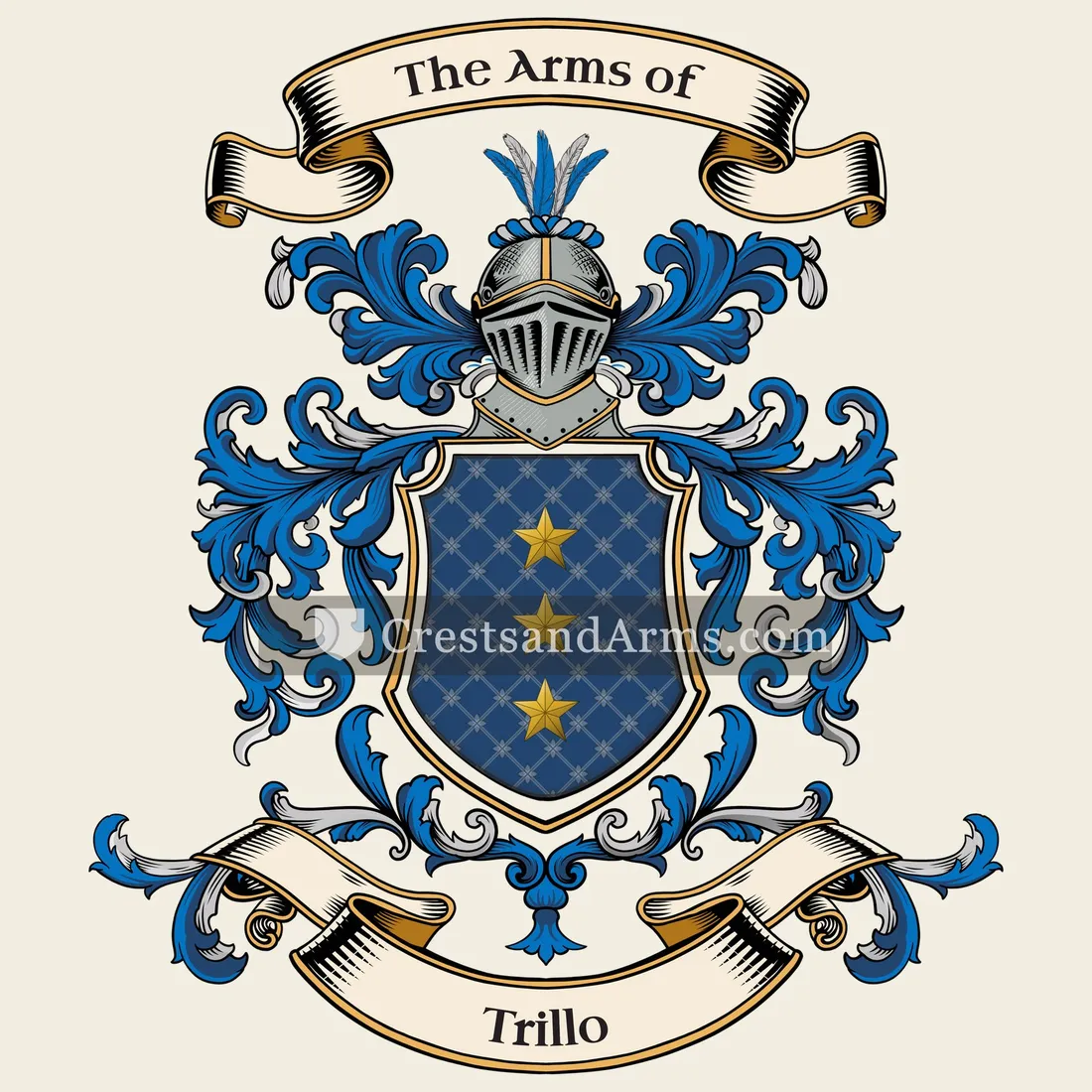


 chequyConstancy, and the counting-board