Map of Germany showing where the Ubl arms are recorded
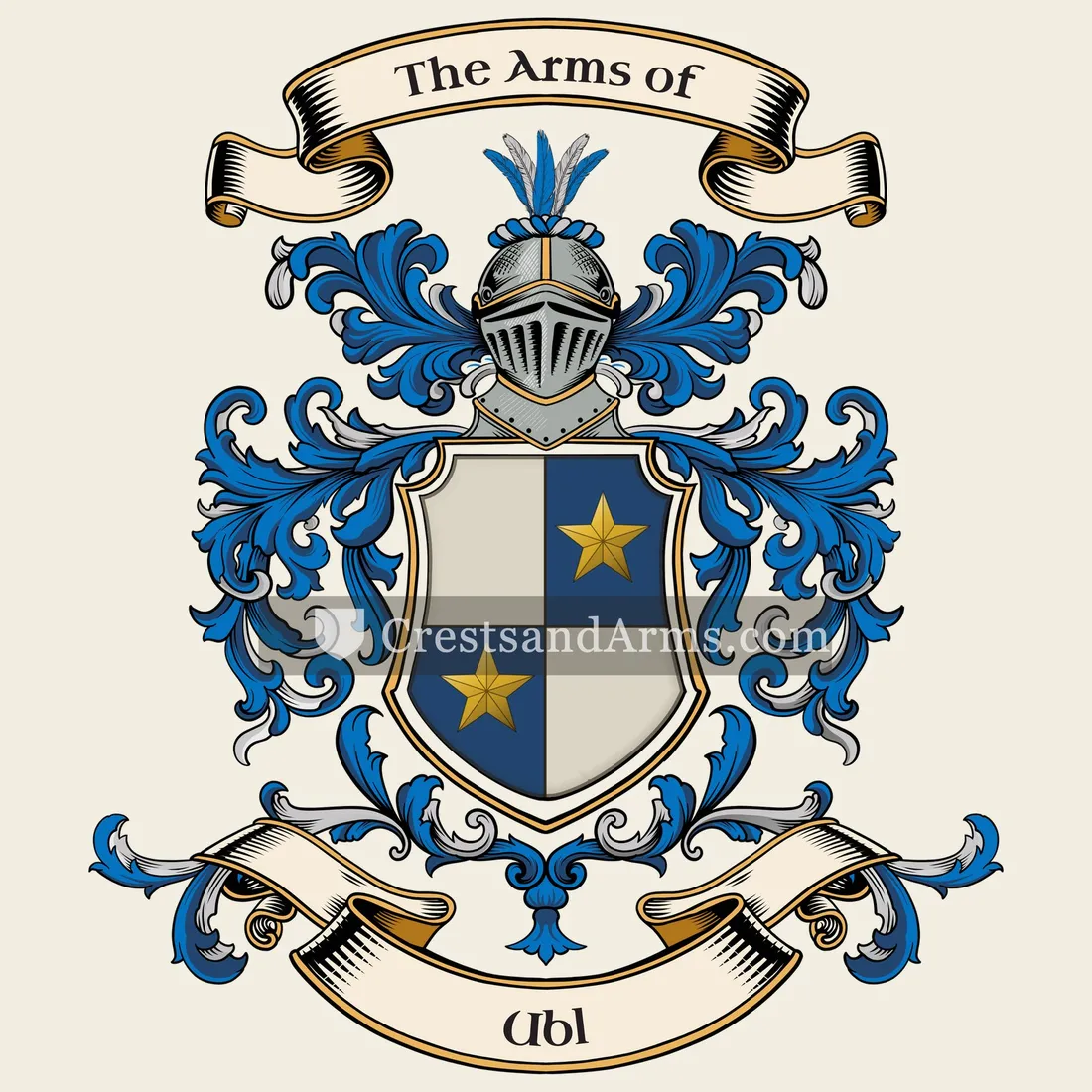
The Ubl arms were recorded in Germany, c. 1824.
Arms such as these were typically recorded in Bavaria.
Bavaria was a country of old landed families and walled market towns. Estates passed down the same line for centuries, and both the landowners and the leading townsmen kept arms, which is why so many Bavarian names sit in the registers.
This is where the arms were entered in the register. Families often moved to other parts of the country, so the same name can turn up in more than one region.
The body that granted and recorded arms in Germany in this period.
Frederick William III of Prussia
Sovereign of the period
Frederick William III of Prussia
1797–1840
Reigning in Germany when the Ubl arms are first recorded.
How Arms Worked in Germany
Prussian heraldry was strictly tied to social rank and noble status rather than being a free choice for every citizen. These symbols were treated as permanent family property that moved through the generations to all legitimate heirs. If a family branch wanted to change their design to stand out, they had to apply for official permission to alter their specific version of the shield.
Granting authority
The Prussian Heroldsamt acted as the central state office that managed and strictly controlled all noble titles and coats of arms.
How they got arms
Families usually obtained their arms through formal royal grants or by proving their long-standing noble status to the state authorities.
Where arms were recorded
All official coats of arms were kept in the rolls of the Prussian Heroldsamt, which functioned from 1706 until 1918.
The family's standing
Recorded among the armigerous families of Germany.
Origin & History of the Ubl Family in Germany
The family name Ubl is deeply rooted in the historical landscape of Bavaria, where records confirm the presence of family members as early as 1824. The name itself is considered a variant of the Middle High German word "ubel," which was often used as a descriptive nickname in medieval times. While the modern meaning of this word implies something negative, it was frequently used in historical naming conventions to describe a person who was physically small, mischievous, or perhaps someone who lived on poor-quality land. As families began to settle into permanent locations during the nineteenth century, these descriptive nicknames became fixed as hereditary surnames. By the time the 1824 records were established, the Ubl family was likely part of the rural working class or local farming communities that defined the Bavarian region. These early ancestors were part of a tradition where names were passed down through generations to track family lineage within their local parishes and village registers.
Ubl Meaning & Related Branches
Root word
Ubel
Middle High German term for evil, bad, or wicked.
This name
UblA descriptive nickname for a person considered unpleasant, ill-tempered, or morally corrupt.
also spelled
Ubel
Documented Sources
J. B. Rietstap, Armorial Général, Gouda: G. B. van Goor Zonen, 1884–87
Bahlow, Hans, Deutsches Namenlexikon: Familien- und Vornamen nach Ursprung und Sinn erklärt, 1967
Bayerisches Hauptstaatsarchiv, Kirchenbücher und Standesregister der bayerischen Pfarreien, 1824
Heintze, Albert, Die deutschen Familien-Namen: geschichtlich, geographisch, sprachlich, 1903
Digital archive packCoat of arms PNG, gold border print PDF, vector SVG and the certificate of authenticity. Sent to your email in minutes.


 mulletThe third son, and a divine quality from above
 mulletThe third son, and a divine quality from above