Map of Spain showing where the Ugarte arms are recorded
The Ugarte arms were recorded in Aragon, c. 1722.
Aragon was mountain and river country in north-eastern Spain, with a strong tradition of small independent landholders. A great many families counted as gentry there, and each one needed a shield to be told apart.
This is where the arms were entered in the register. Families often moved to other parts of the country, so the same name can turn up in more than one region.
The body that granted and recorded arms in Spain in this period.
Philip V of Spain
Sovereign of the period
Philip V of Spain
1714–1724
Reigning in Spain when the Ugarte arms are first recorded.
How Arms Worked in Spain
In Spain, a coat of arms was considered a form of property that belonged to the entire family line. These arms were passed down from a father to all his children equally. Younger branches of the family usually kept the original design without needing to add any special marks to distinguish their specific line.
Granting authority
The Cronista Rey de Armas was the official body that regulated and granted coats of arms throughout Spain.
How they got arms
Families often obtained their arms through royal grants or by proving their noble status to the official heraldic authority.
Where arms were recorded
Coats of arms were officially recorded in the registers of the Cronista Rey de Armas starting in 1496.
The family's standing
Recorded among the armigerous families of Aragon.
Origin & History of the Ugarte Family in Spain
The surname Ugarte originates from the Basque language, which is spoken in the northern regions of Spain. The name is derived from the words "ugar," meaning water or a river, and "te," which acts as a suffix indicating a place or location. Therefore, the name historically described a family that lived near a river or a stream. By the early 18th century, members of the Ugarte family had established a presence in the Kingdom of Aragon. During this period, families often moved across Spanish provinces for work, military service, or to manage land holdings. The presence of the family in Aragon by 1722 suggests they were part of the broader migration patterns that defined the social structure of Spain at that time. These early ancestors were likely landowners or local officials who integrated into the regional economy while maintaining their Basque linguistic roots.
Coat of Arms & Family Crest Details
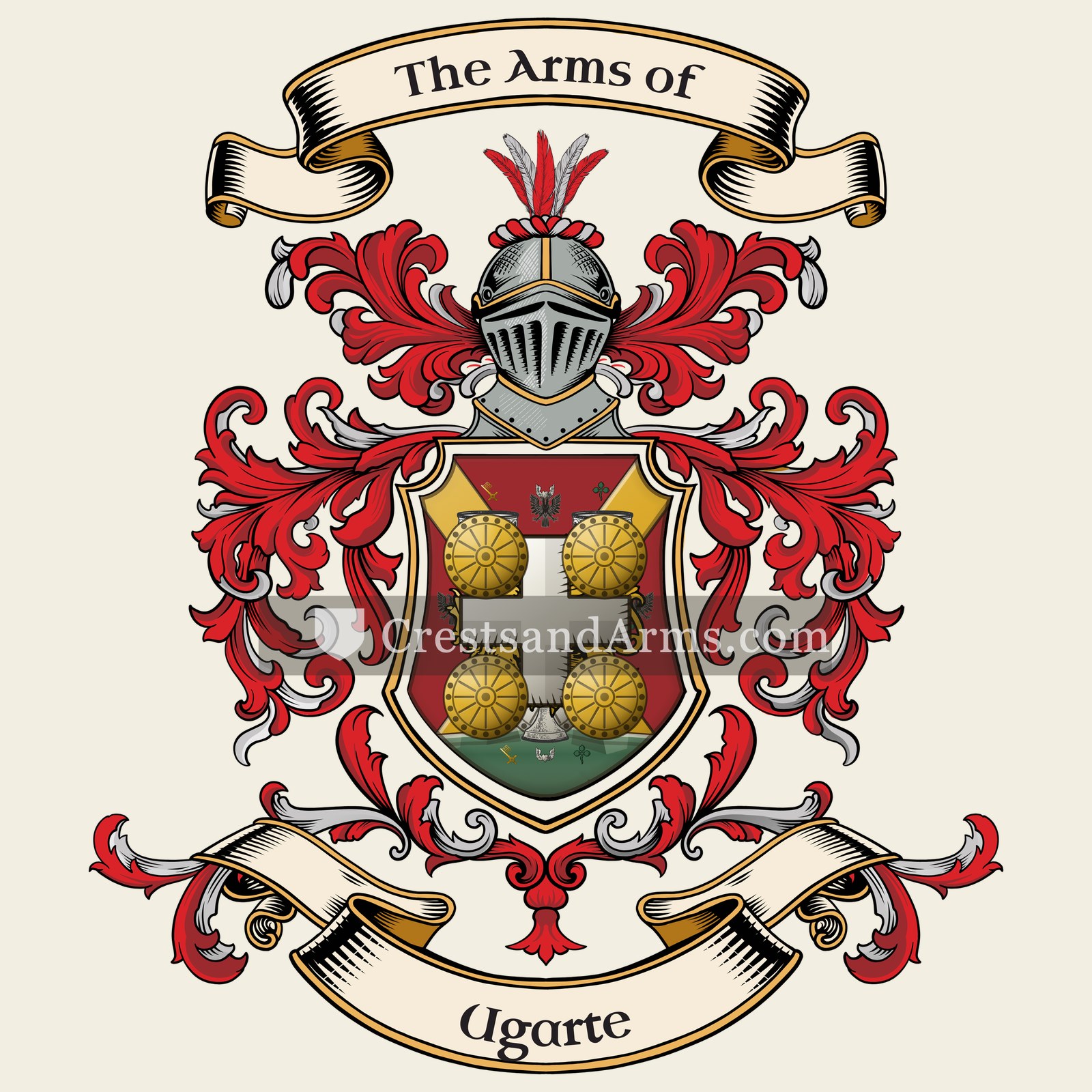
Symbols on this shield
saltireResolution, and St Andrew's cross
mountThe ground held, and steadfastness upon it
cross symbolChristian faith and service
keyGuardianship, and the office of a steward
heartSincerity, charity and true affection
escutcheonA shield within a shield, and a claim inherited
trefoilPerpetuity, and the Trinity
eagleNobility, strength and a keen mind
ramLeadership and authority
roundelA coin, and one who has been to the crusades
cupFaith, office, and a trust discharged
griffinValour and vigilance, guarding great treasure
Colours
Red (Gules)Means: Military strength
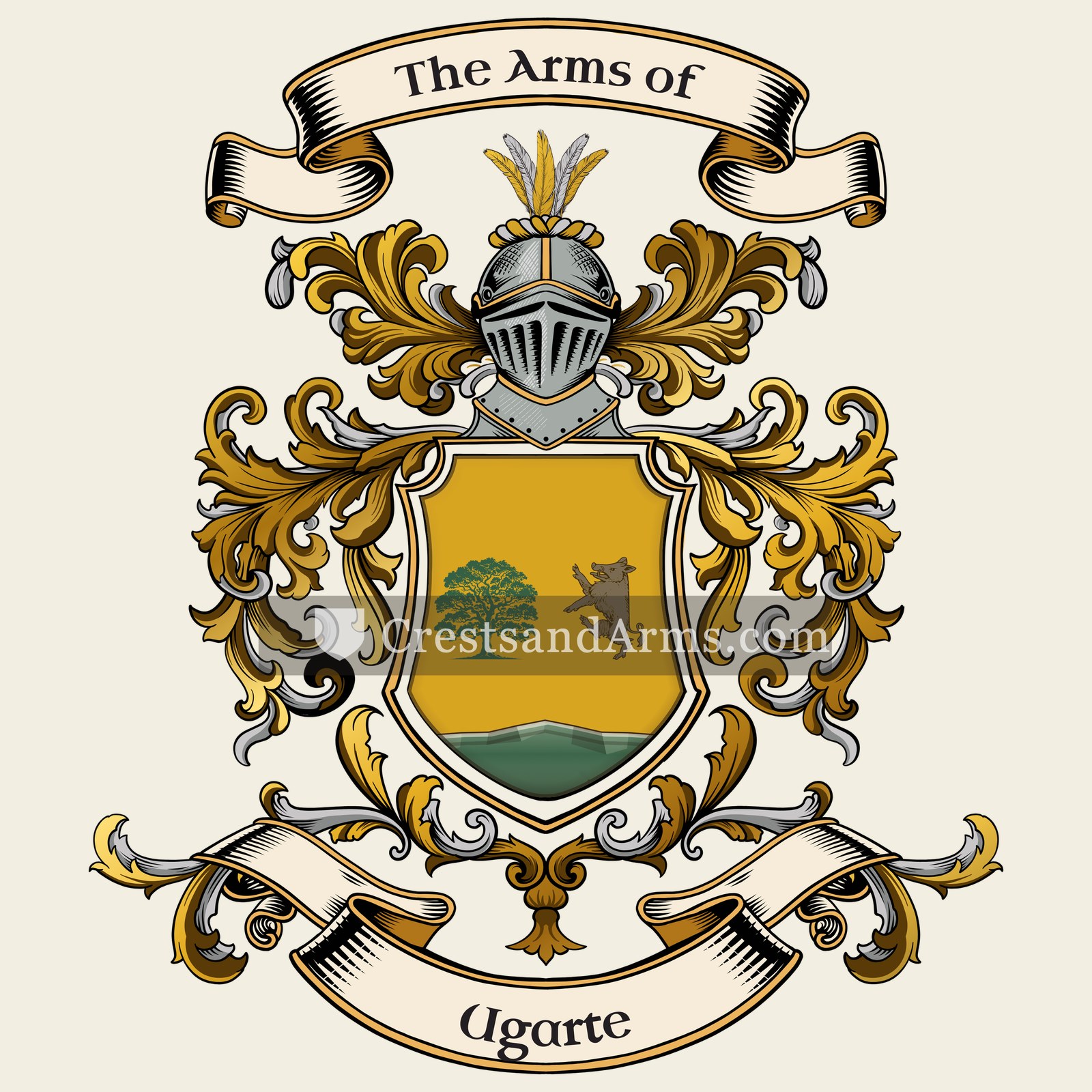
Gold (Or)Means: Generosity
Green (Vert)Means: Hope
Black (Sable)Means: Constancy
Silver (Argent)Means: Peace and sincerity
Historical info
Source
J. B. Rietstap, Armorial Général, Gouda: G. B. van Goor Zonen, 1884–87
Blazon (the actual original written record)
“Parti de trois traits, coupés de deux autres, qui font douze quartiers: au 1 de gu. à deux clés d'or, passées en saut., les anneaux en forme de trèfle; les clés cant. de quatre coeurs du sec; au 2 d'or à cinq panelles de sin.; au 3 d'arg. à un écusson de gu. en abime, ch. de la lettre R d'arg. et acc. de trois trèfles de sin., chacun à trois queues; au 4 de sin. à une rose d'arg., au chef du même, ch. de trois aigles de sa.; au 5 d'arg. à un chêne de sin., terrassé du même; à un bélier au nat., iss. du sommet, et deux lévriers affr. de sa., ramp. contre le fût de l'arbre; au 6 coupé-vivré de trois pièces d'or sur sa.; au 7 éc.: a. et d. de gu. à trois bes. d'arg.; b. et c. d'arg. à la croix de gu.; au 8 coupé-vivré de trois pièces d'or plein, sur sa. à trois pignates d'arg., rangées en fasce; au 9 coupé d'arg. sur or, à un griffon cont. de l'un en l'autre, tenant dans sa patte sen. une épée au nat.; au 10 coupé d'or sur arg., à un griffon de l'un en l'autre, tenant une rose de gu., tigée et feuillée de sin.; au 11 d'arg. à la croix pattée de gu., ch. de cinq bes. d'or; au 12 d'azur au saut. d'or, cant. de quatre bes. du même. S.: deux griffons d'or, langués de gu.”
MoraviaMoravia, c. 1772
Digital archive packCoat of arms PNG, gold border print PDF, vector SVG and the certificate of authenticity. Sent to your email in minutes.
Map of Austria showing where the Ugarte arms are recorded
The Ugarte arms were recorded in Moravia, c. 1772.
Moravia was rich farming country held in large estates by a small number of families. Land there passed down whole for centuries, and unbroken tenure of that kind fills a register.
This is where the arms were entered in the register. Families often moved to other parts of the country, so the same name can turn up in more than one region.
Region
Moravia
First recorded
1772
Granting Authority for the Ugarte Arms
Imperial and Royal chancery
Sodacan · CC BY-SA 3.0
The body that granted and recorded arms in Austria in this period.
Joseph II, Holy Roman Emperor
Sovereign of the period
Joseph II, Holy Roman Emperor
1765–1790
Reigning in Spain when the Ugarte arms are first recorded.
How Arms Worked in Austria
Austrian coats of arms were often linked directly to noble titles granted by the Emperor. These symbols belonged to the entire family line rather than just one individual. When a family grew, new branches kept the original design without needing to change it. This system allowed all members of a noble house to share the same identity across many generations.
Granting authority
The Imperial and Royal chancery managed all heraldic matters and controlled the official granting of arms throughout the Austrian lands.
How they got arms
Families typically received their arms through a formal imperial decree that often accompanied the elevation of a person to noble status.
Where arms were recorded
Official records of these grants were kept in the Imperial Register of Nobility which began its formal documentation process in 1453.
The family's standing
Recorded among the armigerous families of Moravia.
Origin & History of the Ugarte Family in Austria
The Ugarte family name originated in the Basque region of Spain, but it became a prominent fixture in the history of the Habsburg Empire during the eighteenth century. While the family roots were far from the Alps, members of the Ugarte line moved into the Austrian sphere of influence through military and administrative service to the crown. By 1772, the family had established a significant presence in Moravia, which was then a key territory within the Austrian lands. They integrated into the local nobility and managed large estates, playing a vital role in the social and political life of the region. This transition from their Iberian origins to the heart of Central Europe highlights the mobility of noble families within the vast territories ruled by the Habsburgs. Their influence in Moravia allowed them to become deeply connected to the bureaucratic and land-owning traditions of the Austrian state for generations.
Ugarte Meaning & Related Branches
Root word
ugar
Basque word meaning a river or water current.
This name
UgarteRefers to a place located at the river or the riverbank.
also spelled
Ugarte-de-Espagne
Ugarte-de-Biscaye
Ugarte-de-Castille
Ugarta
Documented Sources
J. B. Rietstap, Armorial Général, Gouda: G. B. van Goor Zonen, 1884–87
Koldo Mitxelena, Apellidos vascos, 1953
Archivo de la Corona de Aragón, Registro de la Real Cancillería, 1722
Digital archive packCoat of arms PNG, gold border print PDF, vector SVG and the certificate of authenticity. Sent to your email in minutes.


 mountThe ground held, and steadfastness upon it
 treeLife, endurance and deep roots
 boarA fierce fighter who battles to the end
 mountThe ground held, and steadfastness upon it
 treeLife, endurance and deep roots
 boarA fierce fighter who battles to the end


 saltireResolution, and St Andrew's cross
 cross symbolChristian faith and service
 keyGuardianship, and the office of a steward
 heartSincerity, charity and true affection
 escutcheonA shield within a shield, and a claim inherited
 trefoilPerpetuity, and the Trinity
 eagleNobility, strength and a keen mind
 ramLeadership and authority
 roundelA coin, and one who has been to the crusades
 cupFaith, office, and a trust discharged
 griffinValour and vigilance, guarding great treasure