Map of England showing where the Uher arms are recorded
The Uher arms were recorded in York, c. 1620.
Yorkshire is the largest of the English counties, and it held more gentry families than any other. Land there was split among a great many households rather than a few, so a great many of them carried arms.
This is where the arms were entered in the register. Families often moved to other parts of the country, so the same name can turn up in more than one region.
The body that granted and recorded arms in England in this period.
James VI and I
Sovereign of the period
James VI and I
1603–1625
Reigning in England when the Uher arms are first recorded.
How Arms Worked in England
English heraldry allowed arms to be shared by all legitimate descendants of the original owner. These symbols were treated as personal property that moved through the generations to all children. While the eldest son kept the original design, other family members could use the same shield without needing to change it or register their own unique versions.
Granting authority
The College of Arms in London has regulated the use of coats of arms throughout England and Wales since 1484.
How they got arms
Families typically obtained their coats of arms through a formal grant from the Crown or by proving their ancient right to them.
Where arms were recorded
All official coats of arms are recorded in the registers kept at the College of Arms, which date back to the fifteenth century.
The family's standing
Recorded among the armigerous families of York.
Origin & History of the Uher Family in England
The surname Uher is a rare and distinct name that first appears in English historical records during the early seventeenth century. While the name likely has roots in Central Europe, its presence in the city of York by 1620 suggests that early family members were part of the growing movement of merchants and skilled laborers who migrated to Northern England during this period. York was a major hub for trade and industry at the time, providing a place where families with foreign origins could integrate into the local economy. These early settlers often worked in trades that required specialized knowledge, which helped them establish a foothold in the community. Over time, the family name became firmly rooted in the region, reflecting the broader history of migration and social change that shaped the demographic landscape of Northern England.
Meaning of the Uher family crest colors & symbols
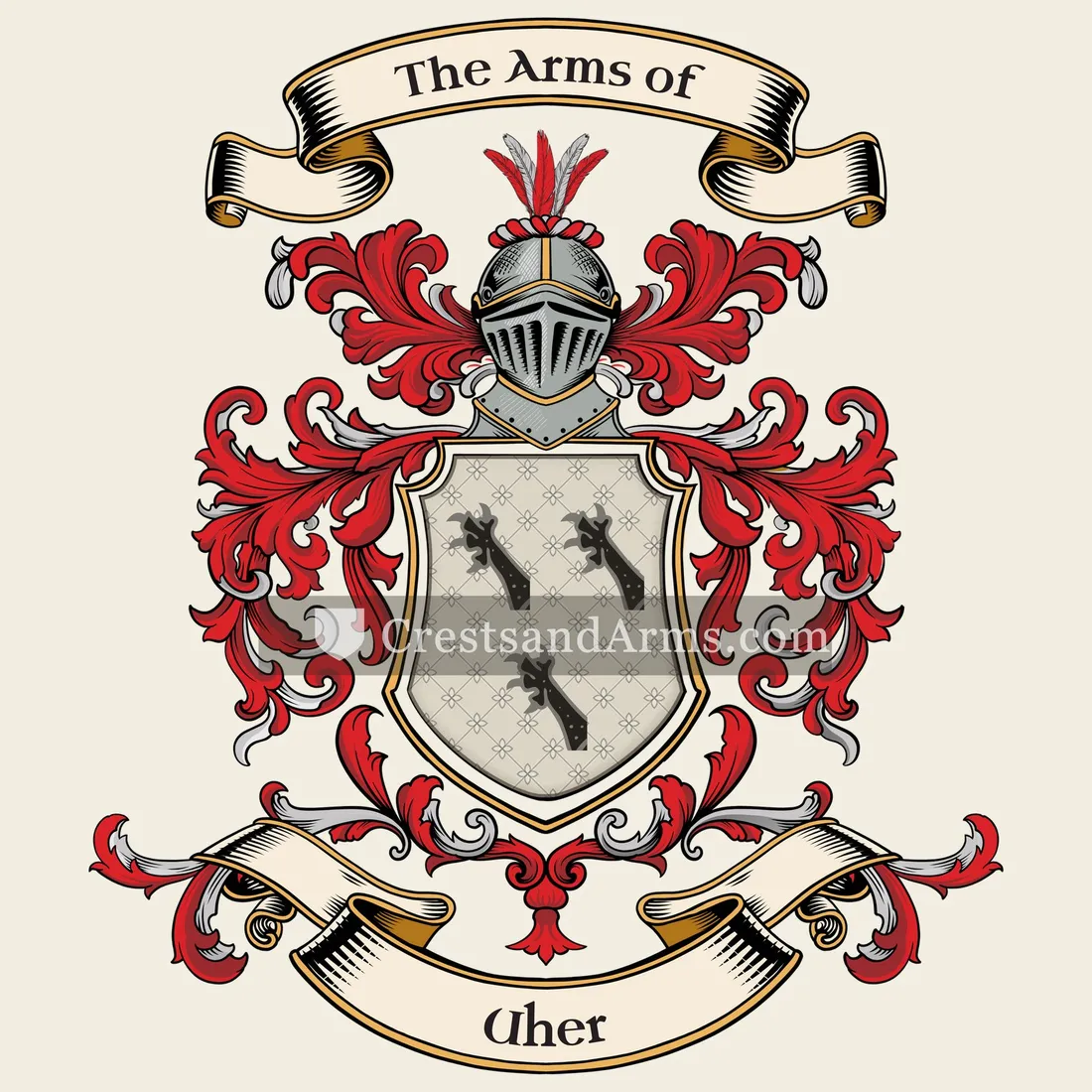
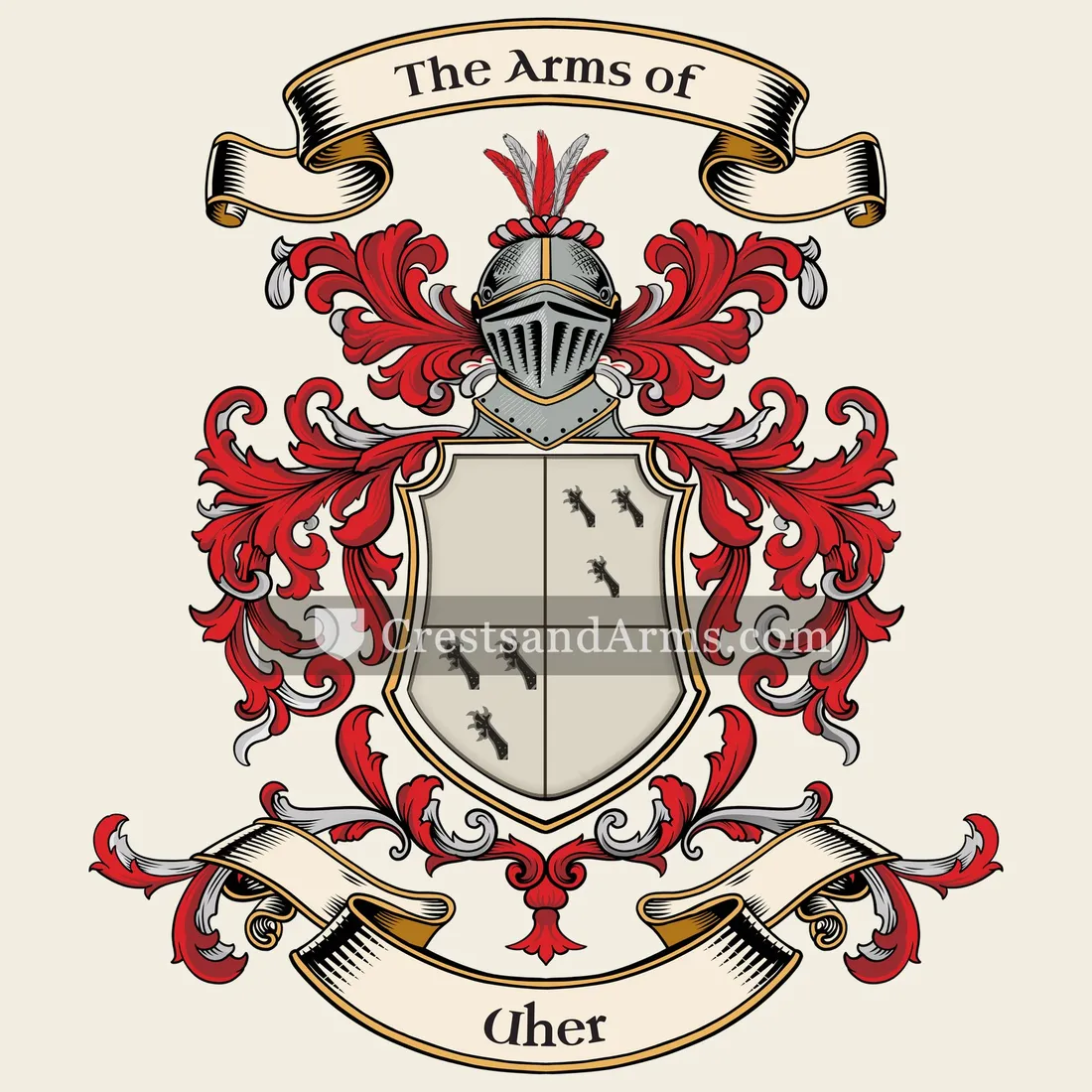
Symbols on this shield
pawStrength held ready, the beast's power in a single limb
Colours
Silver (Argent)Means: Peace and sincerity
Black (Sable)Means: Constancy
Historical info
Source
Sir Bernard Burke, The General Armory of England, Scotland, Ireland and Wales, London: Harrison & Sons, 1884
Blazon (the actual original written record)
“Quarterly, 1st and 4th, same Arms; 2nd and 3rd, ar. three lions' gambs couped and erect sa. armed gu”
DublinDublin, c. 1592
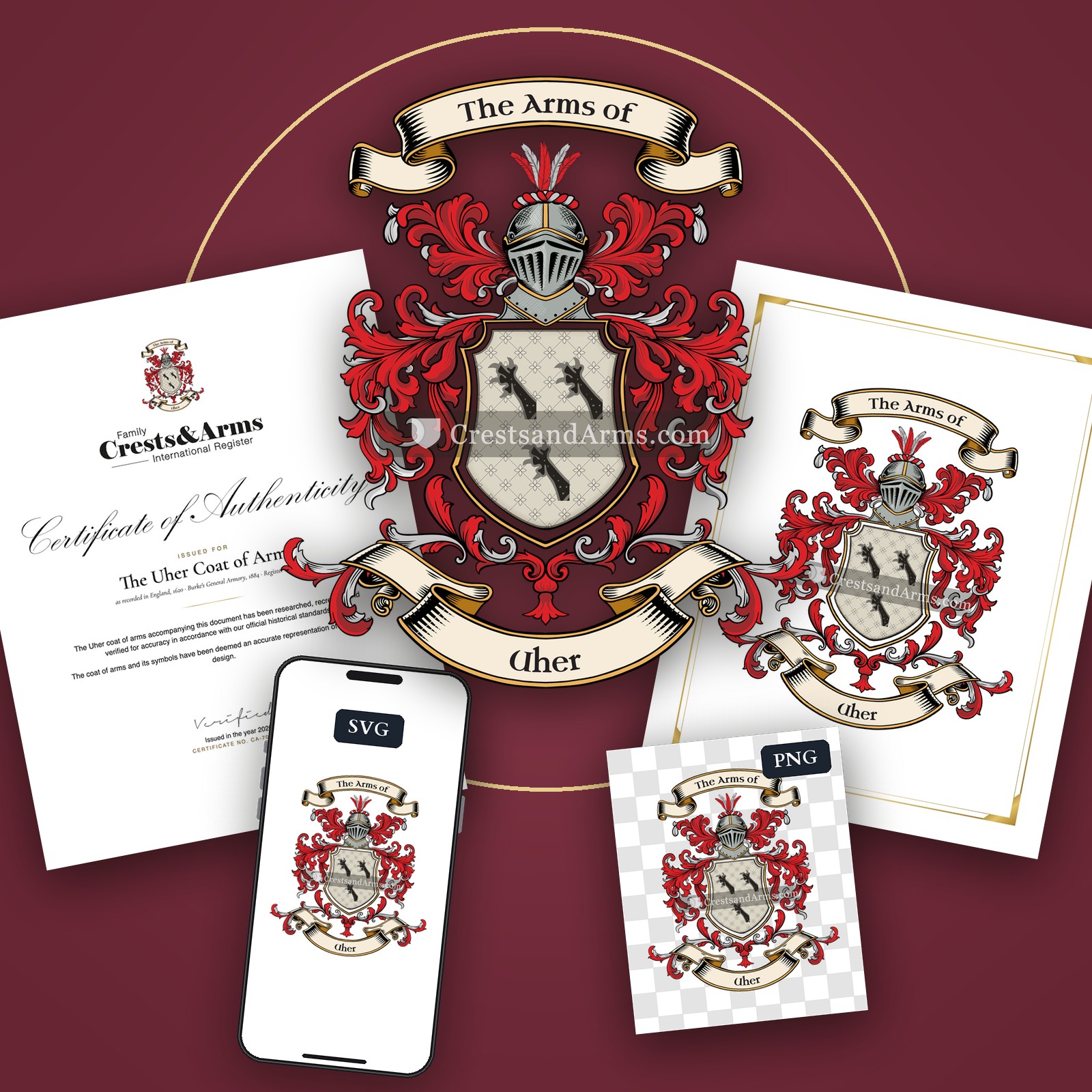
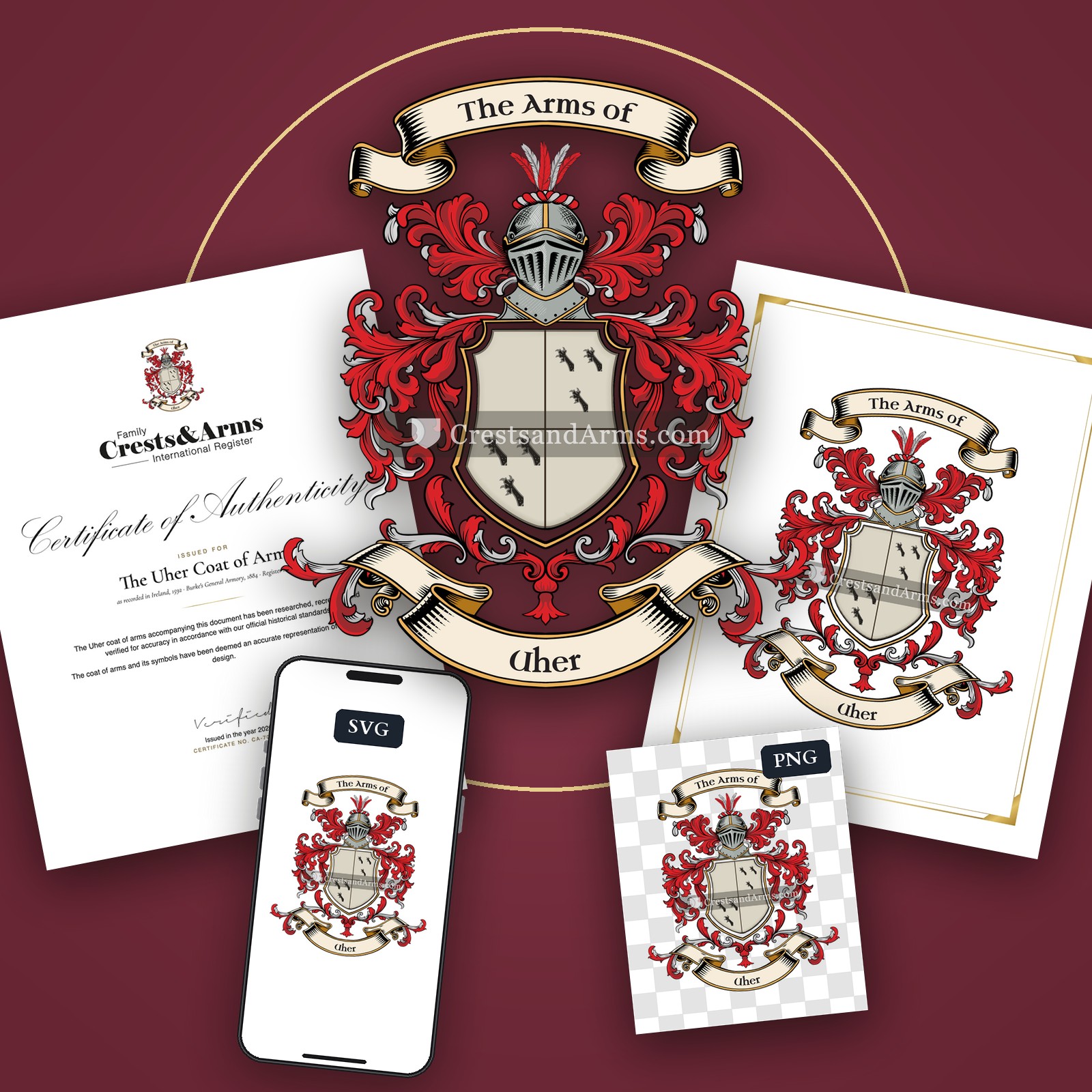
Digital archive packCoat of arms PNG, gold border print PDF, vector SVG and the certificate of authenticity. Sent to your email in minutes.
Map of Ireland showing where the Uher arms are recorded
The Uher arms were recorded in Dublin, c. 1592.
Dublin was the seat of government in Ireland and the place where grants were sought and recorded. Families with business at the castle or the courts settled nearby, and settling there put their arms on record.
This is where the arms were entered in the register. Families often moved to other parts of the country, so the same name can turn up in more than one region.
The body that granted and recorded arms in Ireland in this period.
Elizabeth I of England
Sovereign of the period
Elizabeth I of England
1558–1603
Reigning in England when the Uher arms are first recorded.
How Arms Worked in Ireland
The Ulster King of Arms granted coats of arms to individuals who proved their social standing and good character. These symbols were typically inherited by all legitimate descendants of the original holder. If a family branch wanted a unique look, they could apply for a specific change to their design through the office to ensure their identity remained distinct.
Granting authority
The Ulster King of Arms acted as the official body that regulated and issued all coats of arms throughout Ireland.
How they got arms
Families obtained their arms through formal grants issued by the office after proving their eligibility and paying the required fees.
Where arms were recorded
All official grants were recorded in the registers held by the Ulster King of Arms starting from the year 1552.
The family's standing
Recorded among the armigerous families of Dublin.
Origin & History of the Uher Family in Ireland
The history of the Uher family in Ireland is anchored by a significant presence in Dublin as early as 1592. During this period, Dublin was a bustling center of trade and administration, serving as a primary gateway for families arriving from continental Europe. Historians believe the name likely arrived through merchant networks or skilled labor migrations that connected Ireland to the broader European continent. By establishing themselves in the capital during the late sixteenth century, the Uher family became part of the diverse urban population that shaped the city's growth. These early settlers navigated a society defined by shifting political landscapes and economic opportunities, eventually integrating into the local community while maintaining the unique identity of their surname. Their presence in the official records of the time suggests they were active participants in the civic and social life of Dublin during a transformative era in Irish history.
Uher Meaning & Related Branches
Root word
Uhtred
Old English name meaning counsel or advice in battle.
This name
UherA patronymic surname derived from the Old English personal name Uhtred.
also spelled
Ushir
Documented Sources
Sir Bernard Burke, The General Armory of England, Scotland, Ireland and Wales, London: Harrison & Sons, 1884
Borthwick Institute for Archives, York Diocesan Probate Records
City of York Archives, Freemen of the City of York, 1272–1759
Reaney, P.H. and Wilson, R.M., A Dictionary of English Surnames, 1997
Digital archive packCoat of arms PNG, gold border print PDF, vector SVG and the certificate of authenticity. Sent to your email in minutes.


 pawStrength held ready, the beast's power in a single limb
 pawStrength held ready, the beast's power in a single limb