Map of Spain showing where the Ullah arms are recorded
The Ullah arms were recorded in Spain, c. 1722.
Arms such as these were typically recorded in Castile.
Castile was the heart of Spain and the source of most of its noble families. Land won in the long wars against the Moors was granted out to fighting men, and a man granted land was granted arms along with it.
This is where the arms were entered in the register. Families often moved to other parts of the country, so the same name can turn up in more than one region.
The body that granted and recorded arms in Spain in this period.
Philip V of Spain
Sovereign of the period
Philip V of Spain
1714–1724
Reigning in Spain when the Ullah arms are first recorded.
How Arms Worked in Spain
In Spain, a coat of arms was considered a form of property that belonged to the entire family line. These arms were passed down from a father to all his children equally. Younger branches of the family usually kept the original design without needing to add any special marks to distinguish their specific line.
Granting authority
The Cronista Rey de Armas was the official body that regulated and granted coats of arms throughout Spain.
How they got arms
Families often obtained their arms through royal grants or by proving their noble status to the official heraldic authority.
Where arms were recorded
Coats of arms were officially recorded in the registers of the Cronista Rey de Armas starting in 1496.
The family's standing
Recorded among the armigerous families of Spain.
Origin & History of the Ullah Family in Spain
The family name Ullah carries a distinct history that reflects the complex cultural landscape of eighteenth-century Spain. By 1722, records confirm that members of the family were established in the region of Castile, a period when the area was undergoing significant social and administrative shifts. During this era, families often moved across the Iberian Peninsula to seek new opportunities in the growing urban centers of the Spanish heartland. The presence of the family in Castile suggests they were integrated into the local community, likely participating in the agricultural or merchant economies that defined the Castilian plateau. While the name itself has roots that stretch far beyond the borders of Europe, its firm documentation in Spanish archives from this time highlights how families adapted their identities to fit within the legal and social framework of the Spanish Crown. This early history serves as a testament to the family's resilience and their ability to maintain their heritage while becoming a part of the long-standing traditions of central Spain.
Coat of Arms & Family Crest Details
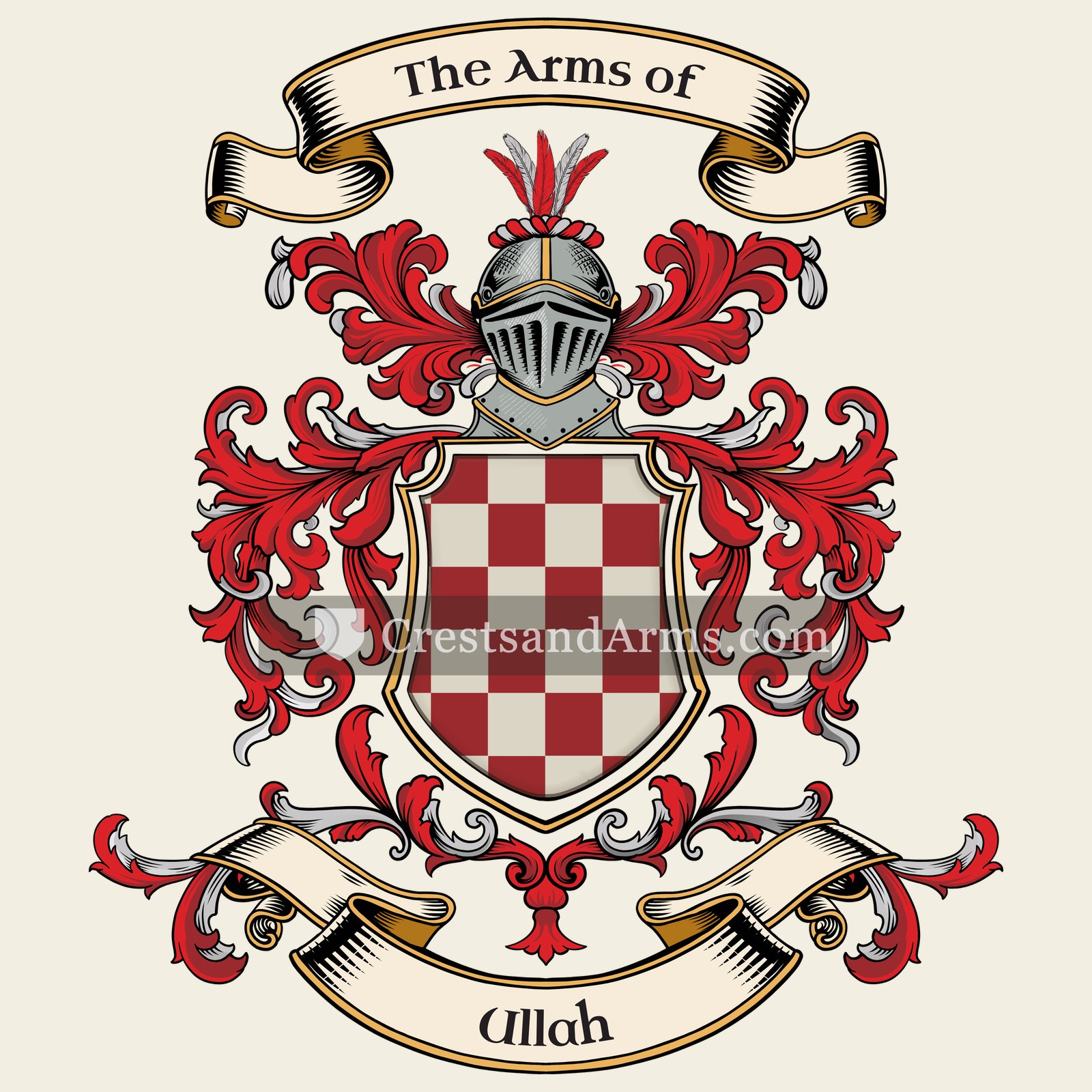
Symbols on this shield
chequyConstancy, and the counting-board
Colours
Red (Gules)Means: Military strength
Silver (Argent)Means: Peace and sincerity
Historical info
Source
J. B. Rietstap, Armorial Général, Gouda: G. B. van Goor Zonen, 1884–87
Blazon (the actual original written record)
“Echiq. de gu. et d'arg., de cinq tires, cha-”
BrabantBrabant, c. 1633
Digital archive packCoat of arms PNG, gold border print PDF, vector SVG and the certificate of authenticity. Sent to your email in minutes.
Map of Belgium showing where the Ullah arms are recorded
The Ullah arms were recorded in Brabant, c. 1633.
Brabant lay at the heart of the Low Countries, where the trade routes met. Its towns were wealthy and its landowners many, and both kinds of family kept arms, which is why the region is so heavily represented.
This is where the arms were entered in the register. Families often moved to other parts of the country, so the same name can turn up in more than one region.
The body that granted and recorded arms in Belgium in this period.
Philip IV of Spain
Sovereign of the period
Philip IV of Spain
1621–1665
Reigning in Spain when the Ullah arms are first recorded.
How Arms Worked in Belgium
In Belgium, a coat of arms is considered personal property that is passed down through the male line to legitimate descendants. Families often use the same shield design across generations to show their shared heritage. If a branch of the family wants to change the design, they must apply for an official update to their specific version of the arms.
Granting authority
The Conseil héraldique is the official body that regulates and approves all coats of arms in Belgium.
How they got arms
Families obtain their coats of arms through formal royal grants or by confirming their historical right to use existing designs.
Where arms were recorded
All approved coats of arms are officially recorded in the public registers of the Conseil héraldique since 1844.
The family's standing
Recorded among the armigerous families of Brabant.
Origin & History of the Ullah Family in Belgium
The presence of the Ullah family in the Brabant region by 1633 places them within a period of significant social and political transition in the Low Countries. During the seventeenth century, Brabant served as a vital crossroads for trade and cultural exchange, often attracting families who were involved in the burgeoning mercantile networks of the era. While the name itself carries deep roots in linguistic traditions outside of Western Europe, its appearance in local administrative records suggests that early members of the family successfully integrated into the local Flemish or Brabantine society. These early settlers likely navigated the complexities of the Spanish Netherlands, finding their place among the local artisans or merchants who defined the regional economy. By establishing themselves in this specific territory during the early 1600s, the family became part of the long-standing demographic history of the region, contributing to the diverse social fabric that characterized the cities and rural parishes of Brabant.
Related Branches & Arms
Root word
Allah
The Arabic word for God or the Supreme Being.
This name
UllahA common suffix meaning servant or devotee of God.
also spelled
Ullua
Ulloah
Uloa
Documented Sources
J. B. Rietstap, Armorial Général, Gouda: G. B. van Goor Zonen, 1884–87
Archivo de la Real Chancillería de Valladolid, Registro de Ejecutorias, 1722
Archivo Histórico Nacional, Sección Nobleza, 1722
Digital archive packCoat of arms PNG, gold border print PDF, vector SVG and the certificate of authenticity. Sent to your email in minutes.


 mulletThe third son, and a divine quality from above
 mulletThe third son, and a divine quality from above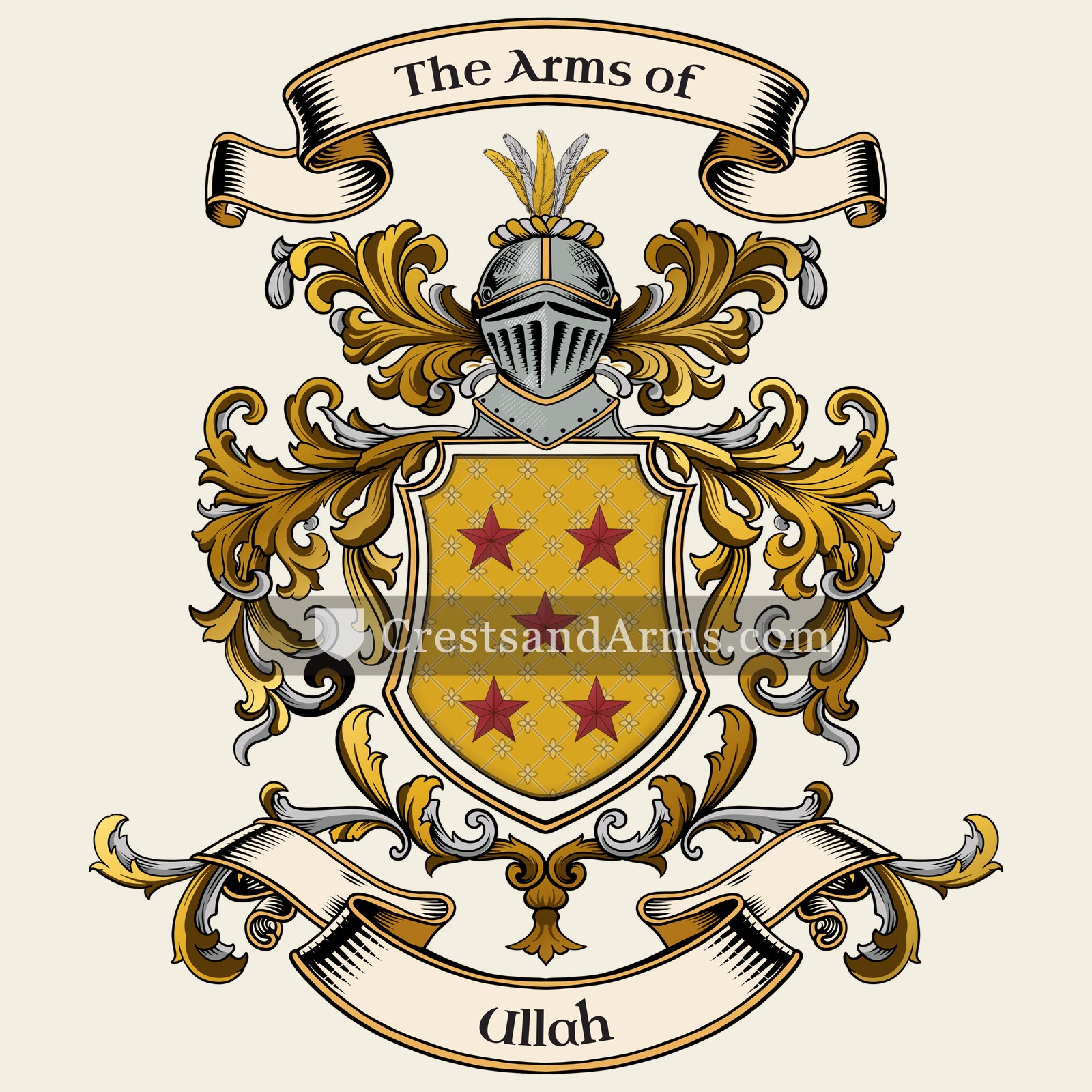


 chequyConstancy, and the counting-board