Map of Spain showing where the Ulloa arms are recorded
The Ulloa arms were recorded in Spain, c. 1722.
Arms such as these were typically recorded in Castile.
Castile was the heart of Spain and the source of most of its noble families. Land won in the long wars against the Moors was granted out to fighting men, and a man granted land was granted arms along with it.
This is where the arms were entered in the register. Families often moved to other parts of the country, so the same name can turn up in more than one region.
The body that granted and recorded arms in Spain in this period.
Philip V of Spain
Sovereign of the period
Philip V of Spain
1714–1724
Reigning in Spain when the Ulloa arms are first recorded.
How Arms Worked in Spain
In Spain, a coat of arms was considered a form of property that belonged to the entire family line. These arms were passed down from a father to all his children equally. Younger branches of the family usually kept the original design without needing to add any special marks to distinguish their specific line.
Granting authority
The Cronista Rey de Armas was the official body that regulated and granted coats of arms throughout Spain.
How they got arms
Families often obtained their arms through royal grants or by proving their noble status to the official heraldic authority.
Where arms were recorded
Coats of arms were officially recorded in the registers of the Cronista Rey de Armas starting in 1496.
The family's standing
Recorded among the armigerous families of Spain.
Origin & History of the Ulloa Family in Spain
The family name Ulloa originates from the rugged landscapes of Galicia in northwestern Spain, where it first appeared as a place name before becoming a prominent surname. During the Middle Ages, the family established itself as a powerful noble house with deep roots in the region’s complex feudal society. As the centuries passed, members of the family expanded their influence far beyond their ancestral lands, moving into the heart of the Spanish kingdom. By the early eighteenth century, the family had firmly established a presence in the region of Castile. This migration reflected the broader historical trend of families seeking new opportunities and administrative roles within the expanding Spanish state. The name Ulloa eventually became synonymous with a legacy of service to the crown and involvement in the political life of the Iberian Peninsula.
Meaning of the Ulloa family crest colors & symbols
Symbols on this shield
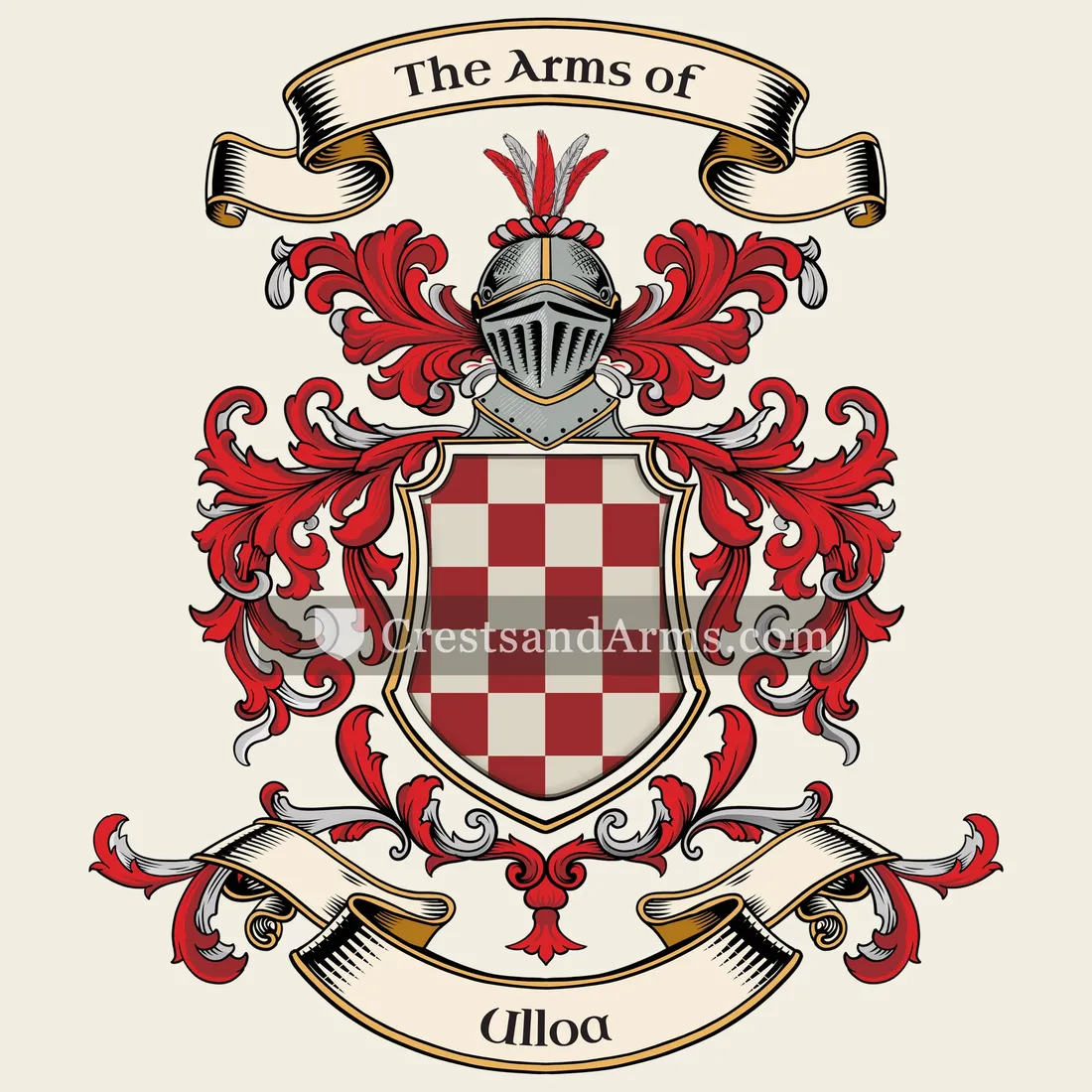
chequyConstancy, and the counting-board
Colours
Red (Gules)Means: Military strength
Silver (Argent)Means: Peace and sincerity
Historical info
Source
J. B. Rietstap, Armorial Général, Gouda: G. B. van Goor Zonen, 1884–87
Blazon (the actual original written record)
“Echiq. de gu. et d'arg., de cinq tires, cha-”
BrabantBrabant, c. 1633
Digital archive packCoat of arms PNG, gold border print PDF, vector SVG and the certificate of authenticity. Sent to your email in minutes.
Map of Belgium showing where the Ulloa arms are recorded
The Ulloa arms were recorded in Brabant, c. 1633.
Brabant lay at the heart of the Low Countries, where the trade routes met. Its towns were wealthy and its landowners many, and both kinds of family kept arms, which is why the region is so heavily represented.
This is where the arms were entered in the register. Families often moved to other parts of the country, so the same name can turn up in more than one region.
The body that granted and recorded arms in Belgium in this period.
Philip IV of Spain
Sovereign of the period
Philip IV of Spain
1621–1665
Reigning in Spain when the Ulloa arms are first recorded.
How Arms Worked in Belgium
In Belgium, a coat of arms is considered personal property that is passed down through the male line to legitimate descendants. Families often use the same shield design across generations to show their shared heritage. If a branch of the family wants to change the design, they must apply for an official update to their specific version of the arms.
Granting authority
The Conseil héraldique is the official body that regulates and approves all coats of arms in Belgium.
How they got arms
Families obtain their coats of arms through formal royal grants or by confirming their historical right to use existing designs.
Where arms were recorded
All approved coats of arms are officially recorded in the public registers of the Conseil héraldique since 1844.
The family's standing
Recorded among the armigerous families of Brabant.
Origin & History of the Ulloa Family in Belgium
The history of the Ulloa family in Belgium is rooted in the complex political landscape of the seventeenth century. While the name is of Spanish origin, records confirm that members of the family were established in the Duchy of Brabant by 1633. During this period, the Southern Netherlands were under the control of the Spanish Habsburgs, which encouraged the movement of military officers, diplomats, and administrators between the Iberian Peninsula and the Low Countries. The presence of the Ulloa family in Brabant suggests they were likely part of this administrative network, serving the interests of the Crown in a region that acted as a vital hub for European trade and diplomacy. By settling in this area, the family integrated into the local social fabric while maintaining their distinct heritage, eventually becoming a part of the long-standing historical connection between Spain and the Belgian provinces.
Ulloa Meaning & Related Branches
Root word
Ollos
Derived from the Latin word for eyes or a hollow place.
This name
UlloaRefers to a person living near a hollow, valley, or a prominent landmark.
also spelled
Ullua
Ulloah
Uloa
Documented Sources
J. B. Rietstap, Armorial Général, Gouda: G. B. van Goor Zonen, 1884–87
Pardo de Guevara y Valdés, Eduardo. Los señores de Galicia: Poder y aristocracia en la Edad Media. 2000
Archivo de la Real Chancillería de Valladolid. Registro de Ejecutorias. 1722
Digital archive packCoat of arms PNG, gold border print PDF, vector SVG and the certificate of authenticity. Sent to your email in minutes.


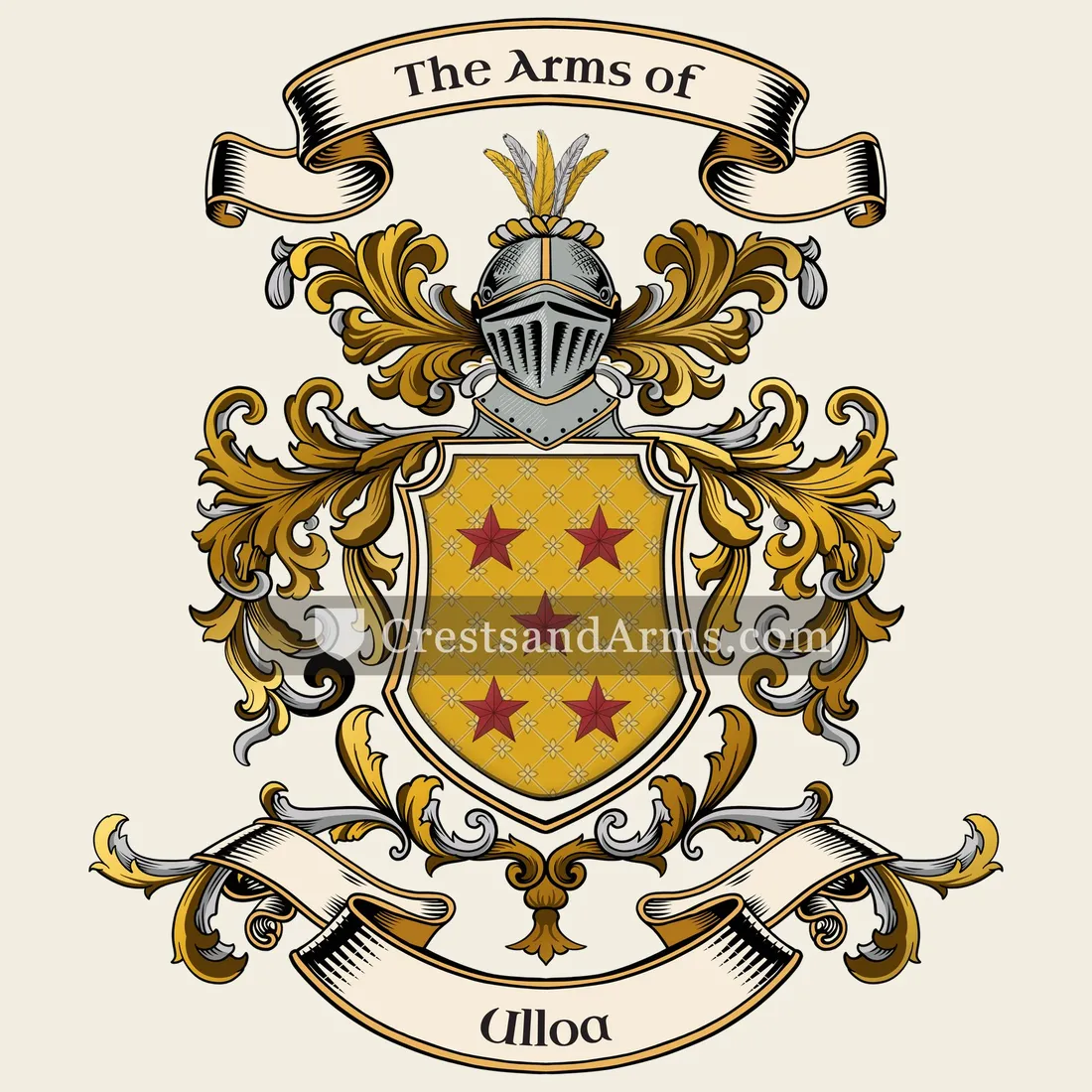
 mulletThe third son, and a divine quality from above
 mulletThe third son, and a divine quality from above


 chequyConstancy, and the counting-board