Map of Portugal showing where the Urena arms are recorded
The Urena arms were recorded in Portugal, c. 1706.
Arms such as these were typically recorded in Lisboa.
Lisbon was the seat of the Portuguese crown and the port its wealth came through. Families made rich by trade and by service to the king took arms, and the crown's heralds recorded them there.
This is where the arms were entered in the register. Families often moved to other parts of the country, so the same name can turn up in more than one region.
The body that granted and recorded arms in Portugal in this period.
Peter II of Portugal
Sovereign of the period
Peter II of Portugal
1683–1706
Reigning in Portugal when the Urena arms are first recorded.
How Arms Worked in Portugal
In Portugal, a coat of arms was a family possession that passed from a father to his children. Every legitimate descendant had the right to use the family shield without needing to change it. Younger branches of the family kept the original design, though they sometimes added small symbols to distinguish their specific line from the main branch.
Granting authority
The Cartório da Nobreza acted as the official body that managed and regulated noble titles and coats of arms in Portugal.
How they got arms
Families typically inherited their arms through bloodline, though they could also receive new grants from the crown for distinguished service.
Where arms were recorded
Coats of arms were officially recorded in the books of the Cartório da Nobreza starting in the year 1512.
The family's standing
Recorded among the armigerous families of Portugal.
Origin & History of the Urena Family in Portugal
The history of the Urena family in Portugal begins with a clear presence in the capital city of Lisboa by the year 1706. During this period, Portugal was a center of global trade and cultural exchange, which often drew families from across the Iberian Peninsula to settle in its bustling urban hubs. While the name likely shares roots with geographic markers found in Spain, its establishment in Lisboa suggests that the family integrated into the administrative and social life of the Portuguese kingdom during the reign of King Pedro II. Families living in Lisboa at this time were often involved in the city's growing merchant class or the professional services required to support the royal court. By settling in the capital, the early Urena family members positioned themselves within a society that valued literacy, trade, and civic participation. This move to Lisboa allowed the family to become part of the historical fabric of a city that served as the gateway between Europe and the rest of the world.
Coat of Arms & Family Crest Details
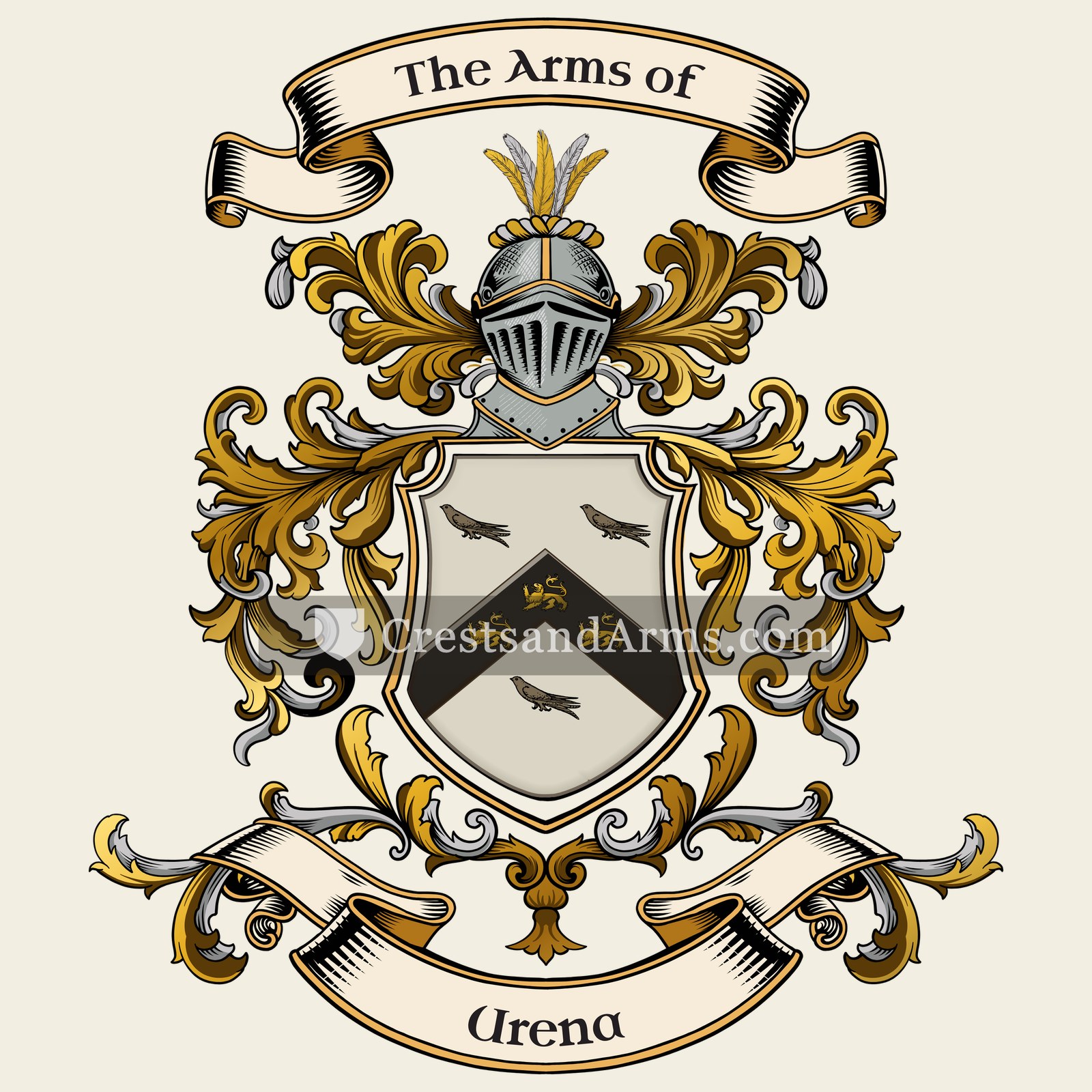
Symbols on this shield
chevronProtection, and faithful service completed
martletA younger son, who must win his own land
lionCourage, strength and royalty
Colours
Silver (Argent)Means: Peace and sincerity
Black (Sable)Means: Constancy
Gold (Or)Means: Generosity
Historical info
Source
Sir Bernard Burke, The General Armory of England, Scotland, Ireland and Wales, London: Harrison & Sons, 1884
Blazon (the actual original written record)
“Ar. on a chev. sa. betw. three Cornish choughs ppr. as many leopards' faces or”
WalesLondon, c. 1619
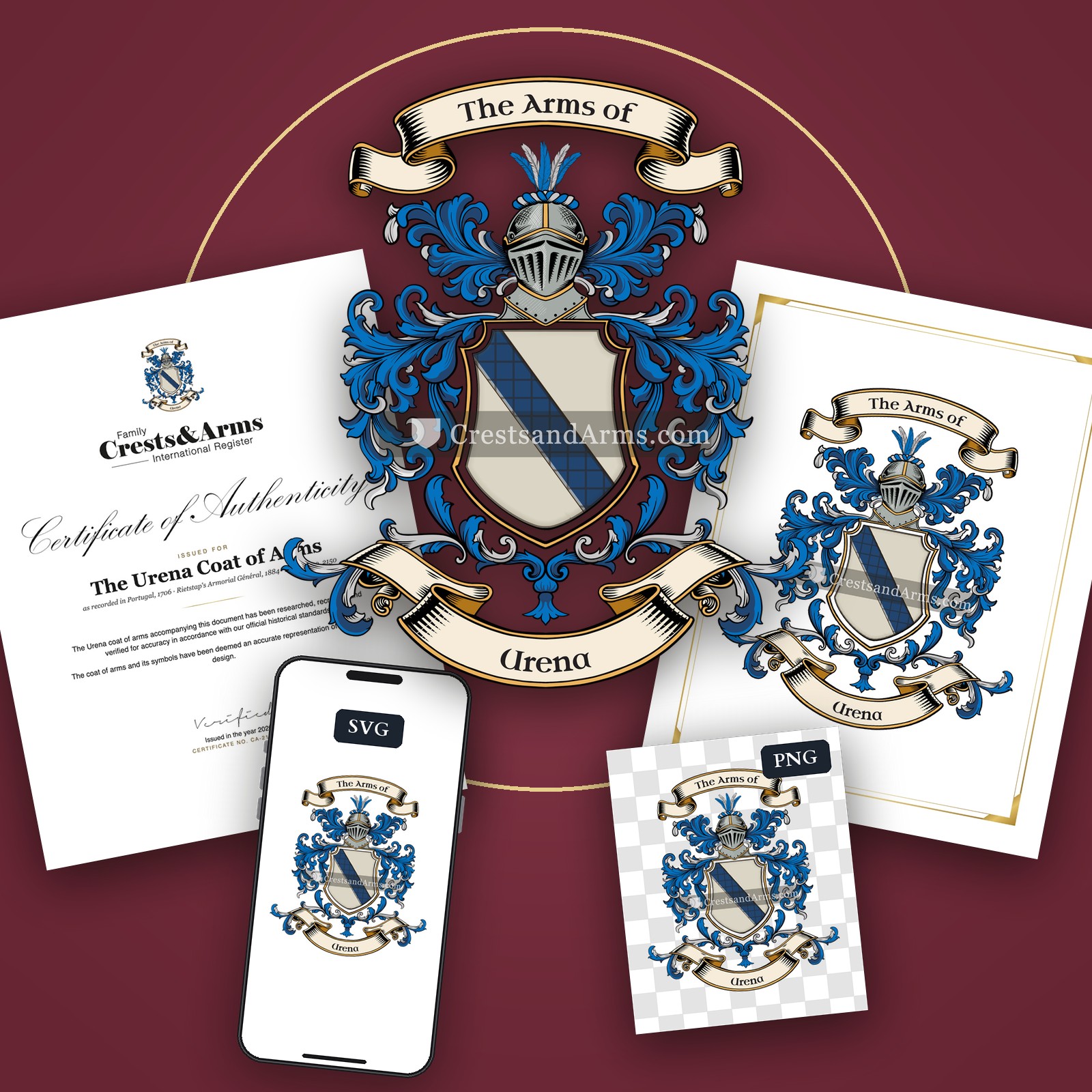
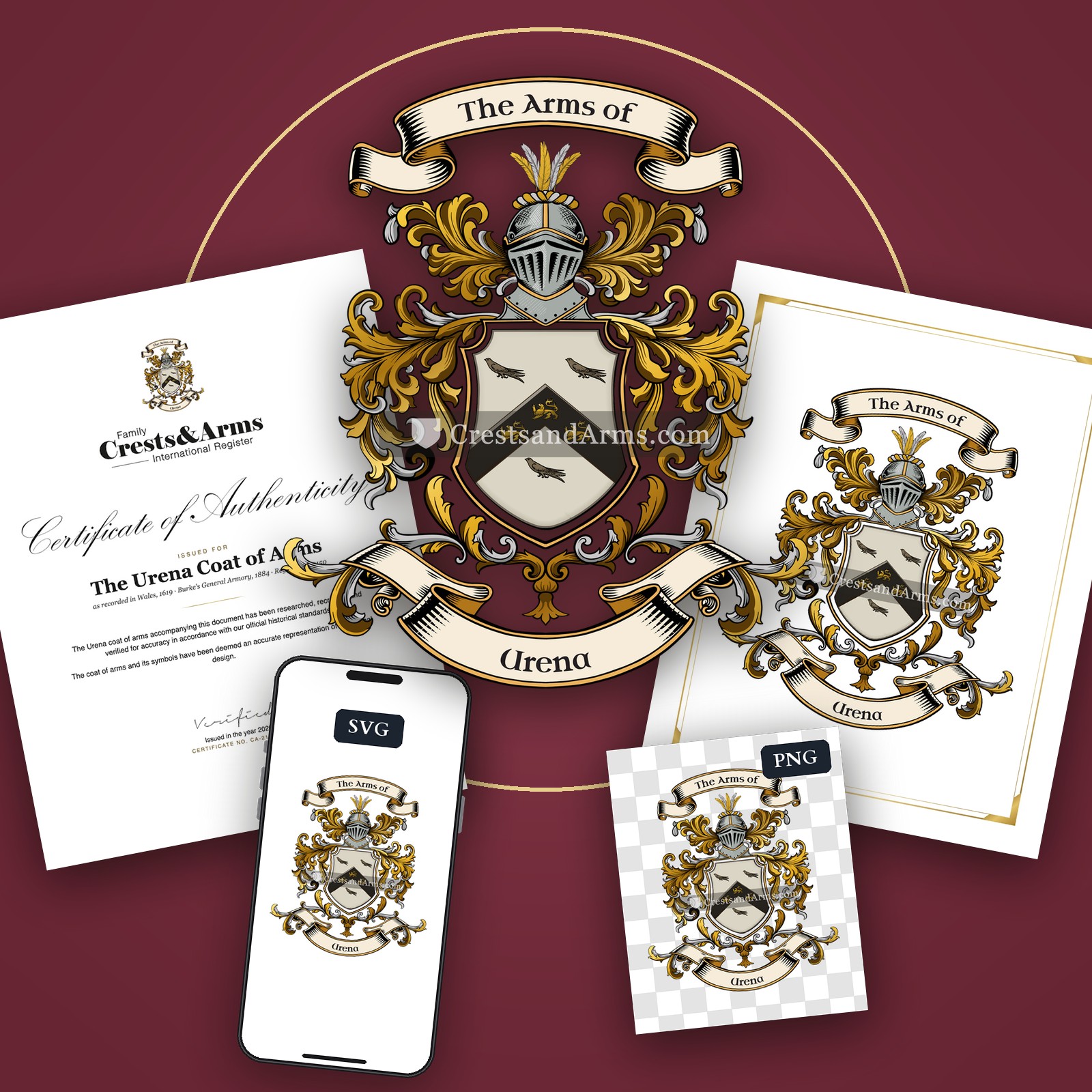
Digital archive packCoat of arms PNG, gold border print PDF, vector SVG and the certificate of authenticity. Sent to your email in minutes.
Map of Wales showing where the Urena arms are recorded
The Urena arms were recorded in London, c. 1619.
Arms such as these were typically recorded in Denbigh.
Denbighshire was north Welsh country of hills and small estates. Land was held by a great many families rather than a few, and each holding brought its own claim to a coat of arms.
This is where the arms were entered in the register. Families often moved to other parts of the country, so the same name can turn up in more than one region.
The body that granted and recorded arms in Wales in this period.
James VI and I
Sovereign of the period
James VI and I
1603–1625
Reigning in Portugal when the Urena arms are first recorded.
How Arms Worked in Wales
English heraldry allowed arms to be shared by all legitimate descendants of the original owner. These symbols were treated as personal property that moved through the generations to all children. While the eldest son kept the original design, other family members could use the same shield without needing to change it or register their own unique versions.
Granting authority
The College of Arms in London has regulated the use of coats of arms throughout England and Wales since 1484.
How they got arms
Families typically obtained their coats of arms through a formal grant from the Crown or by proving their ancient right to them.
Where arms were recorded
All official coats of arms are recorded in the registers kept at the College of Arms, which date back to the fifteenth century.
The family's standing
Recorded among the armigerous families of Wales.
Origin & History of the Urena Family in Wales
The history of the Urena family in Wales is anchored by their documented presence in the town of Denbigh by 1619. During this period, Denbigh was a bustling market town and a center of regional administration, making it a likely place for families to establish roots through trade or local governance. While the name itself has roots that suggest connections to broader European migrations, the Urena family integrated into the social fabric of North Wales during the early seventeenth century. Life in Denbigh at this time was defined by the transition from medieval structures to the more organized legal and social systems of the Stuart era. By settling in this area, the family became part of the local community records that tracked property ownership and parish life. These early residents helped shape the local identity of Denbigh, leaving behind a legacy that reflects the movement of people across borders during a time of significant cultural exchange in Britain.
Urena Meaning & Related Branches
Root word
Ureña
Derived from the Spanish place name Ureña in Valladolid.
This name
UrenaA topographic surname referring to someone who originated from the town of Ureña.
also spelled
Urrin
Urin
Documented Sources
J. B. Rietstap, Armorial Général, Gouda: G. B. van Goor Zonen, 1884–87
Arquivo Nacional da Torre do Tombo, Registos Paroquiais de Lisboa (1706)
Boxer, C.R., The Portuguese Seaborne Empire 1415-1825 (1969)
Mattoso, José, História de Portugal: O Estado Moderno (1993)
Digital archive packCoat of arms PNG, gold border print PDF, vector SVG and the certificate of authenticity. Sent to your email in minutes.


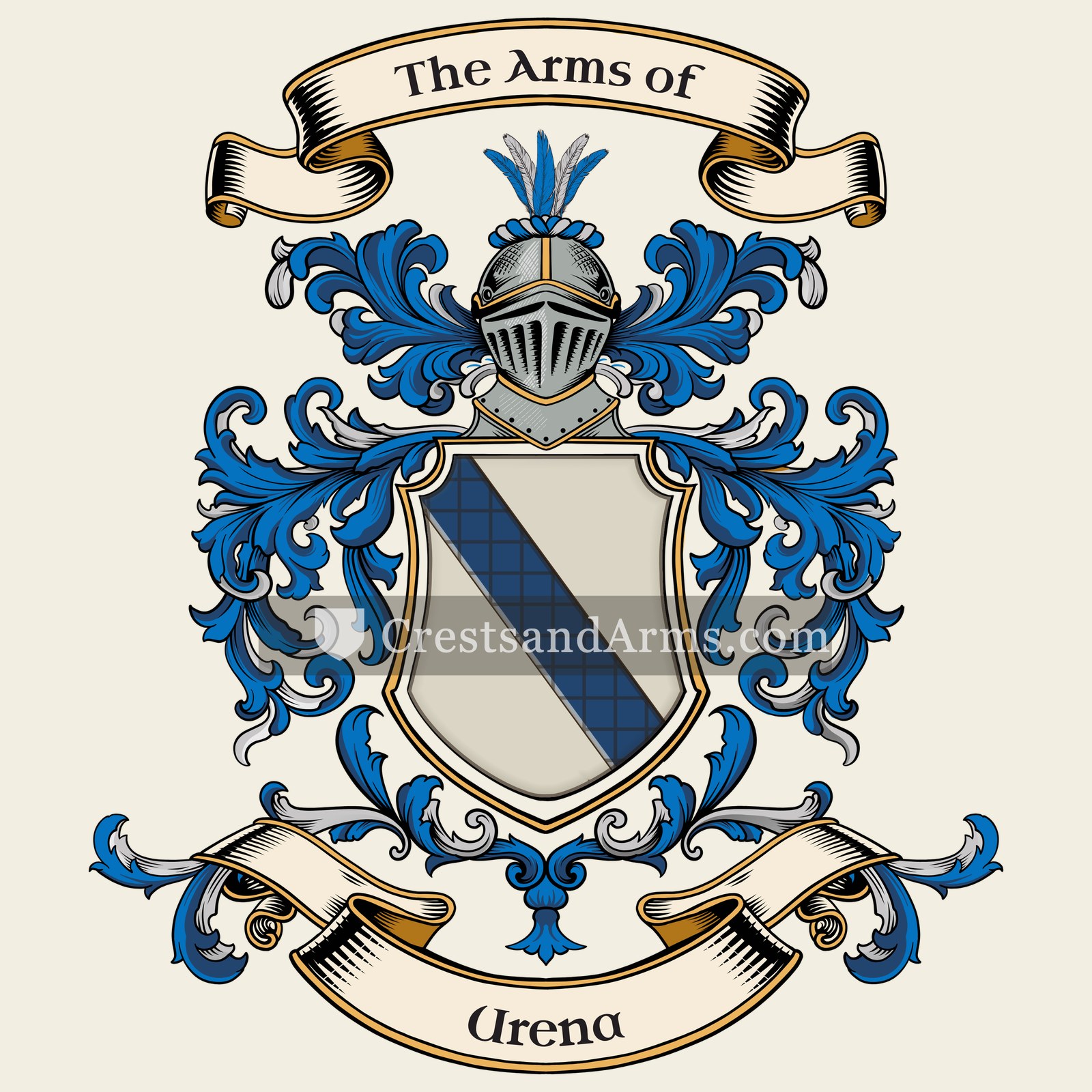
 bendDefence, and the scarf of a commander
 bendDefence, and the scarf of a commander


 chevronProtection, and faithful service completed
 martletA younger son, who must win his own land
 lionCourage, strength and royalty