Map of France showing where the Valle arms are recorded
The Valle arms were recorded in Barrois, c. 1572.
Barrois was eastern French border country, disputed between France and the Empire. Families held land under one crown or the other and served in arms, which brought shields with it.
This is where the arms were entered in the register. Families often moved to other parts of the country, so the same name can turn up in more than one region.
The body that granted and recorded arms in France in this period.
Charles IX of France
Sovereign of the period
Charles IX of France
1560–1574
Reigning in France when the Valle arms are first recorded.
How Arms Worked in France
In France, a coat of arms was a mark of honor that passed down through the male line to all legitimate descendants. Families often used the same shield without changes to show their shared heritage. If a branch wanted to stand out, they could add a small mark to their shield to show their specific place in the family tree.
Granting authority
The Juge d'armes de France acted as the official authority that regulated and verified coats of arms across the country.
How they got arms
Families typically inherited their arms from ancestors, though they could also receive them through royal grants or by proving their noble status.
Where arms were recorded
Coats of arms were officially recorded in the Armorial Général de France, which began its main collection in the year 1696.
The family's standing
Recorded among the armigerous families of Barrois.
Origin & History of the Valle Family in France
The name Valle is a topographical surname, meaning it was originally used to describe people who lived in a valley or a low-lying area. In the French region of Barrois, the name appeared in records as early as 1572, reflecting a time when families were increasingly identified by the specific landscapes they inhabited. During the sixteenth century, Barrois was a duchy with a complex political status, often caught between the influence of the French crown and the Holy Roman Empire. Families living in this area were frequently involved in local agriculture or trade, and the name Valle likely served as a simple way to distinguish one household from another in small village communities. As these families grew, the name became a permanent marker of their ancestral connection to the rugged, hilly terrain of northeastern France. This naming tradition helped preserve a sense of place for the family as they navigated the social and economic changes of the late Renaissance period.
Coat of Arms & Family Crest Details
Symbols on this shield
bendDefence, and the scarf of a commander
mountThe ground held, and steadfastness upon it
Colours
Blue (Azure)Means: Loyalty and truth
Silver (Argent)Means: Peace and sincerity
Green (Vert)Means: Hope
Gold (Or)Means: Generosity
Historical info
Source
J. B. Rietstap, Armorial Général, Gouda: G. B. van Goor Zonen, 1884–87
Blazon (the actual original written record)
“D'azur à la bande d'arg., acc. de deux rochers isolés de trois coupeaux d'or, 1 en chef et 1 en p.”
ItalyVicence, c. 1775
Digital archive packCoat of arms PNG, gold border print PDF, vector SVG and the certificate of authenticity. Sent to your email in minutes.
Map of Italy showing where the Valle arms are recorded
The Valle arms were recorded in Vicence, c. 1775.
This is where the arms were entered in the register. Families often moved to other parts of the country, so the same name can turn up in more than one region.
The body that granted and recorded arms in Italy in this period.
Alvise Giovanni Mocenigo
Sovereign of the period
Alvise Giovanni Mocenigo
1763–1778
Reigning in France when the Valle arms are first recorded.
How Arms Worked in Italy
In the Italian states, coats of arms were often used by noble families to show their status and history. These symbols were passed down through the generations to all legitimate male descendants. Younger branches of a family usually kept the original design but sometimes added small changes to distinguish their specific line from the main branch.
Granting authority
Various local rulers and city governments controlled the use of coats of arms across the different Italian states.
How they got arms
Families often assumed their own arms or received them as official grants from local lords, popes, or city councils.
Where arms were recorded
Arms were recorded in local city archives or private family books rather than in one single national register.
The family's standing
Recorded among the armigerous families of Italy.
Origin & History of the Valle Family in Italy
The surname Valle is a topographic name that originated from the Latin word vallis, which means valley. In Italy, families often adopted this name to identify themselves as people who lived in or near a valley, which was a common way to distinguish neighbors in rural areas. By the late 18th century, the Valle family had established a notable presence in the city of Vicenza. During this period, Vicenza was part of the Republic of Venice, a time when the region was known for its agricultural wealth and architectural growth. Families living in this area were often involved in the local trade networks or the management of land near the foothills of the Alps. The presence of the Valle family in Vicenza by 1775 suggests they were part of the local social fabric during a time of significant cultural development in the Veneto region.
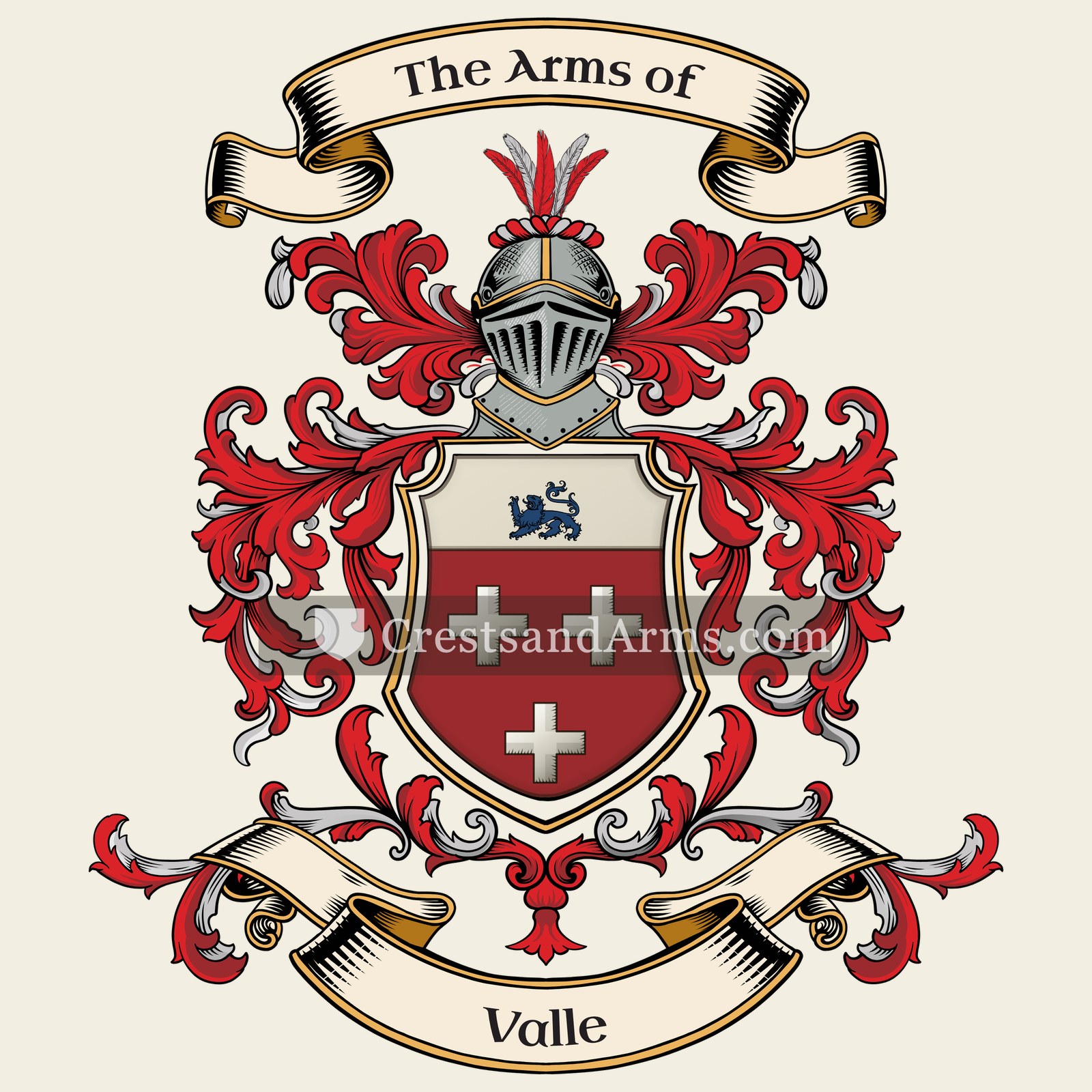
Coat of Arms & Family Crest Details
Symbols on this shield
cross symbolChristian faith and service
chiefAuthority, wisdom and dominion
lionCourage, strength and royalty
Colours
Red (Gules)Means: Military strength
Silver (Argent)Means: Peace and sincerity
Blue (Azure)Means: Loyalty and truth
Historical info
Source
Sir Bernard Burke, The General Armory of England, Scotland, Ireland and Wales, London: Harrison & Sons, 1884
Blazon (the actual original written record)
“Gu. three crosses pattée ar. on a chief of the last a lion pass. az. (N.B. Another coat has the field without the crosses pattée.)”
Irelandc. 1645
Digital archive packCoat of arms PNG, gold border print PDF, vector SVG and the certificate of authenticity. Sent to your email in minutes.
Map of Ireland showing where the Valle arms are recorded
The Valle arms were recorded in Ireland, c. 1645.
Arms such as these were typically recorded in Dublin.
Dublin was the seat of government in Ireland and the place where grants were sought and recorded. Families with business at the castle or the courts settled nearby, and settling there put their arms on record.
This is where the arms were entered in the register. Families often moved to other parts of the country, so the same name can turn up in more than one region.
The body that granted and recorded arms in Ireland in this period.
Charles I of England
Sovereign of the period
Charles I of England
1625–1649
Reigning in France when the Valle arms are first recorded.
How Arms Worked in Ireland
The Ulster King of Arms granted coats of arms to individuals who proved their social standing and good character. These symbols were typically inherited by all legitimate descendants of the original holder. If a family branch wanted a unique look, they could apply for a specific change to their design through the office to ensure their identity remained distinct.
Granting authority
The Ulster King of Arms acted as the official body that regulated and issued all coats of arms throughout Ireland.
How they got arms
Families obtained their arms through formal grants issued by the office after proving their eligibility and paying the required fees.
Where arms were recorded
All official grants were recorded in the registers held by the Ulster King of Arms starting from the year 1552.
The family's standing
Recorded among the armigerous families of Ireland.
Origin & History of the Valle Family in Ireland
The name Valle arrived in Ireland as part of the complex migration patterns that defined the seventeenth century. By 1645, records confirm that members of the family were established in Dublin, a city that served as a vital hub for trade and political activity during this turbulent era. The name itself is rooted in Latin origins, meaning valley, and it likely traveled to Ireland through continental European merchants or soldiers who sought new opportunities in the capital. These early settlers lived in a city undergoing rapid social change, where they integrated into the local urban economy. Over time, the family became part of the fabric of Dublin life, transitioning from recent arrivals to residents who contributed to the growth of the city during a period of significant historical transition.
Related Branches & Arms
Root word
vallis
A Latin term referring to a low-lying area between hills.
This name
ValleA topographic name for someone who lived in or near a valley.
also spelled
Val
Valay
Valley
Related arms
Bréhault de Mallevillesimilar arms
Coëtaneznesimilar arms
Kowniasimilar arms
de Valvariant spelling
Documented Sources
J. B. Rietstap, Armorial Général, Gouda: G. B. van Goor Zonen, 1884–87
Archives départementales de la Meuse, Série B: Cours et juridictions (Barrois mouvant)
Bouteiller, Ernest de, Dictionnaire topographique de l'ancien département de la Moselle, 1874
Dauzat, Albert, Dictionnaire étymologique des noms de famille et prénoms de France, 1951
Archives nationales de France, Série K: Monuments historiques (Documents relatifs au Barrois)
Digital archive packCoat of arms PNG, gold border print PDF, vector SVG and the certificate of authenticity. Sent to your email in minutes.


 fessThe military belt, and readiness to serve
 lionCourage, strength and royalty
 fessThe military belt, and readiness to serve
 lionCourage, strength and royalty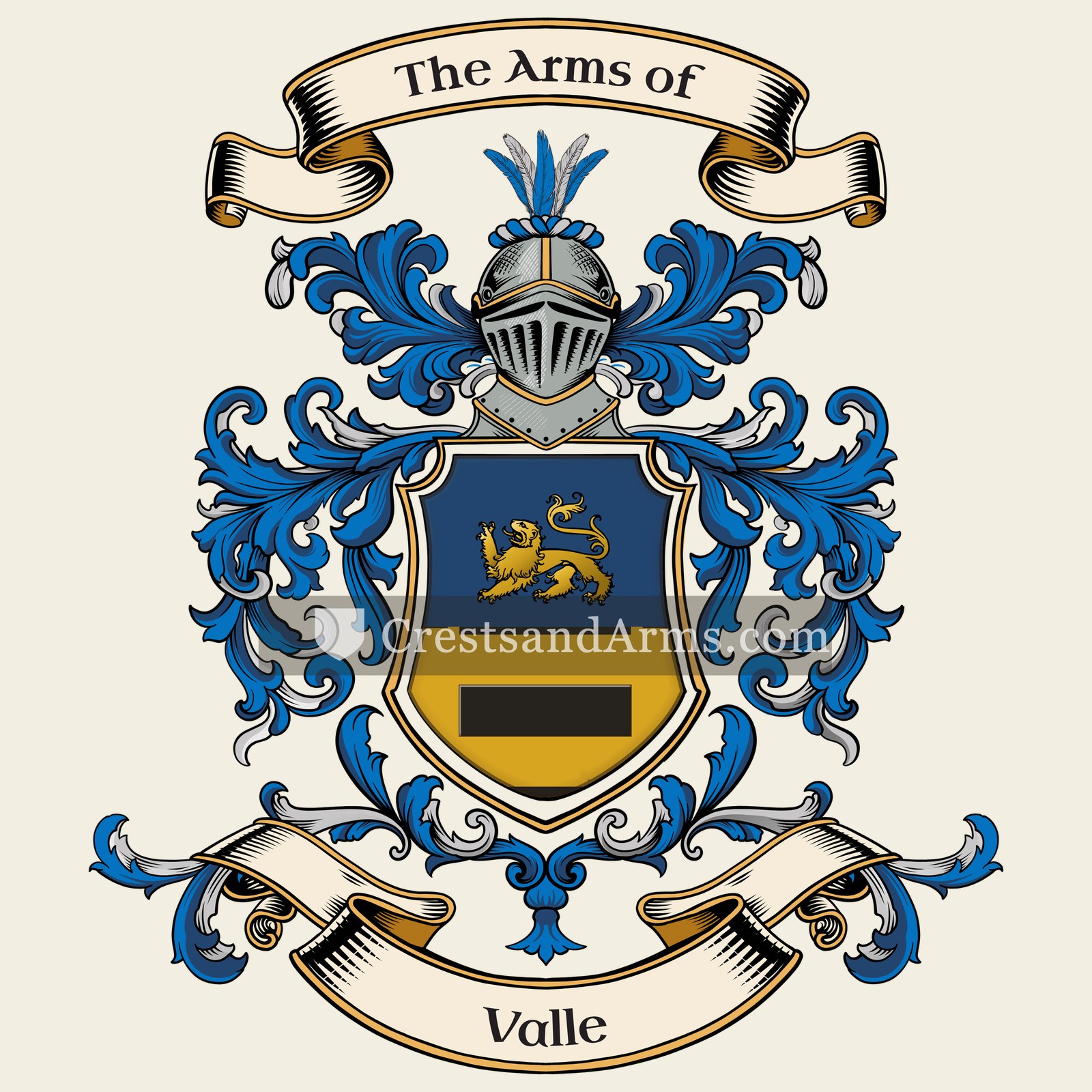


 bendDefence, and the scarf of a commander
 mountThe ground held, and steadfastness upon it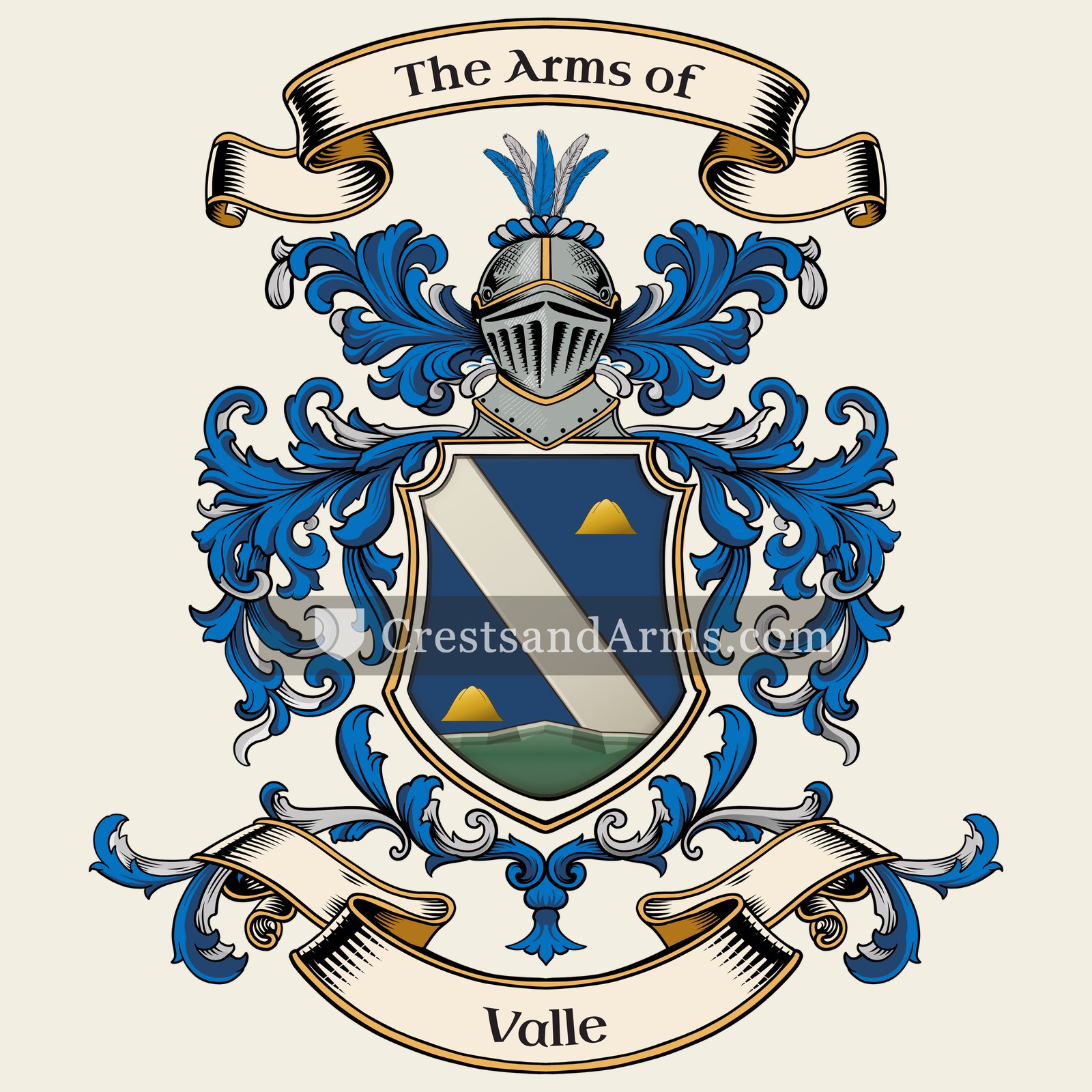


 cross symbolChristian faith and service
 chiefAuthority, wisdom and dominion