Map of Spain showing where the Valoy arms are recorded
The Valoy arms were recorded in Aragon, c. 1722.
Aragon was mountain and river country in north-eastern Spain, with a strong tradition of small independent landholders. A great many families counted as gentry there, and each one needed a shield to be told apart.
This is where the arms were entered in the register. Families often moved to other parts of the country, so the same name can turn up in more than one region.
The body that granted and recorded arms in Spain in this period.
Philip V of Spain
Sovereign of the period
Philip V of Spain
1714–1724
Reigning in Spain when the Valoy arms are first recorded.
How Arms Worked in Spain
In Spain, a coat of arms was considered a form of property that belonged to the entire family line. These arms were passed down from a father to all his children equally. Younger branches of the family usually kept the original design without needing to add any special marks to distinguish their specific line.
Granting authority
The Cronista Rey de Armas was the official body that regulated and granted coats of arms throughout Spain.
How they got arms
Families often obtained their arms through royal grants or by proving their noble status to the official heraldic authority.
Where arms were recorded
Coats of arms were officially recorded in the registers of the Cronista Rey de Armas starting in 1496.
The family's standing
Recorded among the armigerous families of Aragon.
Origin & History of the Valoy Family in Spain
The family name Valoy traces its roots to the rugged landscape of Aragon in northeastern Spain. By the early 18th century, records confirm that members of the family were established within this region, which was historically defined by its unique legal traditions and strong ties to the Pyrenees mountains. During this era, Aragon functioned as a crossroads for trade and cultural exchange between the Iberian Peninsula and the rest of Europe. Families like the Valoys often lived in small, tight-knit communities where local identity was deeply tied to the land and the specific customs of the Aragonese kingdom. As the family grew, they participated in the social and economic life of the region, navigating the transition from traditional rural life to the shifting political landscape of 18th-century Spain. Their presence in the historical record during 1722 suggests they were part of the foundational fabric of the local population, contributing to the development of the area through their daily work and community involvement.
Meaning of the Valoy family crest colors & symbols
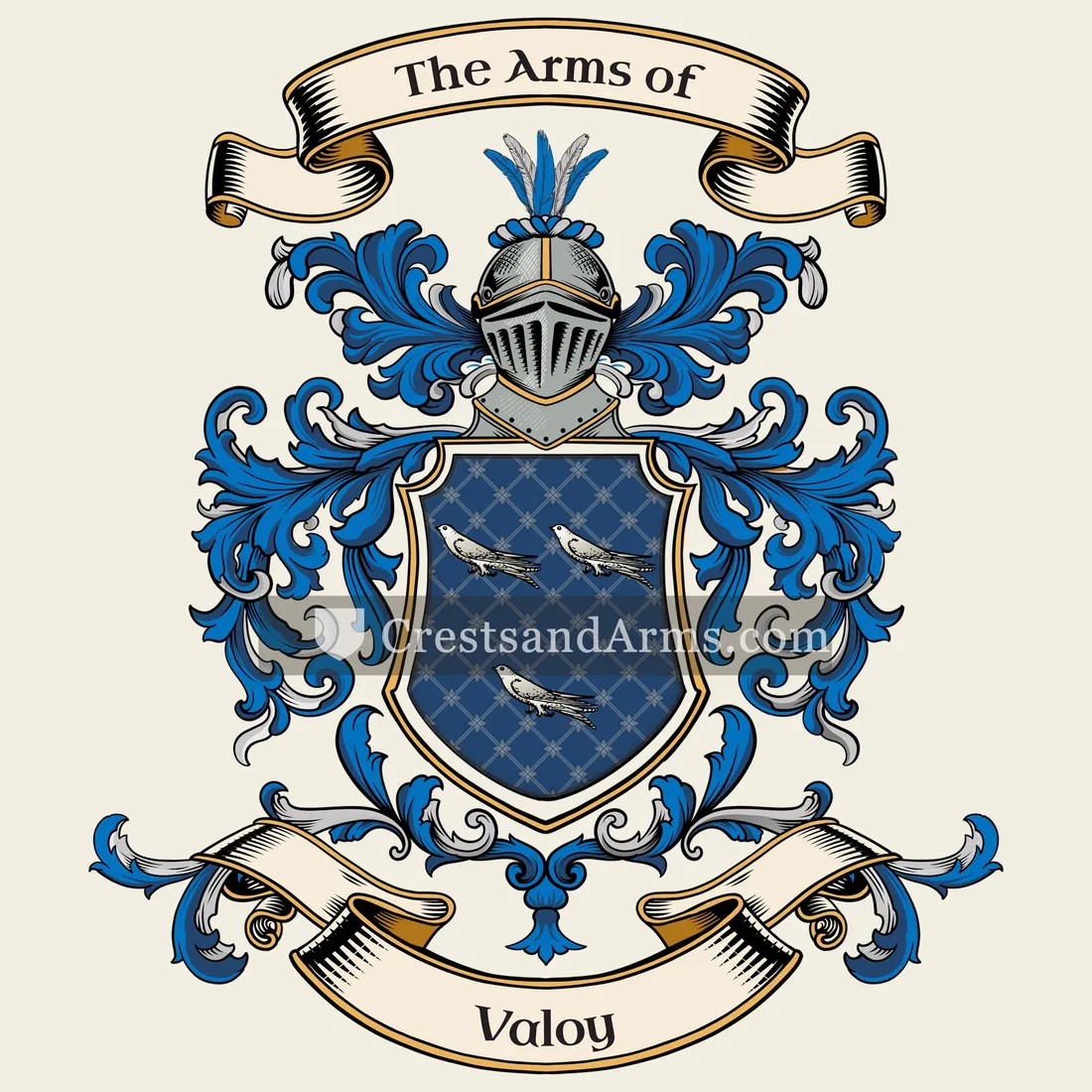
Symbols on this shield
martletA younger son, who must win his own land
Colours
Blue (Azure)Means: Loyalty and truth
Silver (Argent)Means: Peace and sincerity
Historical info
Source
J. B. Rietstap, Armorial Général, Gouda: G. B. van Goor Zonen, 1884–87
Blazon (the actual original written record)
“D'azur à trois merlettes d'arg.”
BelgiumTournaisis, c. 1737
Digital archive packCoat of arms PNG, gold border print PDF, vector SVG and the certificate of authenticity. Sent to your email in minutes.
Map of Belgium showing where the Valoy arms are recorded
The Valoy arms were recorded in Tournaisis, c. 1737.
This is where the arms were entered in the register. Families often moved to other parts of the country, so the same name can turn up in more than one region.
The body that granted and recorded arms in Belgium in this period.
Charles VI, Holy Roman Emperor
Sovereign of the period
Charles VI, Holy Roman Emperor
1711–1740
Reigning in Spain when the Valoy arms are first recorded.
How Arms Worked in Belgium
In Belgium, a coat of arms is considered personal property that is passed down through the male line to legitimate descendants. Families often use the same shield design across generations to show their shared heritage. If a branch of the family wants to change the design, they must apply for an official update to their specific version of the arms.
Granting authority
The Conseil héraldique is the official body that regulates and approves all coats of arms in Belgium.
How they got arms
Families obtain their coats of arms through formal royal grants or by confirming their historical right to use existing designs.
Where arms were recorded
All approved coats of arms are officially recorded in the public registers of the Conseil héraldique since 1844.
The family's standing
Recorded among the armigerous families of Belgium.
Origin & History of the Valoy Family in Belgium
The history of the Valoy family in Belgium is deeply rooted in the region of Tournaisis, where records confirm their presence as early as 1737. During the eighteenth century, this area was a vibrant crossroads of agricultural and trade activity located near the border of modern-day France. Families like the Valoys often lived in small, tight-knit rural communities where they contributed to the local economy through farming or skilled craftsmanship. Because the Tournaisis region frequently shifted between different political powers during this era, families often maintained strong local ties to their parish and village records to track their lineage. By settling in this specific part of the Southern Netherlands, the Valoy family became part of a long tradition of families who helped shape the cultural and social landscape of the Hainaut province. Their early presence in these administrative documents highlights a history of stability and community participation that defined life for many residents of the region during the late 1700s.
Valoy Meaning & Related Branches
Root word
Valle
A low area of land between hills or mountains.
This name
ValoyA topographic surname referring to someone who lived in or near a valley.
also spelled
Vall
Vale
Valh
Documented Sources
J. B. Rietstap, Armorial Général, Gouda: G. B. van Goor Zonen, 1884–87
Archivo de la Corona de Aragón, Censo de población de 1722
Archivo Histórico Provincial de Zaragoza, Protocolos notariales de la ciudad de Zaragoza
Ladero Quesada, Miguel Ángel, La España de los Reyes Católicos, 2005
Sesma Muñoz, José Ángel, La Corona de Aragón: Una historia común, 2000
Digital archive packCoat of arms PNG, gold border print PDF, vector SVG and the certificate of authenticity. Sent to your email in minutes.


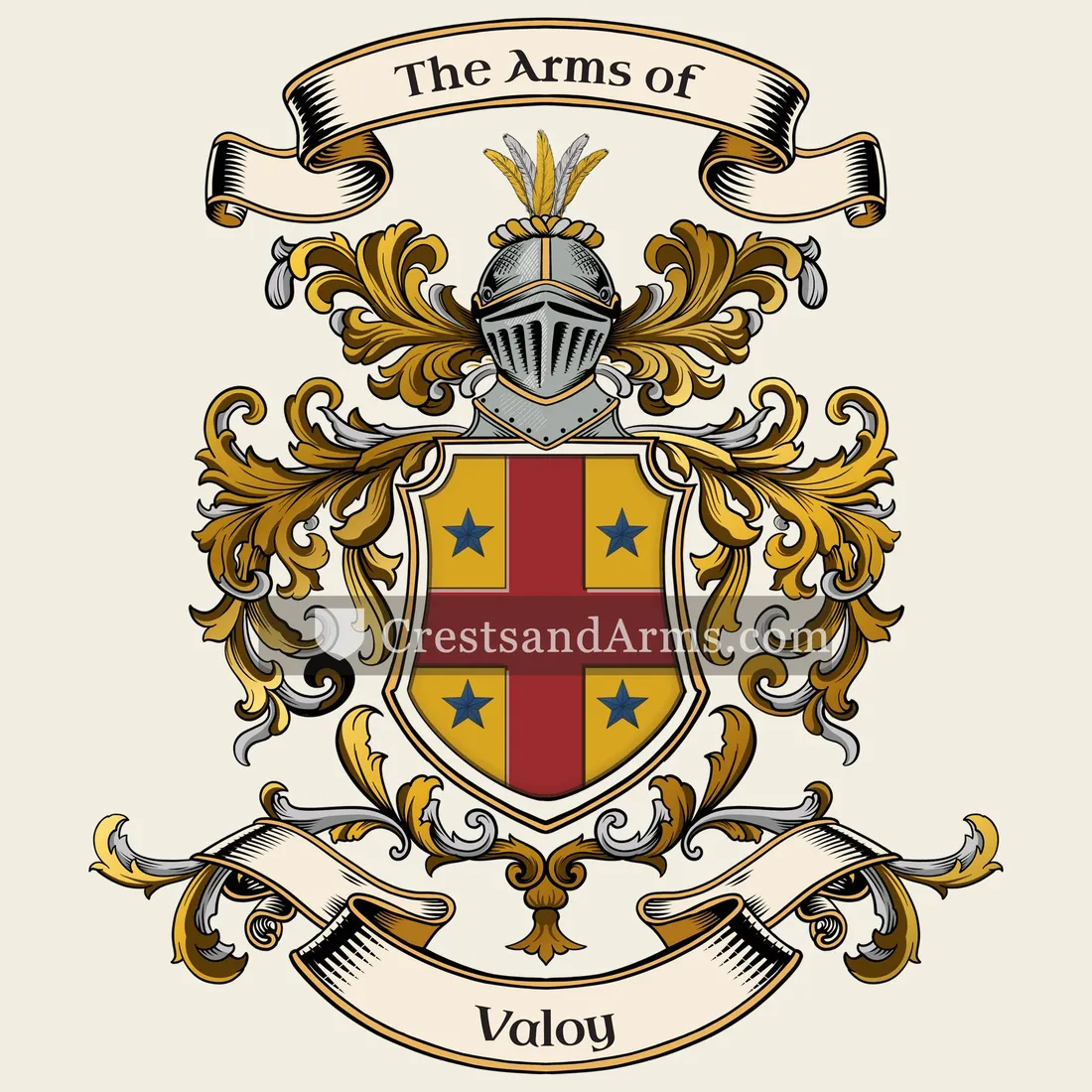
 cross symbolChristian faith and service
 mulletThe third son, and a divine quality from above
 cross symbolChristian faith and service
 mulletThe third son, and a divine quality from above


 martletA younger son, who must win his own land