Map of Belgium showing where the Value arms are recorded
The Value arms were recorded in Flandre, c. 1663.
Flandre grew rich on cloth, and its towns were among the busiest in Europe. Merchant families bought land with their profits and took arms to go with it, so trade put as many names in the registers here as land did.
This is where the arms were entered in the register. Families often moved to other parts of the country, so the same name can turn up in more than one region.
The body that granted and recorded arms in Belgium in this period.
Philip IV of Spain
Sovereign of the period
Philip IV of Spain
1621–1665
Reigning in Belgium when the Value arms are first recorded.
How Arms Worked in Belgium
In Belgium, a coat of arms is considered personal property that is passed down through the male line to legitimate descendants. Families often use the same shield design across generations to show their shared heritage. If a branch of the family wants to change the design, they must apply for an official update to their specific version of the arms.
Granting authority
The Conseil héraldique is the official body that regulates and approves all coats of arms in Belgium.
How they got arms
Families obtain their coats of arms through formal royal grants or by confirming their historical right to use existing designs.
Where arms were recorded
All approved coats of arms are officially recorded in the public registers of the Conseil héraldique since 1844.
The family's standing
Recorded among the armigerous families of Flandre.
Origin & History of the Value Family in Belgium
The history of the Value family in Belgium begins in the seventeenth century, specifically within the historic region of Flanders. Records confirm that members of the family were established in this area by 1663, a time when the region was navigating complex shifts in political power and economic trade. During this period, Flanders was a hub for textile production and merchant activity, which likely influenced the daily lives and social standing of the early Value ancestors. Living in such a vibrant area meant that families often had to adapt to changing local laws and the influence of both Spanish and French administrative styles. By settling in this part of the Low Countries, the early Value family became part of a resilient population that survived through decades of regional conflict and urban growth. Their presence in the historical record during the 1660s suggests they were integrated into the local community life of Flemish towns, where they contributed to the steady development of the region.
Coat of Arms & Family Crest Details
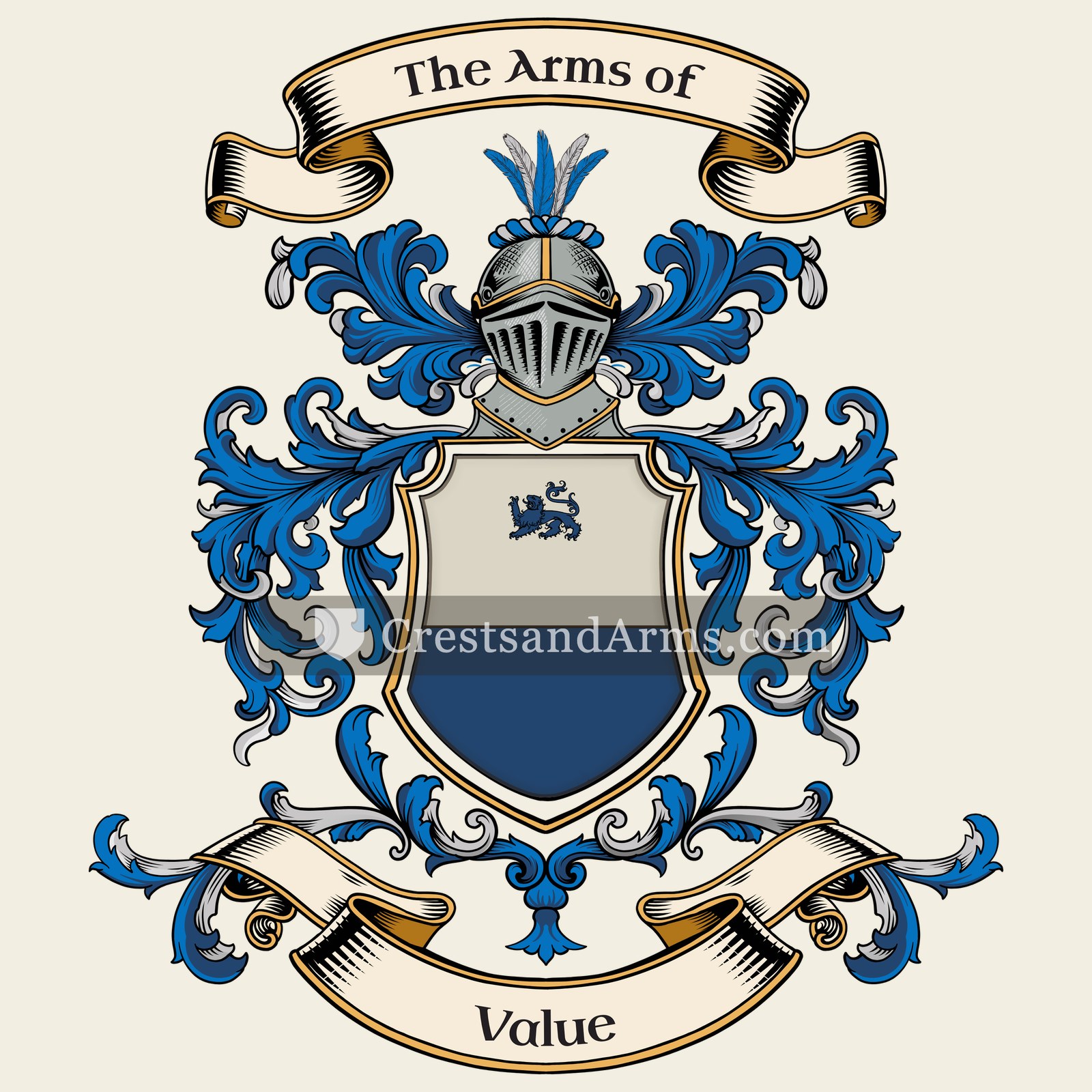
Symbols on this shield
fessThe military belt, and readiness to serve
lionCourage, strength and royalty
Colours
Silver (Argent)Means: Peace and sincerity
Blue (Azure)Means: Loyalty and truth
Historical info
Source
Sir Bernard Burke, The General Armory of England, Scotland, Ireland and Wales, London: Harrison & Sons, 1884
Blazon (the actual original written record)
“Per fess ar. and az. in chief a lion pass. guard. of the second”
Englandc. 1620
Digital archive packCoat of arms PNG, gold border print PDF, vector SVG and the certificate of authenticity. Sent to your email in minutes.
Map of England showing where the Value arms are recorded
The Value arms were recorded in England, c. 1620.
Arms such as these were typically recorded in York.
Yorkshire is the largest of the English counties, and it held more gentry families than any other. Land there was split among a great many households rather than a few, so a great many of them carried arms.
This is where the arms were entered in the register. Families often moved to other parts of the country, so the same name can turn up in more than one region.
The body that granted and recorded arms in England in this period.
James VI and I
Sovereign of the period
James VI and I
1603–1625
Reigning in Belgium when the Value arms are first recorded.
How Arms Worked in England
English heraldry allowed arms to be shared by all legitimate descendants of the original owner. These symbols were treated as personal property that moved through the generations to all children. While the eldest son kept the original design, other family members could use the same shield without needing to change it or register their own unique versions.
Granting authority
The College of Arms in London has regulated the use of coats of arms throughout England and Wales since 1484.
How they got arms
Families typically obtained their coats of arms through a formal grant from the Crown or by proving their ancient right to them.
Where arms were recorded
All official coats of arms are recorded in the registers kept at the College of Arms, which date back to the fifteenth century.
The family's standing
Recorded among the armigerous families of England.
Origin & History of the Value Family in England
The family name Value appears in the historical landscape of Northern England during the early seventeenth century, with documented evidence placing family members in the city of York by 1620. During this period, York served as a vital regional hub for trade and administration, attracting families who often worked in skilled crafts or local commerce. The name likely functioned as a descriptive identifier, potentially linked to a person’s reputation for fairness in business or their role in assessing the worth of goods within the bustling local markets. As the family established itself in the city, they became part of the social fabric of a region defined by its deep medieval roots and its transition into the early modern era. By remaining in such a prominent urban center, the early members of the Value family were positioned to participate in the evolving economic life of Yorkshire, leaving behind traces in local parish registers and civic documents that mark their presence in English history.
Related Branches & Arms
Root word
Valere
Derived from the Latin word meaning to be strong or healthy.
This name
ValueA habitational or occupational surname indicating someone who was worthy or of high value.
also spelled
Valle
Val
Vayle
Vail
Veale
Documented Sources
J. B. Rietstap, Armorial Général, Gouda: G. B. van Goor Zonen, 1884–87
State Archives in Belgium (Rijksarchief), Parochieregisters (Dopen, Huwelijken, Begrafenissen)
City Archives of Ghent (Stadsarchief Gent), Registers van de Poorters van Gent
Blok, P.J., Geschiedenis van het Nederlandsche volk, 1912
Pirenne, Henri, Histoire de Belgique, 1900
Digital archive packCoat of arms PNG, gold border print PDF, vector SVG and the certificate of authenticity. Sent to your email in minutes.


 martletA younger son, who must win his own land
 starThe celestial goddess, and nobility
 martletA younger son, who must win his own land
 starThe celestial goddess, and nobility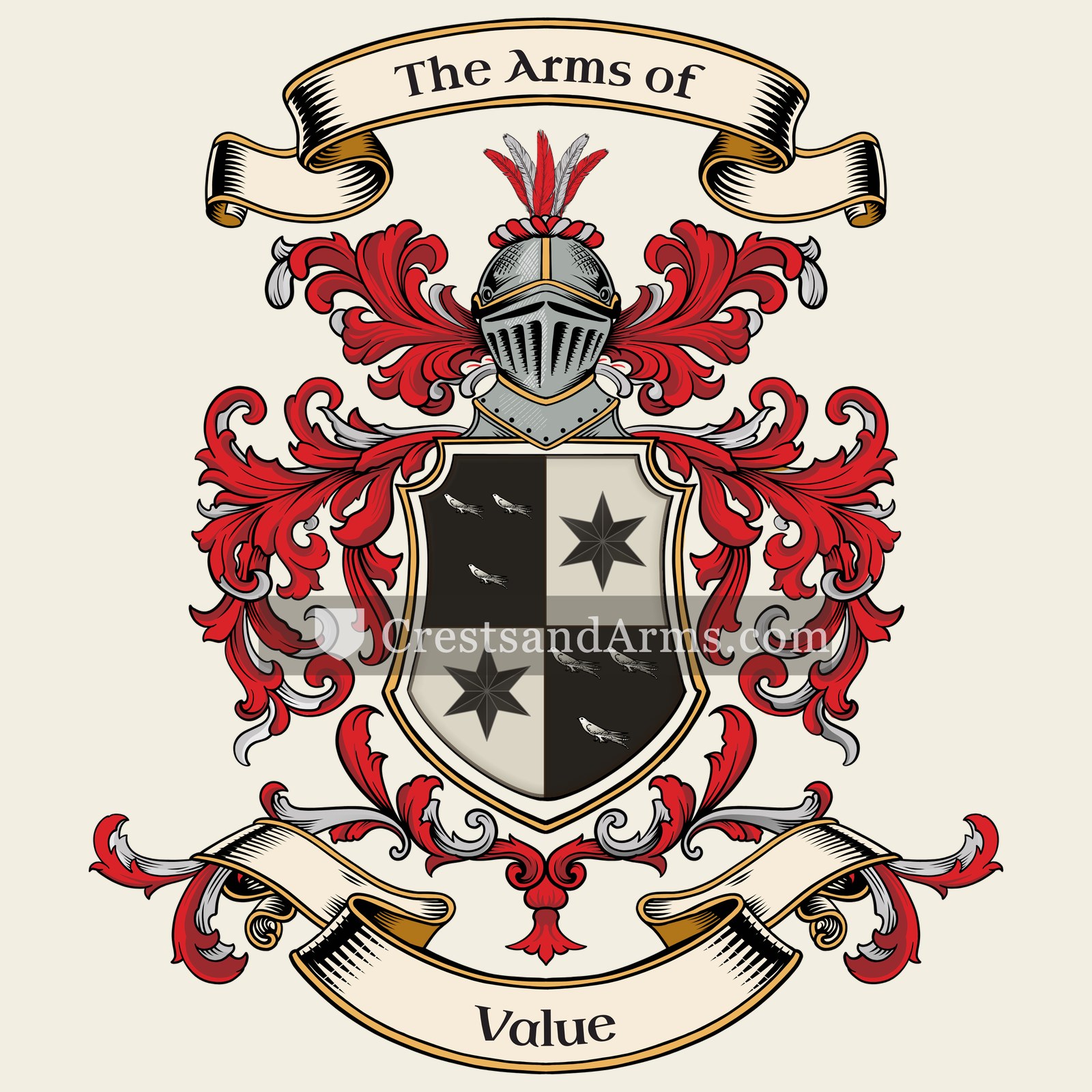


 fessThe military belt, and readiness to serve
 lionCourage, strength and royalty