Map of Netherlands showing where the Van Duyne arms are recorded
The Van Duyne arms were recorded in Dordrecht, c. 1815.
This is where the arms were entered in the register. Families often moved to other parts of the country, so the same name can turn up in more than one region.
Region
Dordrecht
Town
Dordrecht
First recorded
1815
Granting Authority for the Van Duyne Arms
Hoge Raad van Adel
Photograph made by me · CC BY-SA 3.0
The body that granted and recorded arms in Netherlands in this period.
William I of the Netherlands
Sovereign of the period
William I of the Netherlands
1815–1840
Reigning in Netherlands when the Van Duyne arms are first recorded.
How Arms Worked in Netherlands
In the Netherlands, coats of arms were often used by noble families and those who held specific public offices. These arms were passed down through the generations to legitimate descendants. Younger branches of a family usually kept the original design without needing to add special marks. This system ensured that the family identity remained clear and consistent over many years.
Granting authority
The Hoge Raad van Adel is the official body that regulates and manages noble titles and coats of arms in the Netherlands.
How they got arms
Families typically obtained their coats of arms through official royal grants or by proving their long-standing historical use of the symbols.
Where arms were recorded
Coats of arms are officially recorded in the registers held by the Hoge Raad van Adel, which began its work in 1814.
The family's standing
Recorded among the armigerous families of Netherlands.
Origin & History of the Van Duyne Family in Netherlands
The surname Van Duyne originates from the low-lying coastal regions of the Netherlands, where the name served as a geographic identifier for families living near the sand dunes. In the Dutch language, the term "duin" refers to a dune, and the prefix "van" indicates a person’s place of origin or residence. By the early 19th century, the family established a notable presence in the historic city of Dordrecht. As one of the oldest cities in the province of South Holland, Dordrecht was a vital hub for trade and shipping, providing a stable environment for families to grow and document their civil status. Records from 1815 confirm that members of the family were active residents of this city during a time when the Netherlands was transitioning into a modern kingdom. This period marked a shift toward standardized record-keeping, which helped solidify the spelling and registration of the name within official municipal archives.
Meaning of the Van Duyne family crest colors & symbols
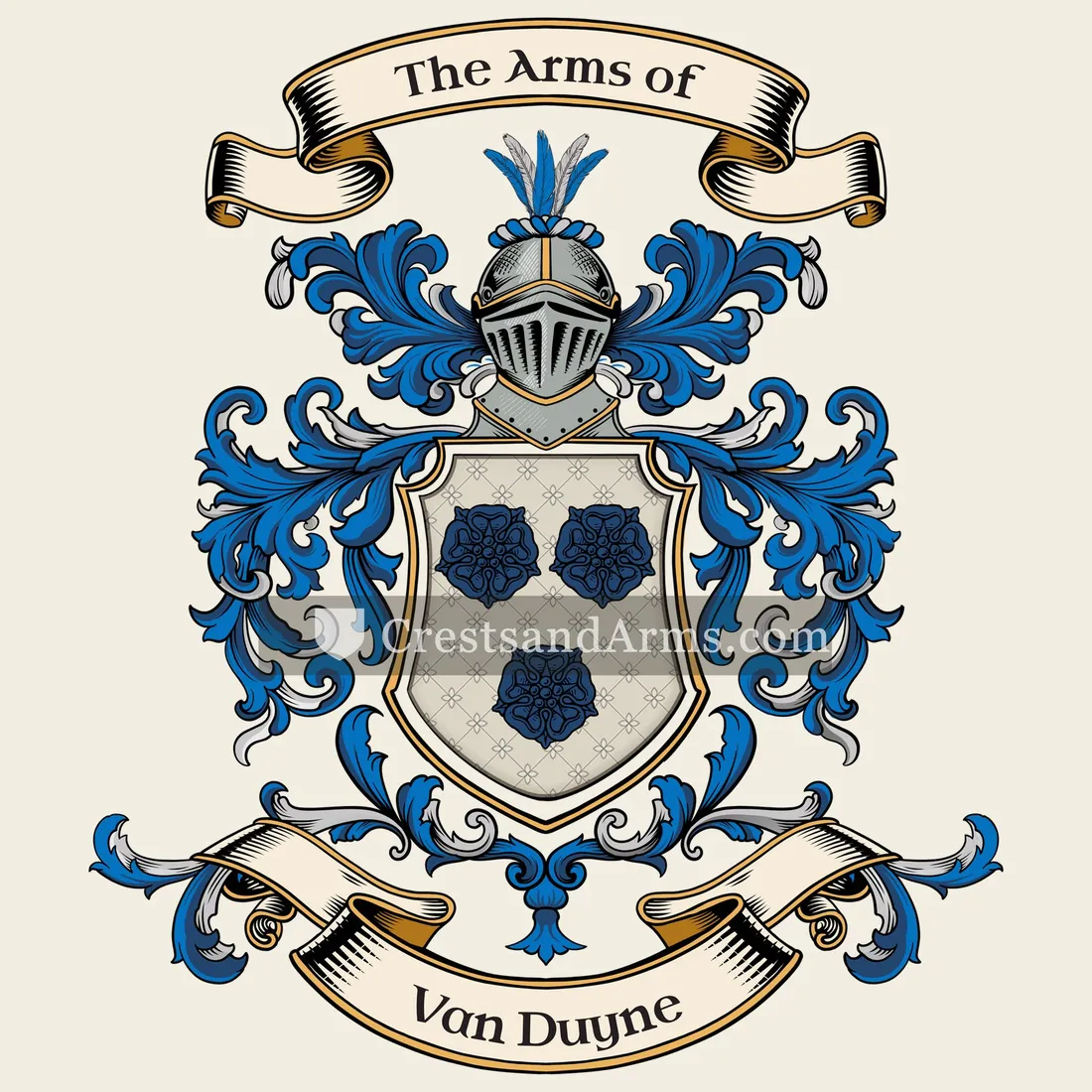
Symbols on this shield
roseThe seventh son, and beauty with grace
Colours
Silver (Argent)Means: Peace and sincerity
Blue (Azure)Means: Loyalty and truth
Historical info
Source
J. B. Rietstap, Armorial Général, Gouda: G. B. van Goor Zonen, 1884–87
Blazon (the actual original written record)
“D'arg. à trois roses à quatre feuilles d'azur.”
BrabantBrabant, c. 1737
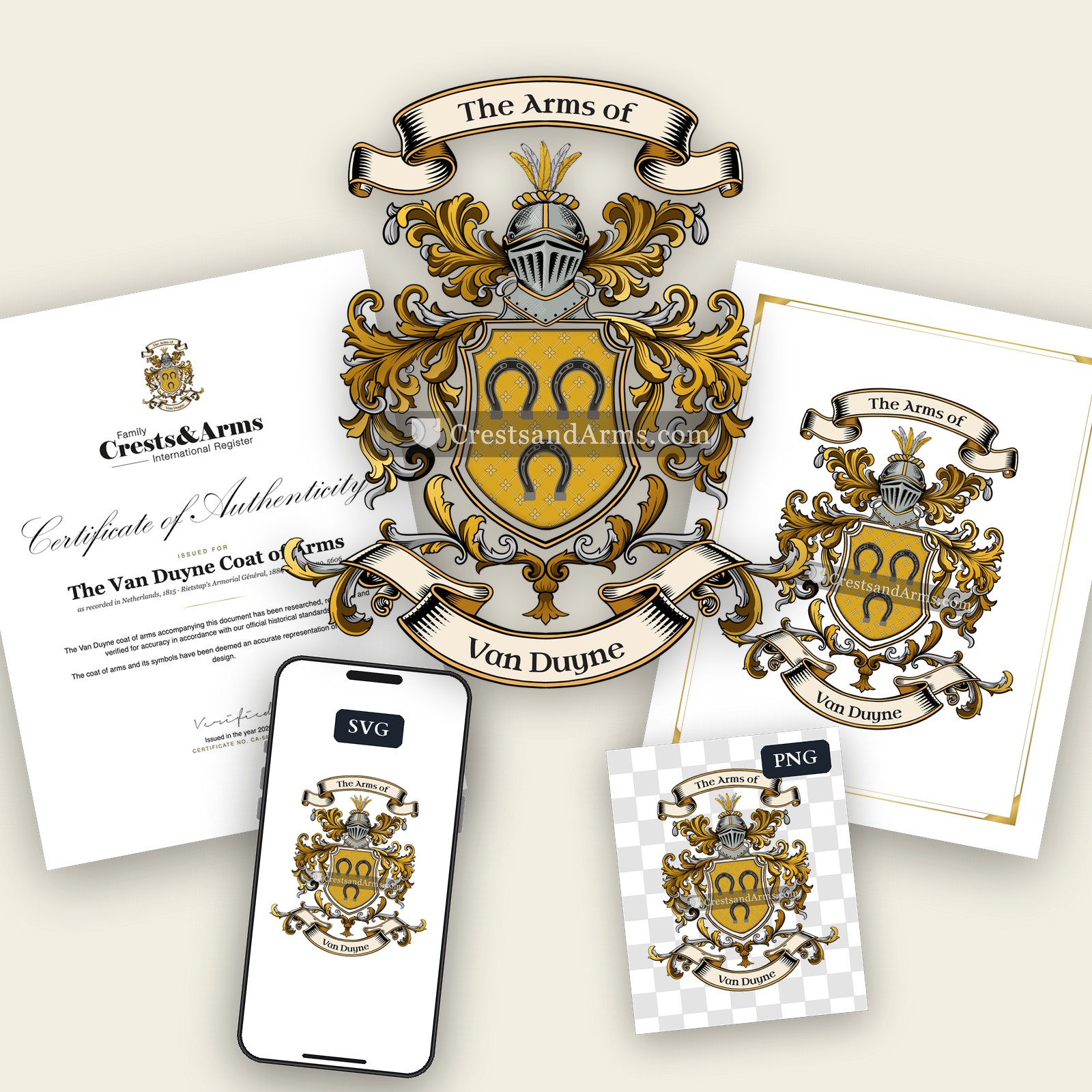
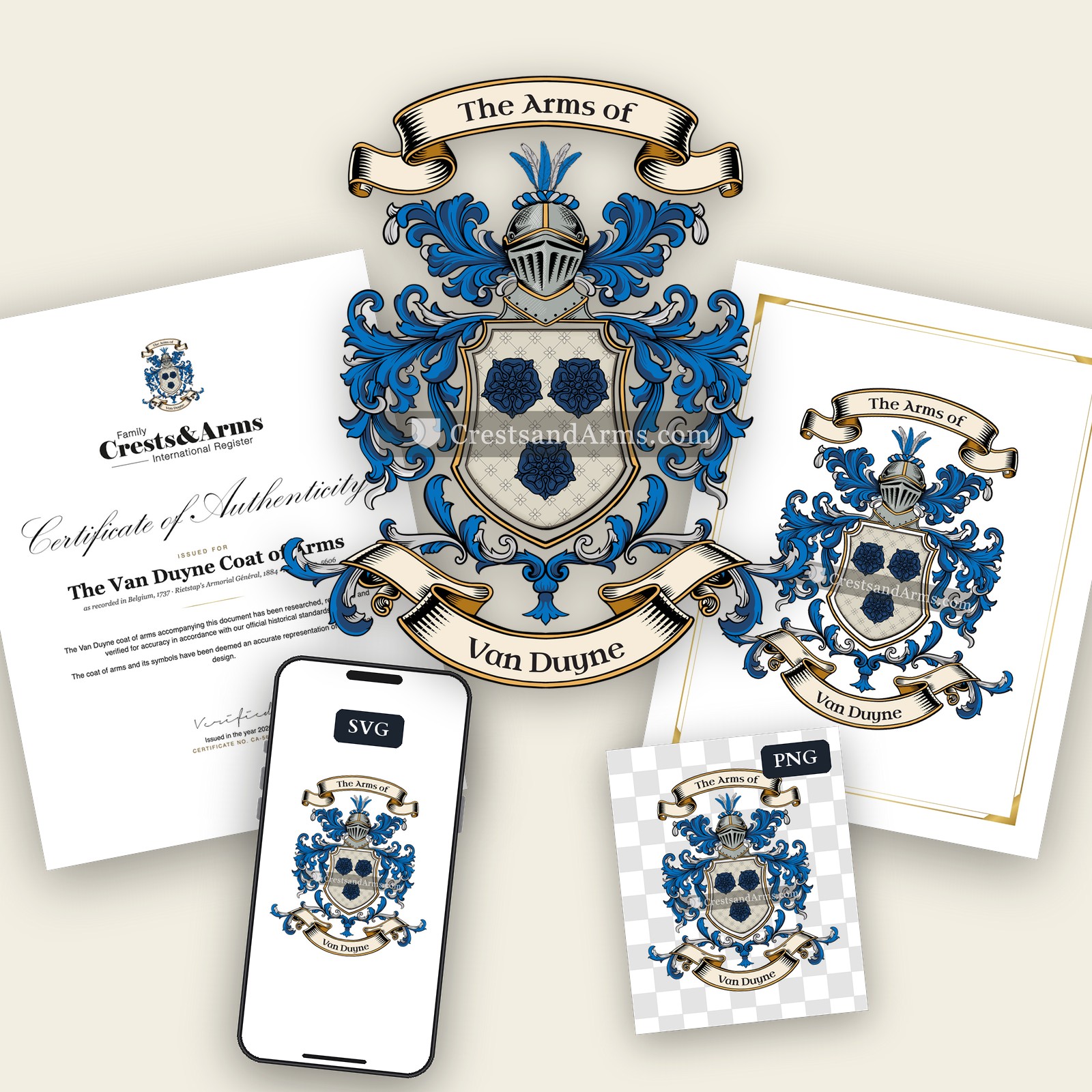
Digital archive packCoat of arms PNG, gold border print PDF, vector SVG and the certificate of authenticity. Sent to your email in minutes.
Map of Belgium showing where the Van Duyne arms are recorded
The Van Duyne arms were recorded in Brabant, c. 1737.
Brabant lay at the heart of the Low Countries, where the trade routes met. Its towns were wealthy and its landowners many, and both kinds of family kept arms, which is why the region is so heavily represented.
This is where the arms were entered in the register. Families often moved to other parts of the country, so the same name can turn up in more than one region.
The body that granted and recorded arms in Belgium in this period.
Charles VI, Holy Roman Emperor
Sovereign of the period
Charles VI, Holy Roman Emperor
1711–1740
Reigning in Netherlands when the Van Duyne arms are first recorded.
How Arms Worked in Belgium
In Belgium, a coat of arms is considered personal property that is passed down through the male line to legitimate descendants. Families often use the same shield design across generations to show their shared heritage. If a branch of the family wants to change the design, they must apply for an official update to their specific version of the arms.
Granting authority
The Conseil héraldique is the official body that regulates and approves all coats of arms in Belgium.
How they got arms
Families obtain their coats of arms through formal royal grants or by confirming their historical right to use existing designs.
Where arms were recorded
All approved coats of arms are officially recorded in the public registers of the Conseil héraldique since 1844.
The family's standing
Recorded among the armigerous families of Brabant.
Origin & History of the Van Duyne Family in Belgium
The family name Van Duyne finds its roots in the historical region of Brabant, a territory that once served as a central hub for trade and culture in the Low Countries. By 1737, records confirm that members of the family were firmly established within this area, living among the dense network of towns and rural parishes that defined the landscape of the Austrian Netherlands. The name itself follows a traditional naming pattern common to the region, likely originating as a topographic descriptor to identify individuals who lived near a specific waterway or a sandy, low-lying area. During the eighteenth century, families in Brabant were often deeply connected to the local agricultural economy or the burgeoning textile industries that fueled the regional prosperity of the time. As the family navigated the social and political shifts of the era, they remained part of a stable community structure that relied on parish record-keeping and local land management to maintain their place in society.
Van Duyne Meaning & Related Branches
Root word
Duin
A sandy hill or dune formation found along the coast.
This name
Van DuyneRefers to a person who lived near or originated from the sand dunes.
also spelled
Vanduyn
Vanduinen
van Dinen
Documented Sources
J. B. Rietstap, Armorial Général, Gouda: G. B. van Goor Zonen, 1884–87
Regionaal Archief Dordrecht, Burgerlijke Stand (Civil Registry)
De Vries, J. W., Nederlandse Familienamen, 1992
Huizinga, A., Encyclopedie van namen, 1959
Digital archive packCoat of arms PNG, gold border print PDF, vector SVG and the certificate of authenticity. Sent to your email in minutes.


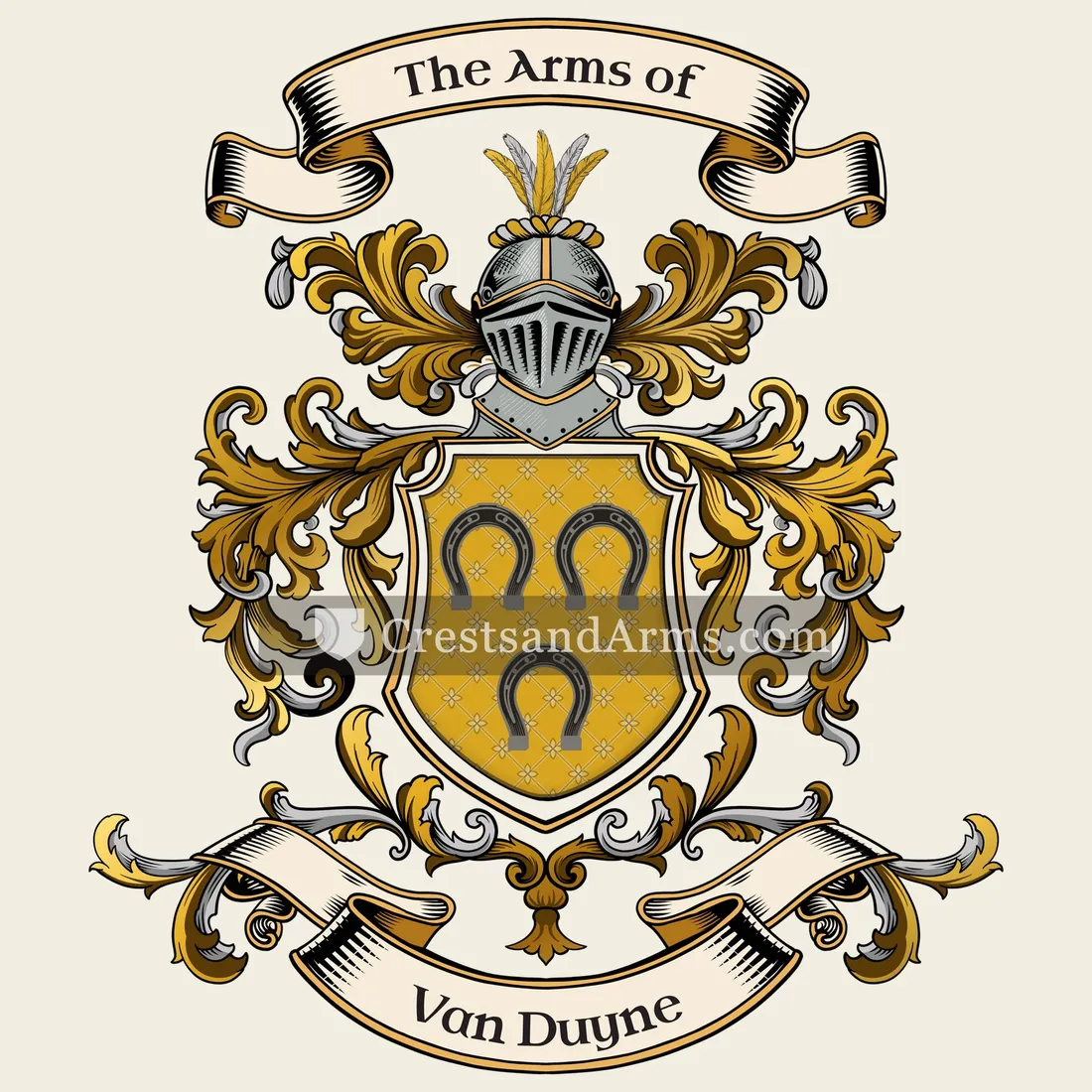
 horseshoeGood fortune and protection from harm
 horseshoeGood fortune and protection from harm


 roseThe seventh son, and beauty with grace