Map of Netherlands showing where the van Essen arms are recorded
The van Essen arms were recorded in Netherlands, c. 1815.
Arms such as these were typically recorded in Friesland.
Friesland was low, wet country on the northern coast of the Netherlands, farmed by families who had held the same land for centuries. Free landholders were unusually common there, and a free landholder could carry arms.
This is where the arms were entered in the register. Families often moved to other parts of the country, so the same name can turn up in more than one region.
Region
Friesland
First recorded
1815
Granting Authority for the van Essen Arms
Hoge Raad van Adel
Photograph made by me · CC BY-SA 3.0
The body that granted and recorded arms in Netherlands in this period.
William I of the Netherlands
Sovereign of the period
William I of the Netherlands
1815–1840
Reigning in Netherlands when the van Essen arms are first recorded.
How Arms Worked in Netherlands
In the Netherlands, coats of arms were often used by noble families and those who held specific public offices. These arms were passed down through the generations to legitimate descendants. Younger branches of a family usually kept the original design without needing to add special marks. This system ensured that the family identity remained clear and consistent over many years.
Granting authority
The Hoge Raad van Adel is the official body that regulates and manages noble titles and coats of arms in the Netherlands.
How they got arms
Families typically obtained their coats of arms through official royal grants or by proving their long-standing historical use of the symbols.
Where arms were recorded
Coats of arms are officially recorded in the registers held by the Hoge Raad van Adel, which began its work in 1814.
The family's standing
Recorded among the armigerous families of Netherlands.
Origin & History of the van Essen Family in Netherlands
The surname van Essen is a locative name, which means it was originally used to identify people based on the specific town or region where they lived. In the Dutch language, the prefix "van" indicates that a person came from a particular place, and in this case, the name points toward the town of Essen. While there are several places with this name, the family history in the Netherlands is deeply connected to the northern provinces. By the year 1815, records confirm that members of the van Essen family were well-established in the province of Friesland. During this period, the Netherlands underwent significant changes in how citizens registered their surnames due to the introduction of the Napoleonic civil registry. This transition helped formalize the family name as it moved from being a simple description of origin to a permanent hereditary identity for generations of families living in the Frisian landscape.
Meaning of the van Essen family crest colors & symbols
Symbols on this shield
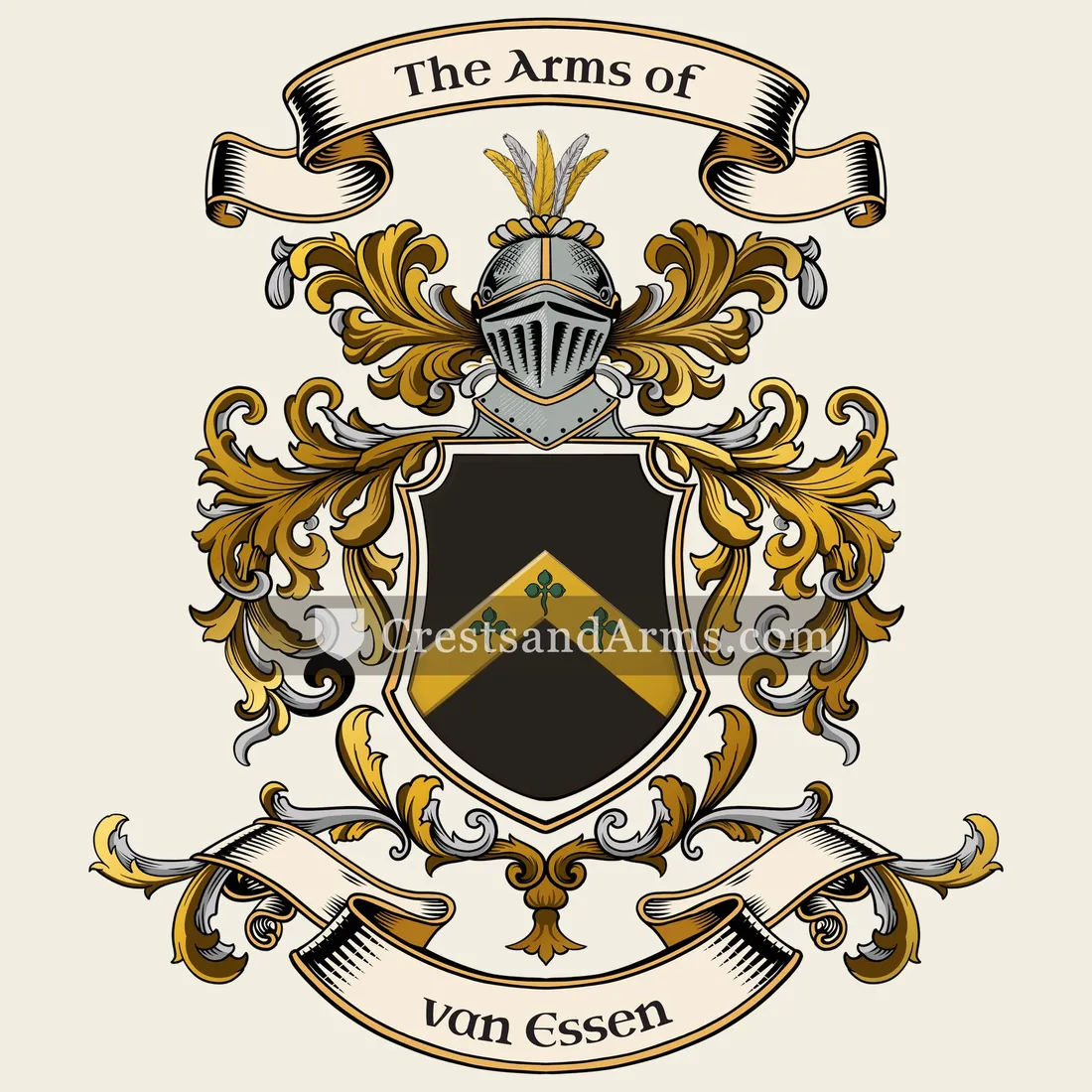
chevronProtection, and faithful service completed
trefoilPerpetuity, and the Trinity
Colours
Black (Sable)Means: Constancy
Gold (Or)Means: Generosity
Green (Vert)Means: Hope
Historical info
Source
J. B. Rietstap, Armorial Général, Gouda: G. B. van Goor Zonen, 1884–87
Blazon (the actual original written record)
“De sa. au chev. d'or, ch. de trois trèfles de sin. (ou roses de gu.) Cq. cour. C.: un homme iss., hab. d'or à brandebourgs de gu., ceint du même, coiffé d'un chapeau de sa., les bras étendus, tenant de chaque main un trèfle de sin.”
BrabantBrabant, c. 1745
Digital archive packCoat of arms PNG, gold border print PDF, vector SVG and the certificate of authenticity. Sent to your email in minutes.
Map of Belgium showing where the van Essen arms are recorded
The van Essen arms were recorded in Brabant, c. 1745.
Brabant lay at the heart of the Low Countries, where the trade routes met. Its towns were wealthy and its landowners many, and both kinds of family kept arms, which is why the region is so heavily represented.
This is where the arms were entered in the register. Families often moved to other parts of the country, so the same name can turn up in more than one region.
The body that granted and recorded arms in Belgium in this period.
Charles VII, Holy Roman Emperor
Sovereign of the period
Charles VII, Holy Roman Emperor
1742–1745
Reigning in Netherlands when the van Essen arms are first recorded.
How Arms Worked in Belgium
In Belgium, a coat of arms is considered personal property that is passed down through the male line to legitimate descendants. Families often use the same shield design across generations to show their shared heritage. If a branch of the family wants to change the design, they must apply for an official update to their specific version of the arms.
Granting authority
The Conseil héraldique is the official body that regulates and approves all coats of arms in Belgium.
How they got arms
Families obtain their coats of arms through formal royal grants or by confirming their historical right to use existing designs.
Where arms were recorded
All approved coats of arms are officially recorded in the public registers of the Conseil héraldique since 1844.
The family's standing
Recorded among the armigerous families of Brabant.
Origin & History of the van Essen Family in Belgium
The family name van Essen is a classic example of a toponymic surname, which means it was originally derived from a specific geographic location. In the context of Belgium, the name identifies individuals who hailed from the town of Essen, located in the northern reaches of the Antwerp province near the border of the Netherlands. By the middle of the eighteenth century, members of the family had established a notable presence within the Duchy of Brabant, a region that served as a central hub for trade and administration in the Low Countries. During this era, families often moved between these local territories for work in agriculture or craft guilds. The presence of the family in Brabant by 1745 suggests that they were part of the steady migration of people moving toward the growing urban centers of the region. Over time, the name evolved from a simple way to describe where a person came from into a permanent family identifier that was passed down through generations.
van Essen Meaning & Related Branches
Root word
Es
A Germanic term referring to an ash tree.
This name
van EssenIndicates a person who lived near or originated from a location characterized by ash trees.
also spelled
Vaness
Documented Sources
J. B. Rietstap, Armorial Général, Gouda: G. B. van Goor Zonen, 1884–87
Meertens, P.J., De betekenis van de Nederlandse familienamen, 1958
Van der Schaar, J., Woordenboek van voornamen, 1964
Tresoar (Fries Historisch en Letterkundig Centrum), Burgerlijke Stand van Friesland (1811-1950)
Digital archive packCoat of arms PNG, gold border print PDF, vector SVG and the certificate of authenticity. Sent to your email in minutes.


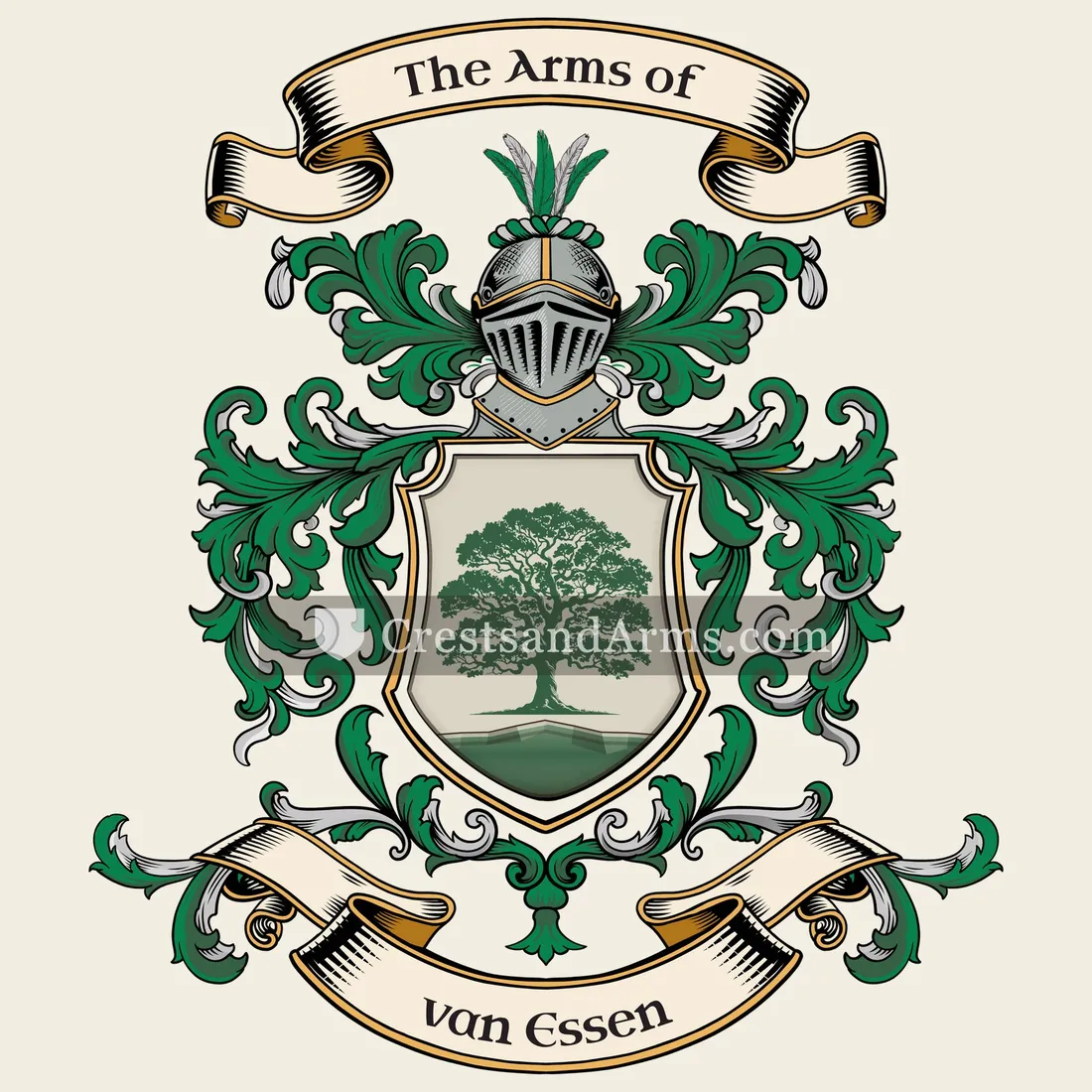
 mountThe ground held, and steadfastness upon it
 treeLife, endurance and deep roots
 mountThe ground held, and steadfastness upon it
 treeLife, endurance and deep roots


 chevronProtection, and faithful service completed
 trefoilPerpetuity, and the Trinity