Map of Netherlands showing where the Van Horn arms are recorded
The Van Horn arms were recorded in Amsterdam, c. 1815.
This is where the arms were entered in the register. Families often moved to other parts of the country, so the same name can turn up in more than one region.
Region
Amsterdam
Town
Amsterdam
First recorded
1815
Granting Authority for the Van Horn Arms
Hoge Raad van Adel
Photograph made by me · CC BY-SA 3.0
The body that granted and recorded arms in Netherlands in this period.
William I of the Netherlands
Sovereign of the period
William I of the Netherlands
1815–1840
Reigning in Netherlands when the Van Horn arms are first recorded.
How Arms Worked in Netherlands
In the Netherlands, coats of arms were often used by noble families and those who held specific public offices. These arms were passed down through the generations to legitimate descendants. Younger branches of a family usually kept the original design without needing to add special marks. This system ensured that the family identity remained clear and consistent over many years.
Granting authority
The Hoge Raad van Adel is the official body that regulates and manages noble titles and coats of arms in the Netherlands.
How they got arms
Families typically obtained their coats of arms through official royal grants or by proving their long-standing historical use of the symbols.
Where arms were recorded
Coats of arms are officially recorded in the registers held by the Hoge Raad van Adel, which began its work in 1814.
The family's standing
Recorded among the armigerous families of Netherlands.
Origin & History of the Van Horn Family in Netherlands
The surname Van Horn originates from the Dutch language and identifies a person who came from a place called Hoorn. This town is located in the province of North Holland and served as a major center for trade and shipping during the height of the Dutch Golden Age. Families carrying this name often moved from smaller coastal towns into the bustling city of Amsterdam to pursue new economic opportunities. By the year 1815, Amsterdam was undergoing significant changes as it transitioned into the capital of the newly formed Kingdom of the Netherlands. During this period, the Van Horn family was well-established within the city, participating in the urban growth and commercial life that defined the post-Napoleonic era. The name itself reflects a deep connection to the geography of the Dutch coastline and the long tradition of families migrating toward the economic heart of the nation.
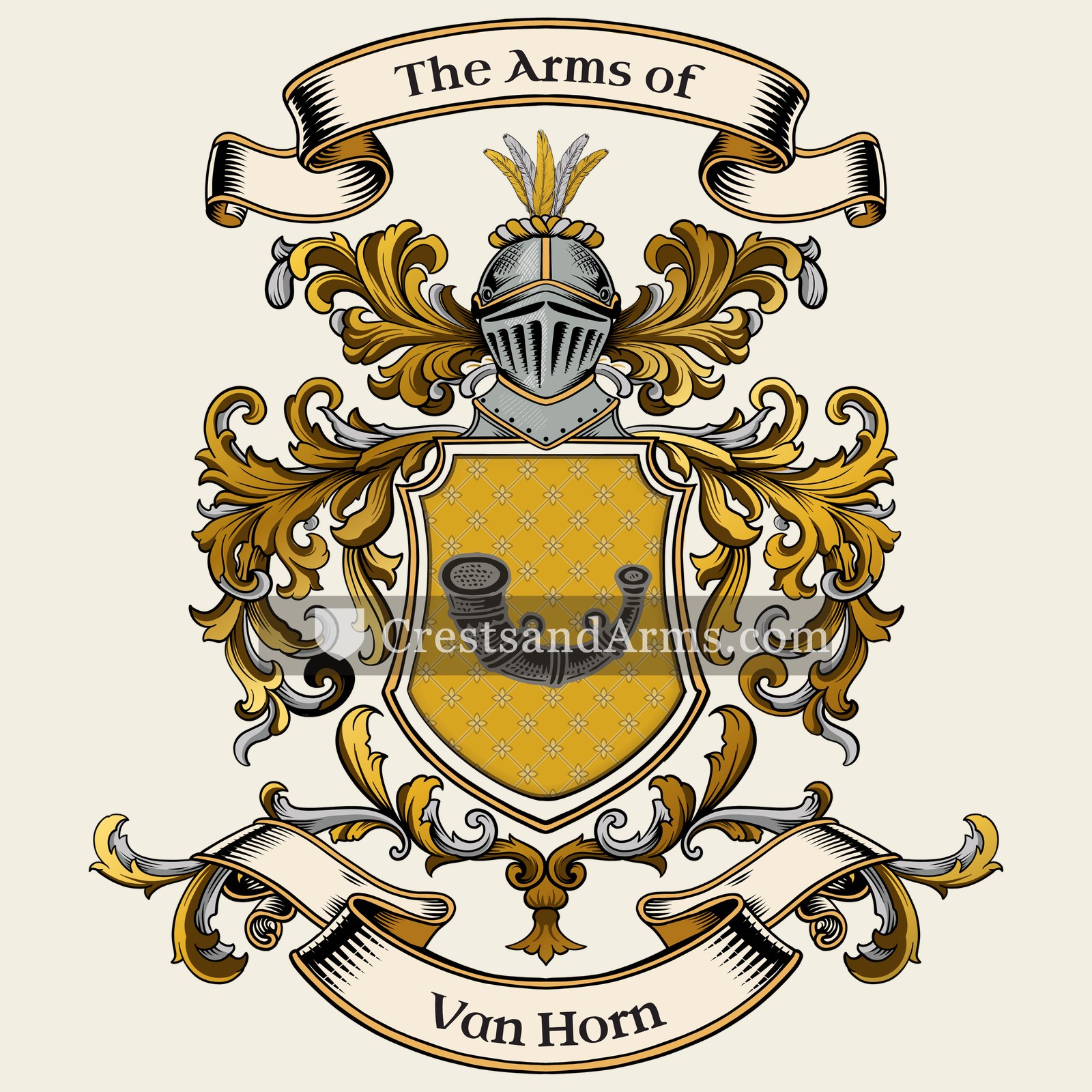
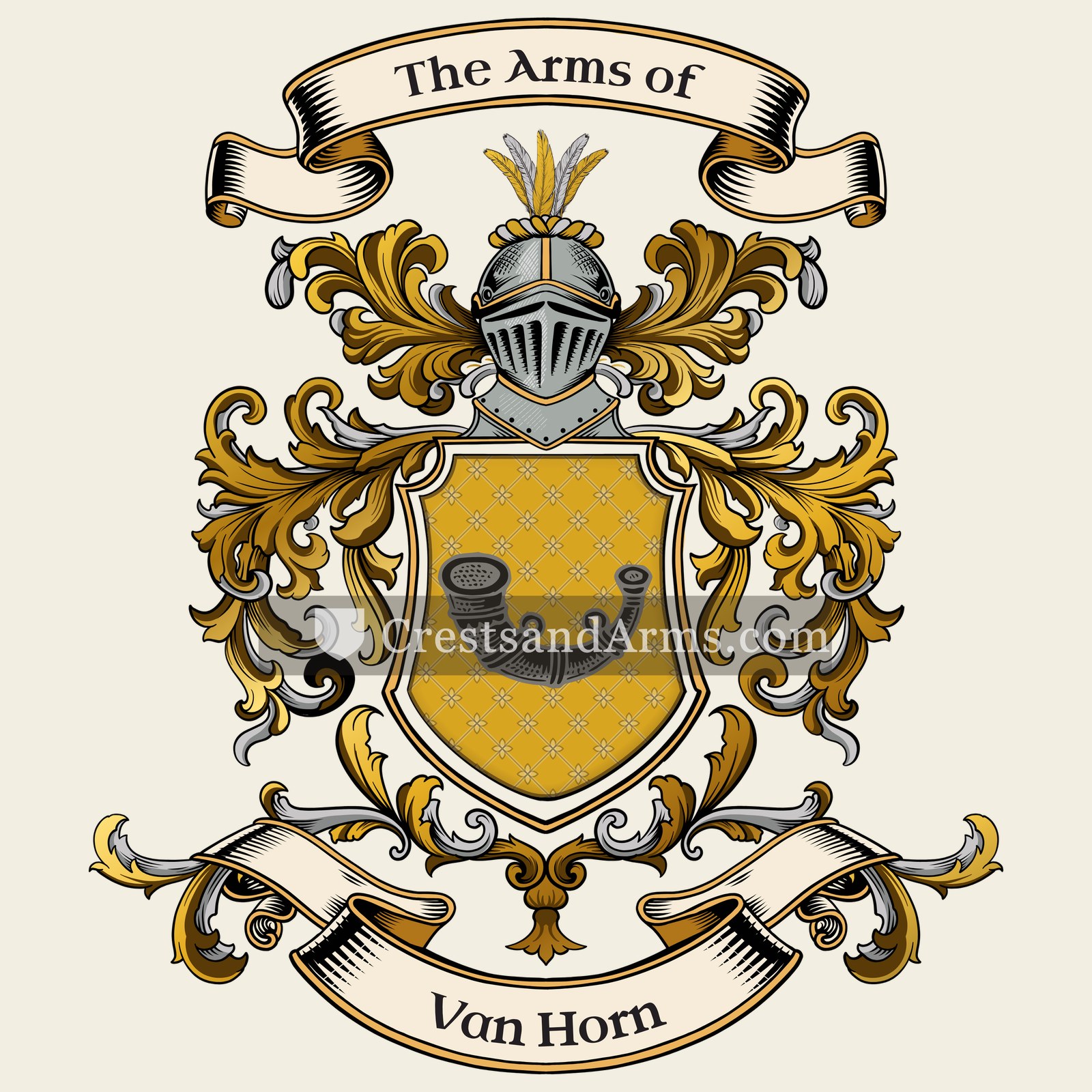
Coat of Arms & Family Crest Details
Symbols on this shield
hunting horn stringedOne who delights in the chase
Colours
Gold (Or)Means: Generosity
Black (Sable)Means: Constancy
Historical info
Source
J. B. Rietstap, Armorial Général, Gouda: G. B. van Goor Zonen, 1884–87
Blazon (the actual original written record)
“D'or à un cor-de-chasse de sa., lié, vir. et eng. d'or.”
BelgiumGand, c. 1737
Digital archive packCoat of arms PNG, gold border print PDF, vector SVG and the certificate of authenticity. Sent to your email in minutes.
Map of Belgium showing where the Van Horn arms are recorded
The Van Horn arms were recorded in Gand, c. 1737.
This is where the arms were entered in the register. Families often moved to other parts of the country, so the same name can turn up in more than one region.
The body that granted and recorded arms in Belgium in this period.
Charles VI, Holy Roman Emperor
Sovereign of the period
Charles VI, Holy Roman Emperor
1711–1740
Reigning in Netherlands when the Van Horn arms are first recorded.
How Arms Worked in Belgium
In Belgium, a coat of arms is considered personal property that is passed down through the male line to legitimate descendants. Families often use the same shield design across generations to show their shared heritage. If a branch of the family wants to change the design, they must apply for an official update to their specific version of the arms.
Granting authority
The Conseil héraldique is the official body that regulates and approves all coats of arms in Belgium.
How they got arms
Families obtain their coats of arms through formal royal grants or by confirming their historical right to use existing designs.
Where arms were recorded
All approved coats of arms are officially recorded in the public registers of the Conseil héraldique since 1844.
The family's standing
Recorded among the armigerous families of Belgium.
Origin & History of the Van Horn Family in Belgium
The family name Van Horn finds its roots in the low-lying regions of the Low Countries, where the prefix "van" traditionally signaled a person’s place of origin. In the context of Belgium, the name is deeply tied to the historical landscape of Flanders. By 1737, records confirm that members of the family were well-established in the city of Ghent, known locally as Gand. During this period, Ghent was a vital center for trade and textile production, which likely influenced the daily lives and social standing of the family members living there. As the name spread through the region, it became associated with the local Flemish culture and the urban development of one of Europe’s most important medieval cities. The family likely navigated the complex political and economic shifts of the eighteenth century while contributing to the growth of the local community in Ghent.
Related Branches & Arms
Root word
Hoorn
A geographical term referring to a horn-shaped piece of land or harbor.
This name
Van HornIndicates a person who originated from the town of Hoorn in the Netherlands.
also spelled
van Hoorne
van Horn
Hoorn
Van Horn
Documented Sources
J. B. Rietstap, Armorial Général, Gouda: G. B. van Goor Zonen, 1884–87
Huizinga, Frans, Nederlandse Familienamen, 1959
Stadsarchief Amsterdam, Bevolkingsregister van Amsterdam, 1815
Van der Aa, A.J., Aardrijkskundig Woordenboek der Nederlanden, 1844
Digital archive packCoat of arms PNG, gold border print PDF, vector SVG and the certificate of authenticity. Sent to your email in minutes.


 hunting horn stringedOne who delights in the chase
 hunting horn stringedOne who delights in the chase