Map of Netherlands showing where the van Son arms are recorded
The van Son arms were recorded in Bois-le, c. 1815.
This is where the arms were entered in the register. Families often moved to other parts of the country, so the same name can turn up in more than one region.
Region
Bois-le
Town
Bois-le
First recorded
1815
Granting Authority for the van Son Arms
Hoge Raad van Adel
Photograph made by me · CC BY-SA 3.0
The body that granted and recorded arms in Netherlands in this period.
William I of the Netherlands
Sovereign of the period
William I of the Netherlands
1815–1840
Reigning in Netherlands when the van Son arms are first recorded.
How Arms Worked in Netherlands
In the Netherlands, coats of arms were often used by noble families and those who held specific public offices. These arms were passed down through the generations to legitimate descendants. Younger branches of a family usually kept the original design without needing to add special marks. This system ensured that the family identity remained clear and consistent over many years.
Granting authority
The Hoge Raad van Adel is the official body that regulates and manages noble titles and coats of arms in the Netherlands.
How they got arms
Families typically obtained their coats of arms through official royal grants or by proving their long-standing historical use of the symbols.
Where arms were recorded
Coats of arms are officially recorded in the registers held by the Hoge Raad van Adel, which began its work in 1814.
The family's standing
Recorded among the armigerous families of Netherlands.
Origin & History of the van Son Family in Netherlands
The family name van Son originates from the North Brabant region of the Netherlands, specifically drawing its identity from the village of Son en Breugel located near the city of Eindhoven. In the Dutch language, the prefix "van" indicates that an individual came from a particular place, meaning the earliest ancestors were likely residents or landowners in the village of Son who eventually moved into larger urban centers. By the year 1815, records confirm that members of the family were well-established in the city of 's-Hertogenbosch, which is historically referred to in French as Bois-le-Duc. During this period, the family was part of the local Dutch citizenry navigating the transition from the Napoleonic era to the newly formed United Kingdom of the Netherlands. The family’s presence in 's-Hertogenbosch suggests they were integrated into the administrative and social life of the provincial capital, reflecting the broader movement of families from rural Brabant villages into the growing cities of the nineteenth century.
Meaning of the van Son family crest colors & symbols
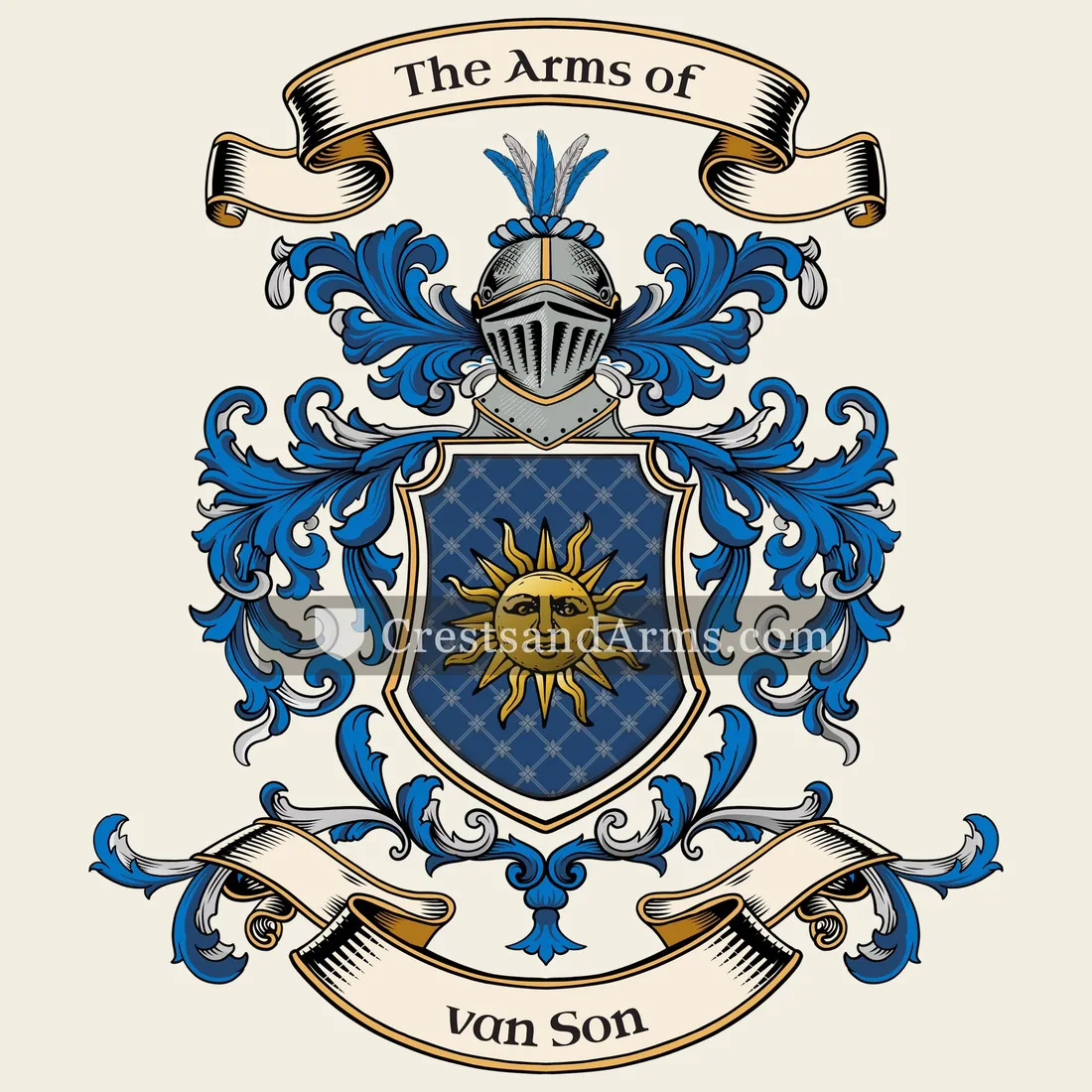
Symbols on this shield
sunGlory, splendour and the source of life
Colours
Blue (Azure)Means: Loyalty and truth
Gold (Or)Means: Generosity
Historical info
Source
J. B. Rietstap, Armorial Général, Gouda: G. B. van Goor Zonen, 1884–87
Blazon (the actual original written record)
“D'azur à un soleil d'or.”
BelgiumRotterdam, c. 1737
Digital archive packCoat of arms PNG, gold border print PDF, vector SVG and the certificate of authenticity. Sent to your email in minutes.
Map of Belgium showing where the van Son arms are recorded
The van Son arms were recorded in Rotterdam, c. 1737.
Arms such as these were typically recorded in Brabant.
Brabant lay at the heart of the Low Countries, where the trade routes met. Its towns were wealthy and its landowners many, and both kinds of family kept arms, which is why the region is so heavily represented.
This is where the arms were entered in the register. Families often moved to other parts of the country, so the same name can turn up in more than one region.
The body that granted and recorded arms in Belgium in this period.
Charles VI, Holy Roman Emperor
Sovereign of the period
Charles VI, Holy Roman Emperor
1711–1740
Reigning in Netherlands when the van Son arms are first recorded.
How Arms Worked in Belgium
In Belgium, a coat of arms is considered personal property that is passed down through the male line to legitimate descendants. Families often use the same shield design across generations to show their shared heritage. If a branch of the family wants to change the design, they must apply for an official update to their specific version of the arms.
Granting authority
The Conseil héraldique is the official body that regulates and approves all coats of arms in Belgium.
How they got arms
Families obtain their coats of arms through formal royal grants or by confirming their historical right to use existing designs.
Where arms were recorded
All approved coats of arms are officially recorded in the public registers of the Conseil héraldique since 1844.
The family's standing
Recorded among the armigerous families of Belgium.
Origin & History of the van Son Family in Belgium
The family name van Son finds its historical roots in the fertile landscape of the Duchy of Brabant, a region that now spans parts of modern-day Belgium and the southern Netherlands. By the year 1737, records confirm that members of the family were firmly established within this territory, living in a society deeply shaped by local parish life and agricultural traditions. The name itself is a toponymic surname, meaning it was originally used to identify individuals based on their place of origin, specifically the village of Son located near Eindhoven. As people moved across the borders of the Low Countries during the eighteenth century, those carrying the name integrated into the local communities of Brabant, where they participated in the social and economic rhythms of the region. This early presence highlights a history defined by migration and the strong connection between a family identity and the specific geography of the Brabant countryside.
van Son Meaning & Related Branches
Root word
Sone
Old Germanic term for son or descendant.
This name
van SonRefers to a person originating from the village of Son in North Brabant.
also spelled
Sonne
van Sonne
Sonh
Son
Related arms
Paperecorded with van Son, same area
van Casteelrecorded with van Son, same area
van Couwenhovenrecorded with van Son, same area
van Crayesteinrecorded with van Son, same area
Documented Sources
J. B. Rietstap, Armorial Général, Gouda: G. B. van Goor Zonen, 1884–87
Brabants Historisch Informatie Centrum (BHIC), Bevolkingsregister 's-Hertogenbosch
Nationaal Archief, Burgerlijke Stand en Bevolking in Noord-Brabant
Van Driel, L., Etymologie van Nederlandse familienamen, 2003
Van der Aa, A.J., Aardrijkskundig woordenboek der Nederlanden, 1847
Digital archive packCoat of arms PNG, gold border print PDF, vector SVG and the certificate of authenticity. Sent to your email in minutes.


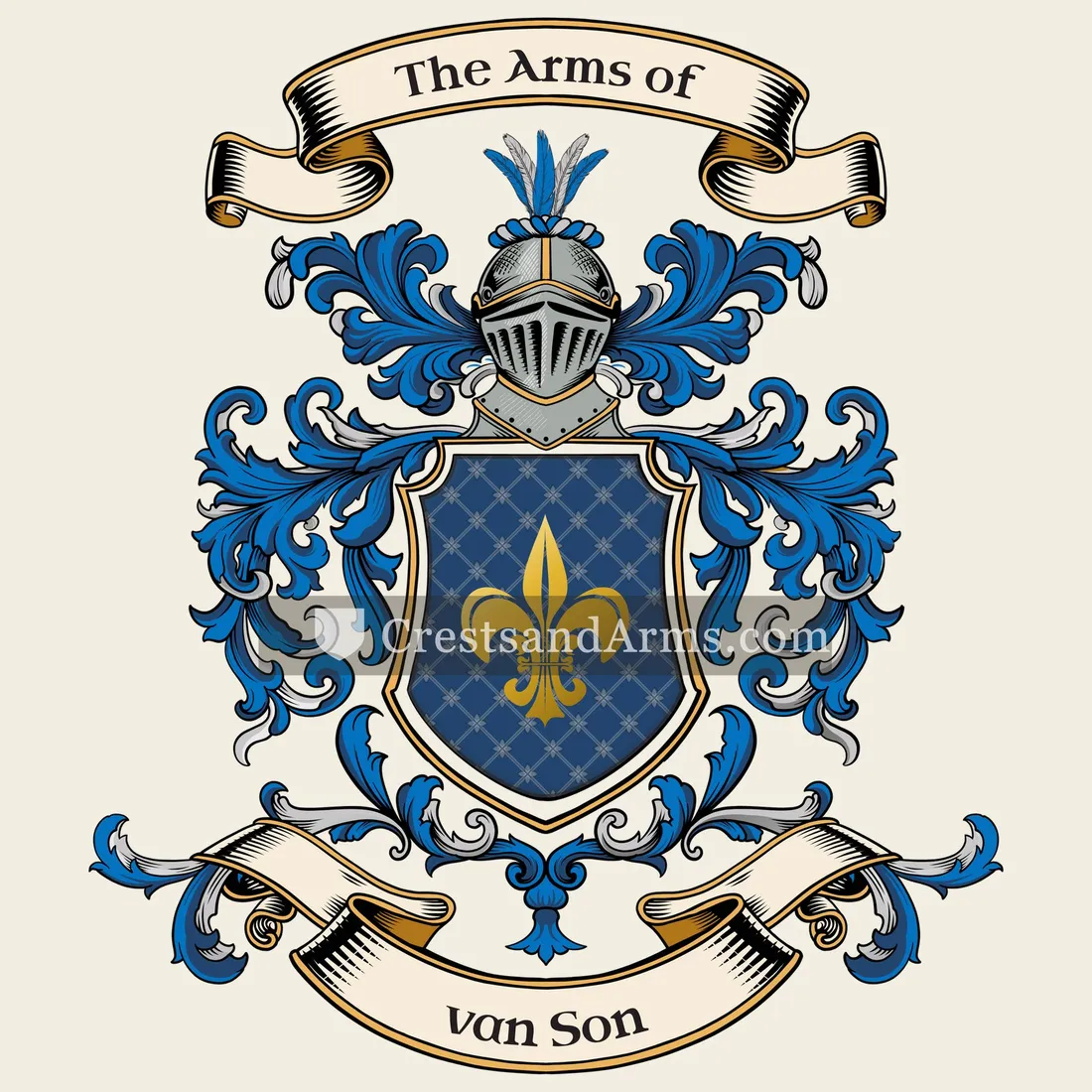
 fleur de lisPurity, light, and the sixth son
 fleur de lisPurity, light, and the sixth son


 sunGlory, splendour and the source of life