Map of Netherlands showing where the Vandenburg arms are recorded
The Vandenburg arms were recorded in Netherlands, c. 1815.
Arms such as these were typically recorded in Friesland.
Friesland was low, wet country on the northern coast of the Netherlands, farmed by families who had held the same land for centuries. Free landholders were unusually common there, and a free landholder could carry arms.
This is where the arms were entered in the register. Families often moved to other parts of the country, so the same name can turn up in more than one region.
Region
Friesland
First recorded
1815
Granting Authority for the Vandenburg Arms
Hoge Raad van Adel
Photograph made by me · CC BY-SA 3.0
The body that granted and recorded arms in Netherlands in this period.
William I of the Netherlands
Sovereign of the period
William I of the Netherlands
1815–1840
Reigning in Netherlands when the Vandenburg arms are first recorded.
How Arms Worked in Netherlands
In the Netherlands, coats of arms were often used by noble families and those who held specific public offices. These arms were passed down through the generations to legitimate descendants. Younger branches of a family usually kept the original design without needing to add special marks. This system ensured that the family identity remained clear and consistent over many years.
Granting authority
The Hoge Raad van Adel is the official body that regulates and manages noble titles and coats of arms in the Netherlands.
How they got arms
Families typically obtained their coats of arms through official royal grants or by proving their long-standing historical use of the symbols.
Where arms were recorded
Coats of arms are officially recorded in the registers held by the Hoge Raad van Adel, which began its work in 1814.
The family's standing
Recorded among the armigerous families of Netherlands.
Origin & History of the Vandenburg Family in Netherlands
The name Vandenburg is a topographic surname that translates literally to "from the mountain" or "from the fortress." In the context of the Netherlands, this name likely originated as a way to identify individuals who lived near a prominent hill or a fortified structure. While the name is found in various regions, the presence of the family in the northern province of Friesland by 1815 reflects a time of significant transition for Dutch surnames. During the Napoleonic era, specifically in 1811, the French administration required all citizens to adopt permanent, hereditary family names for tax and census purposes. Before this mandate, many families in rural areas like Friesland used patronymics, which were names based on their father's first name. The formal registration of the Vandenburg name in the early 19th century suggests that the family was solidifying its identity during this period of national record-keeping. This shift helped transition the family from a local, oral tradition of naming into the modern system of civil registration that defines Dutch genealogical history today.
Coat of Arms & Family Crest Details
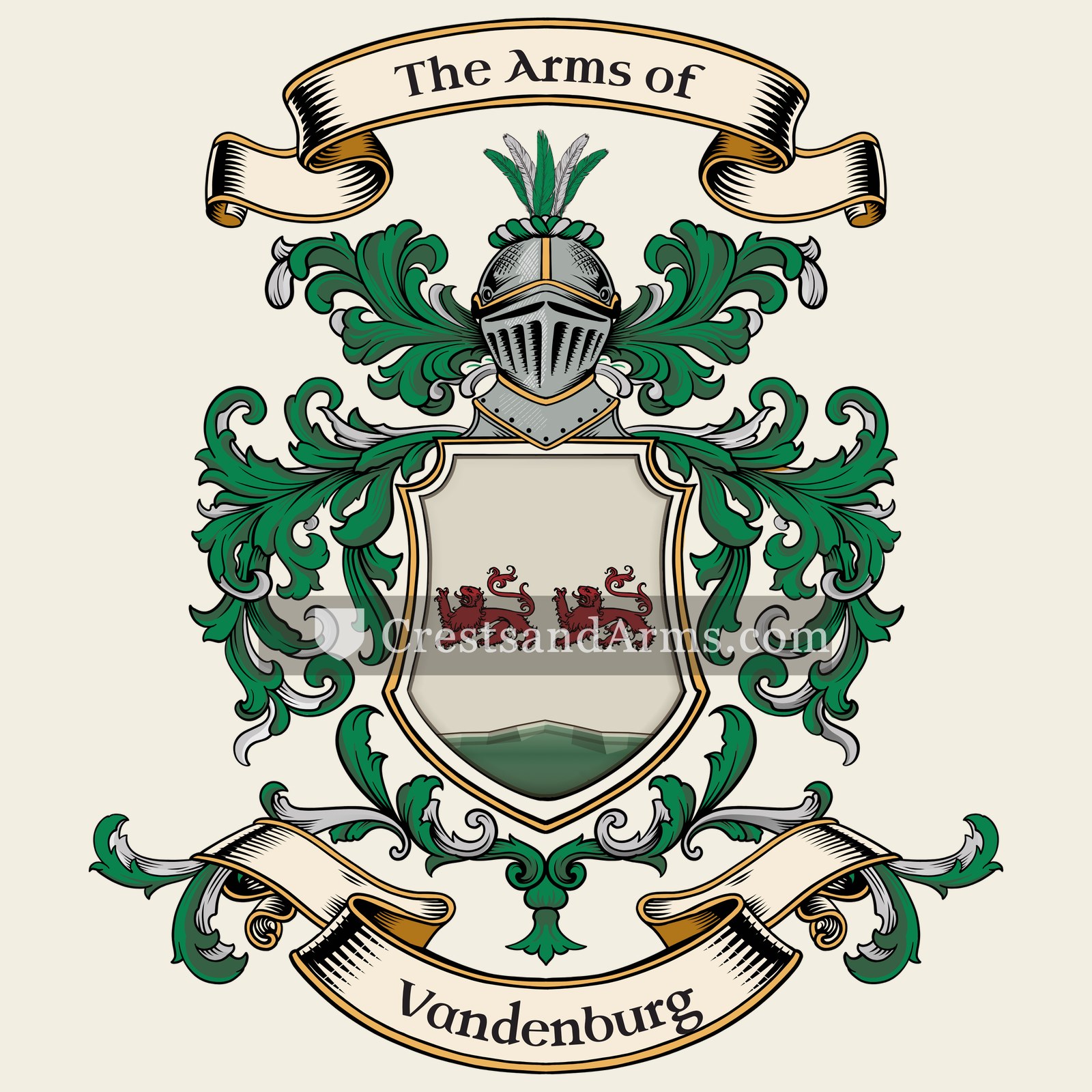
Symbols on this shield
mountThe ground held, and steadfastness upon it
lionCourage, strength and royalty
Colours
Silver (Argent)Means: Peace and sincerity
Green (Vert)Means: Hope
Red (Gules)Means: Military strength
Historical info
Source
J. B. Rietstap, Armorial Général, Gouda: G. B. van Goor Zonen, 1884–87
Blazon (the actual original written record)
“D'arg. à deux lions affr. de gu, jouant de la patte, soutenus d'un tertre de sin. C.: les deux lions, ramp. et affr. [Henri van den Berg, roi d'armes de la province de Liége, décédé en 1674.]”
LiegeLiege, c. 1737
Digital archive packCoat of arms PNG, gold border print PDF, vector SVG and the certificate of authenticity. Sent to your email in minutes.
Map of Belgium showing where the Vandenburg arms are recorded
The Vandenburg arms were recorded in Liege, c. 1737.
Liege was a prosperous town and its surrounding country, living on metalworking and trade. Merchant families grew rich, bought land outside the walls, and took arms as landowners rather than tradesmen.
This is where the arms were entered in the register. Families often moved to other parts of the country, so the same name can turn up in more than one region.
The body that granted and recorded arms in Belgium in this period.
Charles VI, Holy Roman Emperor
Sovereign of the period
Charles VI, Holy Roman Emperor
1711–1740
Reigning in Netherlands when the Vandenburg arms are first recorded.
How Arms Worked in Belgium
In Belgium, a coat of arms is considered personal property that is passed down through the male line to legitimate descendants. Families often use the same shield design across generations to show their shared heritage. If a branch of the family wants to change the design, they must apply for an official update to their specific version of the arms.
Granting authority
The Conseil héraldique is the official body that regulates and approves all coats of arms in Belgium.
How they got arms
Families obtain their coats of arms through formal royal grants or by confirming their historical right to use existing designs.
Where arms were recorded
All approved coats of arms are officially recorded in the public registers of the Conseil héraldique since 1844.
The family's standing
Recorded among the armigerous families of Liege.
Origin & History of the Vandenburg Family in Belgium
The family name Vandenburg originates from the Dutch language and translates to mean "from the mountain" or "from the fortress." In the context of Belgium, this name reflects a history tied to the landscape and the defensive structures that defined the region during the Middle Ages. By the early 18th century, records confirm that members of the family were well-established in the city of Liège. During this period, Liège functioned as a powerful ecclesiastical principality, serving as a hub for trade, metalworking, and coal mining. Families living in this area were often influenced by the shifting political boundaries between the French and Dutch-speaking territories. As residents of Liège in 1737, the Vandenburg family likely participated in the vibrant urban life of a city known for its independence and industrial growth. Their presence in such a significant cultural center suggests they were integrated into the local economy and social fabric of the Meuse River valley.
Related Branches & Arms
Root word
burg
A fortified settlement, castle, or protected enclosure.
This name
VandenburgRefers to someone who lived near or originated from a fortified castle or town.
also spelled
Berg
Documented Sources
J. B. Rietstap, Armorial Général, Gouda: G. B. van Goor Zonen, 1884–87
Meertens, P. J., De betekenis van de Nederlandse familienamen, 1957
Van Berkel, G. and Samplonius, K., Nederlandse plaatsnamen verklaard, 2018
Tresoar (Fries Historisch en Letterkundig Centrum), Burgerlijke Stand van Friesland (1811–1950)
Digital archive packCoat of arms PNG, gold border print PDF, vector SVG and the certificate of authenticity. Sent to your email in minutes.


 chevronProtection, and faithful service completed
 chevronProtection, and faithful service completed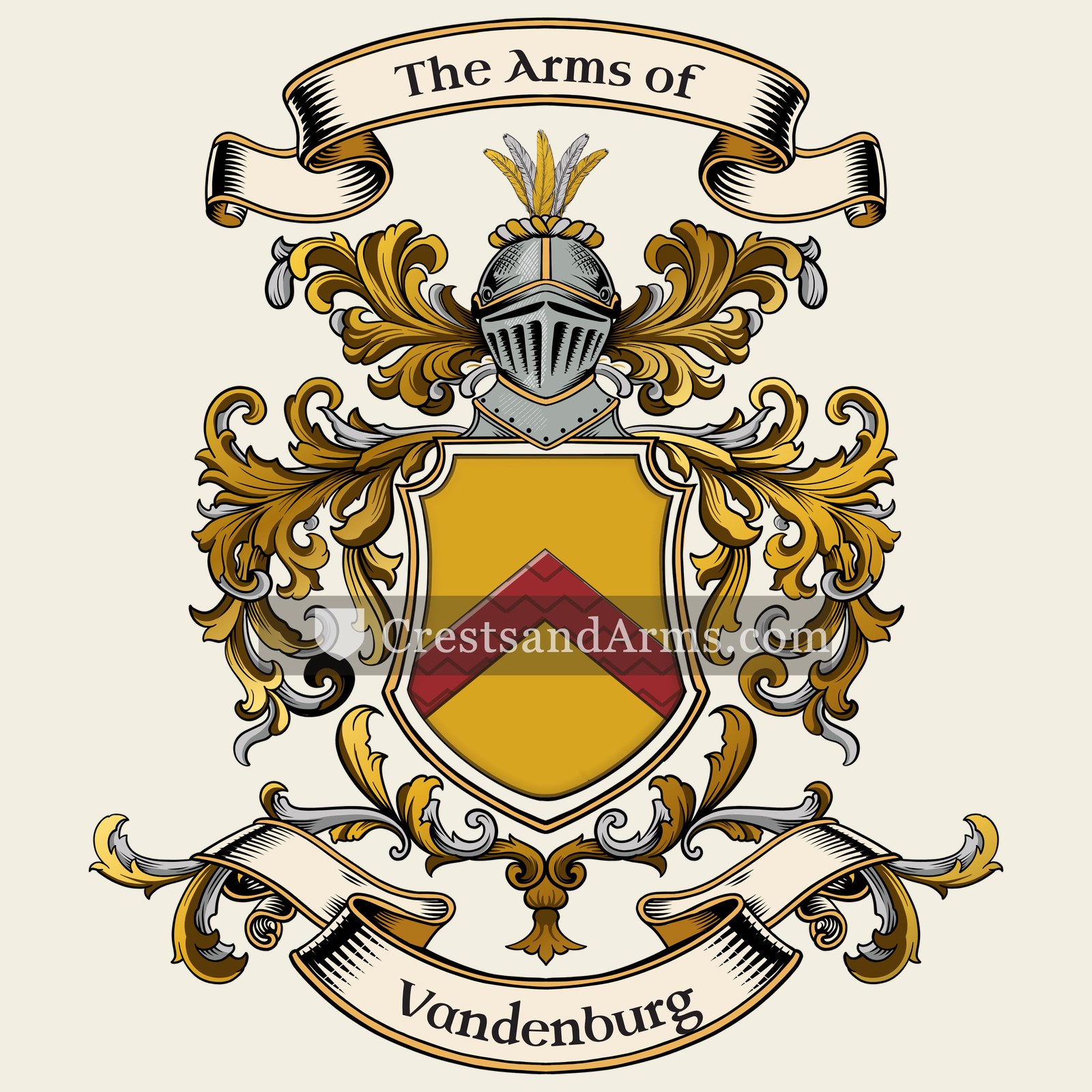


 mountThe ground held, and steadfastness upon it
 lionCourage, strength and royalty