Map of Netherlands showing where the Vandermyde arms are recorded
The Vandermyde arms were recorded in Amsterdam, c. 1815.
This is where the arms were entered in the register. Families often moved to other parts of the country, so the same name can turn up in more than one region.
Region
Amsterdam
Town
Amsterdam
First recorded
1815
Granting Authority for the Vandermyde Arms
Hoge Raad van Adel
Photograph made by me · CC BY-SA 3.0
The body that granted and recorded arms in Netherlands in this period.
William I of the Netherlands
Sovereign of the period
William I of the Netherlands
1815–1840
Reigning in Netherlands when the Vandermyde arms are first recorded.
How Arms Worked in Netherlands
In the Netherlands, coats of arms were often used by noble families and those who held specific public offices. These arms were passed down through the generations to legitimate descendants. Younger branches of a family usually kept the original design without needing to add special marks. This system ensured that the family identity remained clear and consistent over many years.
Granting authority
The Hoge Raad van Adel is the official body that regulates and manages noble titles and coats of arms in the Netherlands.
How they got arms
Families typically obtained their coats of arms through official royal grants or by proving their long-standing historical use of the symbols.
Where arms were recorded
Coats of arms are officially recorded in the registers held by the Hoge Raad van Adel, which began its work in 1814.
The family's standing
Recorded among the armigerous families of Netherlands.
Origin & History of the Vandermyde Family in Netherlands
The surname Vandermyde originates from the Dutch language, where the prefix "van der" indicates that a family lived near a specific geographical feature or location. In this case, the name suggests an ancestral connection to a "myde," which is an archaic Dutch term for a meadow or a low-lying piece of pasture land near water. By the early 19th century, records confirm that members of the family were established in Amsterdam. This period was a time of significant transition for the city as it recovered from the Napoleonic era and began to rebuild its status as a major European trade hub. Living in Amsterdam during 1815 placed the family at the center of a bustling urban environment where the Dutch economy was shifting toward modern commerce and industry. The family name serves as a linguistic bridge to the rural landscape of the Netherlands, even as those who carried it moved into the heart of one of the world's most important port cities.
Coat of Arms & Family Crest Details
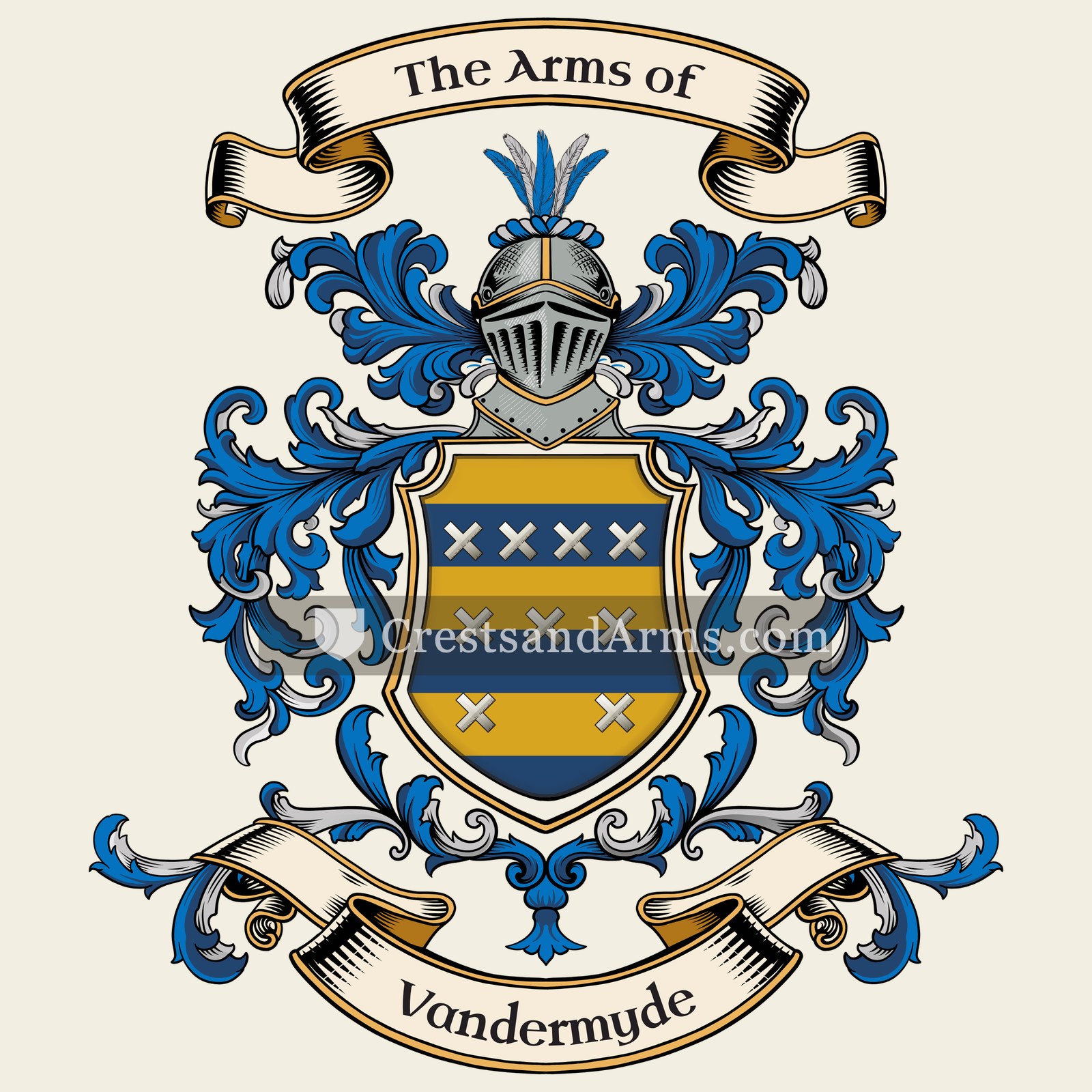
Symbols on this shield
fessThe military belt, and readiness to serve
saltire coupedResolution, and the cross of St Andrew
Colours
Blue (Azure)Means: Loyalty and truth
Silver (Argent)Means: Peace and sincerity
Gold (Or)Means: Generosity
Historical info
Source
J. B. Rietstap, Armorial Général, Gouda: G. B. van Goor Zonen, 1884–87
Blazon (the actual original written record)
“Fascé d'azur et d'or, les fasces d'azur ch. de neuf flanchis d'arg., 4, 3 et 2. C.: un flanchis d'arg. entre un vol, d'azur et d'arg.”
FlandreRotterdam · Flandre, c. 1663
Digital archive packCoat of arms PNG, gold border print PDF, vector SVG and the certificate of authenticity. Sent to your email in minutes.
Map of Belgium showing where the Vandermyde arms are recorded
The Vandermyde arms were recorded in Flandre, c. 1663.
Flandre grew rich on cloth, and its towns were among the busiest in Europe. Merchant families bought land with their profits and took arms to go with it, so trade put as many names in the registers here as land did.
This is where the arms were entered in the register. Families often moved to other parts of the country, so the same name can turn up in more than one region.
The body that granted and recorded arms in Belgium in this period.
Philip IV of Spain
Sovereign of the period
Philip IV of Spain
1621–1665
Reigning in Netherlands when the Vandermyde arms are first recorded.
How Arms Worked in Belgium
In Belgium, a coat of arms is considered personal property that is passed down through the male line to legitimate descendants. Families often use the same shield design across generations to show their shared heritage. If a branch of the family wants to change the design, they must apply for an official update to their specific version of the arms.
Granting authority
The Conseil héraldique is the official body that regulates and approves all coats of arms in Belgium.
How they got arms
Families obtain their coats of arms through formal royal grants or by confirming their historical right to use existing designs.
Where arms were recorded
All approved coats of arms are officially recorded in the public registers of the Conseil héraldique since 1844.
The family's standing
Recorded among the armigerous families of Flandre.
Origin & History of the Vandermyde Family in Belgium
The family name Vandermyde originates from the historical region of Flanders in present-day Belgium. The structure of the name suggests it was a locative surname, meaning it identified individuals based on their proximity to a specific landscape feature or a local meadow known as a "myde." By 1663, records confirm that members of the family were established within this territory, which was then a complex collection of provinces under shifting political control. During this period, the people of Flanders were deeply connected to the land and the local agricultural economy. Families often identified themselves by their relationship to the geography of their village or parish. As the region navigated the pressures of the seventeenth century, the Vandermyde family likely participated in the local traditions and labor that defined Flemish life. Their early presence in the area reflects the broader movement of families who settled in the fertile plains of the Low Countries to build their lives around the local trade and farming communities of the era.
Related Branches & Arms
Root word
Van der Mije
From the place or river known as the Mije.
This name
VandermydeA topographic surname indicating origin from a specific location near the Mije river.
also spelled
vanderMeide
vanMeyde
Meide
vanderMeijde
vandermayde
Documented Sources
J. B. Rietstap, Armorial Général, Gouda: G. B. van Goor Zonen, 1884–87
Stadsarchief Amsterdam, Doop-, trouw- en begraafregisters (DTB)
Nationaal Archief, Bevolkingsregister van Amsterdam
Van der Schaar, J., Woordenboek van voornamen. 2010
Bakker, J., Geschiedenis van Amsterdam: Een stad in ontwikkeling. 2005
Digital archive packCoat of arms PNG, gold border print PDF, vector SVG and the certificate of authenticity. Sent to your email in minutes.


 fleur de lisPurity, light, and the sixth son
 fleur de lisPurity, light, and the sixth son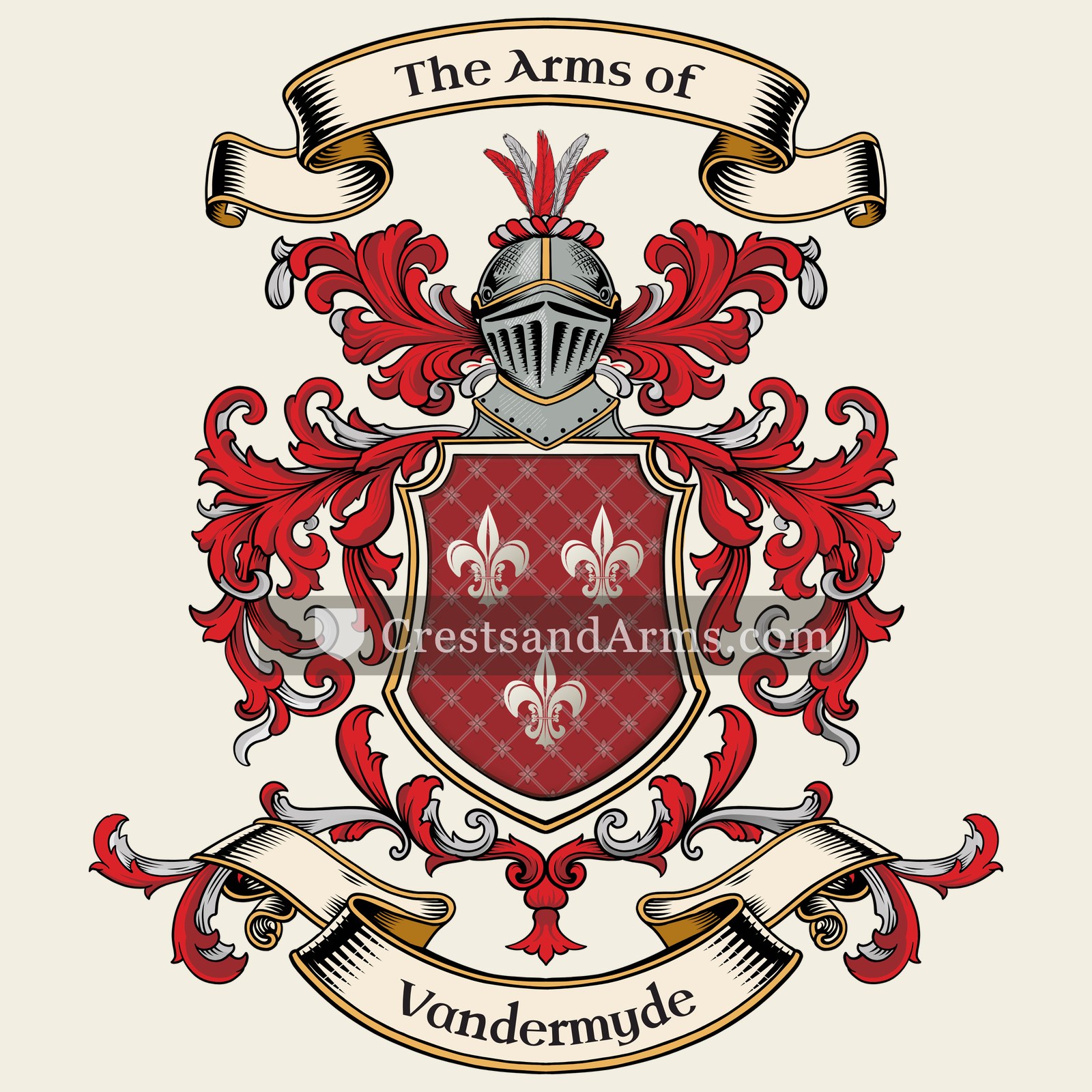


 fessThe military belt, and readiness to serve
 saltire coupedResolution, and the cross of St Andrew