Map of Netherlands showing where the Vantine arms are recorded
The Vantine arms were recorded in Zeeland, c. 1815.
Zeeland was a scatter of islands in the south-west of the Netherlands, living on the sea and on land reclaimed from it. Families who drained and held that land were counted among the gentry, and gentry carried arms.
This is where the arms were entered in the register. Families often moved to other parts of the country, so the same name can turn up in more than one region.
Region
Zeeland
Town
Amsterdam
First recorded
1815
Granting Authority for the Vantine Arms
Hoge Raad van Adel
Photograph made by me · CC BY-SA 3.0
The body that granted and recorded arms in Netherlands in this period.
William I of the Netherlands
Sovereign of the period
William I of the Netherlands
1815–1840
Reigning in Netherlands when the Vantine arms are first recorded.
How Arms Worked in Netherlands
In the Netherlands, coats of arms were often used by noble families and those who held specific public offices. These arms were passed down through the generations to legitimate descendants. Younger branches of a family usually kept the original design without needing to add special marks. This system ensured that the family identity remained clear and consistent over many years.
Granting authority
The Hoge Raad van Adel is the official body that regulates and manages noble titles and coats of arms in the Netherlands.
How they got arms
Families typically obtained their coats of arms through official royal grants or by proving their long-standing historical use of the symbols.
Where arms were recorded
Coats of arms are officially recorded in the registers held by the Hoge Raad van Adel, which began its work in 1814.
The family's standing
Recorded among the armigerous families of Zeeland.
Origin & History of the Vantine Family in Netherlands
The Vantine surname finds its historical roots in the coastal province of Zeeland, where the family established a presence by the early nineteenth century. During this period, the Netherlands was undergoing significant social and administrative changes following the end of the Napoleonic era and the formation of the United Kingdom of the Netherlands. Families living in Zeeland often relied on the region’s unique geography, which is defined by a series of islands and a deep connection to maritime trade and agriculture. The name likely evolved as a localized variation of regional naming patterns common to the southwestern Dutch provinces. By 1815, the family was integrated into the local community, participating in the civil registration systems that were becoming standardized across the country at that time. These early records provide a clear glimpse into the lives of ancestors who navigated the challenges of living in a low-lying, water-bound landscape while contributing to the growth of their local Zeeland parishes.
Meaning of the Vantine family crest colors & symbols
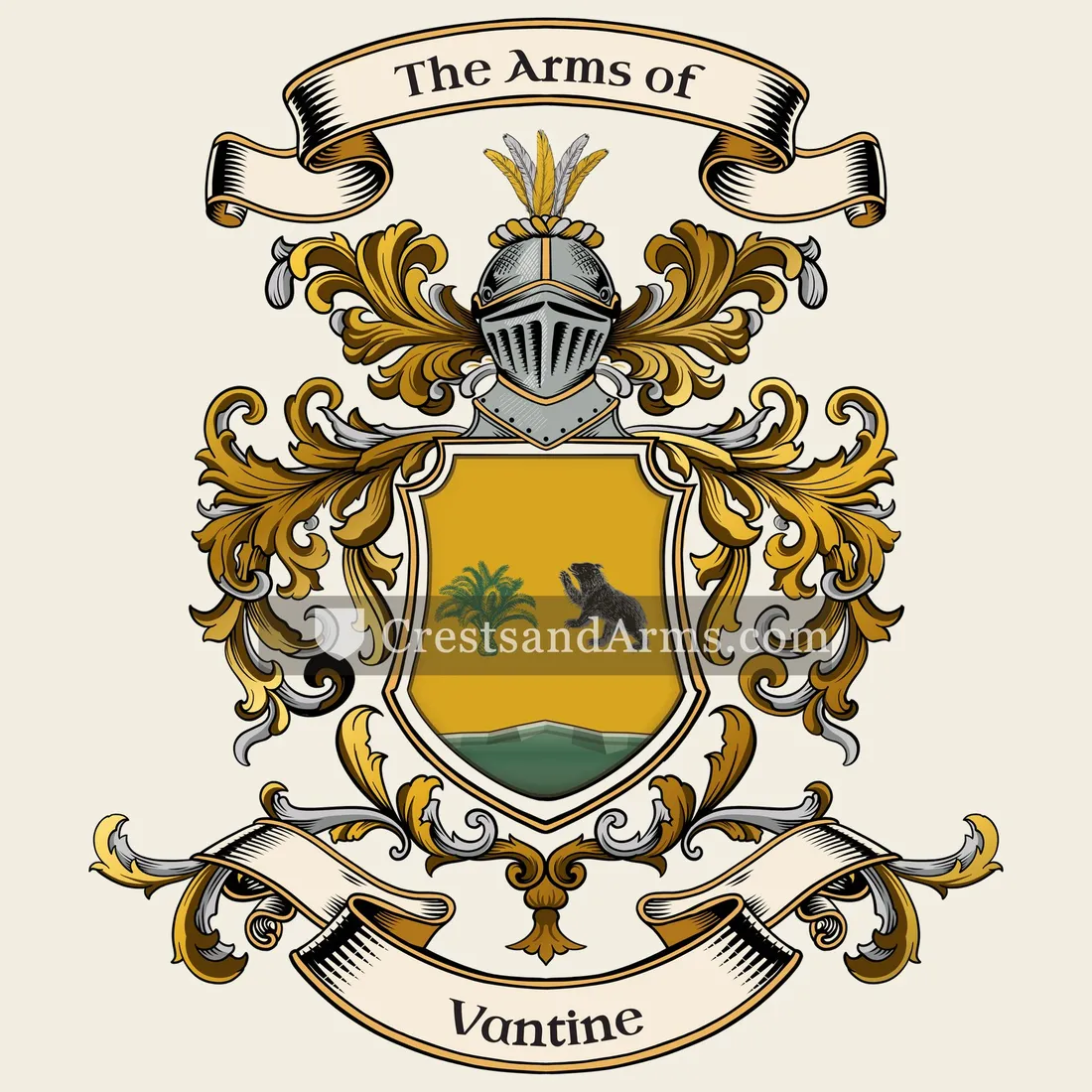
Symbols on this shield
mountThe ground held, and steadfastness upon it
palm treeVictory, and righteousness that flourishes
bearStrength, cunning and protection of kin
Colours
Gold (Or)Means: Generosity
Green (Vert)Means: Hope
Black (Sable)Means: Constancy
Historical info
Source
J. B. Rietstap, Armorial Général, Gouda: G. B. van Goor Zonen, 1884–87
Blazon (the actual original written record)
“D'or à un palmier de sin., terrassé du même à dextre, et un ours ramp. de sa. à sen., coll. d'arg. C.: l'ours, iss. L. d'or et de sin.”
BelgiumBruges, c. 1737
Digital archive packCoat of arms PNG, gold border print PDF, vector SVG and the certificate of authenticity. Sent to your email in minutes.
Map of Belgium showing where the Vantine arms are recorded
The Vantine arms were recorded in Bruges, c. 1737.
This is where the arms were entered in the register. Families often moved to other parts of the country, so the same name can turn up in more than one region.
The body that granted and recorded arms in Belgium in this period.
Charles VI, Holy Roman Emperor
Sovereign of the period
Charles VI, Holy Roman Emperor
1711–1740
Reigning in Netherlands when the Vantine arms are first recorded.
How Arms Worked in Belgium
In Belgium, a coat of arms is considered personal property that is passed down through the male line to legitimate descendants. Families often use the same shield design across generations to show their shared heritage. If a branch of the family wants to change the design, they must apply for an official update to their specific version of the arms.
Granting authority
The Conseil héraldique is the official body that regulates and approves all coats of arms in Belgium.
How they got arms
Families obtain their coats of arms through formal royal grants or by confirming their historical right to use existing designs.
Where arms were recorded
All approved coats of arms are officially recorded in the public registers of the Conseil héraldique since 1844.
The family's standing
Recorded among the armigerous families of Belgium.
Origin & History of the Vantine Family in Belgium
The Vantine family name traces its roots to the historic city of Bruges, where records confirm members of the family were living by 1737. During this period, Bruges was a center of trade and craftsmanship, and families like the Vantines were often deeply integrated into the local urban economy. The name itself likely evolved from regional dialects spoken in the Low Countries, reflecting the linguistic blend of Dutch and French influences common in the area. As residents of a prominent commercial hub, the early Vantines were part of a society that valued skilled labor and civic participation. By establishing themselves in such a well-documented city, the family became part of the long-standing tradition of Belgian urban life, contributing to the social fabric of the region during the eighteenth century.
Vantine Meaning & Related Branches
Root word
Valentinus
Derived from the Latin word valens meaning strong, healthy, or powerful.
This name
VantineA Dutch topographic or habitational name referring to someone living near a specific valley or field.
also spelled
Vanthinen
Vanthien
van Teenen
Documented Sources
J. B. Rietstap, Armorial Général, Gouda: G. B. van Goor Zonen, 1884–87
Zeeuws Archief, Burgerlijke Stand Zeeland (1796–1950)
Nationaal Archief, Bevolkingsregisters van de provincie Zeeland
Blok, P.J., Geschiedenis van het Nederlandsche volk (1912)
De Vries, J.W., Nederlandse familienamen (1992)
Digital archive packCoat of arms PNG, gold border print PDF, vector SVG and the certificate of authenticity. Sent to your email in minutes.


 lionCourage, strength and royalty
 lionCourage, strength and royalty
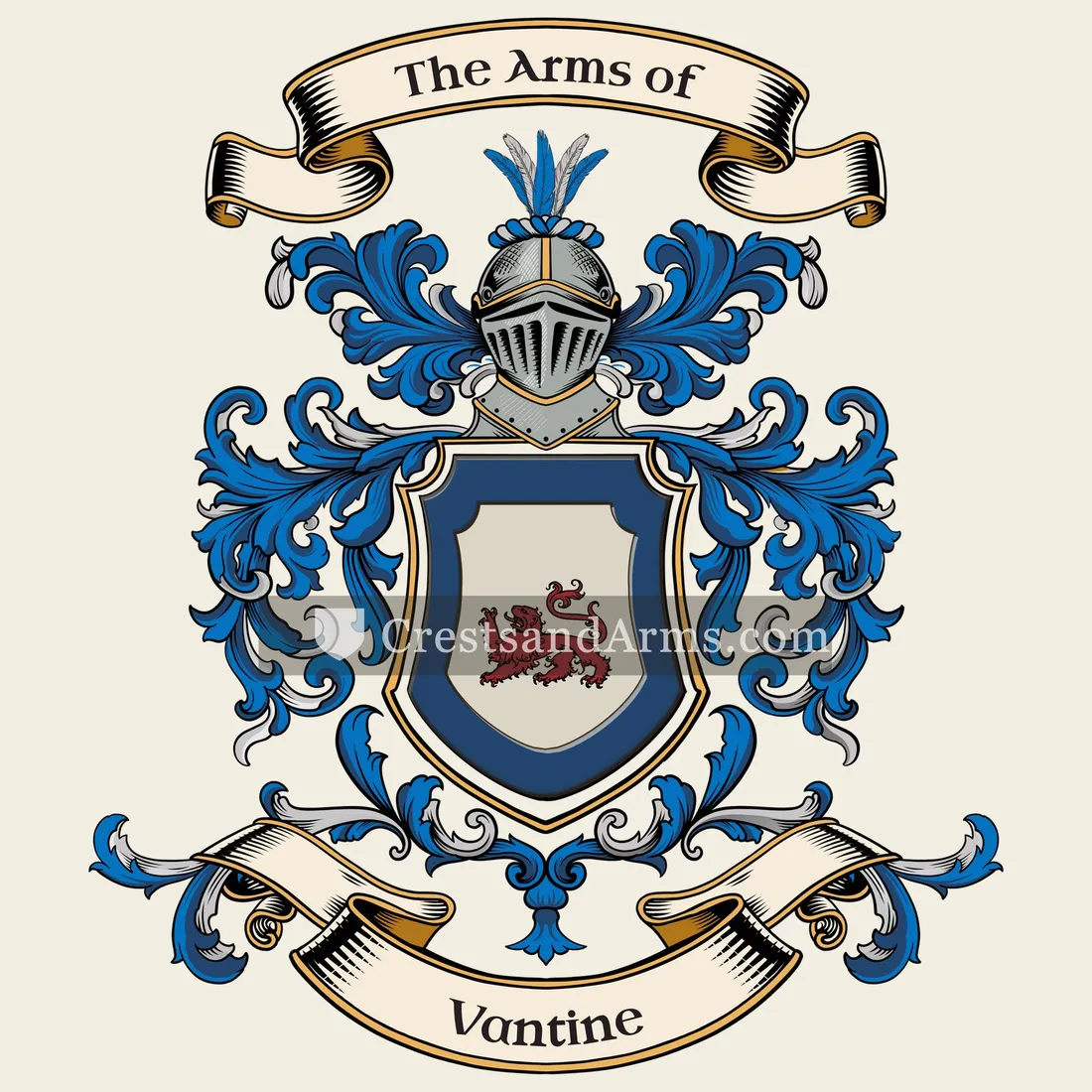


 mountThe ground held, and steadfastness upon it
 palm treeVictory, and righteousness that flourishes
 bearStrength, cunning and protection of kin