Map of Portugal showing where the Vasconcelos arms are recorded
The Vasconcelos arms were recorded in Portugal, c. 1706.
Arms such as these were typically recorded in Lisboa.
Lisbon was the seat of the Portuguese crown and the port its wealth came through. Families made rich by trade and by service to the king took arms, and the crown's heralds recorded them there.
This is where the arms were entered in the register. Families often moved to other parts of the country, so the same name can turn up in more than one region.
The body that granted and recorded arms in Portugal in this period.
Peter II of Portugal
Sovereign of the period
Peter II of Portugal
1683–1706
Reigning in Portugal when the Vasconcelos arms are first recorded.
How Arms Worked in Portugal
In Portugal, a coat of arms was a family possession that passed from a father to his children. Every legitimate descendant had the right to use the family shield without needing to change it. Younger branches of the family kept the original design, though they sometimes added small symbols to distinguish their specific line from the main branch.
Granting authority
The Cartório da Nobreza acted as the official body that managed and regulated noble titles and coats of arms in Portugal.
How they got arms
Families typically inherited their arms through bloodline, though they could also receive new grants from the crown for distinguished service.
Where arms were recorded
Coats of arms were officially recorded in the books of the Cartório da Nobreza starting in the year 1512.
The family's standing
Recorded among the armigerous families of Portugal.
Origin & History of the Vasconcelos Family in Portugal
The surname Vasconcelos originates from the northern regions of Portugal and is classified as a toponymic name, meaning it was derived from a specific place. The name is rooted in the combination of the words "Vasco," referring to the Basque people, and "celos," which likely relates to a small valley or a specific geographic feature in the Minho province. By the time the family established a notable presence in Lisboa during the early 18th century, they had already transitioned from regional landowners into influential figures within the Portuguese administration and society. Their migration to the capital city in 1706 reflects the broader trend of elite families moving to the center of power during the reign of King Dom João V. As the family settled in Lisboa, they became deeply integrated into the social and political fabric of the city, often serving in government roles or contributing to the growth of the urban landscape during a period of great national wealth.
Vasconcelos Meaning & Related Branches
Root word
Vasconcellos
Derived from the Latin Vascones referring to the Basque people.
This name
VasconcelosA toponymic surname indicating a place associated with the Basque people or a small valley.
also spelled
Vasconcelles
Vaskonselos
Documented Sources
J. B. Rietstap, Armorial Général, Gouda: G. B. van Goor Zonen, 1884–87
Pimpão, Álvaro Júlio da Costa, Dicionário de Nomes e Sobrenomes, 1998
Sanches de Baena, Visconde de, Archivo Heráldico-Genealogico contendo noticias historico-heraldicas dos illustres brazões de Portugal, 1872
Arquivo Nacional da Torre do Tombo, Registos Paroquiais de Lisboa, 1706
Digital archive packCoat of arms PNG, gold border print PDF, vector SVG and the certificate of authenticity. Sent to your email in minutes.


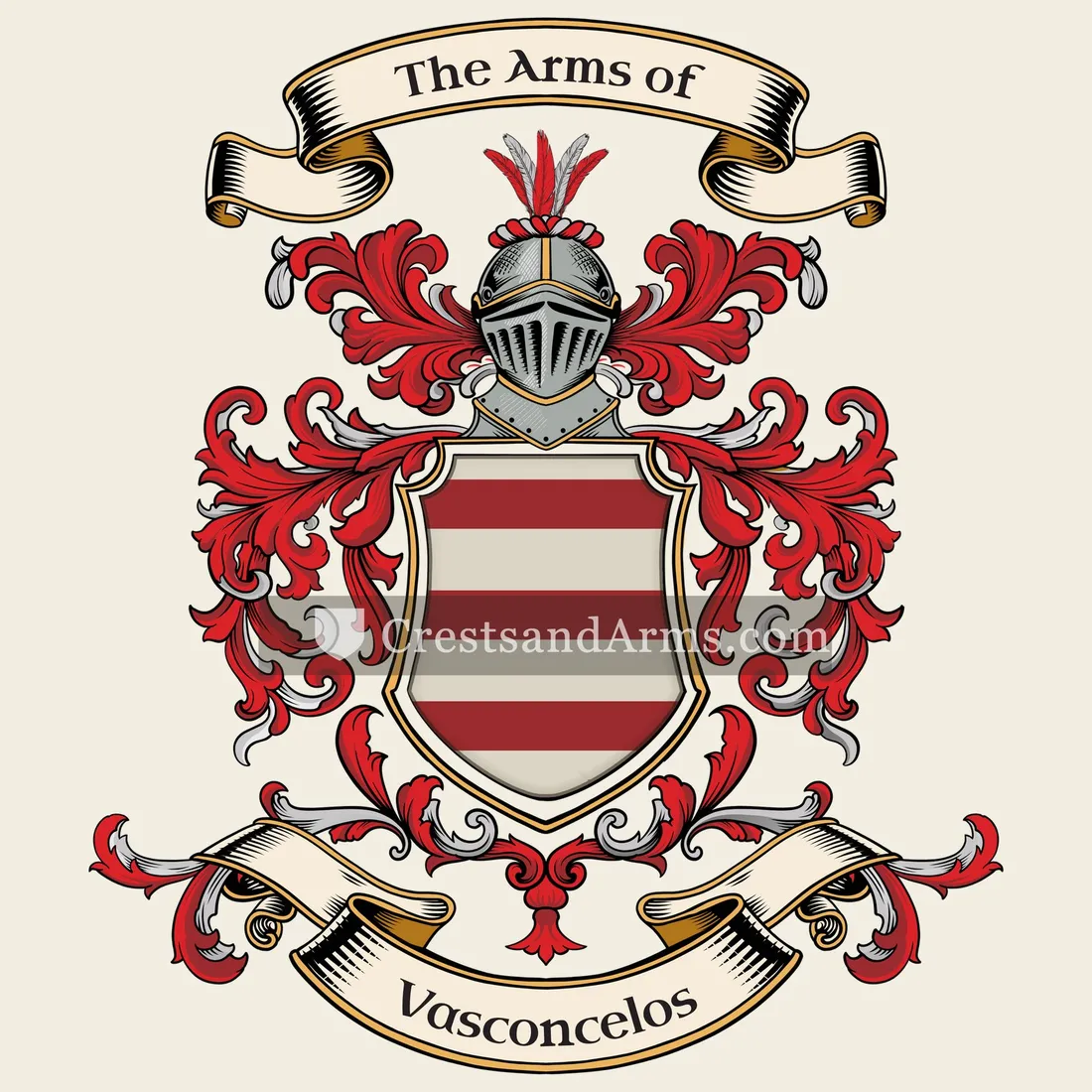
 fessThe military belt, and readiness to serve
 fessThe military belt, and readiness to serve