Map of Portugal showing where the Vences arms are recorded
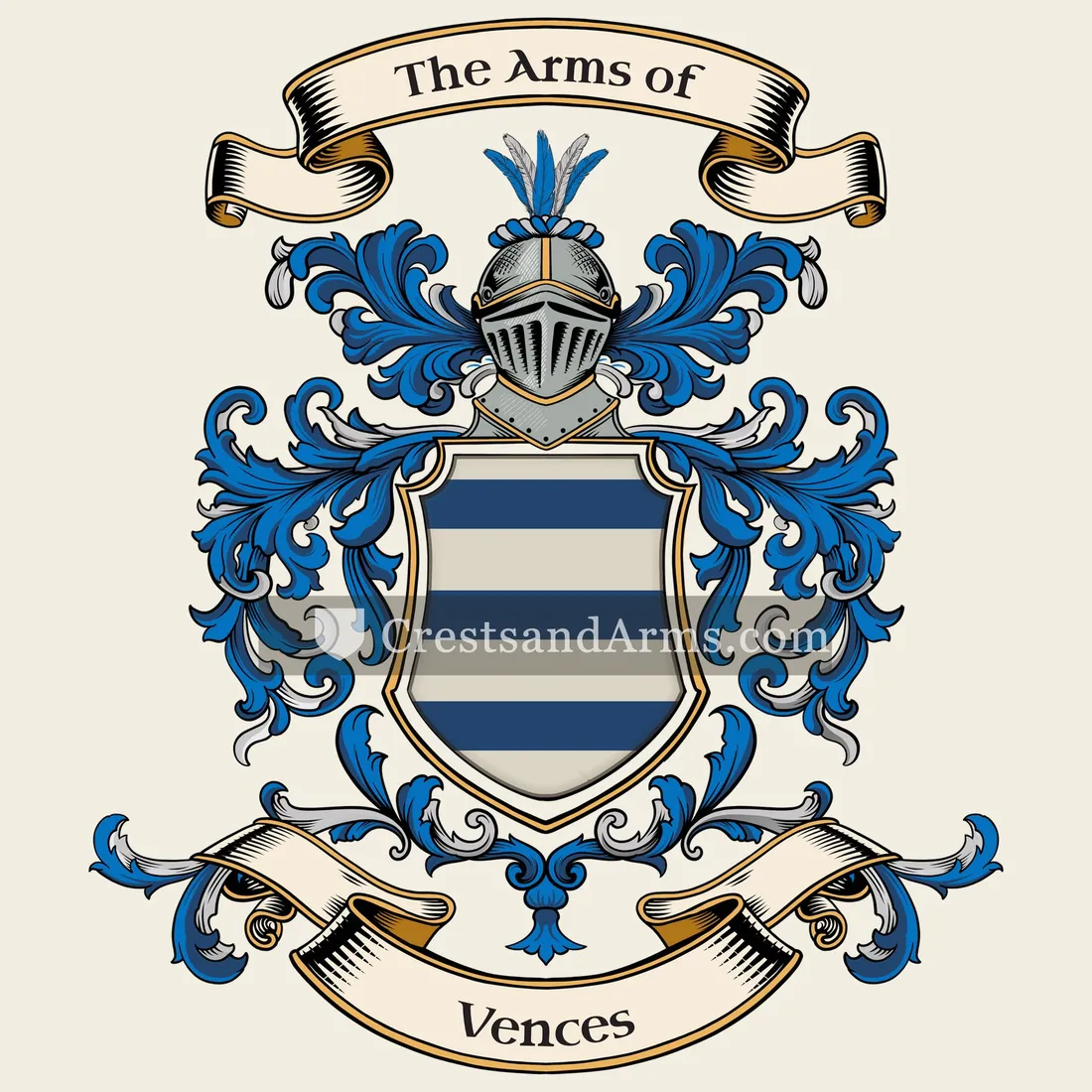
The Vences arms were recorded in Galicia, c. 1706.
Galicia was eastern country of large estates and small farming villages, held by families who had been there for a very long time. Land was what entitled a family to arms, and land there rarely changed hands.
This is where the arms were entered in the register. Families often moved to other parts of the country, so the same name can turn up in more than one region.
The body that granted and recorded arms in Portugal in this period.
Peter II of Portugal
Sovereign of the period
Peter II of Portugal
1683–1706
Reigning in Portugal when the Vences arms are first recorded.
How Arms Worked in Portugal
In Portugal, a coat of arms was a family possession that passed from a father to his children. Every legitimate descendant had the right to use the family shield without needing to change it. Younger branches of the family kept the original design, though they sometimes added small symbols to distinguish their specific line from the main branch.
Granting authority
The Cartório da Nobreza acted as the official body that managed and regulated noble titles and coats of arms in Portugal.
How they got arms
Families typically inherited their arms through bloodline, though they could also receive new grants from the crown for distinguished service.
Where arms were recorded
Coats of arms were officially recorded in the books of the Cartório da Nobreza starting in the year 1512.
The family's standing
Recorded among the armigerous families of Galicia.
Origin & History of the Vences Family in Portugal
The surname Vences finds its historical roots in the rugged landscape of Galicia, a region in northwestern Spain known for its deep connection to Celtic and Roman heritage. By the year 1706, records confirm that members of the Vences family were firmly established within this area, living among the rolling hills and coastal towns that define the Galician countryside. The name itself is believed to be a shortened form of the ancient name Wenceslaus, which carries the noble meaning of someone who possesses great glory. As the family grew, they became part of the local social fabric, likely working as farmers or tradespeople who helped shape the unique culture of the region. Their presence in 18th-century Galicia highlights a long history of resilience and community belonging that has been passed down through generations of the family line.
Vences Meaning & Related Branches
Root word
Wenceslaus
Derived from Slavic elements meaning more glory or greater glory.
This name
VencesA Portuguese patronymic surname signifying a descendant of someone named Wenceslaus.
also spelled
Venega
Venegass
Documented Sources
J. B. Rietstap, Armorial Général, Gouda: G. B. van Goor Zonen, 1884–87
Instituto Nacional de Estadística, Padrón municipal de habitantes, 1706
Archivo del Reino de Galicia, Protocolos Notariales de la Provincia de Ourense, 1706
García García, A., Historia de las familias gallegas durante el siglo XVIII, 1995
Digital archive packCoat of arms PNG, gold border print PDF, vector SVG and the certificate of authenticity. Sent to your email in minutes.


 fessThe military belt, and readiness to serve
 fessThe military belt, and readiness to serve