Map of France showing where the Vidali arms are recorded
The Vidali arms were recorded in Toulouse, c. 1663.
This is where the arms were entered in the register. Families often moved to other parts of the country, so the same name can turn up in more than one region.
The body that granted and recorded arms in France in this period.
Louis XIV of France
Sovereign of the period
Louis XIV of France
1643–1715
Reigning in France when the Vidali arms are first recorded.
How Arms Worked in France
In France, a coat of arms was a mark of honor that passed down through the male line to all legitimate descendants. Families often used the same shield without changes to show their shared heritage. If a branch wanted to stand out, they could add a small mark to their shield to show their specific place in the family tree.
Granting authority
The Juge d'armes de France acted as the official authority that regulated and verified coats of arms across the country.
How they got arms
Families typically inherited their arms from ancestors, though they could also receive them through royal grants or by proving their noble status.
Where arms were recorded
Coats of arms were officially recorded in the Armorial Général de France, which began its main collection in the year 1696.
The family's standing
Recorded among the armigerous families of France.
Origin & History of the Vidali Family in France
The Vidali family name has roots that trace back to the vibrant cultural landscape of southern France, with documented evidence placing members of the family in the city of Toulouse by 1663. During this period, Toulouse was a major center for trade and legal administration, serving as a hub where families often established themselves through commerce or local governance. The name itself suggests a connection to the Latin word for life, which was a common linguistic root for surnames emerging in the Languedoc region during the seventeenth century. As residents of a city known for its distinct regional identity and strong ties to the Mediterranean, the early Vidali family likely navigated the complex social hierarchies of the French provinces. Their presence in the city records from the mid-seventeenth century indicates that they were integrated into the urban fabric of Toulouse, participating in the daily life of a region that was then transitioning through significant political and religious changes.
Meaning of the Vidali family crest colors & symbols
Symbols on this shield
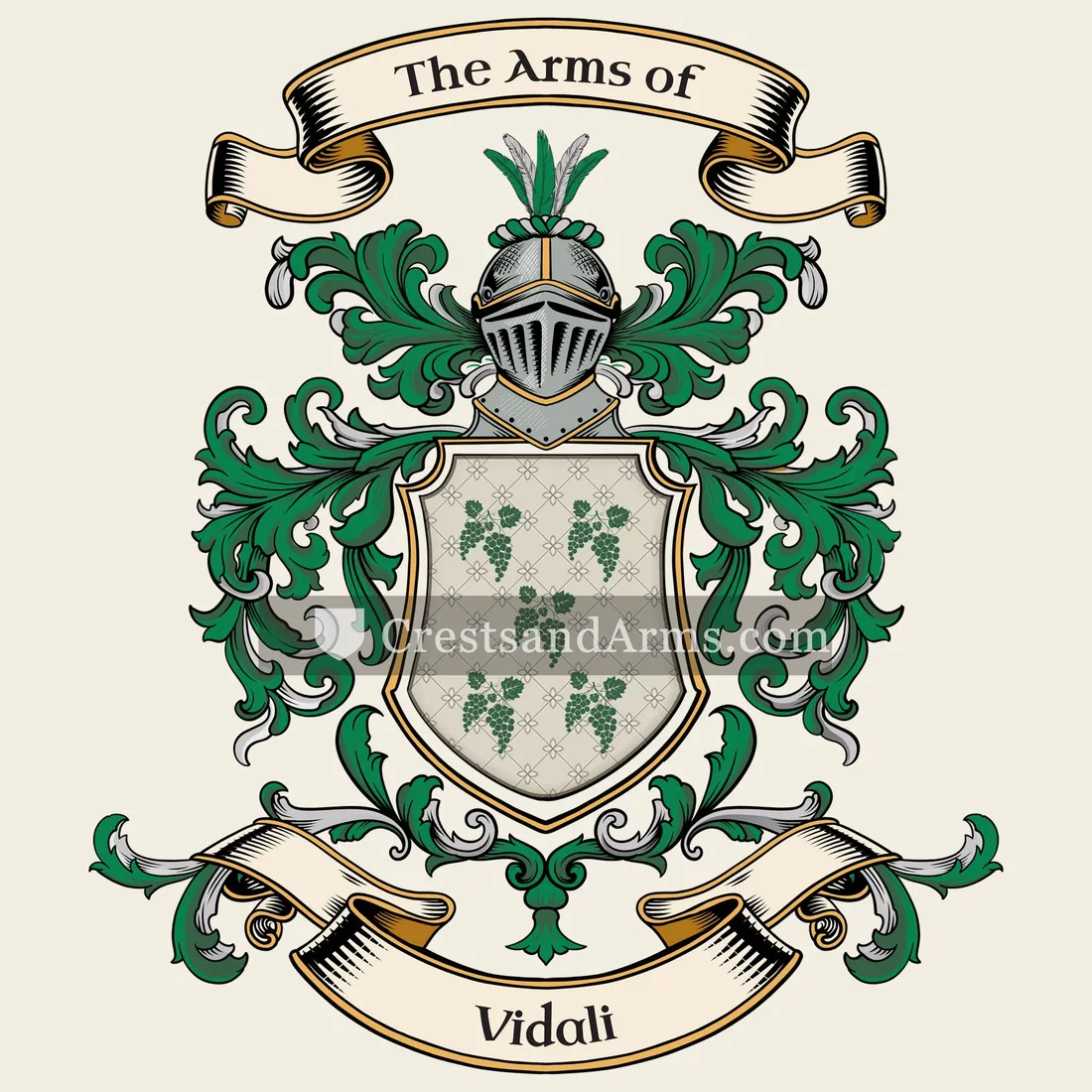
grapesPlenty, and the labour of the vine
Colours
Silver (Argent)Means: Peace and sincerity
Green (Vert)Means: Hope
Historical info
Source
J. B. Rietstap, Armorial Général, Gouda: G. B. van Goor Zonen, 1884–87
Blazon (the actual original written record)
“D'arg. à cinq feuille de vigne de sin., 2, 1 et 2. C.: une feuille de l'écu.”
Portugalc. 1706
Digital archive packCoat of arms PNG, gold border print PDF, vector SVG and the certificate of authenticity. Sent to your email in minutes.
Map of Portugal showing where the Vidali arms are recorded
The Vidali arms were recorded in Portugal, c. 1706.
Arms such as these were typically recorded in Lisboa.
Lisbon was the seat of the Portuguese crown and the port its wealth came through. Families made rich by trade and by service to the king took arms, and the crown's heralds recorded them there.
This is where the arms were entered in the register. Families often moved to other parts of the country, so the same name can turn up in more than one region.
The body that granted and recorded arms in Portugal in this period.
Peter II of Portugal
Sovereign of the period
Peter II of Portugal
1683–1706
Reigning in France when the Vidali arms are first recorded.
How Arms Worked in Portugal
In Portugal, a coat of arms was a family possession that passed from a father to his children. Every legitimate descendant had the right to use the family shield without needing to change it. Younger branches of the family kept the original design, though they sometimes added small symbols to distinguish their specific line from the main branch.
Granting authority
The Cartório da Nobreza acted as the official body that managed and regulated noble titles and coats of arms in Portugal.
How they got arms
Families typically inherited their arms through bloodline, though they could also receive new grants from the crown for distinguished service.
Where arms were recorded
Coats of arms were officially recorded in the books of the Cartório da Nobreza starting in the year 1512.
The family's standing
Recorded among the armigerous families of Portugal.
Origin & History of the Vidali Family in Portugal
The Vidali family name holds a distinct place in the historical records of Lisbon, with documented evidence confirming their presence in the city by 1706. During this era, Lisbon was a bustling center of trade and intellectual exchange, serving as a gateway between the Portuguese Empire and the rest of Europe. Families like the Vidali often integrated into the urban fabric of the capital by engaging in commerce or serving in administrative roles that supported the royal court. Because the name suggests a possible connection to Mediterranean roots, it is likely that the family arrived in Portugal through the extensive maritime trade networks that linked Lisbon to Italian port cities. By the early eighteenth century, they had established themselves as part of the city’s growing middle class, contributing to the vibrant social and economic life of a nation recovering from the challenges of the previous century. Their presence in the capital during this time reflects the broader movement of families who sought opportunity and stability within the heart of the Portuguese administration.
Meaning of the Vidali family crest colors & symbols
Symbols on this shield
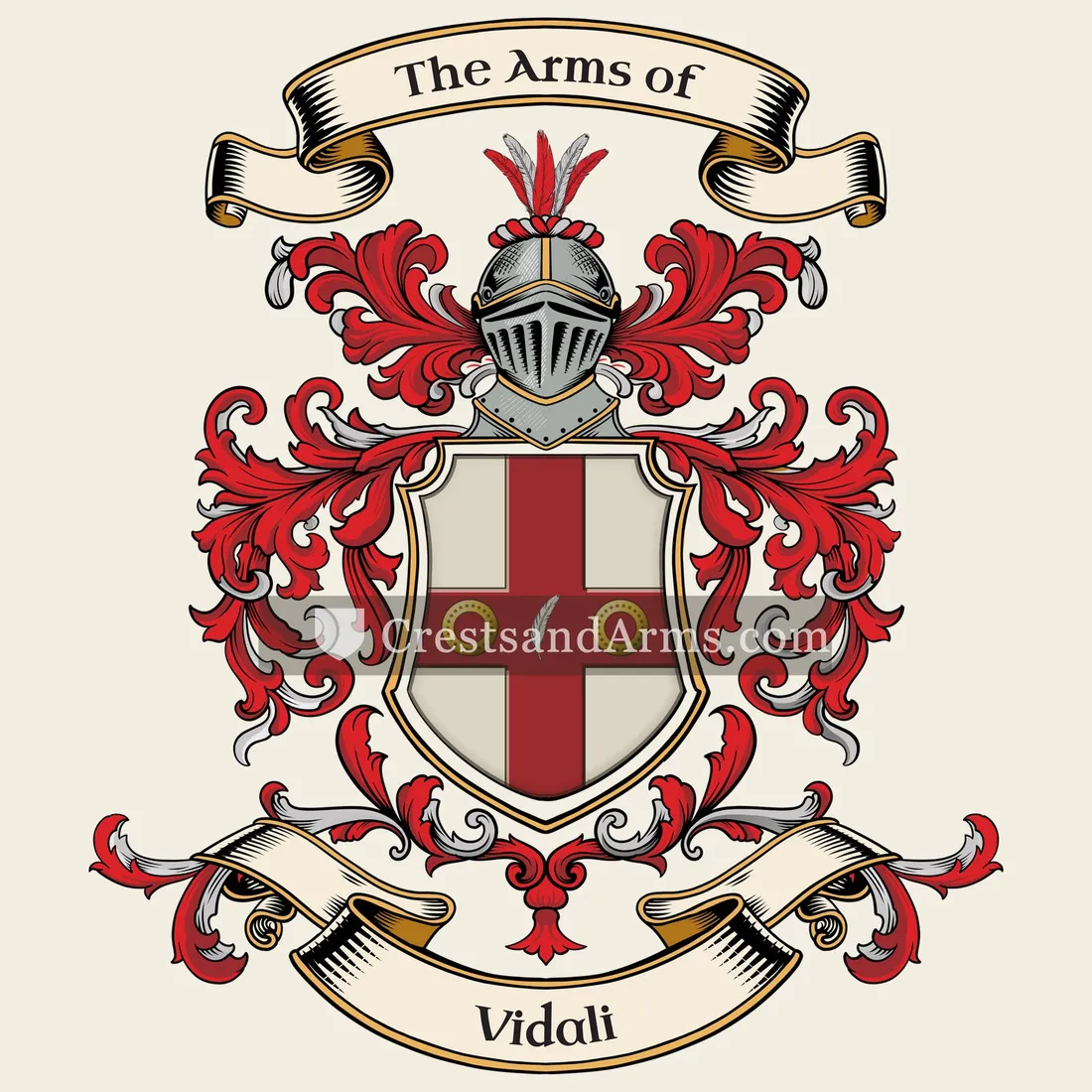
cross symbolChristian faith and service
feathersWilling obedience and serenity
ringFidelity, and a promise kept
Colours
Silver (Argent)Means: Peace and sincerity
Red (Gules)Means: Military strength
Gold (Or)Means: Generosity
Historical info
Source
Sir Bernard Burke, The General Armory of England, Scotland, Ireland and Wales, London: Harrison & Sons, 1884
Blazon (the actual original written record)
“Ar. on a cross moline gu. a feather of the field betw. two annulets in pale or”
DevonCornborough · Devon, c. 1620
Digital archive packCoat of arms PNG, gold border print PDF, vector SVG and the certificate of authenticity. Sent to your email in minutes.
Map of England showing where the Vidali arms are recorded
The Vidali arms were recorded in Devon, c. 1620.
Devon was a county of small manors and seafaring families. Its gentry were spread thickly across the countryside, and money made at sea often bought an estate, which in turn brought a coat of arms.
This is where the arms were entered in the register. Families often moved to other parts of the country, so the same name can turn up in more than one region.
The body that granted and recorded arms in England in this period.
James VI and I
Sovereign of the period
James VI and I
1603–1625
Reigning in France when the Vidali arms are first recorded.
How Arms Worked in England
English heraldry allowed arms to be shared by all legitimate descendants of the original owner. These symbols were treated as personal property that moved through the generations to all children. While the eldest son kept the original design, other family members could use the same shield without needing to change it or register their own unique versions.
Granting authority
The College of Arms in London has regulated the use of coats of arms throughout England and Wales since 1484.
How they got arms
Families typically obtained their coats of arms through a formal grant from the Crown or by proving their ancient right to them.
Where arms were recorded
All official coats of arms are recorded in the registers kept at the College of Arms, which date back to the fifteenth century.
The family's standing
Recorded among the armigerous families of Devon.
Origin & History of the Vidali Family in England
The history of the Vidali name in England is rooted in the coastal landscape of Devon during the early seventeenth century. By 1620, records indicate that members of the family had established a presence in this region, which was a hub for maritime trade and agricultural development. The name itself suggests a connection to Mediterranean origins, likely arriving in Britain through the movement of merchants or settlers traveling across Europe. During this period, families in Devon often lived in small parish communities where they contributed to the local economy through farming or seafaring. The Vidali family integrated into these tight-knit social structures, leaving behind traces in local parish registers that document their daily lives, marriages, and baptisms. Their early presence in the West Country highlights how families with international roots became part of the fabric of English rural life during the reign of King James I.
Vidali Meaning & Related Branches
Root word
Vitalis
Latin term meaning of life or pertaining to life.
This name
VidaliDerived from a personal name signifying one who is full of life or vital.
also spelled
Vydal
Vydall
Documented Sources
J. B. Rietstap, Armorial Général, Gouda: G. B. van Goor Zonen, 1884–87
Archives départementales de la Haute-Garonne, Registres paroissiaux et d'état civil de Toulouse
Wolff, Philippe, Histoire de Toulouse, 1974
Digital archive packCoat of arms PNG, gold border print PDF, vector SVG and the certificate of authenticity. Sent to your email in minutes.


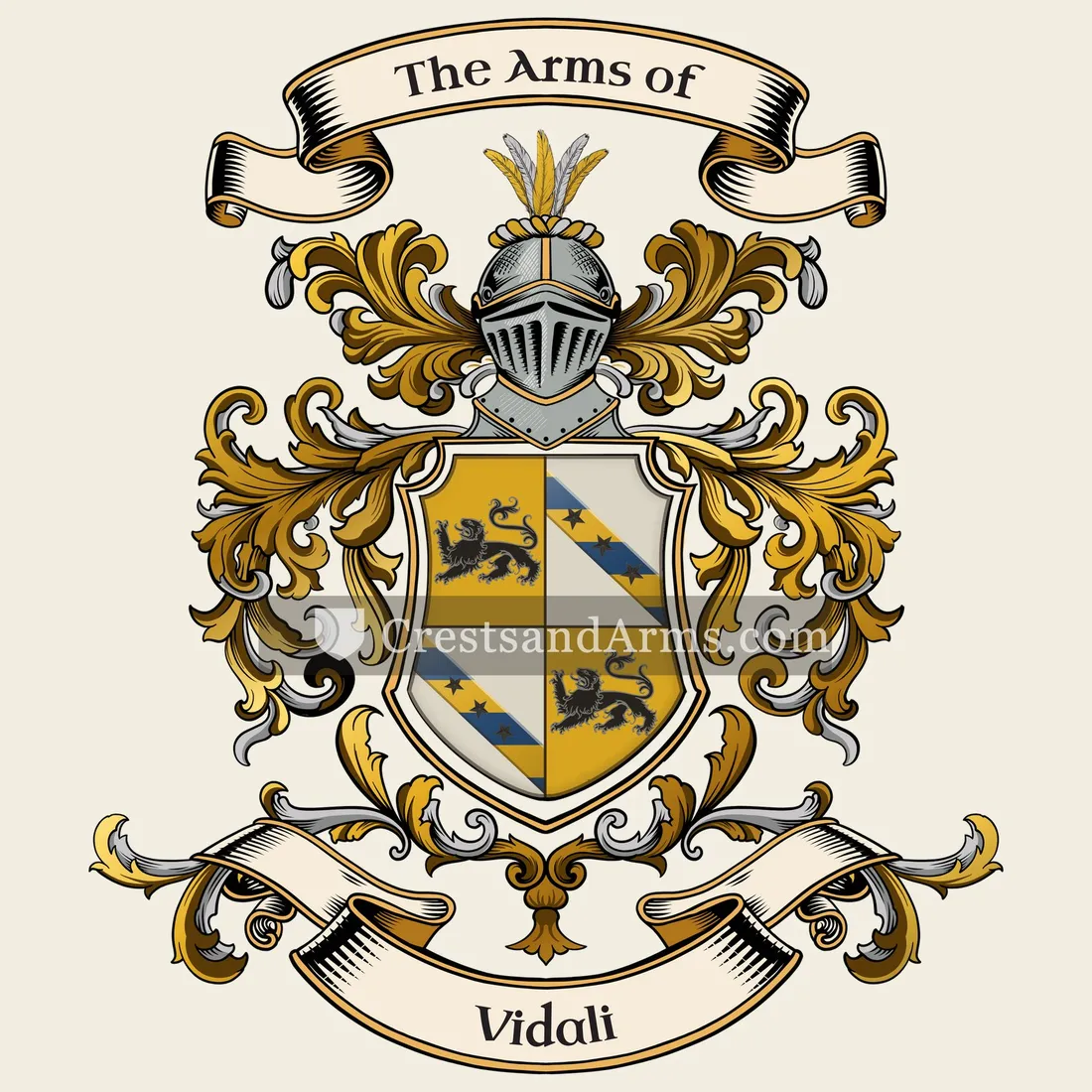
 bendDefence, and the scarf of a commander
 lionCourage, strength and royalty
 mulletThe third son, and a divine quality from above
 bendDefence, and the scarf of a commander
 lionCourage, strength and royalty
 mulletThe third son, and a divine quality from above


 grapesPlenty, and the labour of the vine


 cross symbolChristian faith and service
 feathersWilling obedience and serenity
 ringFidelity, and a promise kept