Map of Portugal showing where the Villabroza arms are recorded
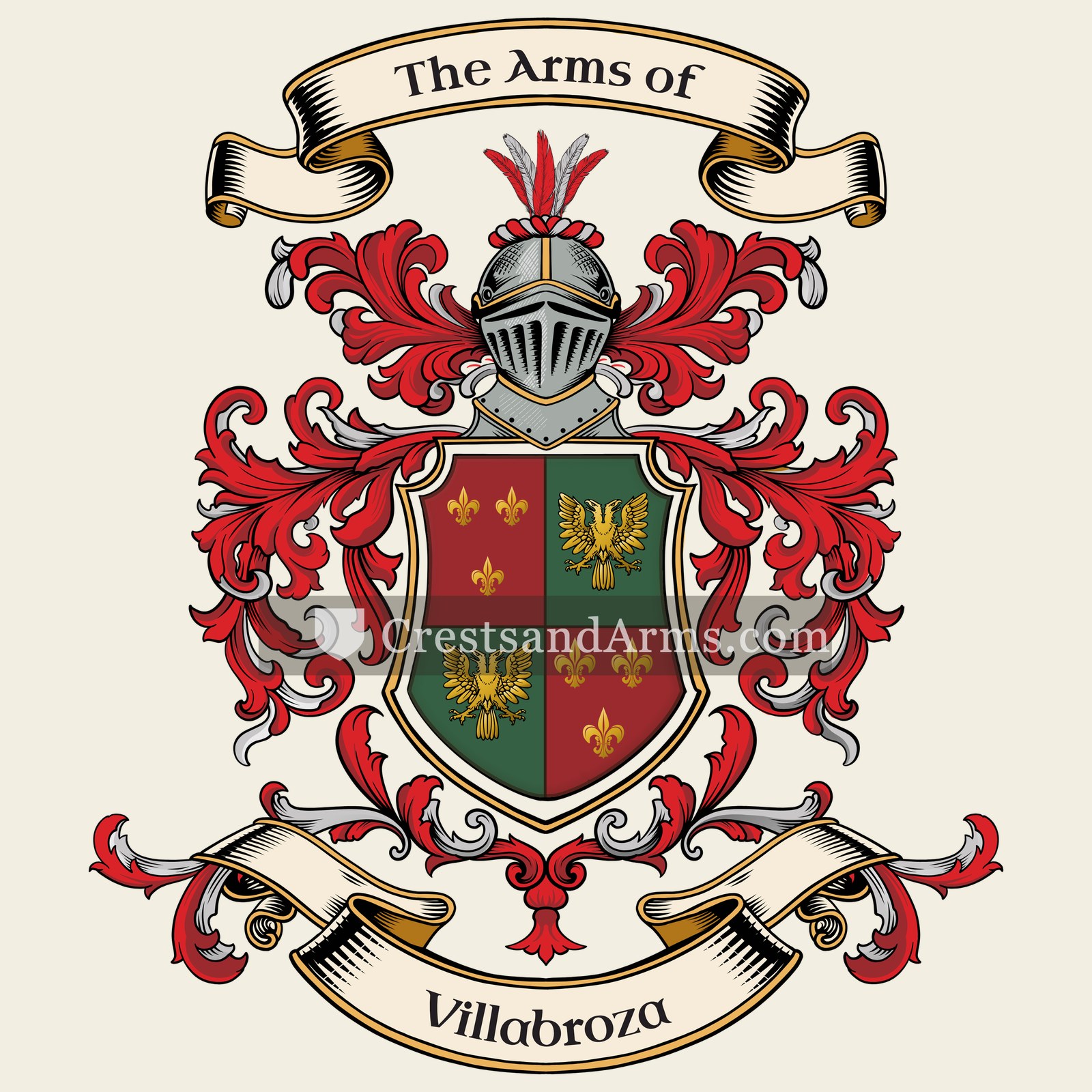
The Villabroza arms were recorded in Portugal, c. 1706.
Arms such as these were typically recorded in Lisboa.
Lisbon was the seat of the Portuguese crown and the port its wealth came through. Families made rich by trade and by service to the king took arms, and the crown's heralds recorded them there.
This is where the arms were entered in the register. Families often moved to other parts of the country, so the same name can turn up in more than one region.
The body that granted and recorded arms in Portugal in this period.
Peter II of Portugal
Sovereign of the period
Peter II of Portugal
1683–1706
Reigning in Portugal when the Villabroza arms are first recorded.
How Arms Worked in Portugal
In Portugal, a coat of arms was a family possession that passed from a father to his children. Every legitimate descendant had the right to use the family shield without needing to change it. Younger branches of the family kept the original design, though they sometimes added small symbols to distinguish their specific line from the main branch.
Granting authority
The Cartório da Nobreza acted as the official body that managed and regulated noble titles and coats of arms in Portugal.
How they got arms
Families typically inherited their arms through bloodline, though they could also receive new grants from the crown for distinguished service.
Where arms were recorded
Coats of arms were officially recorded in the books of the Cartório da Nobreza starting in the year 1512.
The family's standing
Recorded among the armigerous families of Portugal.
Origin & History of the Villabroza Family in Portugal
The family name Villabroza finds its historical roots in the Iberian Peninsula, with documented evidence placing early members of the family in the city of Lisboa by the year 1706. The name itself follows a traditional Spanish and Portuguese structure, likely derived from a combination of the word villa, meaning a town or estate, and a specific geographic or descriptive term. During the early eighteenth century, families with this surname were often part of the urban middle class or minor nobility who played roles in the administrative and commercial life of the Portuguese capital. As Lisboa was a major hub for global trade and colonial administration at the time, the Villabroza family likely benefited from the city’s status as a center of cultural and economic exchange. Over the following generations, the family name spread as individuals moved through the various territories connected to the Portuguese empire, carrying their history from the streets of Lisboa to other regions.
Related Branches & Arms
Root word
Villa Broza
A country house or estate located near a brushwood or thicket.
This name
VillabrozaRefers to a family originating from a rural estate situated in a wooded or shrubby area.
also spelled
Villabo
Villaboas
Documented Sources
J. B. Rietstap, Armorial Général, Gouda: G. B. van Goor Zonen, 1884–87
Arquivo Nacional da Torre do Tombo, Registos Paroquiais de Lisboa, 1706
Pimentel, Alberto, A Lisboa de Outros Tempos, 1904
Silva, Innocencio Francisco da, Diccionario Bibliographico Portuguez, 1858
Digital archive packCoat of arms PNG, gold border print PDF, vector SVG and the certificate of authenticity. Sent to your email in minutes.


 fleur de lisPurity, light, and the sixth son
 eagleNobility, strength and a keen mind
 fleur de lisPurity, light, and the sixth son
 eagleNobility, strength and a keen mind