Map of France showing where the Vis arms are recorded
The Vis arms were recorded in Languedoc, c. 1663.
Languedoc stretched across the south of France, a country of small towns, vineyards and old local families. Its gentry were numerous rather than grand, and a great many of them held arms even where their estates were modest.
This is where the arms were entered in the register. Families often moved to other parts of the country, so the same name can turn up in more than one region.
The body that granted and recorded arms in France in this period.
Louis XIV of France
Sovereign of the period
Louis XIV of France
1643–1715
Reigning in France when the Vis arms are first recorded.
How Arms Worked in France
In France, a coat of arms was a mark of honor that passed down through the male line to all legitimate descendants. Families often used the same shield without changes to show their shared heritage. If a branch wanted to stand out, they could add a small mark to their shield to show their specific place in the family tree.
Granting authority
The Juge d'armes de France acted as the official authority that regulated and verified coats of arms across the country.
How they got arms
Families typically inherited their arms from ancestors, though they could also receive them through royal grants or by proving their noble status.
Where arms were recorded
Coats of arms were officially recorded in the Armorial Général de France, which began its main collection in the year 1696.
The family's standing
Recorded among the armigerous families of Languedoc.
Origin & History of the Vis Family in France
The family name Vis has deep roots in the southern region of France known as Languedoc. By the year 1663, records confirm that members of the family were already established in this area, which was then a hub of agricultural and cultural activity. The name itself is thought to be linked to the Old French word for a screw or a winding staircase, which may have originally served as a descriptive nickname for a person living near a specific landmark or working in a particular trade. During the seventeenth century, families in Languedoc often lived in close-knit rural communities where they played active roles in local parish life and regional commerce. As the family grew, they became part of the social fabric of the French countryside, adapting to the shifting political and religious landscapes of the era. Their presence in the historical record during this time highlights the long-standing connection between the family name and the distinctive geography of southern France.
Coat of Arms & Family Crest Details
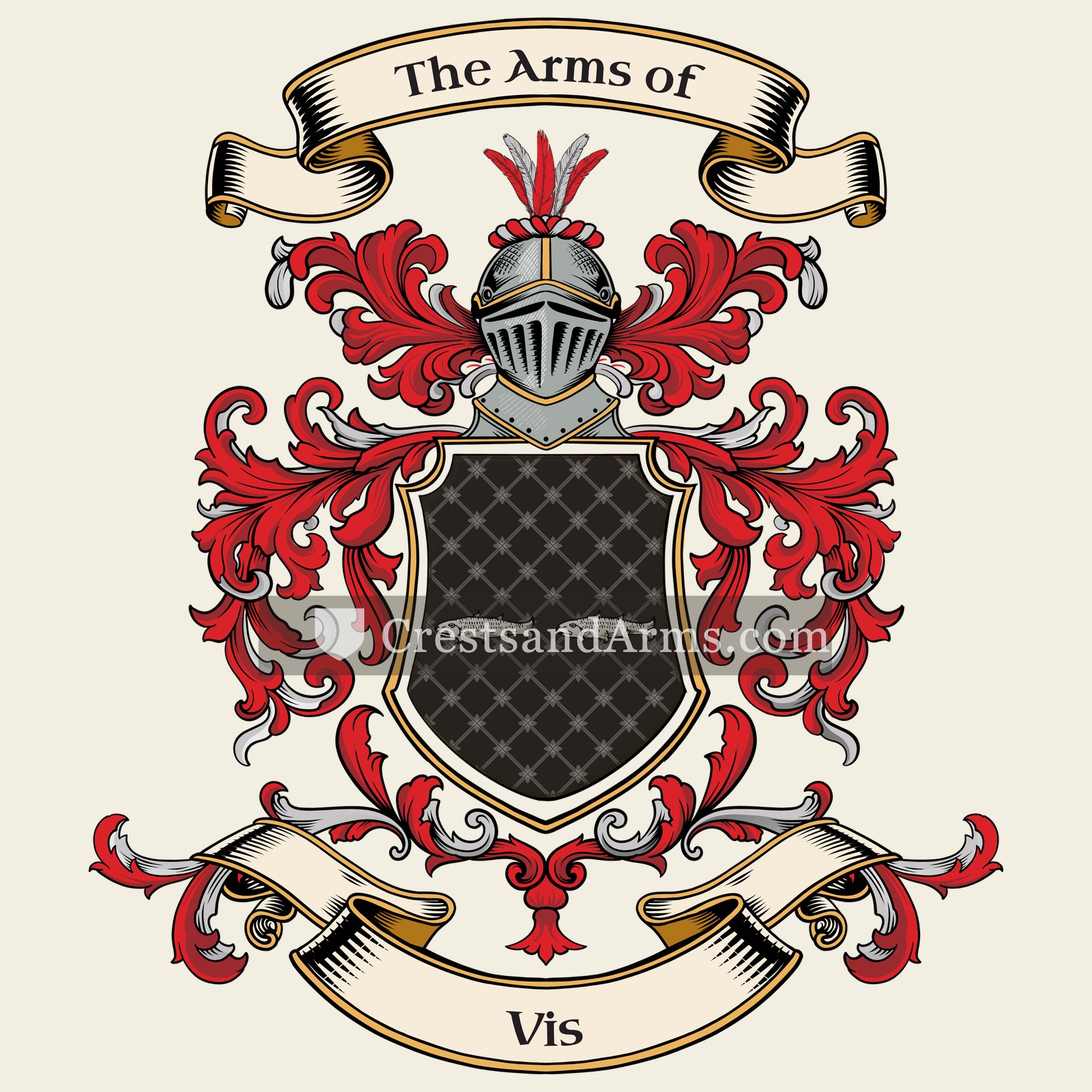
Symbols on this shield
fishA true and generous mind, and Christian faith
Colours
Black (Sable)Means: Constancy
Silver (Argent)Means: Peace and sincerity
Historical info
Source
J. B. Rietstap, Armorial Général, Gouda: G. B. van Goor Zonen, 1884–87
Blazon (the actual original written record)
“De sa. à deux poissons adossés d'arg.”
NetherlandsAmsterdam, c. 1815
Digital archive packCoat of arms PNG, gold border print PDF, vector SVG and the certificate of authenticity. Sent to your email in minutes.
Map of Netherlands showing where the Vis arms are recorded
The Vis arms were recorded in Amsterdam, c. 1815.
This is where the arms were entered in the register. Families often moved to other parts of the country, so the same name can turn up in more than one region.
Region
Amsterdam
Town
Amsterdam
First recorded
1815
Granting Authority for the Vis Arms
Hoge Raad van Adel
Photograph made by me · CC BY-SA 3.0
The body that granted and recorded arms in Netherlands in this period.
William I of the Netherlands
Sovereign of the period
William I of the Netherlands
1815–1840
Reigning in France when the Vis arms are first recorded.
How Arms Worked in Netherlands
In the Netherlands, coats of arms were often used by noble families and those who held specific public offices. These arms were passed down through the generations to legitimate descendants. Younger branches of a family usually kept the original design without needing to add special marks. This system ensured that the family identity remained clear and consistent over many years.
Granting authority
The Hoge Raad van Adel is the official body that regulates and manages noble titles and coats of arms in the Netherlands.
How they got arms
Families typically obtained their coats of arms through official royal grants or by proving their long-standing historical use of the symbols.
Where arms were recorded
Coats of arms are officially recorded in the registers held by the Hoge Raad van Adel, which began its work in 1814.
The family's standing
Recorded among the armigerous families of Netherlands.
Origin & History of the Vis Family in Netherlands
The surname Vis is a classic example of a Dutch occupational or descriptive name, as the word literally translates to "fish" in the Dutch language. In the context of early modern history, such names were often adopted by individuals who worked in the fishing industry, sold seafood at local markets, or perhaps lived near a prominent fish stall. By the time the family was firmly established in Amsterdam in 1815, the city had long been a global hub for maritime trade and commerce. Families bearing this name were likely integrated into the bustling urban life of the capital, where the proximity to the North Sea and the extensive canal networks made the fishing trade a vital part of the local economy. As the family grew during the nineteenth century, they became part of the diverse social fabric of Amsterdam, contributing to the city's identity as a center for both trade and craftsmanship.
Related Branches & Arms
Root word
Visus
Latin term meaning sight, vision, or appearance.
This name
VisA topographic name for someone living near a lookout point or a descriptive nickname for a person with keen eyesight.
also spelled
Vys
Viss
Documented Sources
J. B. Rietstap, Armorial Général, Gouda: G. B. van Goor Zonen, 1884–87
Archives Départementales de l'Hérault, Registres paroissiaux et état civil
Boutaric, Edgard, La France sous Philippe le Bel, 1861
Le Roy Ladurie, Emmanuel, Les Paysans de Languedoc, 1966
Digital archive packCoat of arms PNG, gold border print PDF, vector SVG and the certificate of authenticity. Sent to your email in minutes.


 greyhoundCourage, vigilance and loyalty
 greyhoundCourage, vigilance and loyalty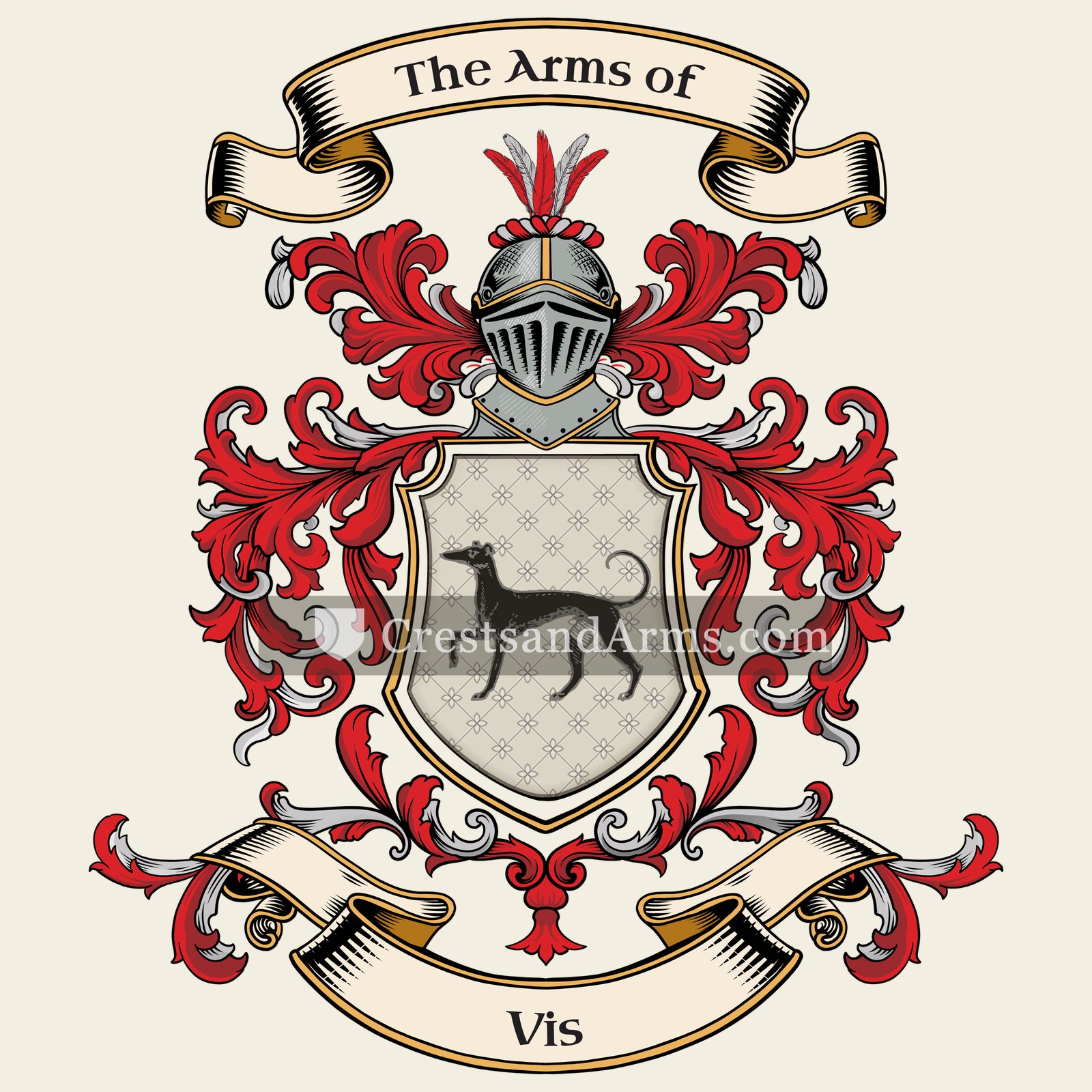


 fishA true and generous mind, and Christian faith