Map of France showing where the Vivanco arms are recorded
The Vivanco arms were recorded in Ile-de-France, c. 1663.
Ile-de-France is the country around Paris, and proximity to the court mattered. Families who served the crown were rewarded with land near it, and land near the capital carried arms almost as a matter of course.
This is where the arms were entered in the register. Families often moved to other parts of the country, so the same name can turn up in more than one region.
The body that granted and recorded arms in France in this period.
Louis XIV of France
Sovereign of the period
Louis XIV of France
1643–1715
Reigning in France when the Vivanco arms are first recorded.
How Arms Worked in France
In France, a coat of arms was a mark of honor that passed down through the male line to all legitimate descendants. Families often used the same shield without changes to show their shared heritage. If a branch wanted to stand out, they could add a small mark to their shield to show their specific place in the family tree.
Granting authority
The Juge d'armes de France acted as the official authority that regulated and verified coats of arms across the country.
How they got arms
Families typically inherited their arms from ancestors, though they could also receive them through royal grants or by proving their noble status.
Where arms were recorded
Coats of arms were officially recorded in the Armorial Général de France, which began its main collection in the year 1696.
The family's standing
Recorded among the armigerous families of Ile-de-France.
Origin & History of the Vivanco Family in France
The family name Vivanco carries a rich history that traces back to the northern regions of the Iberian Peninsula before spreading across Europe. While the name is deeply rooted in Spanish heritage, historical records confirm that members of the family were established in the Ile-de-France region by 1663. During the seventeenth century, families often moved across borders for trade, military service, or religious reasons. The presence of the Vivanco name in France during this period suggests that these early ancestors were likely part of a mobile class of professionals or skilled laborers who integrated into the local community. By settling in the heart of France, these individuals helped carry their family legacy into a new cultural landscape while maintaining their distinct ancestral identity.
Vivanco Meaning & Related Branches
Root word
Vivus
Latin term meaning alive, living, or full of life.
This name
VivancoDerived from a topographic location or habitational name referring to a place where vines grow.
also spelled
Vivant
Vivance
Vivan
Documented Sources
J. B. Rietstap, Armorial Général, Gouda: G. B. van Goor Zonen, 1884–87
Archives Nationales de France, Minutier central des notaires de Paris
Moll, Francisco de Borja, Els llinatges catalans: Catalunya, País Valencià, Illes Balears, 1959
Pescador del Hoyo, María del Carmen, La población de Castilla en el siglo XVI, 1976
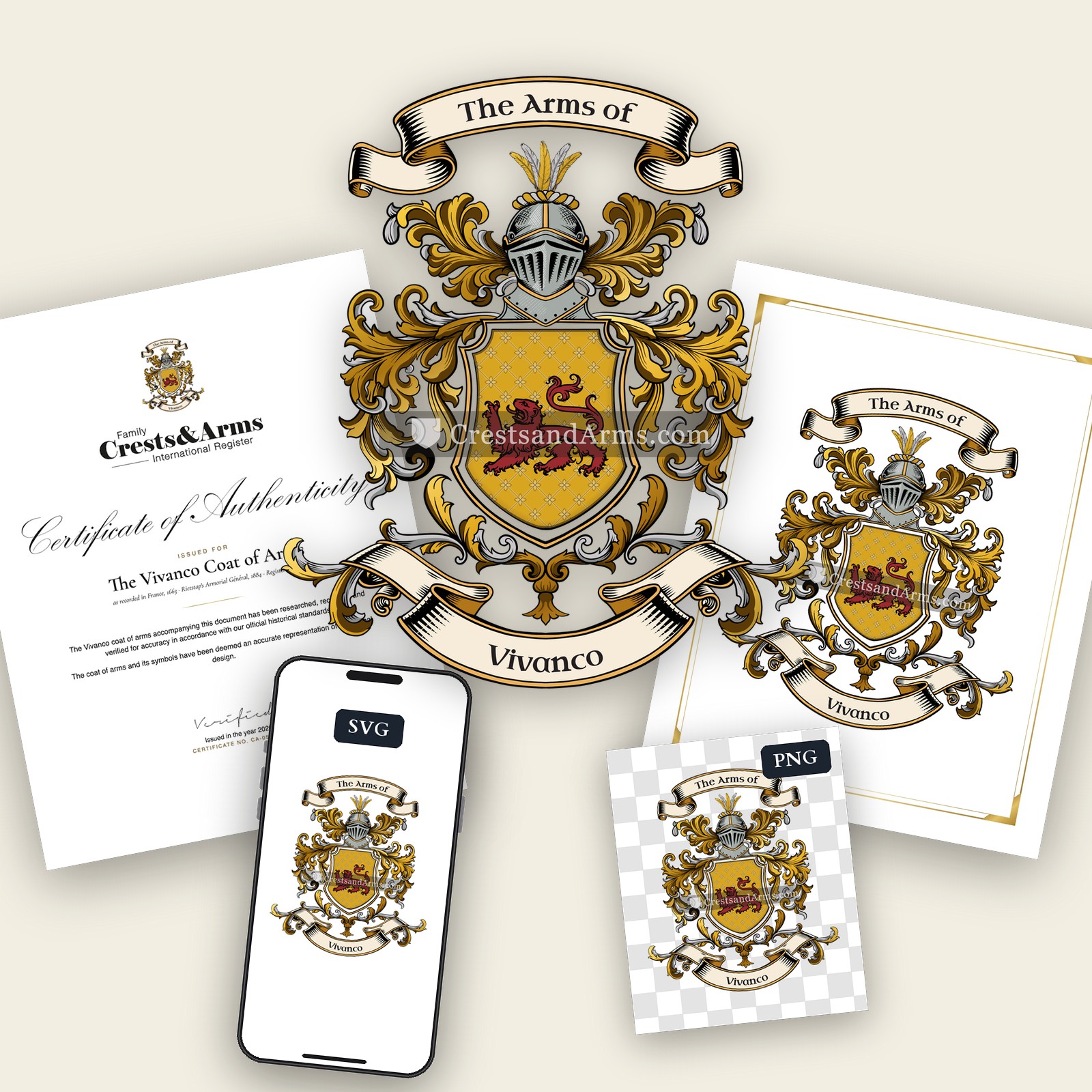
Digital archive packCoat of arms PNG, gold border print PDF, vector SVG and the certificate of authenticity. Sent to your email in minutes.


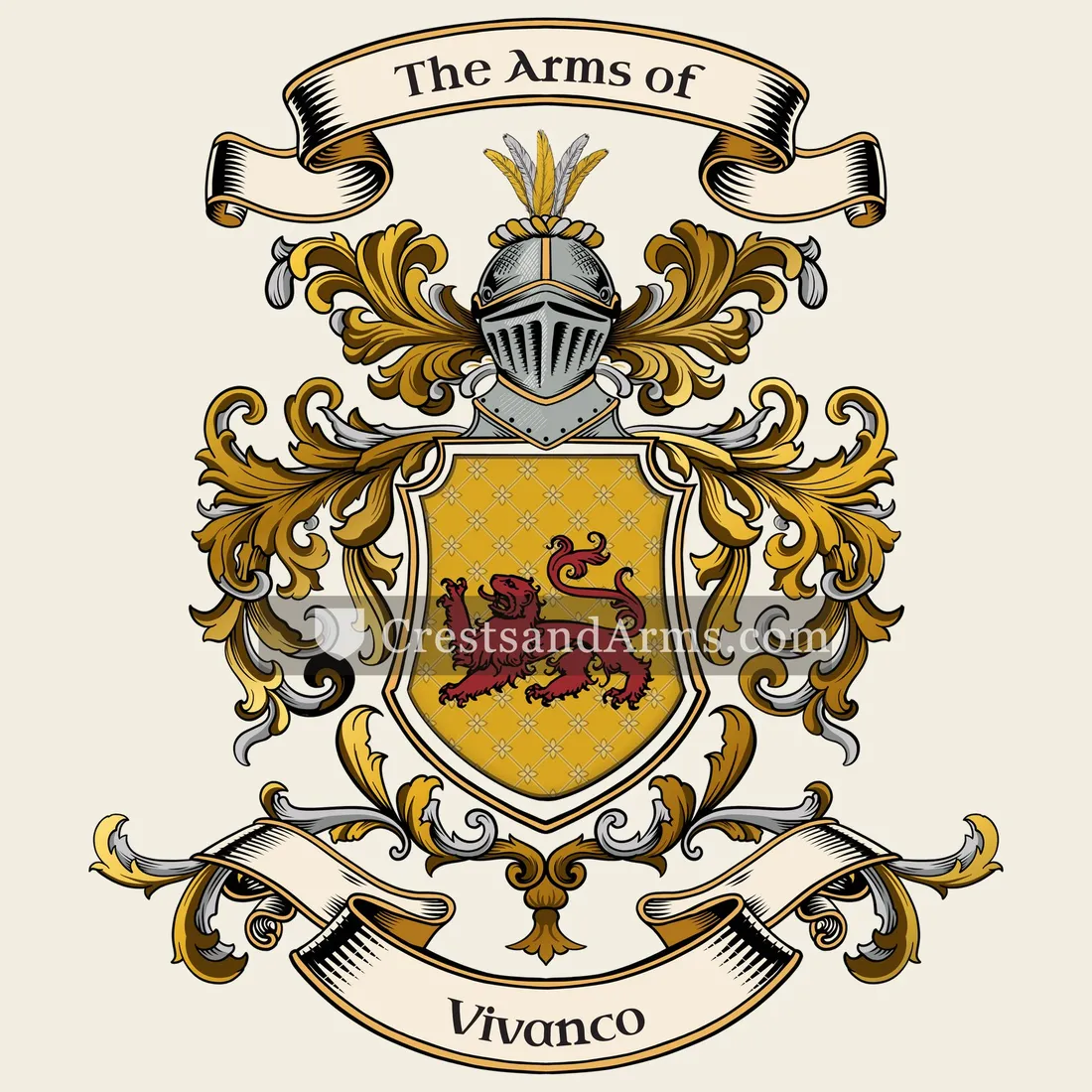
 lionCourage, strength and royalty
 lionCourage, strength and royalty