Map of France showing where the Viviano arms are recorded
The Viviano arms were recorded in France, c. 1663.
Arms such as these were typically recorded in Bretagne.
More families held coats of arms in Bretagne than anywhere else in France. The land was divided into many small estates rather than a few large ones, so far more households counted as gentry, and each needed a shield of its own to be told apart.
This is where the arms were entered in the register. Families often moved to other parts of the country, so the same name can turn up in more than one region.
The body that granted and recorded arms in France in this period.
Louis XIV of France
Sovereign of the period
Louis XIV of France
1643–1715
Reigning in France when the Viviano arms are first recorded.
How Arms Worked in France
In France, a coat of arms was a mark of honor that passed down through the male line to all legitimate descendants. Families often used the same shield without changes to show their shared heritage. If a branch wanted to stand out, they could add a small mark to their shield to show their specific place in the family tree.
Granting authority
The Juge d'armes de France acted as the official authority that regulated and verified coats of arms across the country.
How they got arms
Families typically inherited their arms from ancestors, though they could also receive them through royal grants or by proving their noble status.
Where arms were recorded
Coats of arms were officially recorded in the Armorial Général de France, which began its main collection in the year 1696.
The family's standing
Recorded among the armigerous families of France.
Origin & History of the Viviano Family in France
The name Viviano finds its roots in the Latin word vivus, which means alive or full of life. In France, the name evolved from these ancient linguistic origins to become a marker of families living in specific regions. By the year 1663, records confirm that members of the family were well-established in the province of Bretagne. During this period, Bretagne was a distinct region with its own unique customs and social structures. Families living there often worked in agriculture or maritime trades, which were the primary ways of life along the rugged French coast. The presence of the family in this area suggests they were part of the local community life that defined the seventeenth century. As they settled into the region, they contributed to the local history of the province through their daily work and their connections to the parish records that tracked births, marriages, and deaths.
Coat of Arms & Family Crest Details
Symbols on this shield
chevronProtection, and faithful service completed
chiefAuthority, wisdom and dominion
lionCourage, strength and royalty
ringFidelity, and a promise kept
martletA younger son, who must win his own land
Colours
Gold (Or)Means: Generosity
Blue (Azure)Means: Loyalty and truth
Red (Gules)Means: Military strength
Purple (Purpure)Means: Royal majesty
Historical info
Source
Sir Bernard Burke, The General Armory of England, Scotland, Ireland and Wales, London: Harrison & Sons, 1884
Blazon (the actual original written record)
“Or, on a chev. az. betw. three lions' heads erased purp. as many annulets of the field, on a chief gu. as many martlets or”
CornwallBodmin · Cornwall, c. 1507
Digital archive packCoat of arms PNG, gold border print PDF, vector SVG and the certificate of authenticity. Sent to your email in minutes.
Map of England showing where the Viviano arms are recorded
The Viviano arms were recorded in Cornwall, c. 1507.
Cornwall was a county apart, with its own language and its own tight-knit gentry. Tin and the sea made money there, and families who made it bought land, which is what brought arms with it.
This is where the arms were entered in the register. Families often moved to other parts of the country, so the same name can turn up in more than one region.
The body that granted and recorded arms in England in this period.
Henry VII of England
Sovereign of the period
Henry VII of England
1485–1509
Reigning in France when the Viviano arms are first recorded.
How Arms Worked in England
English heraldry allowed arms to be shared by all legitimate descendants of the original owner. These symbols were treated as personal property that moved through the generations to all children. While the eldest son kept the original design, other family members could use the same shield without needing to change it or register their own unique versions.
Granting authority
The College of Arms in London has regulated the use of coats of arms throughout England and Wales since 1484.
How they got arms
Families typically obtained their coats of arms through a formal grant from the Crown or by proving their ancient right to them.
Where arms were recorded
All official coats of arms are recorded in the registers kept at the College of Arms, which date back to the fifteenth century.
The family's standing
Recorded among the armigerous families of Cornwall.
Origin & History of the Viviano Family in England
The surname Viviano is rooted in the Latin name Vivianus, which carries the meaning of being full of life or lively. While the name has strong historical ties to Mediterranean regions, records confirm that members of the family were established in Cornwall by 1507. During this period, the family likely lived in small, tight-knit coastal communities where they integrated into the local Cornish society. As the name moved into England, it adapted to the linguistic patterns of the region while maintaining its connection to its ancient origins. These early settlers in Cornwall were part of a broader migration of families who brought diverse cultural backgrounds to the English landscape. By settling in the southwest, the Viviano family became a part of the unique social and economic fabric of Cornwall during the early sixteenth century.
Coat of Arms & Family Crest Details
Symbols on this shield
chevronProtection, and faithful service completed
chiefAuthority, wisdom and dominion
ermineDignity and rank
chequyConstancy, and the counting-board
fessThe military belt, and readiness to serve
oakGreat age, strength and steadfastness
lionCourage, strength and royalty
ringFidelity, and a promise kept
roundelA coin, and one who has been to the crusades
Colours
Gold (Or)Means: Generosity
Counter-ermine (Ermines)Means: Dignity
Blue (Azure)Means: Loyalty and truth
Red (Gules)Means: Military strength
ErmineMeans: Dignity
Historical info
Source
Sir Bernard Burke, The General Armory of England, Scotland, Ireland and Wales, London: Harrison & Sons, 1884
Blazon (the actual original written record)
“Quarterly, 1st and 4th, or, on a chev. az. betw. three lions' heads erased ppr. as many annulets of the field, on a chief embattled gu. a wreath of oak of the first betw. two medals, the dexter representing the gold medal and clasp for the actions of Sahagun, Benevente, and Orthes, the sinister, the silver Waterloo medal; 2nd, barry of six ermines and gu., for HUSSEY; 3rd, chequy gu. and or, a fess erm., for CRANCH”
Walesc. 1647
Digital archive packCoat of arms PNG, gold border print PDF, vector SVG and the certificate of authenticity. Sent to your email in minutes.
Map of Wales showing where the Viviano arms are recorded
The Viviano arms were recorded in Wales, c. 1647.
Arms such as these were typically recorded in Denbigh.
Denbighshire was north Welsh country of hills and small estates. Land was held by a great many families rather than a few, and each holding brought its own claim to a coat of arms.
This is where the arms were entered in the register. Families often moved to other parts of the country, so the same name can turn up in more than one region.
The body that granted and recorded arms in Wales in this period.
Charles I of England
Sovereign of the period
Charles I of England
1625–1649
Reigning in France when the Viviano arms are first recorded.
How Arms Worked in Wales
English heraldry allowed arms to be shared by all legitimate descendants of the original owner. These symbols were treated as personal property that moved through the generations to all children. While the eldest son kept the original design, other family members could use the same shield without needing to change it or register their own unique versions.
Granting authority
The College of Arms in London has regulated the use of coats of arms throughout England and Wales since 1484.
How they got arms
Families typically obtained their coats of arms through a formal grant from the Crown or by proving their ancient right to them.
Where arms were recorded
All official coats of arms are recorded in the registers kept at the College of Arms, which date back to the fifteenth century.
The family's standing
Recorded among the armigerous families of Wales.
Origin & History of the Viviano Family in Wales
The family name Viviano carries a distinct history within the rugged landscape of North Wales, where records confirm the family was well-established in the town of Denbigh by 1647. During this period, Denbigh served as a vital administrative and market hub, meaning families residing there were often involved in the local trade or the legal affairs of the region. The name itself is rooted in the Latin word *vivus*, which translates to living or lively, suggesting that the original bearers of the name were likely known for their spirited personalities or their vitality within the community. By the mid-17th century, the Viviano family had integrated into the Welsh social fabric, navigating the complex political shifts of the era while maintaining their presence in the Denbigh area. Their survival and growth in this specific locale reflect a broader pattern of families who helped shape the economic and social identity of North Wales during the transition into the modern age.
Related Branches & Arms
Root word
Vivus
Latin term meaning alive, living, or full of life.
This name
VivianoDerived from the Latin name Vivianus, signifying one who is full of life or lively.
also spelled
Vivien
Vyvian
Vivyan
Vyvyan
Documented Sources
Sir Bernard Burke, The General Armory of England, Scotland, Ireland and Wales, London: Harrison & Sons, 1884
Archives départementales d'Ille-et-Vilaine, Série B, Fonds de la juridiction de Rennes
Archives départementales du Morbihan, Série E, État civil et registres paroissiaux
Dauzat, Albert, Dictionnaire étymologique des noms de famille et prénoms de France, 1951
Digital archive packCoat of arms PNG, gold border print PDF, vector SVG and the certificate of authenticity. Sent to your email in minutes.


 greyhoundCourage, vigilance and loyalty
 spurKnighthood, and readiness to spur on
 greyhoundCourage, vigilance and loyalty
 spurKnighthood, and readiness to spur on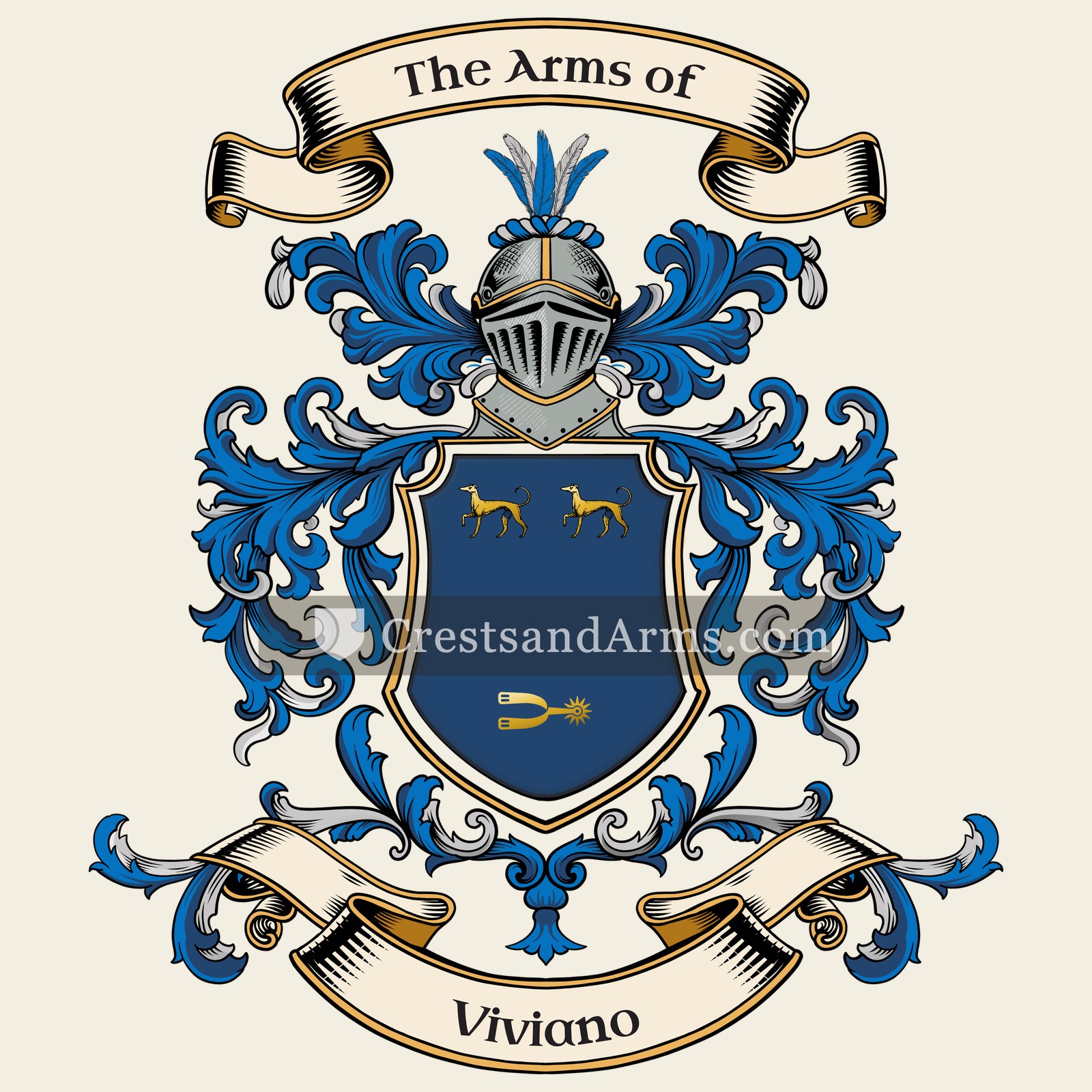


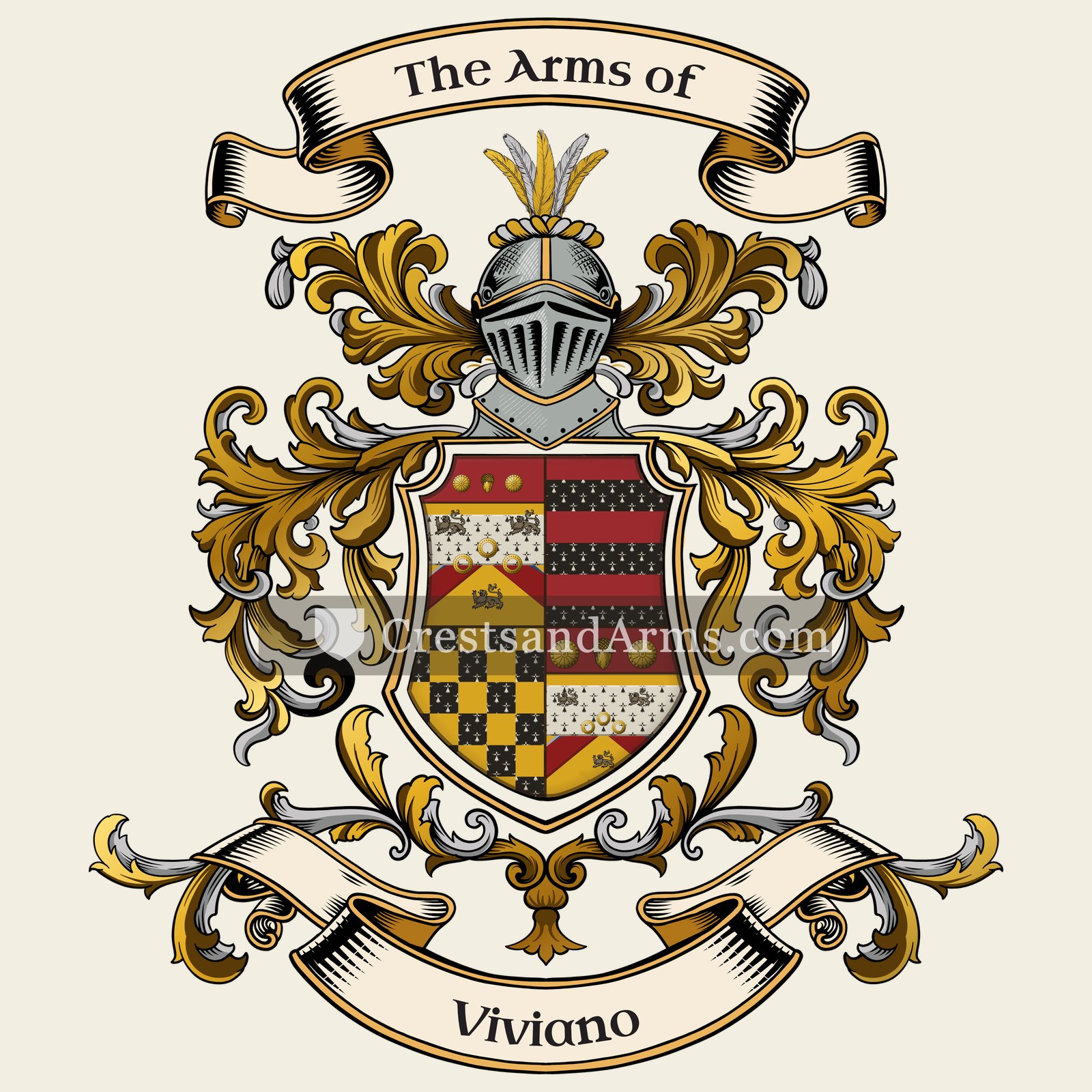
 chevronProtection, and faithful service completed
 chiefAuthority, wisdom and dominion
 lionCourage, strength and royalty
 ringFidelity, and a promise kept
 martletA younger son, who must win his own land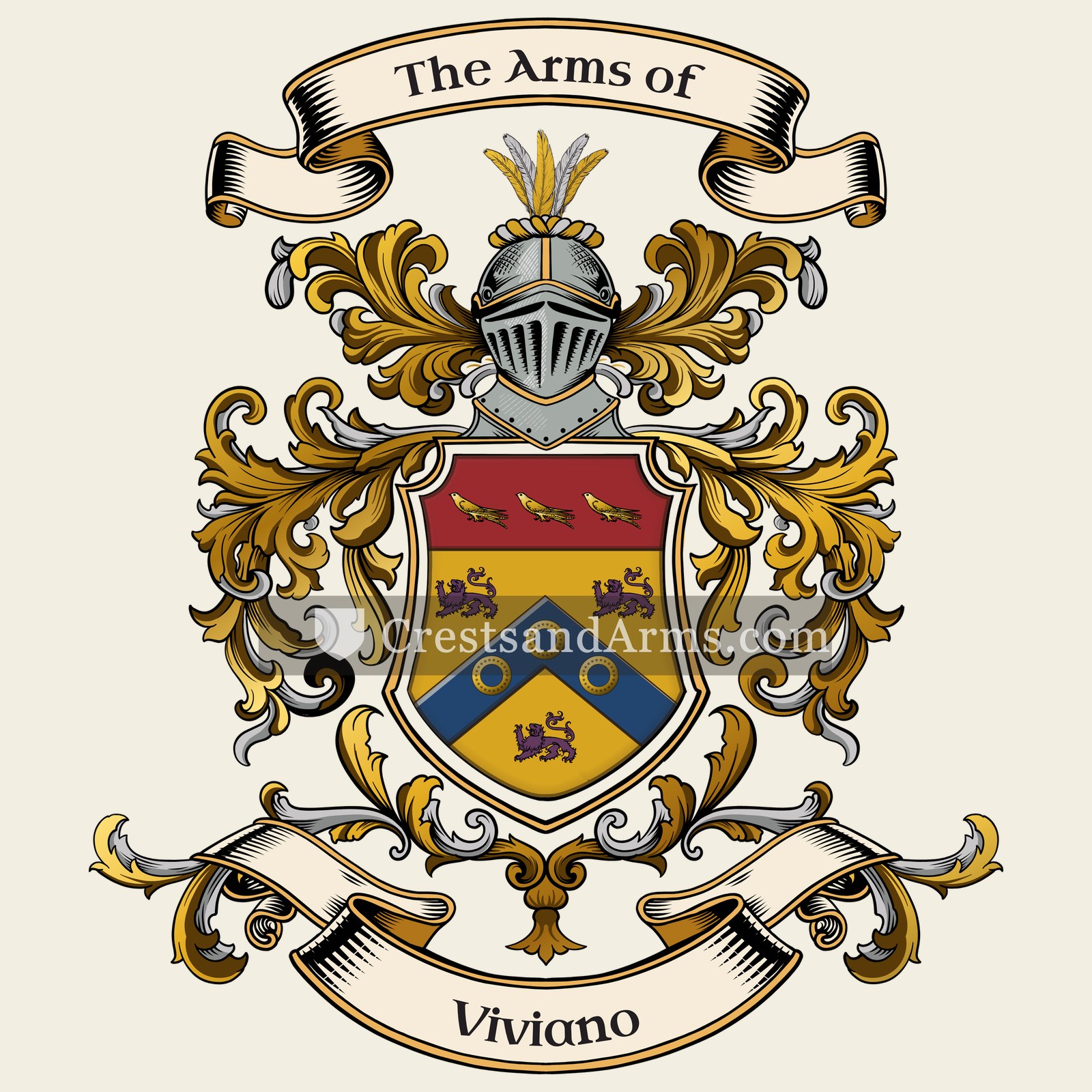


 ermineDignity and rank
 chequyConstancy, and the counting-board
 fessThe military belt, and readiness to serve
 oakGreat age, strength and steadfastness
 roundelA coin, and one who has been to the crusades