Map of Germany showing where the Vogel arms are recorded
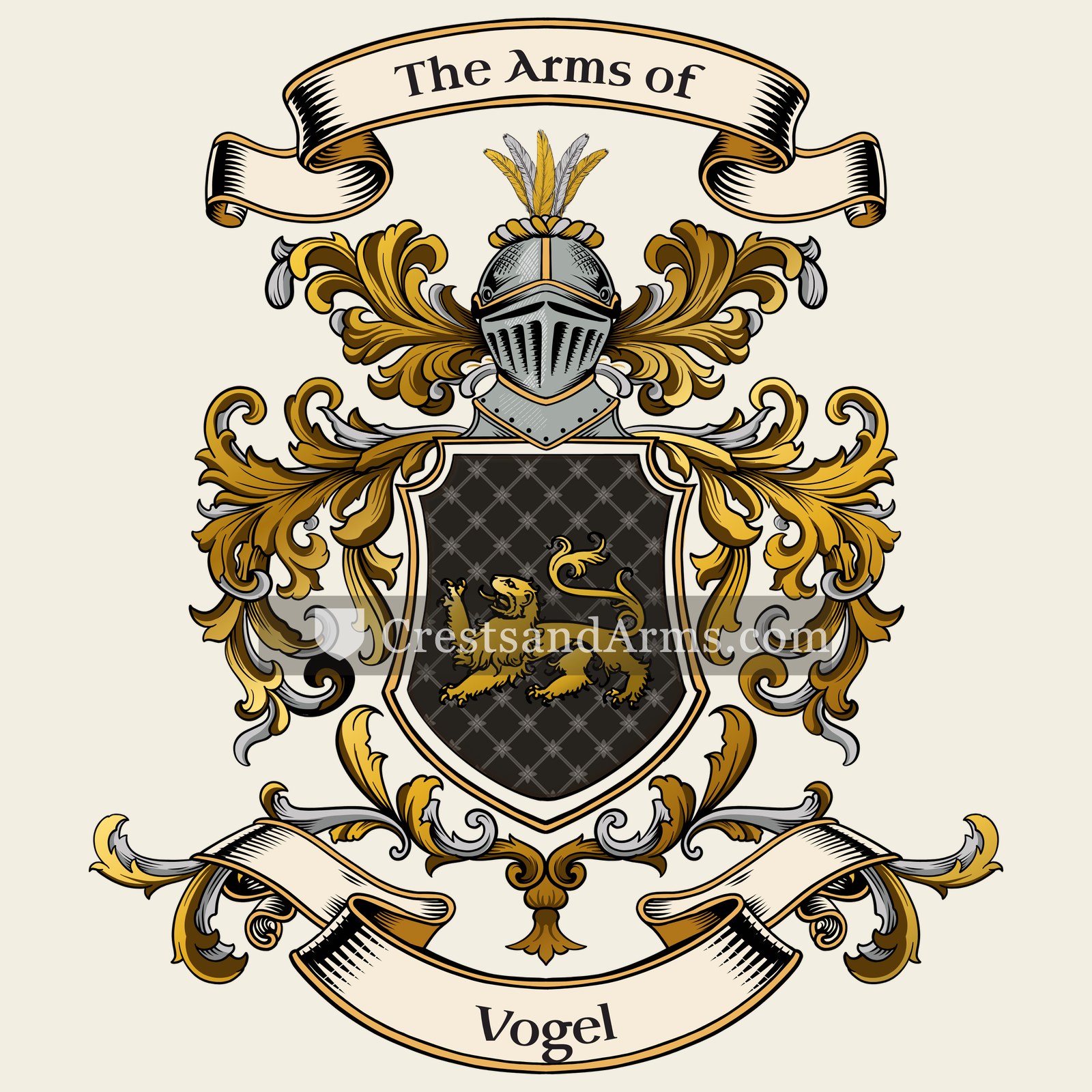
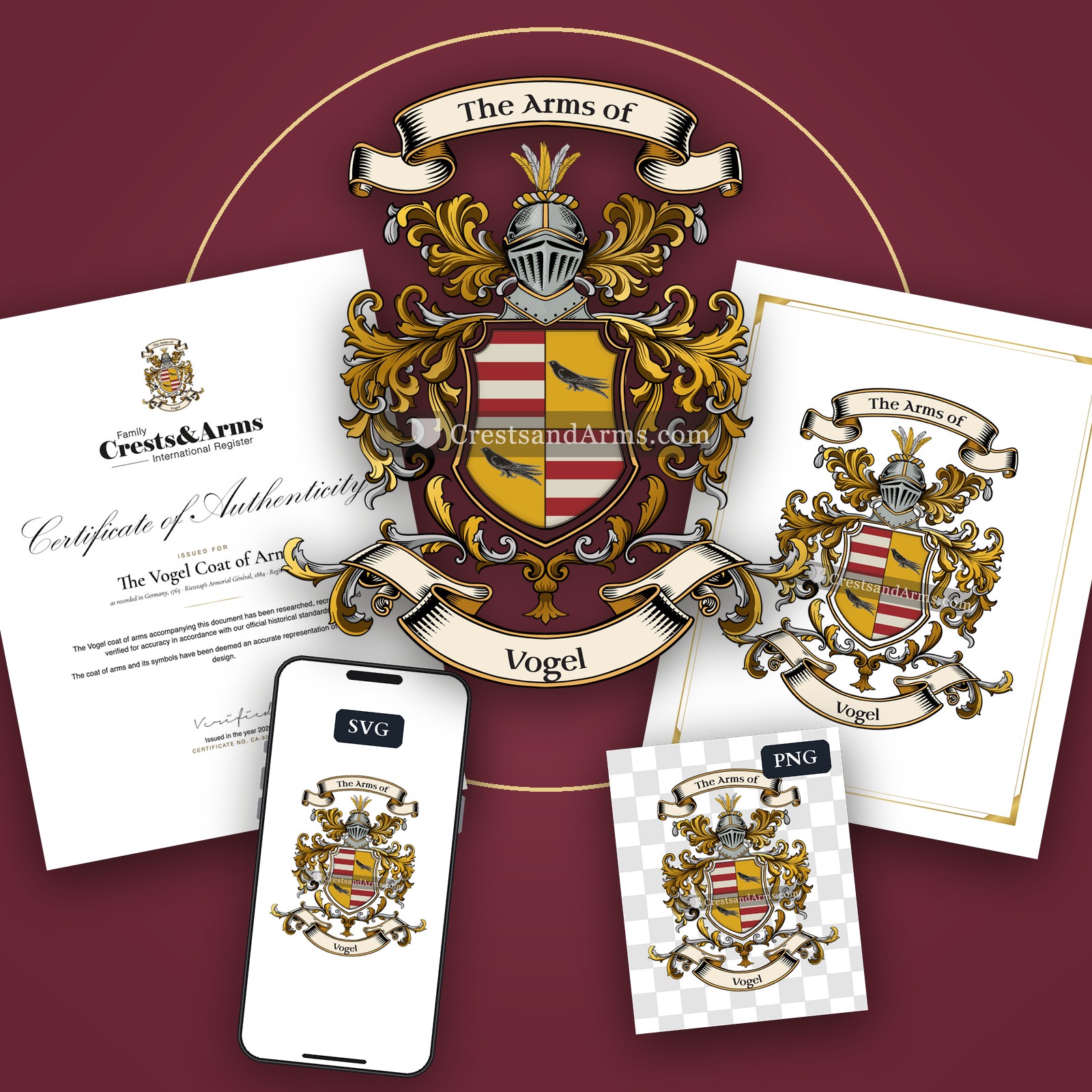
The Vogel arms were recorded in Germany, c. 1765.
Arms such as these were typically recorded in Bavaria.
Bavaria was a country of old landed families and walled market towns. Estates passed down the same line for centuries, and both the landowners and the leading townsmen kept arms, which is why so many Bavarian names sit in the registers.
This is where the arms were entered in the register. Families often moved to other parts of the country, so the same name can turn up in more than one region.
The body that granted and recorded arms in Germany in this period.
Francis I, Holy Roman Emperor
Sovereign of the period
Francis I, Holy Roman Emperor
1745–1765
Reigning in Germany when the Vogel arms are first recorded.
How Arms Worked in Germany
In the Holy Roman Empire, coats of arms were often granted to individuals by the Emperor or his representatives. These arms were then passed down through the generations to all legitimate descendants of the original holder. Younger branches of a family usually kept the same shield design without needing to change it, as the arms belonged to the entire lineage.
Granting authority
The Holy Roman Emperor held the sole power to grant new coats of arms throughout his vast imperial territories.
How they got arms
Families typically obtained their coats of arms through a formal imperial grant or by proving their noble status to the authorities.
Where arms were recorded
These grants were officially recorded in the Imperial Chancery registers, which began keeping formal records of such honors during the Middle Ages.
The family's standing
Recorded among the armigerous families of Germany.
Origin & History of the Vogel Family in Germany
The surname Vogel is a classic example of a German occupational or descriptive name that originated during the Middle Ages. In the German language, the word vogel translates directly to bird. It was likely first used as a nickname for a person who possessed a cheerful personality, a talent for singing, or perhaps someone who worked as a professional bird catcher or fowler. By the time records place members of the family in Bavaria in 1765, the name had already been established for centuries as a common identifier across German-speaking regions. Families carrying this name were often integrated into the local agricultural or trade communities of southern Germany, where they lived as farmers, craftsmen, or merchants. Because the name was tied to a common noun, it developed independently in many different locations rather than originating from a single ancestor. This widespread usage helped the name persist through generations as families moved across the Bavarian countryside to seek new opportunities in trade and land ownership.
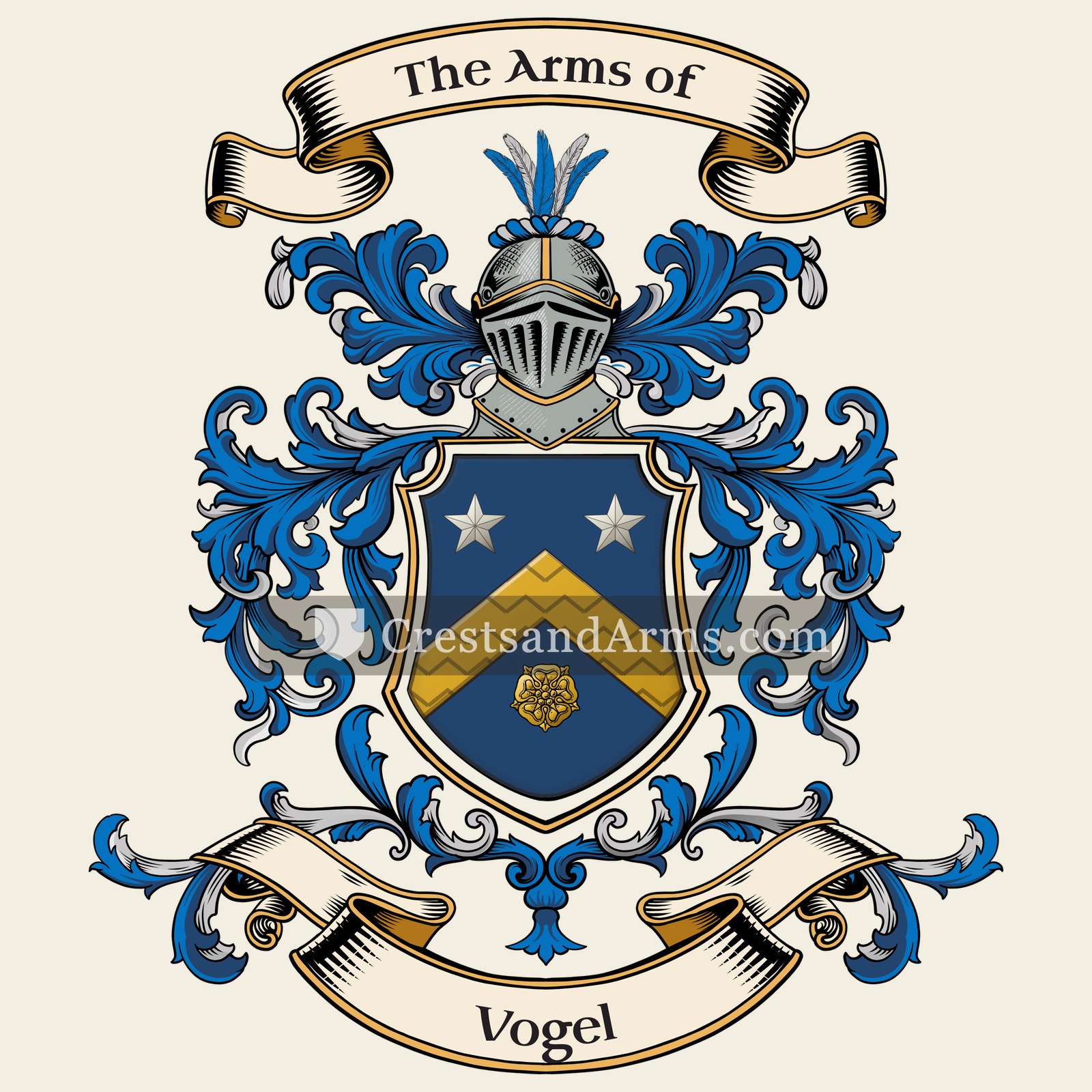
Coat of Arms & Family Crest Details
Symbols on this shield
chevronProtection, and faithful service completed
mulletThe third son, and a divine quality from above
roseThe seventh son, and beauty with grace
Colours
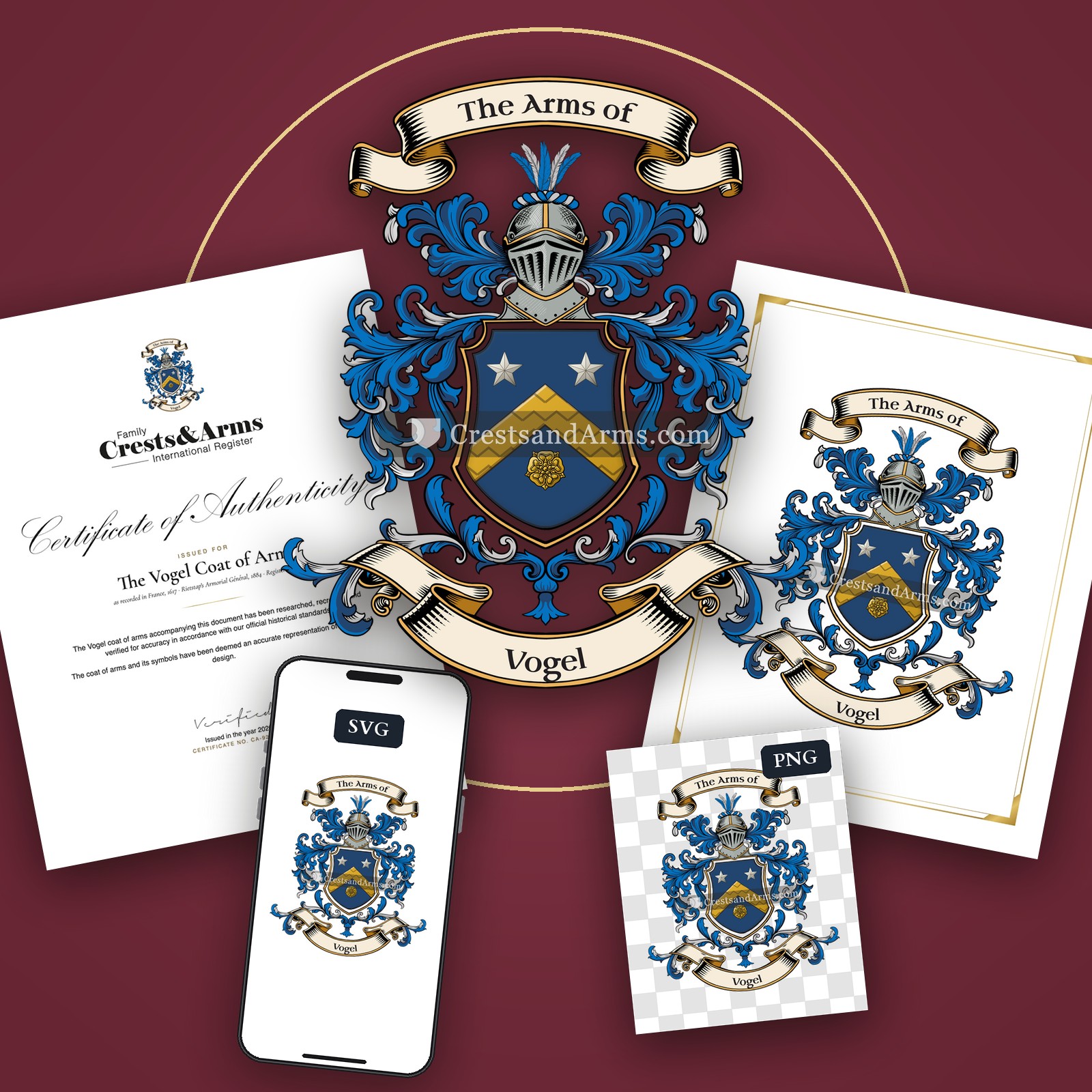
Blue (Azure)Means: Loyalty and truth
Gold (Or)Means: Generosity
Silver (Argent)Means: Peace and sincerity
Historical info
Source
J. B. Rietstap, Armorial Général, Gouda: G. B. van Goor Zonen, 1884–87
Blazon (the actual original written record)
“D'azur au chev., d'or, acc. en chef de deux étoiles d'arg. et en p. d'une rose du sec.”
LorraineLorraine, c. 1617
Digital archive packCoat of arms PNG, gold border print PDF, vector SVG and the certificate of authenticity. Sent to your email in minutes.
Map of France showing where the Vogel arms are recorded
The Vogel arms were recorded in Lorraine, c. 1617.
Lorraine sat on the border between France and the German lands, and border country bred soldiers. Families here held small estates and served in arms, and a fighting man was exactly the sort who carried a shield of his own.
This is where the arms were entered in the register. Families often moved to other parts of the country, so the same name can turn up in more than one region.
The body that granted and recorded arms in France in this period.
Louis XIII of France
Sovereign of the period
Louis XIII of France
1610–1617
Reigning in Germany when the Vogel arms are first recorded.
How Arms Worked in France
In France, a coat of arms was a mark of honor that passed down through the male line to all legitimate descendants. Families often used the same shield without changes to show their shared heritage. If a branch wanted to stand out, they could add a small mark to their shield to show their specific place in the family tree.
Granting authority
The Juge d'armes de France acted as the official authority that regulated and verified coats of arms across the country.
How they got arms
Families typically inherited their arms from ancestors, though they could also receive them through royal grants or by proving their noble status.
Where arms were recorded
Coats of arms were officially recorded in the Armorial Général de France, which began its main collection in the year 1696.
The family's standing
Recorded among the armigerous families of Lorraine.
Origin & History of the Vogel Family in France
The surname Vogel has deep roots in the Lorraine region of France, where records confirm the family was established by at least 1617. The name itself is of Germanic origin and translates to bird, which suggests that the earliest ancestors may have been given the name as a descriptive nickname or a professional identifier. During the early seventeenth century, Lorraine was a crossroads of culture and language, situated between the French-speaking territories and the German-speaking lands of the Holy Roman Empire. Families in this area often navigated a complex mix of linguistic influences, which explains why a German-derived name became firmly planted in a French province. As the family settled into the local community, they became part of the agricultural and social fabric of the region, living through a period of significant political change as the Duchy of Lorraine moved closer to French influence. By maintaining their presence in the area, the early members of the Vogel family contributed to the long history of migration and cultural blending that defines the borderlands of eastern France.
Coat of Arms & Family Crest Details
Symbols on this shield
lionCourage, strength and royalty
Colours
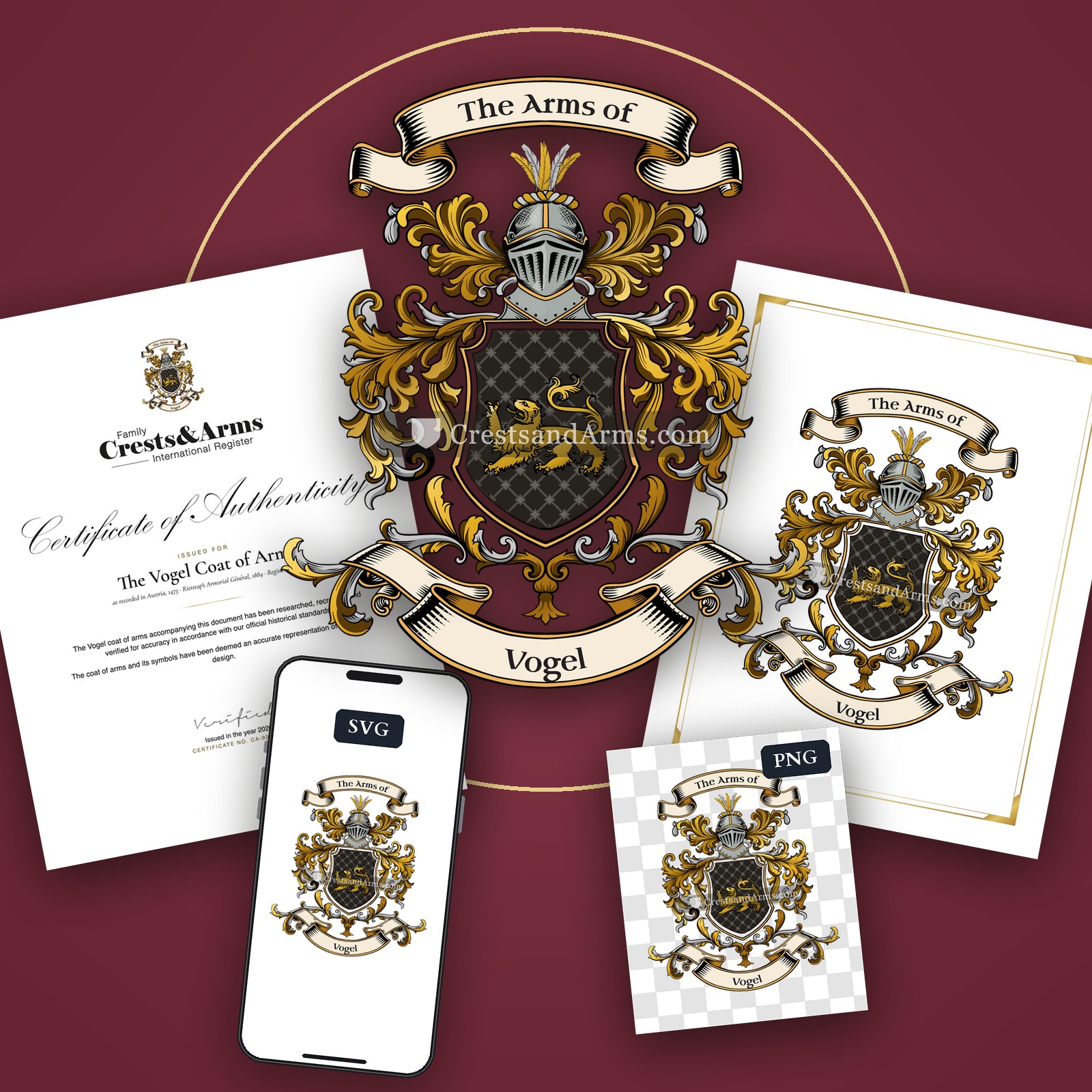
Black (Sable)Means: Constancy
Gold (Or)Means: Generosity
Historical info
Source
J. B. Rietstap, Armorial Général, Gouda: G. B. van Goor Zonen, 1884–87
Blazon (the actual original written record)
“De sa. au lion d'or, à queue d'arg. C.: le lion, iss., entre un vol de sa. L. d'or et de sa.”
Austriac. 1473
Digital archive packCoat of arms PNG, gold border print PDF, vector SVG and the certificate of authenticity. Sent to your email in minutes.
Map of Austria showing where the Vogel arms are recorded
The Vogel arms were recorded in Austria, c. 1473.
Arms such as these were typically recorded in Tyrol.
Tyrol was mountain country in western Austria, where the valleys were held by families who had been there a very long time. Old tenure counted for more than money, and old families carried arms.
This is where the arms were entered in the register. Families often moved to other parts of the country, so the same name can turn up in more than one region.
Region
Tyrol
First recorded
1473
Granting Authority for the Vogel Arms
Imperial and Royal chancery
Sodacan · CC BY-SA 3.0
The body that granted and recorded arms in Austria in this period.
Frederick III, Holy Roman Emperor
Sovereign of the period
Frederick III, Holy Roman Emperor
1452–1493
Reigning in Germany when the Vogel arms are first recorded.
How Arms Worked in Austria
Austrian coats of arms were often linked directly to noble titles granted by the Emperor. These symbols belonged to the entire family line rather than just one individual. When a family grew, new branches kept the original design without needing to change it. This system allowed all members of a noble house to share the same identity across many generations.
Granting authority
The Imperial and Royal chancery managed all heraldic matters and controlled the official granting of arms throughout the Austrian lands.
How they got arms
Families typically received their arms through a formal imperial decree that often accompanied the elevation of a person to noble status.
Where arms were recorded
Official records of these grants were kept in the Imperial Register of Nobility which began its formal documentation process in 1453.
The family's standing
Recorded among the armigerous families of Austria.
Origin & History of the Vogel Family in Austria
The surname Vogel, which translates to bird in German, emerged as a descriptive name for individuals during the Middle Ages. In the mountainous region of Tyrol, records confirm that members of the Vogel family were established residents by 1473. During this period, surnames often identified a person by their trade, a physical trait, or their connection to a specific location. Because the name is rooted in nature, it may have originally been a nickname for someone who was a skilled bird catcher, a falconer, or perhaps someone who lived near a place known for its songbirds. As families grew and moved through the alpine valleys of Austria, the name became a permanent way to track lineage and community ties. This history reflects the broader trend of how common nouns evolved into lasting family identities across the German-speaking lands.
Vogel Meaning & Related Branches
Root word
fugel
A Germanic term referring to a flying creature or bird.
This name
VogelAn occupational name for a bird catcher or a nickname for someone with bird-like characteristics.
Related arms
Rudasimilar arms
Vöglsimilar arms
Voigtländersimilar arms
Voghelvariant spelling
Documented Sources
J. B. Rietstap, Armorial Général, Gouda: G. B. van Goor Zonen, 1884–87
Bahlow, Hans, Deutsches Namenlexikon: Familien- und Vornamen nach Ursprung und Sinn erklärt, 1967
Heintze, Albert, Die deutschen Familiennamen: geschichtlich, geographisch, sprachlich, 1903


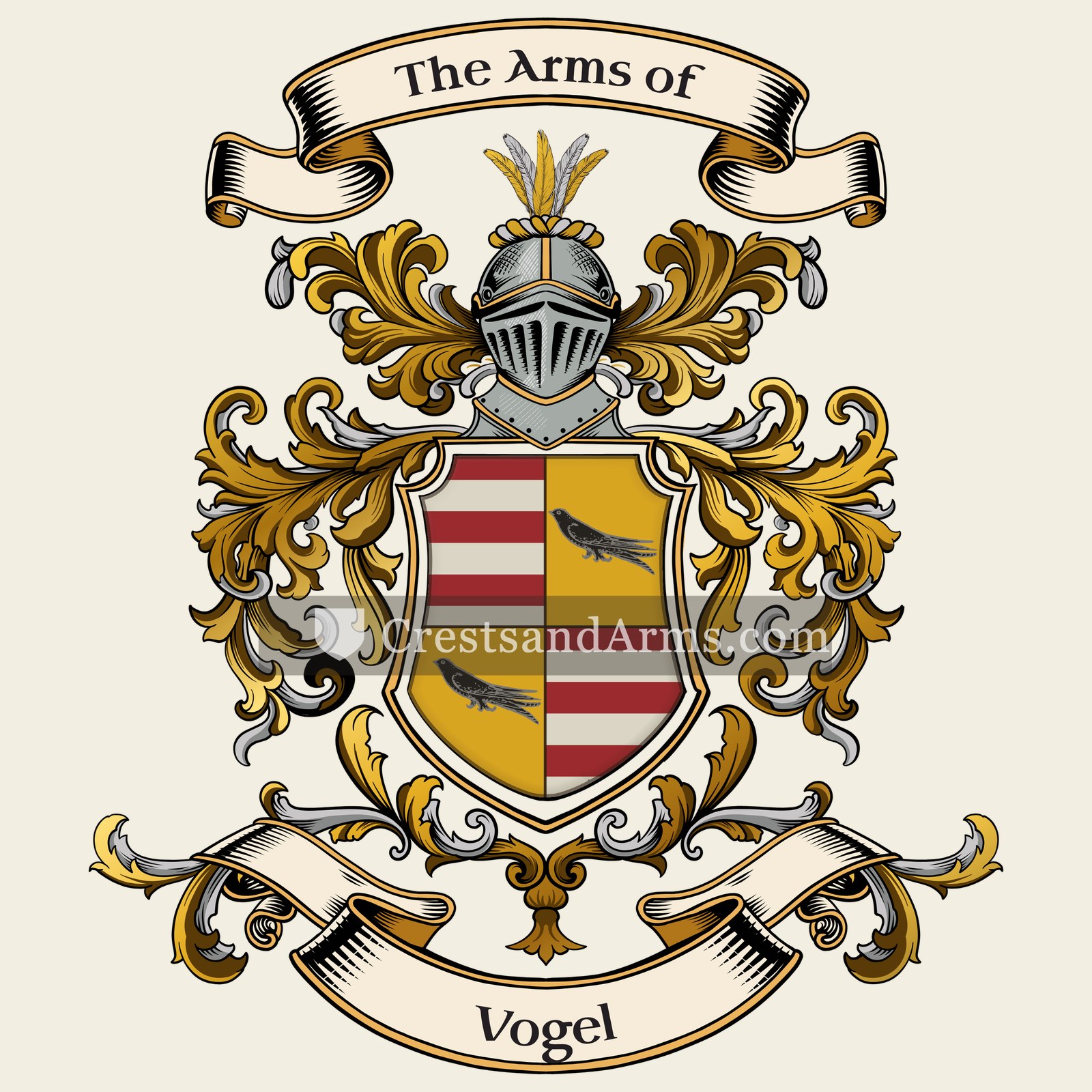
 fessThe military belt, and readiness to serve
 martletA younger son, who must win his own land
 fessThe military belt, and readiness to serve
 martletA younger son, who must win his own land


 chevronProtection, and faithful service completed
 mulletThe third son, and a divine quality from above
 roseThe seventh son, and beauty with grace


 lionCourage, strength and royalty