Map of Netherlands showing where the Vose arms are recorded
The Vose arms were recorded in Amsterdam, c. 1815.
This is where the arms were entered in the register. Families often moved to other parts of the country, so the same name can turn up in more than one region.
Region
Amsterdam
Town
Amsterdam
First recorded
1815
Granting Authority for the Vose Arms
Hoge Raad van Adel
Photograph made by me · CC BY-SA 3.0
The body that granted and recorded arms in Netherlands in this period.
William I of the Netherlands
Sovereign of the period
William I of the Netherlands
1815–1840
Reigning in Netherlands when the Vose arms are first recorded.
How Arms Worked in Netherlands
In the Netherlands, coats of arms were often used by noble families and those who held specific public offices. These arms were passed down through the generations to legitimate descendants. Younger branches of a family usually kept the original design without needing to add special marks. This system ensured that the family identity remained clear and consistent over many years.
Granting authority
The Hoge Raad van Adel is the official body that regulates and manages noble titles and coats of arms in the Netherlands.
How they got arms
Families typically obtained their coats of arms through official royal grants or by proving their long-standing historical use of the symbols.
Where arms were recorded
Coats of arms are officially recorded in the registers held by the Hoge Raad van Adel, which began its work in 1814.
The family's standing
Recorded among the armigerous families of Netherlands.
Origin & History of the Vose Family in Netherlands
The family name Vose has roots that connect to the bustling urban landscape of early nineteenth-century Amsterdam. By 1815, the city was undergoing a major transition as it emerged from the Napoleonic era and became part of the newly formed United Kingdom of the Netherlands. During this period, families with the name Vose were integrated into the city’s dense social fabric, likely participating in the vibrant trade and mercantile activities that defined Amsterdam. Because the name appears in municipal records during this time of national reorganization, it suggests that the family was part of the growing urban population navigating the shift toward a modern Dutch state. These early residents helped establish the presence of the name within the region, setting a foundation for the family history that would continue to develop throughout the century.
Meaning of the Vose family crest colors & symbols
Symbols on this shield
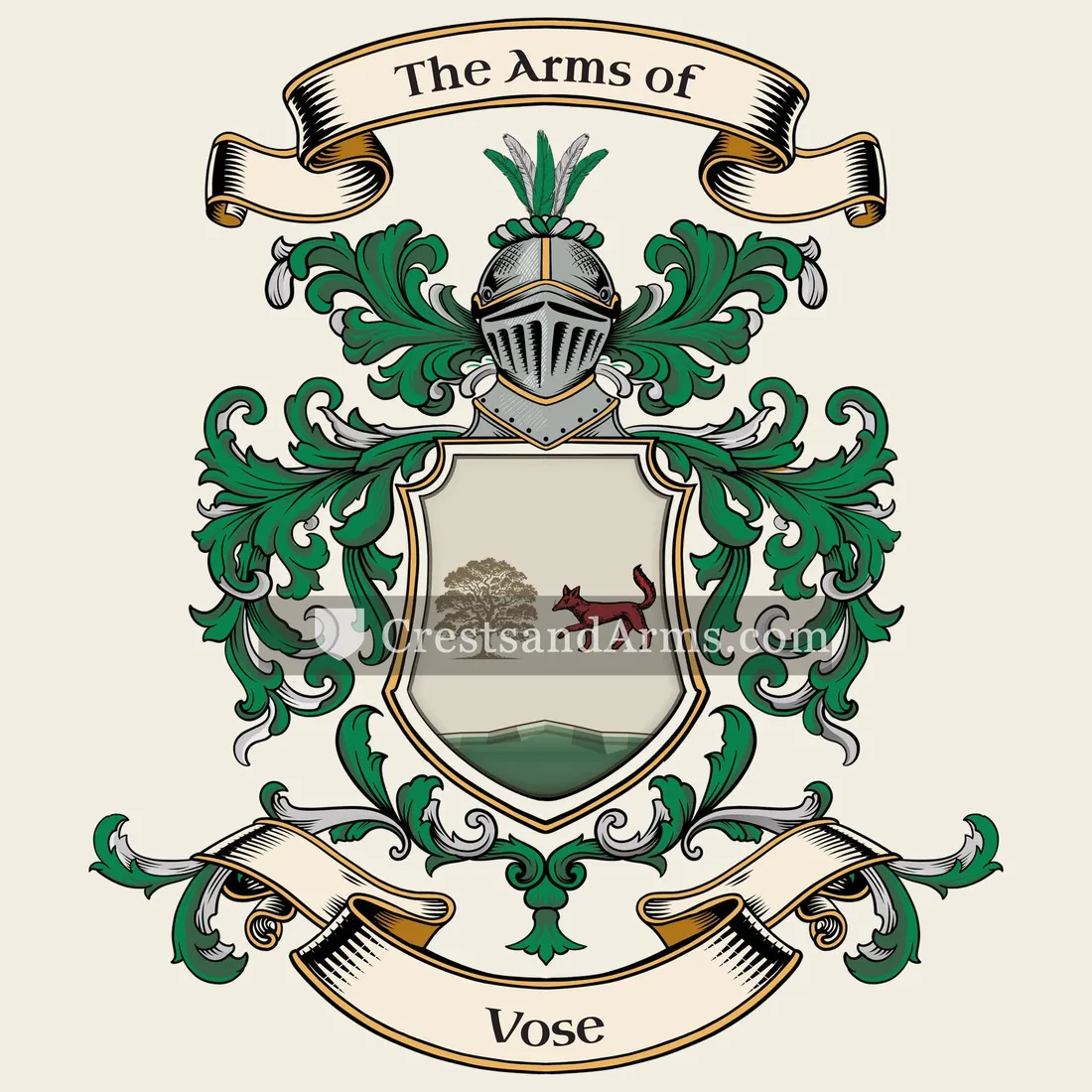
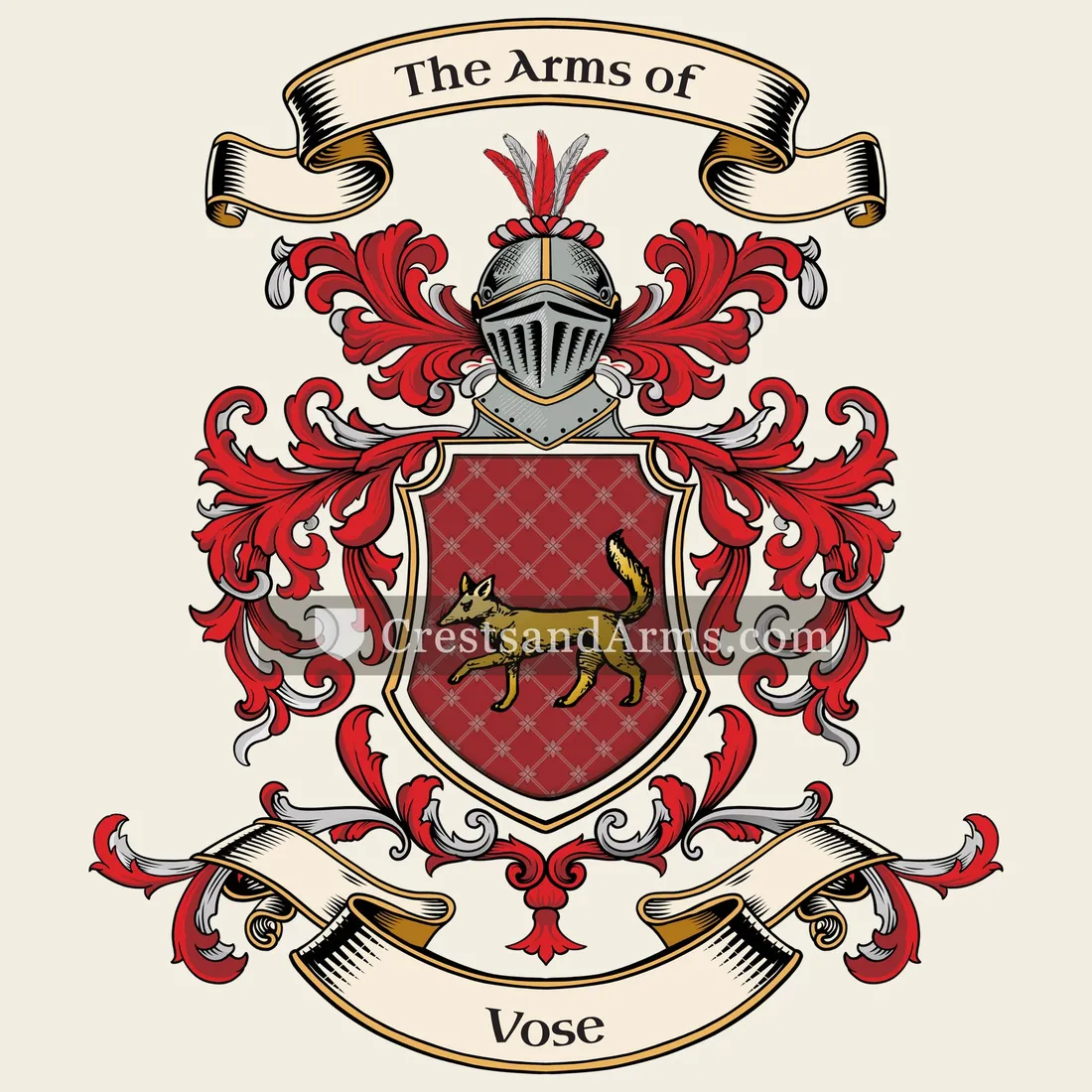
foxWit and wisdom in defence
Colours
Red (Gules)Means: Military strength
Gold (Or)Means: Generosity
Historical info
Source
J. B. Rietstap, Armorial Général, Gouda: G. B. van Goor Zonen, 1884–87
Blazon (the actual original written record)
“De gu. à un renard assis d'or.”
FlandreFlandre, c. 1663
Digital archive packCoat of arms PNG, gold border print PDF, vector SVG and the certificate of authenticity. Sent to your email in minutes.
Map of Belgium showing where the Vose arms are recorded
The Vose arms were recorded in Flandre, c. 1663.
Flandre grew rich on cloth, and its towns were among the busiest in Europe. Merchant families bought land with their profits and took arms to go with it, so trade put as many names in the registers here as land did.
This is where the arms were entered in the register. Families often moved to other parts of the country, so the same name can turn up in more than one region.
The body that granted and recorded arms in Belgium in this period.
Philip IV of Spain
Sovereign of the period
Philip IV of Spain
1621–1665
Reigning in Netherlands when the Vose arms are first recorded.
How Arms Worked in Belgium
In Belgium, a coat of arms is considered personal property that is passed down through the male line to legitimate descendants. Families often use the same shield design across generations to show their shared heritage. If a branch of the family wants to change the design, they must apply for an official update to their specific version of the arms.
Granting authority
The Conseil héraldique is the official body that regulates and approves all coats of arms in Belgium.
How they got arms
Families obtain their coats of arms through formal royal grants or by confirming their historical right to use existing designs.
Where arms were recorded
All approved coats of arms are officially recorded in the public registers of the Conseil héraldique since 1844.
The family's standing
Recorded among the armigerous families of Flandre.
Origin & History of the Vose Family in Belgium
The history of the Vose family in Belgium is rooted in the fertile landscape of the Flanders region during the seventeenth century. Records confirm that members of the family were established in this area by 1663, living during a time when the region was a center for trade and agricultural development. The name likely evolved from local dialects spoken in the Low Countries, reflecting the linguistic shifts that occurred as communities moved between rural villages and growing urban centers. Families like the Voses often played a role in the local economy, working as skilled laborers or merchants who helped sustain the prosperity of the Flemish provinces. By settling in this specific part of Europe, the early ancestors of the family became part of a long tradition of endurance and community building that defined the social fabric of the region for generations.
Meaning of the Vose family crest colors & symbols
Symbols on this shield
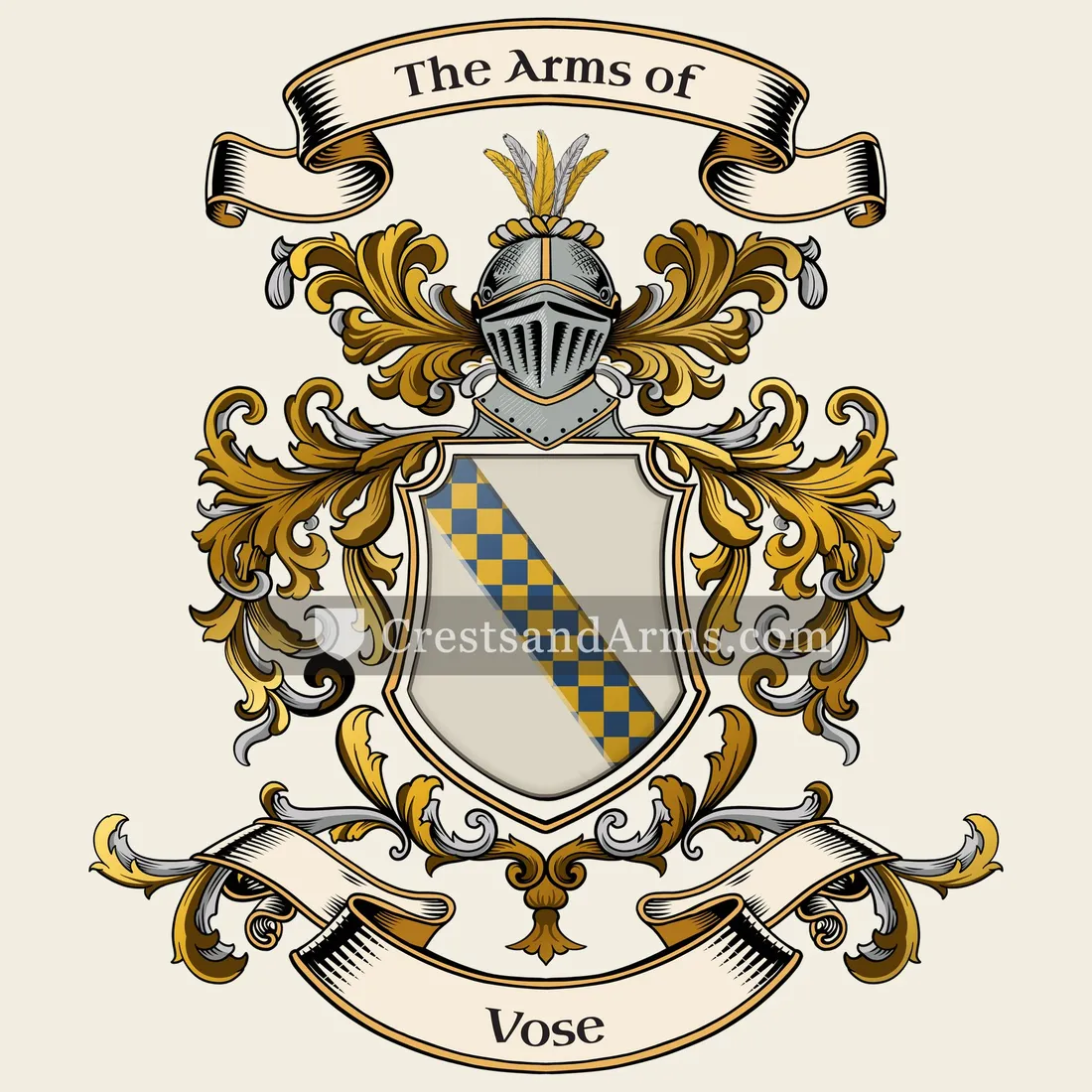
bendDefence, and the scarf of a commander
chequyConstancy, and the counting-board
Colours
Silver (Argent)Means: Peace and sincerity
Gold (Or)Means: Generosity
Blue (Azure)Means: Loyalty and truth
Historical info
Source
Sir Bernard Burke, The General Armory of England, Scotland, Ireland and Wales, London: Harrison & Sons, 1884
Blazon (the actual original written record)
“Ar. a bend chequy or and az”
YorkAnlaby House · York, c. 1620
Digital archive packCoat of arms PNG, gold border print PDF, vector SVG and the certificate of authenticity. Sent to your email in minutes.
Map of England showing where the Vose arms are recorded
The Vose arms were recorded in York, c. 1620.
Yorkshire is the largest of the English counties, and it held more gentry families than any other. Land there was split among a great many households rather than a few, so a great many of them carried arms.
This is where the arms were entered in the register. Families often moved to other parts of the country, so the same name can turn up in more than one region.
The body that granted and recorded arms in England in this period.
James VI and I
Sovereign of the period
James VI and I
1603–1625
Reigning in Netherlands when the Vose arms are first recorded.
How Arms Worked in England
English heraldry allowed arms to be shared by all legitimate descendants of the original owner. These symbols were treated as personal property that moved through the generations to all children. While the eldest son kept the original design, other family members could use the same shield without needing to change it or register their own unique versions.
Granting authority
The College of Arms in London has regulated the use of coats of arms throughout England and Wales since 1484.
How they got arms
Families typically obtained their coats of arms through a formal grant from the Crown or by proving their ancient right to them.
Where arms were recorded
All official coats of arms are recorded in the registers kept at the College of Arms, which date back to the fifteenth century.
The family's standing
Recorded among the armigerous families of York.
Origin & History of the Vose Family in England
The family name Vose has roots that trace back to the northern regions of England, with documented evidence placing members of the family in the city of York by the year 1620. During this period, York was a bustling center of trade and religious life, and families like the Voses were often integrated into the local merchant or artisan classes. The name itself is thought to be a variation of older topographical or occupational surnames that evolved as families moved between villages and growing urban hubs. By the early 17th century, the Vose family had established a presence in the local parish records, which served as the primary way for officials to track residents during a time of significant social change. These early ancestors lived through a transformative era in English history, witnessing the expansion of city life and the shifting economic landscape that defined the northern counties.
Vose Meaning & Related Branches
Root word
Vos
A carnivorous mammal of the dog family known for its cunning.
This name
VoseA topographic or habitational name referring to someone who lived near a fox den.
also spelled
Voss
Vose
Documented Sources
J. B. Rietstap, Armorial Général, Gouda: G. B. van Goor Zonen, 1884–87
Stadsarchief Amsterdam, Bevolkingsregister van Amsterdam (1815)
Noord-Hollands Archief, Burgerlijke Stand van de Gemeente Amsterdam (1815)
Digital archive packCoat of arms PNG, gold border print PDF, vector SVG and the certificate of authenticity. Sent to your email in minutes.


 mountThe ground held, and steadfastness upon it
 treeLife, endurance and deep roots
 foxWit and wisdom in defence
 mountThe ground held, and steadfastness upon it
 treeLife, endurance and deep roots
 foxWit and wisdom in defence




 bendDefence, and the scarf of a commander
 chequyConstancy, and the counting-board