Map of Netherlands showing where the Voss arms are recorded
The Voss arms were recorded in Netherlands, c. 1815.
Arms such as these were typically recorded in Friesland.
Friesland was low, wet country on the northern coast of the Netherlands, farmed by families who had held the same land for centuries. Free landholders were unusually common there, and a free landholder could carry arms.
This is where the arms were entered in the register. Families often moved to other parts of the country, so the same name can turn up in more than one region.
Region
Friesland
First recorded
1815
Granting Authority for the Voss Arms
Hoge Raad van Adel
Photograph made by me · CC BY-SA 3.0
The body that granted and recorded arms in Netherlands in this period.
William I of the Netherlands
Sovereign of the period
William I of the Netherlands
1815–1840
Reigning in Netherlands when the Voss arms are first recorded.
How Arms Worked in Netherlands
In the Netherlands, coats of arms were often used by noble families and those who held specific public offices. These arms were passed down through the generations to legitimate descendants. Younger branches of a family usually kept the original design without needing to add special marks. This system ensured that the family identity remained clear and consistent over many years.
Granting authority
The Hoge Raad van Adel is the official body that regulates and manages noble titles and coats of arms in the Netherlands.
How they got arms
Families typically obtained their coats of arms through official royal grants or by proving their long-standing historical use of the symbols.
Where arms were recorded
Coats of arms are officially recorded in the registers held by the Hoge Raad van Adel, which began its work in 1814.
The family's standing
Recorded among the armigerous families of Netherlands.
Origin & History of the Voss Family in Netherlands
The surname Voss is a classic example of a name derived from a nickname, as the word itself means fox in several Germanic languages. In the Netherlands, this name often identified someone who was known for their cleverness or perhaps their reddish hair. While the name appears in various regions, the branch of the family documented in Friesland by 1815 reflects the unique naming traditions of that northern province. During this period, the Napoleonic government required all citizens to register permanent surnames for the first time. Many families in Friesland adopted or solidified their names during this transition, often choosing descriptors that had been used informally for generations. The presence of the Voss name in these early official records highlights the shift from local, spoken nicknames to the formal, hereditary family identities that define Dutch genealogy today.
Meaning of the Voss family crest colors & symbols
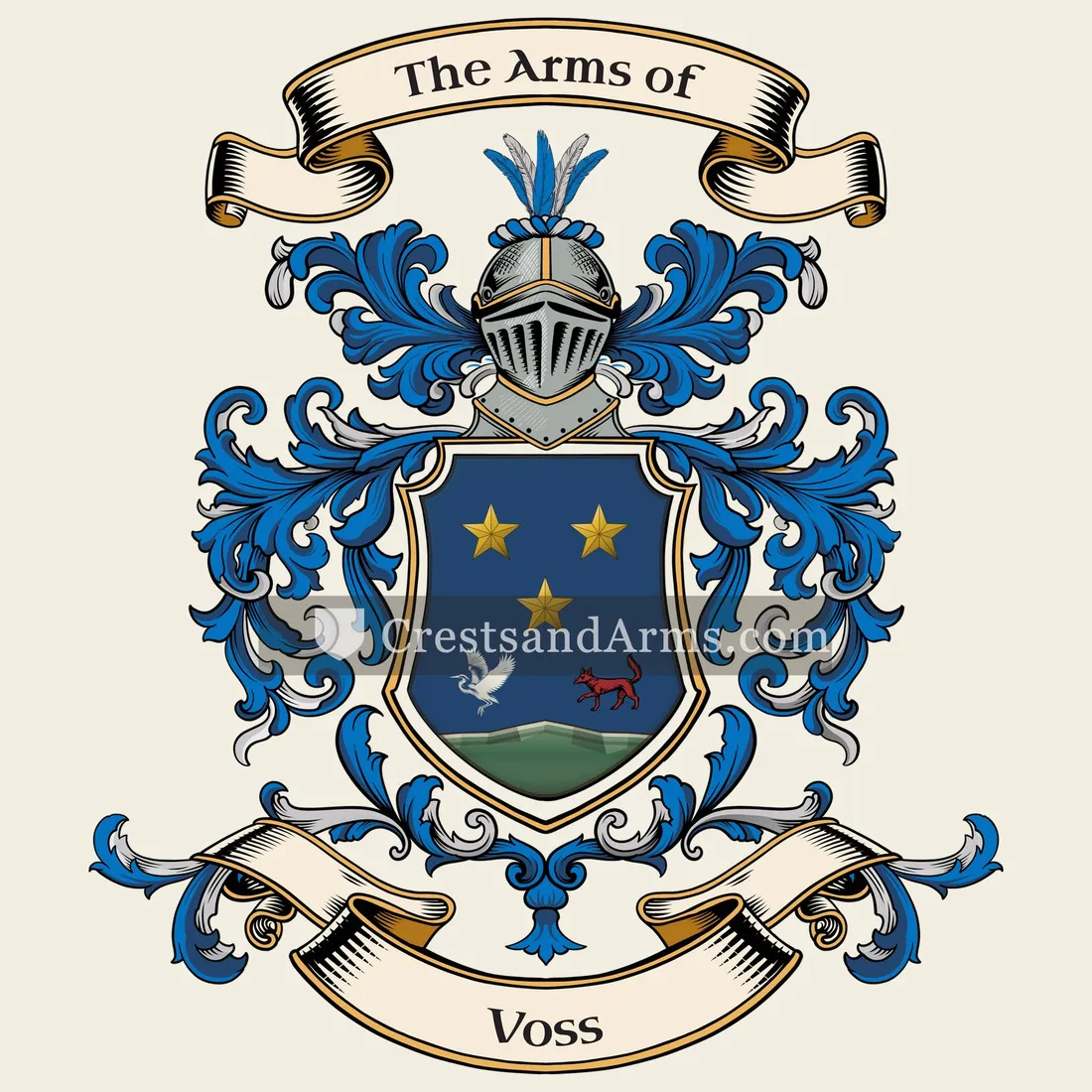
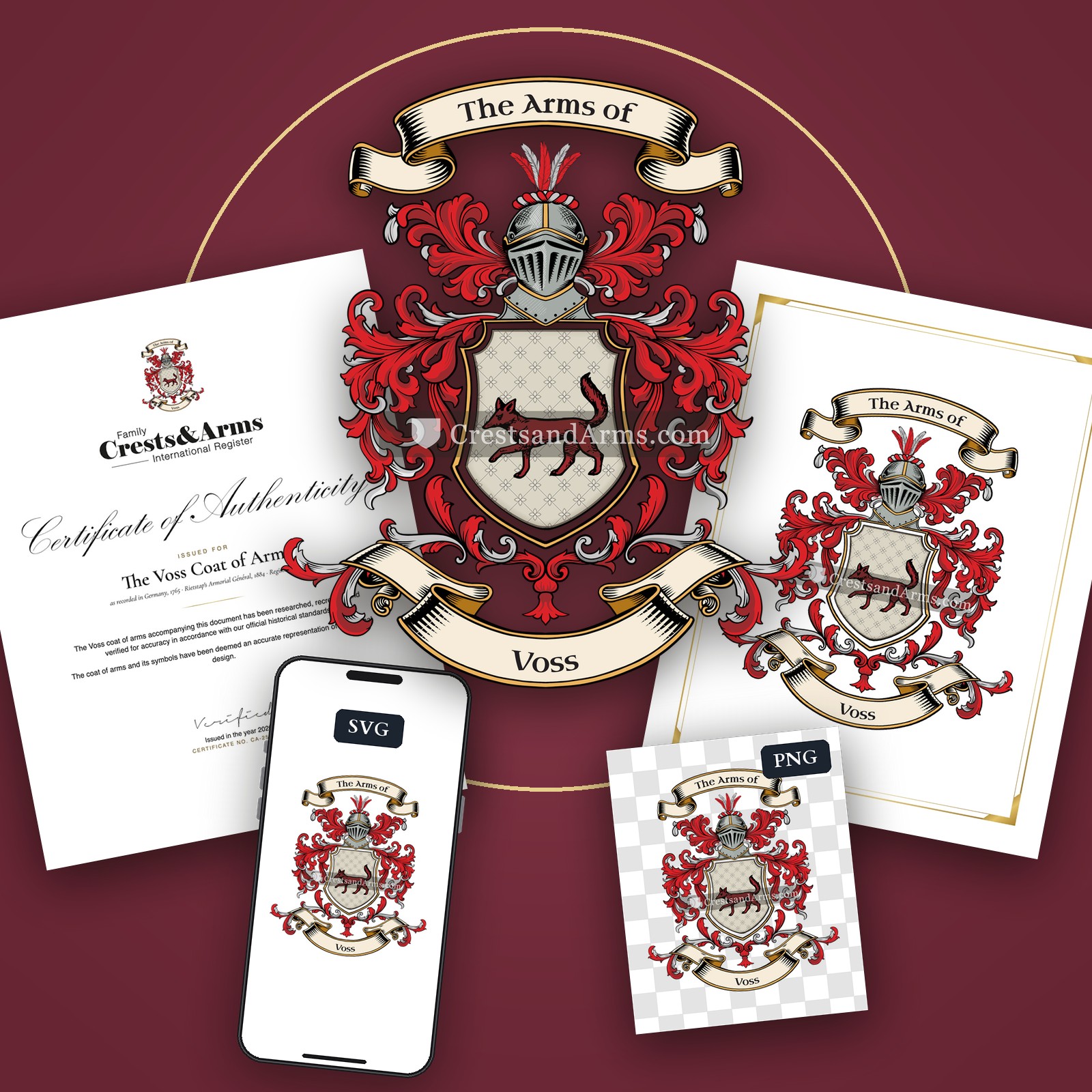
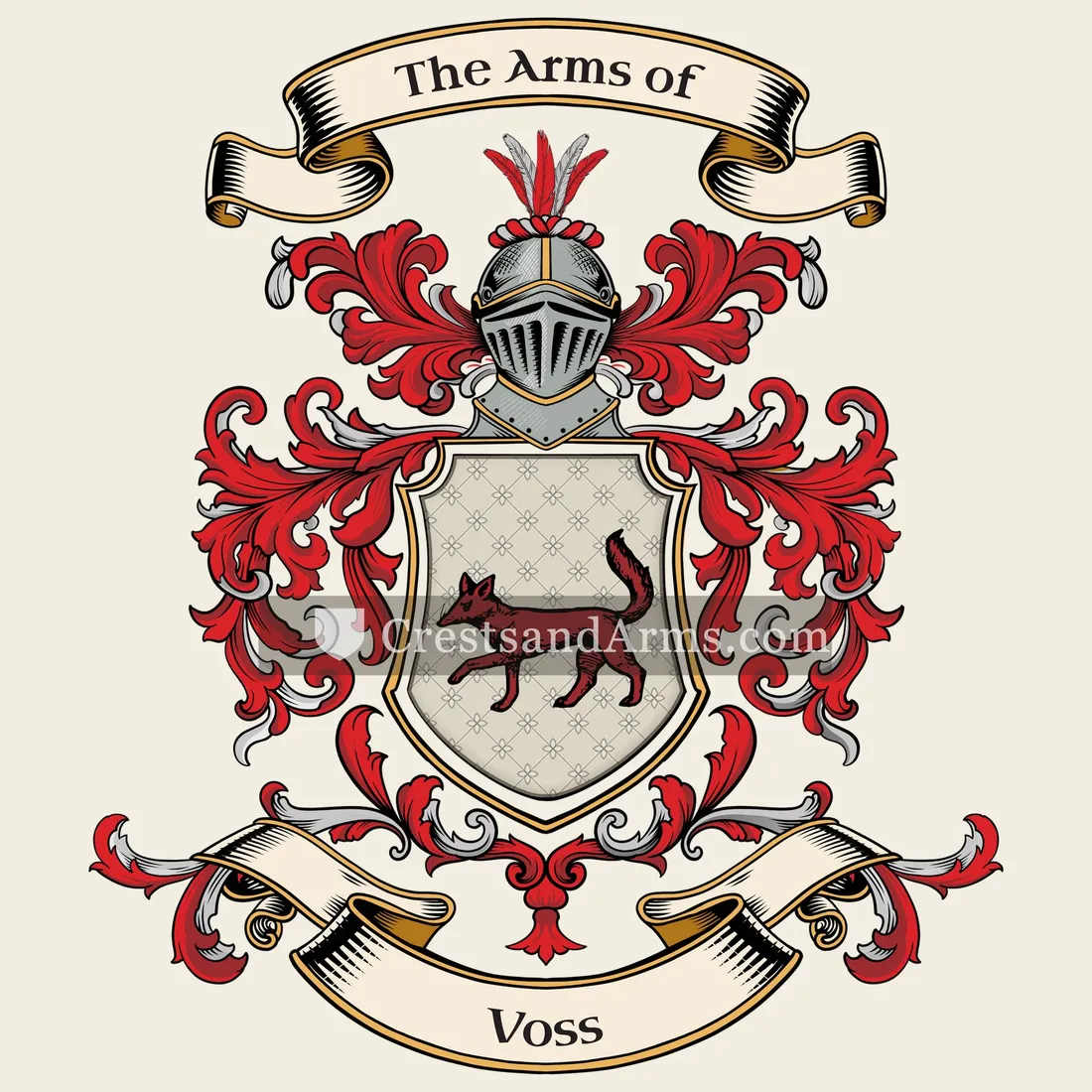
Symbols on this shield
foxWit and wisdom in defence
Colours
Silver (Argent)Means: Peace and sincerity
Red (Gules)Means: Military strength
Historical info
Source
J. B. Rietstap, Armorial Général, Gouda: G. B. van Goor Zonen, 1884–87
Blazon (the actual original written record)
“D'arg. à un renard ramp. de gu. Cq. cour. C.: le renard, iss. Manteau de gu., doublé d'herm., frangé et houppé d'or.”
MecklenburgMecklenburg, c. 1765
Digital archive packCoat of arms PNG, gold border print PDF, vector SVG and the certificate of authenticity. Sent to your email in minutes.
Map of Germany showing where the Voss arms are recorded
The Voss arms were recorded in Mecklenburg, c. 1765.
Mecklenburg was farming country in the north of Germany, held by a small number of families who kept their estates for generations. Owning land was what entitled a family to arms, so a great many Mecklenburg names ended up in the registers.
This is where the arms were entered in the register. Families often moved to other parts of the country, so the same name can turn up in more than one region.
The body that granted and recorded arms in Germany in this period.
Francis I, Holy Roman Emperor
Sovereign of the period
Francis I, Holy Roman Emperor
1745–1765
Reigning in Netherlands when the Voss arms are first recorded.
How Arms Worked in Germany
In the Holy Roman Empire, coats of arms were often granted to individuals by the Emperor or his representatives. These arms were then passed down through the generations to all legitimate descendants of the original holder. Younger branches of a family usually kept the same shield design without needing to change it, as the arms belonged to the entire lineage.
Granting authority
The Holy Roman Emperor held the sole power to grant new coats of arms throughout his vast imperial territories.
How they got arms
Families typically obtained their coats of arms through a formal imperial grant or by proving their noble status to the authorities.
Where arms were recorded
These grants were officially recorded in the Imperial Chancery registers, which began keeping formal records of such honors during the Middle Ages.
The family's standing
Recorded among the armigerous families of Mecklenburg.
Origin & History of the Voss Family in Germany
The surname Voss is deeply rooted in the Low German dialects of northern Germany, where it translates directly to the word for fox. During the Middle Ages, names were often chosen to reflect a person’s physical traits, personality, or occupation, and the name likely originated as a nickname for someone perceived to be clever or quick. By the time records confirm the family presence in Mecklenburg in 1765, the name was already well-established across the rural landscapes of the Baltic coast. Families in this region were typically involved in agriculture or trade, living in small village communities that were shaped by the shifting borders of the Holy Roman Empire. As the population grew, the Voss name became a common identifier for families who had lived in these northern territories for generations, linking them to the distinct cultural and linguistic traditions of the Mecklenburg region.
Meaning of the Voss family crest colors & symbols
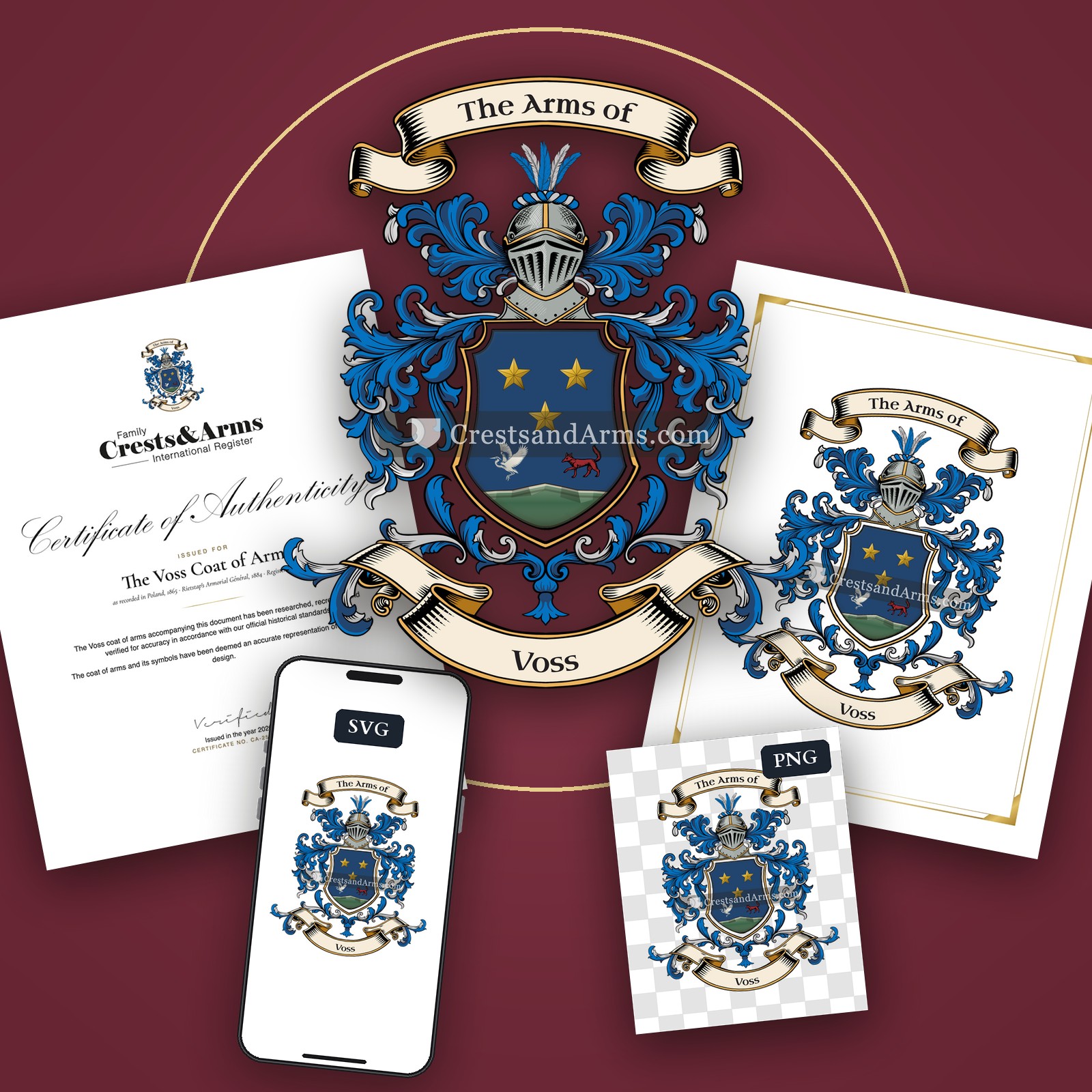
Symbols on this shield
mountThe ground held, and steadfastness upon it
mulletThe third son, and a divine quality from above
heronPatience and quiet watchfulness
foxWit and wisdom in defence
Colours
Blue (Azure)Means: Loyalty and truth
Green (Vert)Means: Hope
Gold (Or)Means: Generosity
Red (Gules)Means: Military strength
Historical info
Source
J. B. Rietstap, Armorial Général, Gouda: G. B. van Goor Zonen, 1884–87
Blazon (the actual original written record)
“D'azur à trois étoiles d'or; le champ chaussé-ployé d'or, ch. à dextre d'une cigogne cont. tenant en son bec une anguille, le tout au nat., ladite cigogne posée sur une colline de sin., et à dextre d'un renard ramp. de gu., soutenu d'une colline de sin. C.: une épée d'arg., la poignée de gu., la garde et le bouton d'or, et une bèche d'arg., emm. au nat., l'épée et la bèche passées en saut. et surm. d'une étoile d'or; entre un vol coupé d'azur sur or, chaque compartiment d'azur ch. d'une étoile d'or. L. d'or et d'azur.”
PolandPosnanie, c. 1865
Digital archive packCoat of arms PNG, gold border print PDF, vector SVG and the certificate of authenticity. Sent to your email in minutes.
Map of Poland showing where the Voss arms are recorded
The Voss arms were recorded in Posnanie, c. 1865.
This is where the arms were entered in the register. Families often moved to other parts of the country, so the same name can turn up in more than one region.
Region
Posnanie
Town
Posnanie
First recorded
1865
Granting Authority for the Voss Arms
Ennoblement by the Sejm
Author: Olek Remesz · CC BY-SA 3.0
The body that granted and recorded arms in Poland in this period.
How Arms Worked in Poland
Polish noble families shared a single coat of arms across many different surnames, creating large clans rather than individual designs. These symbols were held collectively by all members of the clan regardless of their specific family name. When a new family joined the nobility, they were adopted into an existing clan and began using that group's established shield.
Granting authority
The Sejm, which was the Polish parliament, held the power to grant noble status and the right to bear arms.
How they got arms
Families typically received their coat of arms through a formal act of ennoblement granted by the Sejm for distinguished service.
Where arms were recorded
These grants were officially recorded in the Crown Metrica, which served as the central archive for state documents starting in the sixteenth century.
The family's standing
Recorded among the armigerous families of Poland.
Origin & History of the Voss Family in Poland
The history of the Voss family in the region of Posnania is deeply connected to the shifting borders and social changes of the nineteenth century. By 1865, records confirm the presence of the family in this area, which was then part of the Prussian partition of Poland. The name Voss is of Germanic origin and often identifies people who lived near a fox den or were known for their clever nature. As the family settled in Posnania, they lived in a unique cultural crossroads where Polish and German influences blended together. Many families with this name worked as farmers or skilled tradespeople during this era. They navigated the complex political landscape of the time while maintaining their roots in the local community. Their presence in the region reflects the broader movement of families who sought stability and opportunity in the fertile lands of western Poland during the mid-1800s.
Voss Meaning & Related Branches
Root word
Vos
A carnivorous mammal of the family Canidae with a bushy tail.
This name
VossA nickname for a cunning or clever person, or a topographic name for someone living at a house named after the animal.
also spelled
Vos
Vose
Voase
Related arms
Vosvariant spelling
Voasevariant spelling
Redwoodrecorded with Voss, same area
Documented Sources
J. B. Rietstap, Armorial Général, Gouda: G. B. van Goor Zonen, 1884–87
Meertens, P.J., De betekenis van de Nederlandse familienamen, 1970
Tresoar (Frysk Histoarysk en Letterkundich Sintrum), Burgerlijke Stand van Friesland (1811-1950)
Van der Schaar, J., Woordenboek van voornamen, 1964
Digital archive packCoat of arms PNG, gold border print PDF, vector SVG and the certificate of authenticity. Sent to your email in minutes.


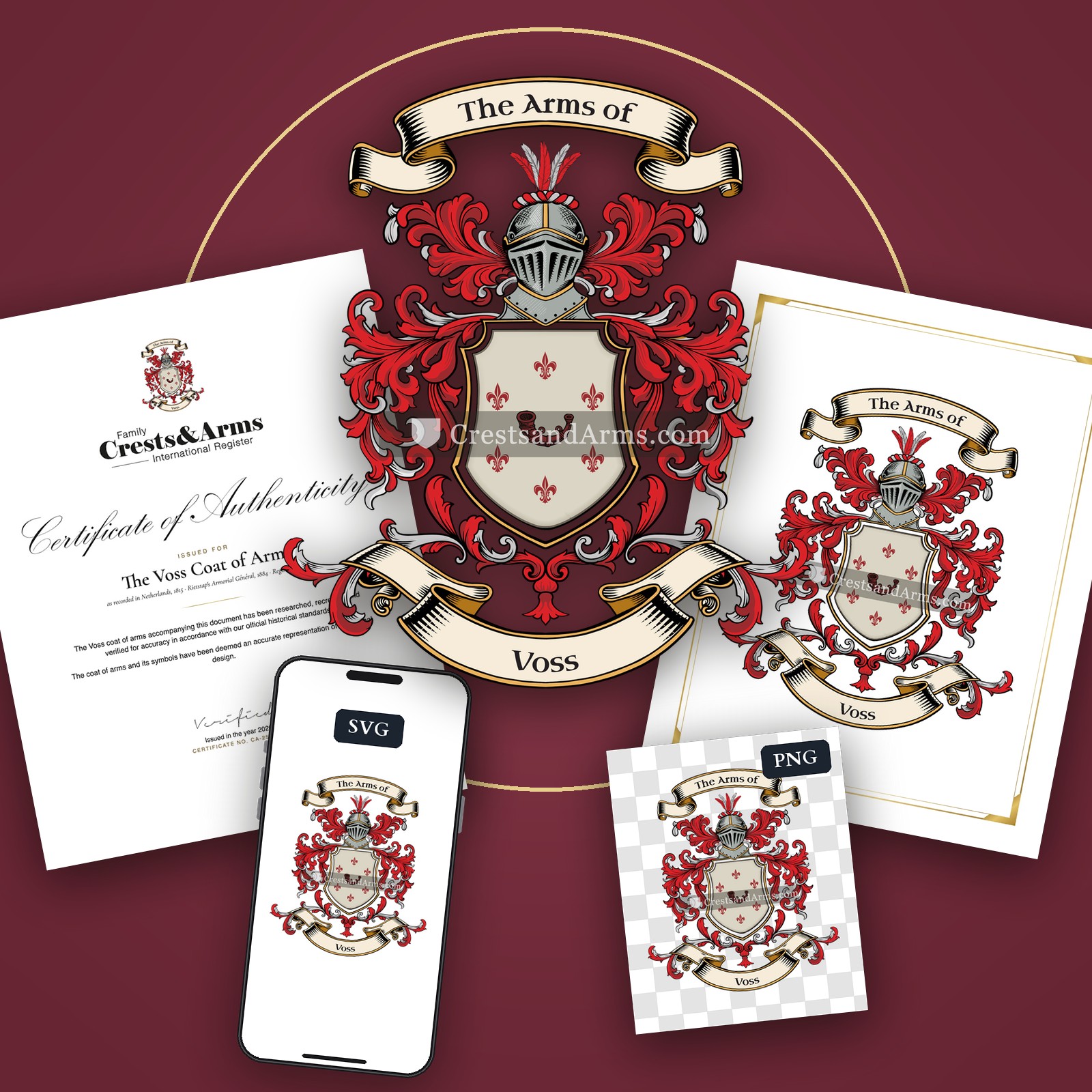
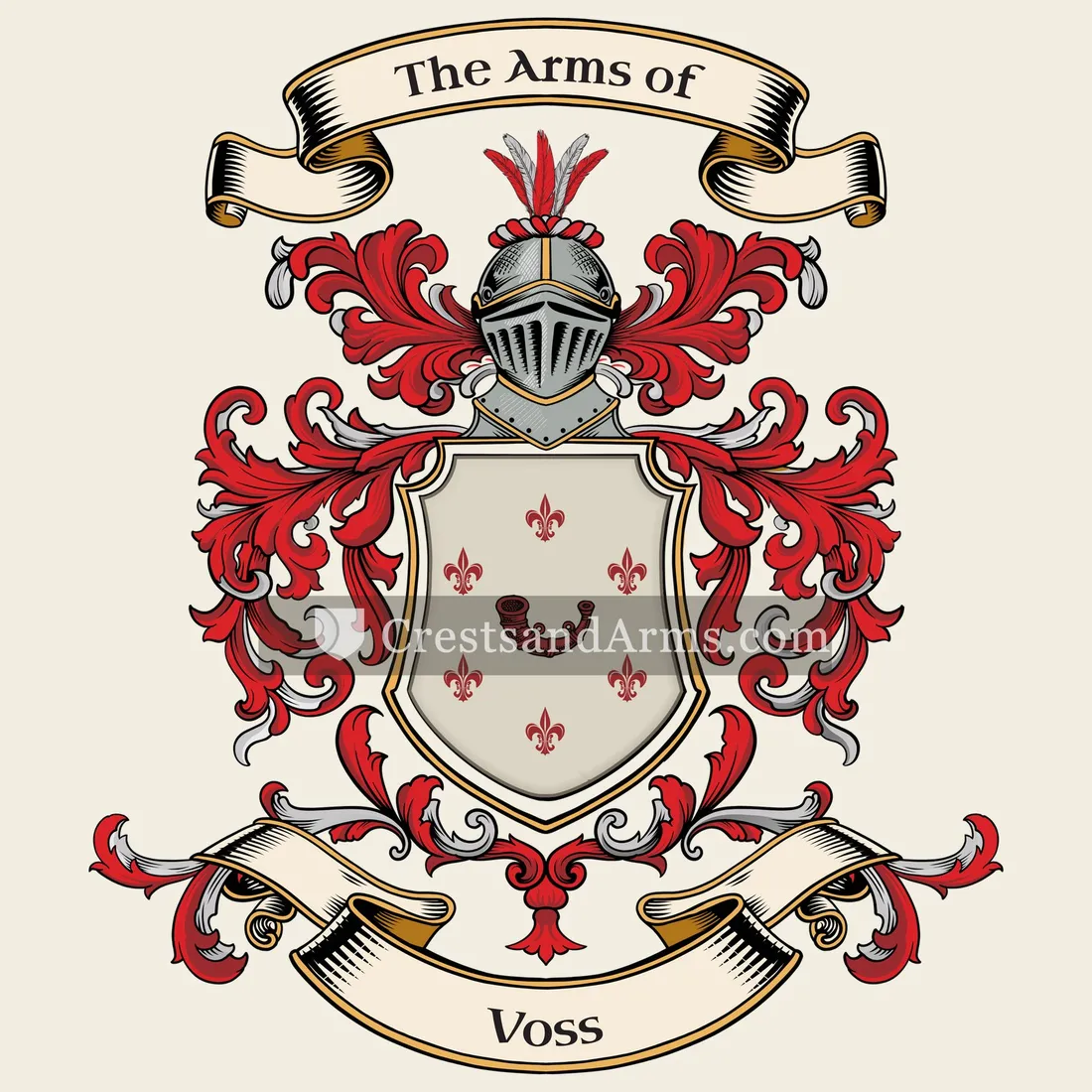
 hunting horn stringedOne who delights in the chase
 fleur de lisPurity, light, and the sixth son
 hunting horn stringedOne who delights in the chase
 fleur de lisPurity, light, and the sixth son


 foxWit and wisdom in defence


 mountThe ground held, and steadfastness upon it
 mulletThe third son, and a divine quality from above
 heronPatience and quiet watchfulness