Map of Netherlands showing where the Vs arms are recorded
The Vs arms were recorded in Amsterdam, c. 1815.
This is where the arms were entered in the register. Families often moved to other parts of the country, so the same name can turn up in more than one region.
Region
Amsterdam
Town
Amsterdam
First recorded
1815
Granting Authority for the Vs Arms
Hoge Raad van Adel
Photograph made by me · CC BY-SA 3.0
The body that granted and recorded arms in Netherlands in this period.
William I of the Netherlands
Sovereign of the period
William I of the Netherlands
1815–1840
Reigning in Netherlands when the Vs arms are first recorded.
How Arms Worked in Netherlands
In the Netherlands, coats of arms were often used by noble families and those who held specific public offices. These arms were passed down through the generations to legitimate descendants. Younger branches of a family usually kept the original design without needing to add special marks. This system ensured that the family identity remained clear and consistent over many years.
Granting authority
The Hoge Raad van Adel is the official body that regulates and manages noble titles and coats of arms in the Netherlands.
How they got arms
Families typically obtained their coats of arms through official royal grants or by proving their long-standing historical use of the symbols.
Where arms were recorded
Coats of arms are officially recorded in the registers held by the Hoge Raad van Adel, which began its work in 1814.
The family's standing
Recorded among the armigerous families of Netherlands.
Origin & History of the Vs Family in Netherlands
The history of the family name Vs in the Netherlands is deeply connected to the urban growth of Amsterdam during the early nineteenth century. By 1815, members of the family were already established residents of the city, which was a time of significant transition as the Netherlands emerged as a sovereign kingdom following the Napoleonic Wars. During this period, the Dutch government began to standardize civil registration laws to better track the population. Families like the Vs were part of a growing class of citizens who navigated the economic shifts of a recovering Amsterdam, where trade and maritime commerce defined daily life. Because the name appears in city records during this era, it suggests that the family was integrated into the local community and subject to the formal documentation practices that were becoming mandatory for all Dutch citizens. This era marked a shift toward modern record-keeping, ensuring that the presence of the Vs family was officially preserved in the municipal archives for future generations to study.
Meaning of the Vs family crest colors & symbols
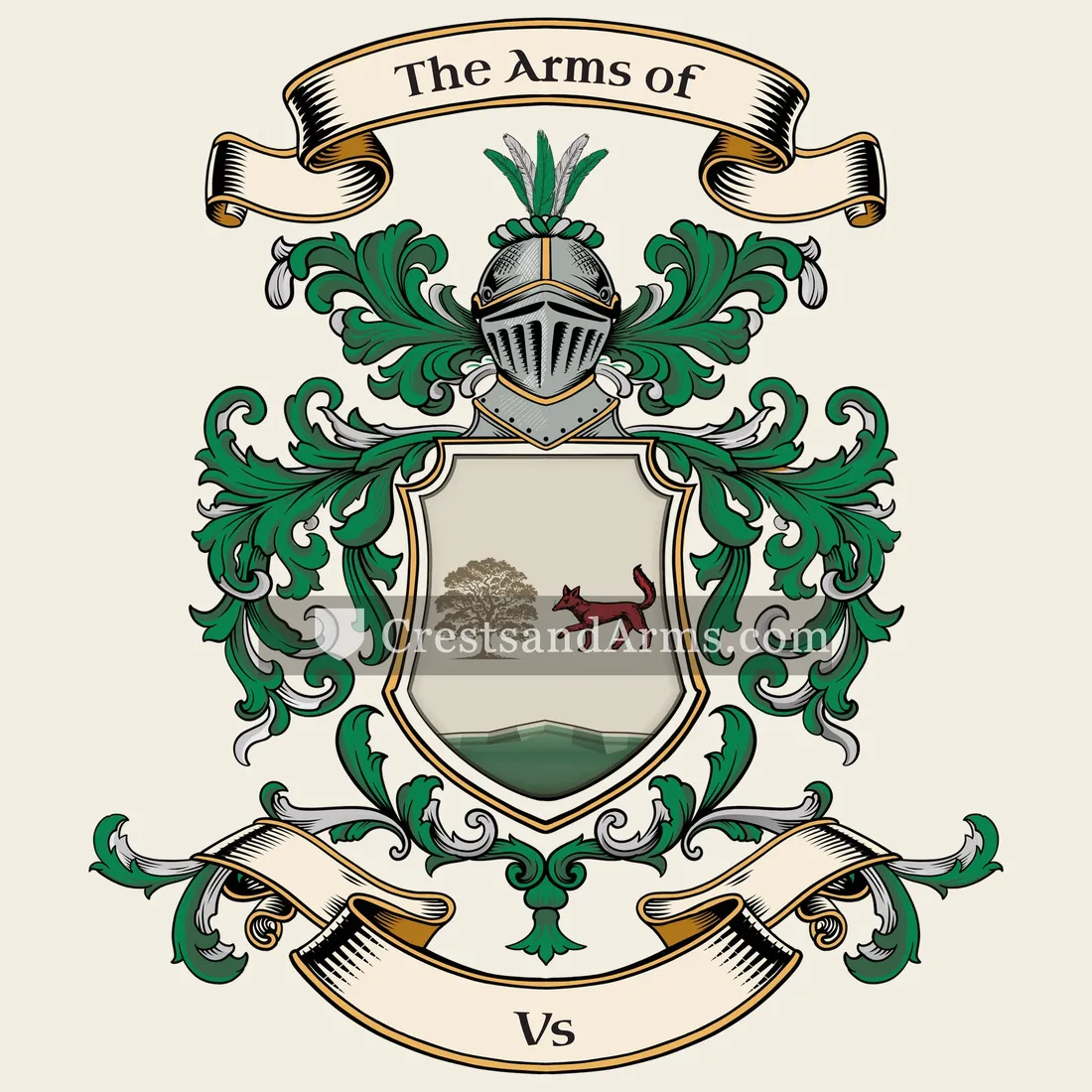
Symbols on this shield
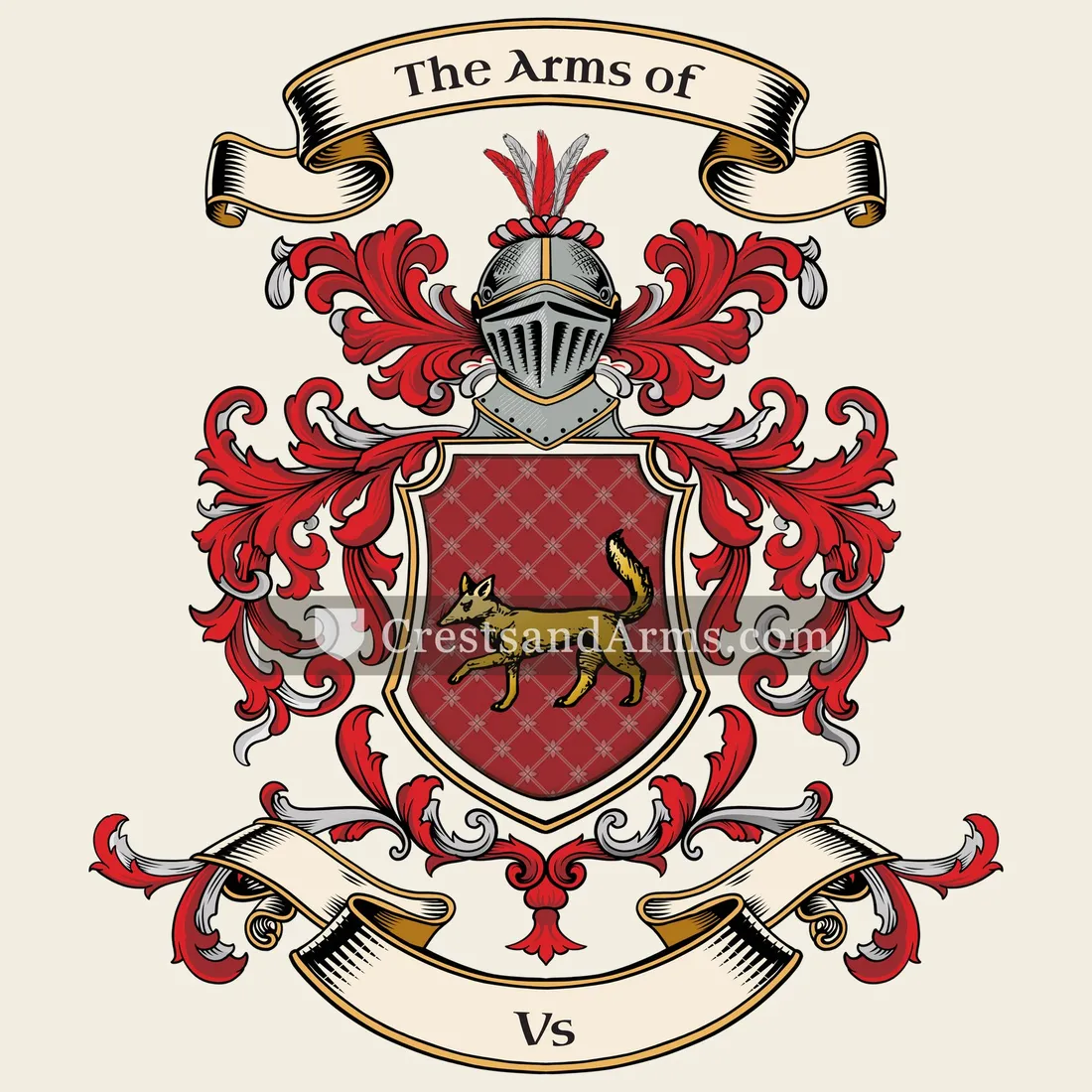
foxWit and wisdom in defence
Colours
Red (Gules)Means: Military strength
Gold (Or)Means: Generosity
Historical info
Source
J. B. Rietstap, Armorial Général, Gouda: G. B. van Goor Zonen, 1884–87
Blazon (the actual original written record)
“De gu. à un renard assis d'or.”
FlandreFlandre, c. 1663
Digital archive packCoat of arms PNG, gold border print PDF, vector SVG and the certificate of authenticity. Sent to your email in minutes.
Map of Belgium showing where the Vs arms are recorded
The Vs arms were recorded in Flandre, c. 1663.
Flandre grew rich on cloth, and its towns were among the busiest in Europe. Merchant families bought land with their profits and took arms to go with it, so trade put as many names in the registers here as land did.
This is where the arms were entered in the register. Families often moved to other parts of the country, so the same name can turn up in more than one region.
The body that granted and recorded arms in Belgium in this period.
Philip IV of Spain
Sovereign of the period
Philip IV of Spain
1621–1665
Reigning in Netherlands when the Vs arms are first recorded.
How Arms Worked in Belgium
In Belgium, a coat of arms is considered personal property that is passed down through the male line to legitimate descendants. Families often use the same shield design across generations to show their shared heritage. If a branch of the family wants to change the design, they must apply for an official update to their specific version of the arms.
Granting authority
The Conseil héraldique is the official body that regulates and approves all coats of arms in Belgium.
How they got arms
Families obtain their coats of arms through formal royal grants or by confirming their historical right to use existing designs.
Where arms were recorded
All approved coats of arms are officially recorded in the public registers of the Conseil héraldique since 1844.
The family's standing
Recorded among the armigerous families of Flandre.
Origin & History of the Vs Family in Belgium
The history of the family name Vs in Belgium begins in the seventeenth century, specifically within the historic region of Flanders. Records confirm that members of the family were established in this area by 1663, a time when Flanders was a center of trade, agriculture, and complex political shifts under the rule of the Spanish Netherlands. During this period, families often identified themselves through their connection to specific local parishes or their roles in the regional economy. Because the name appears in Flemish records during the mid-1600s, it is likely that the family was part of the local social fabric that navigated the transition between rural life and the growing urban influence of Flemish cities. By settling in Flanders, these early ancestors became part of a distinct cultural landscape defined by the Dutch language and the unique traditions of the Low Countries. Their presence in the region during the 1660s suggests they were witnesses to a transformative era in Belgian history, as the territory moved through various administrative changes that shaped the identity of its inhabitants for generations to come.
Vs Meaning & Related Branches
Root word
Fosse
A ditch, trench, or defensive moat surrounding a fortification.
This name
VsRefers to a person who lived near a ditch, moat, or defensive water barrier.
also spelled
Voss
Vose
Documented Sources
J. B. Rietstap, Armorial Général, Gouda: G. B. van Goor Zonen, 1884–87


 mountThe ground held, and steadfastness upon it
 treeLife, endurance and deep roots
 foxWit and wisdom in defence
 mountThe ground held, and steadfastness upon it
 treeLife, endurance and deep roots
 foxWit and wisdom in defence