Map of Italy showing where the Vulpe arms are recorded
The Vulpe arms were recorded in Trévise, c. 1775.
This is where the arms were entered in the register. Families often moved to other parts of the country, so the same name can turn up in more than one region.
The body that granted and recorded arms in Italy in this period.
Alvise Giovanni Mocenigo
Sovereign of the period
Alvise Giovanni Mocenigo
1763–1778
Reigning in Italy when the Vulpe arms are first recorded.
How Arms Worked in Italy
In the Italian states, coats of arms were often used by noble families to show their status and history. These symbols were passed down through the generations to all legitimate male descendants. Younger branches of a family usually kept the original design but sometimes added small changes to distinguish their specific line from the main branch.
Granting authority
Various local rulers and city governments controlled the use of coats of arms across the different Italian states.
How they got arms
Families often assumed their own arms or received them as official grants from local lords, popes, or city councils.
Where arms were recorded
Arms were recorded in local city archives or private family books rather than in one single national register.
The family's standing
Recorded among the armigerous families of Italy.
Origin & History of the Vulpe Family in Italy
The family name Vulpe, which translates to "fox" in Italian, likely originated as a descriptive nickname for a person known for their cleverness or sharp wit. By the late 18th century, the family established a notable presence in the city of Treviso. During this period, Treviso was part of the Republic of Venice, a region defined by its bustling trade routes and agricultural wealth. Families living in this area often held roles in local administration or commerce, contributing to the social fabric of the Venetian mainland. The presence of the Vulpe family in 1775 suggests they were part of a stable community that navigated the transition of power as the region moved toward the end of the Venetian era and into the complexities of the Napoleonic period. Their history reflects the broader movement of families who settled in northern Italian cities to build lives centered on trade, craftsmanship, and civic participation.
Coat of Arms & Family Crest Details
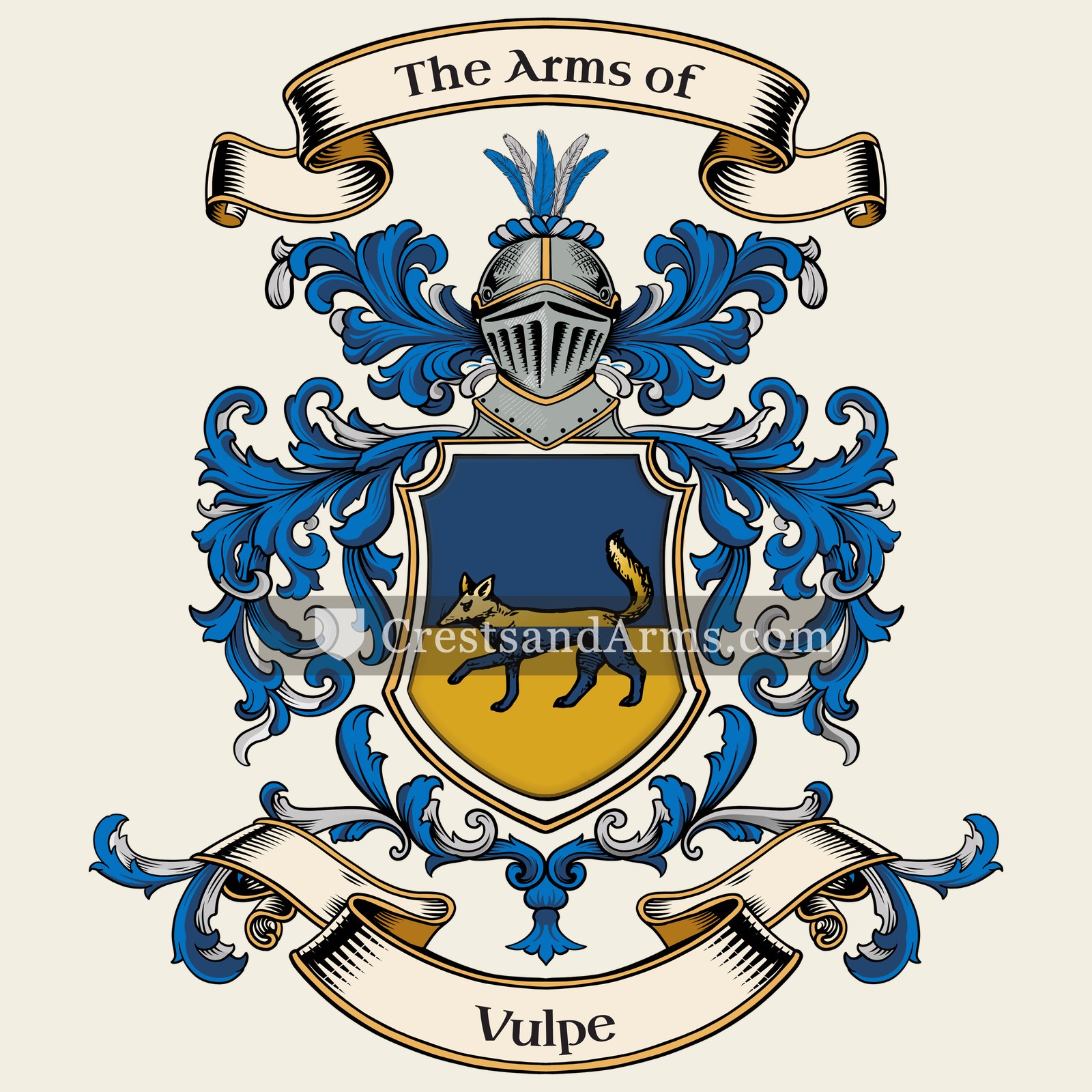
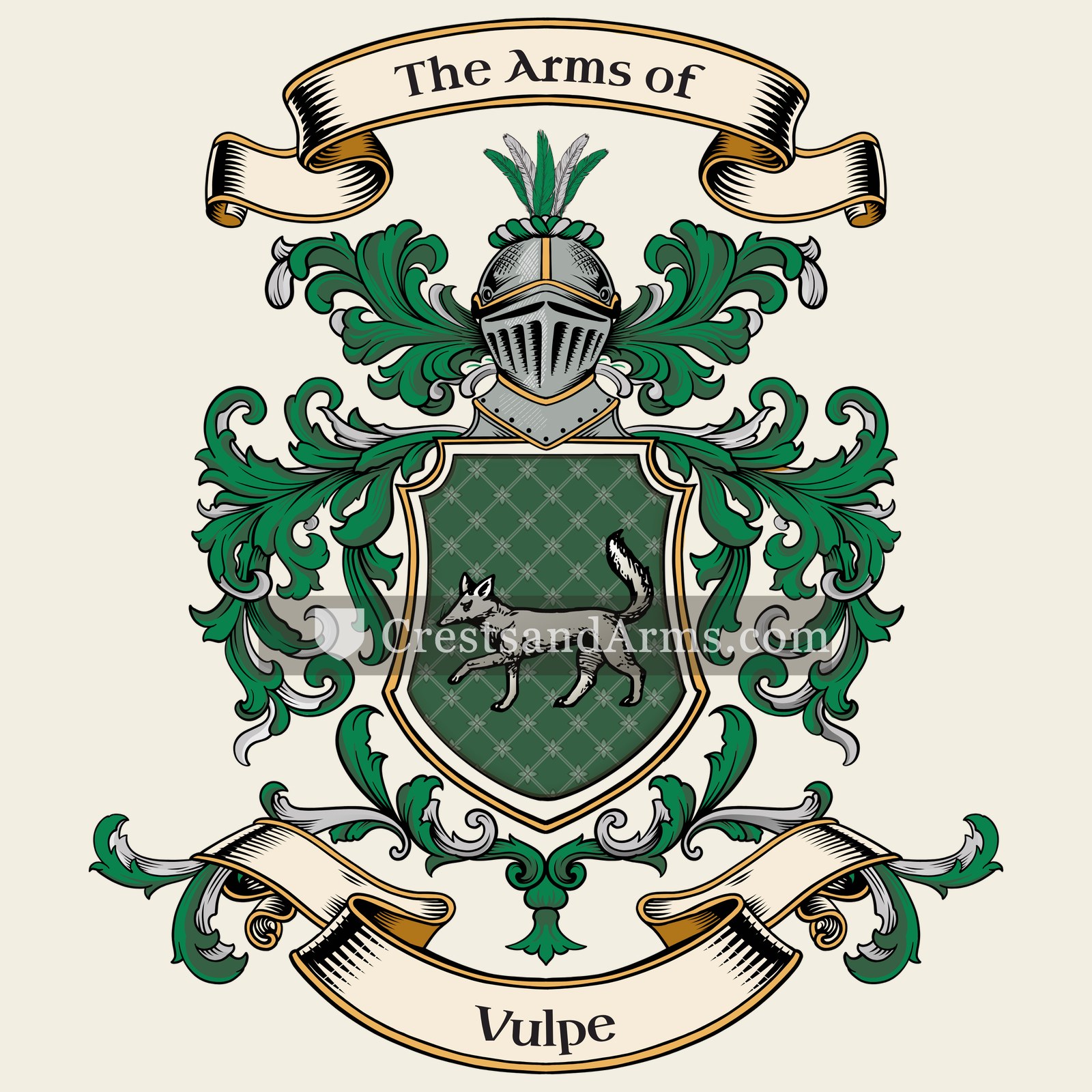
Symbols on this shield
foxWit and wisdom in defence
Colours
Green (Vert)Means: Hope
Historical info
Source
Sir Bernard Burke, The General Armory of England, Scotland, Ireland and Wales, London: Harrison & Sons, 1884
Blazon (the actual original written record)
“Vert a fox courant ppr”
Englandc. 1620
Digital archive packCoat of arms PNG, gold border print PDF, vector SVG and the certificate of authenticity. Sent to your email in minutes.
Map of England showing where the Vulpe arms are recorded
The Vulpe arms were recorded in England, c. 1620.
Arms such as these were typically recorded in York.
Yorkshire is the largest of the English counties, and it held more gentry families than any other. Land there was split among a great many households rather than a few, so a great many of them carried arms.
This is where the arms were entered in the register. Families often moved to other parts of the country, so the same name can turn up in more than one region.
The body that granted and recorded arms in England in this period.
James VI and I
Sovereign of the period
James VI and I
1603–1625
Reigning in Italy when the Vulpe arms are first recorded.
How Arms Worked in England
English heraldry allowed arms to be shared by all legitimate descendants of the original owner. These symbols were treated as personal property that moved through the generations to all children. While the eldest son kept the original design, other family members could use the same shield without needing to change it or register their own unique versions.
Granting authority
The College of Arms in London has regulated the use of coats of arms throughout England and Wales since 1484.
How they got arms
Families typically obtained their coats of arms through a formal grant from the Crown or by proving their ancient right to them.
Where arms were recorded
All official coats of arms are recorded in the registers kept at the College of Arms, which date back to the fifteenth century.
The family's standing
Recorded among the armigerous families of England.
Origin & History of the Vulpe Family in England
The surname Vulpe carries a distinct history that reflects the movement of people across Europe and into England. While the name is rooted in Latin and Romance languages, where it translates directly to the word for fox, its presence in England suggests a lineage of individuals who likely migrated from the continent. By 1620, records confirm that members of the family had established themselves in the historic city of York. During this period, York was a major center for trade and religious activity, making it a common destination for skilled workers and merchants arriving from abroad. These early settlers likely integrated into the local community by adopting the English spelling of their name while maintaining their ancestral identity. Their presence in the city during the early seventeenth century highlights the ongoing exchange of people and cultures that helped shape the diverse social landscape of northern England.
Related Branches & Arms
Root word
Vulpes
Latin term for a fox or a cunning person.
This name
VulpeAn occupational or descriptive surname referring to someone with fox-like traits or a hunter.
also spelled
Volpi
Volpey
Documented Sources
J. B. Rietstap, Armorial Général, Gouda: G. B. van Goor Zonen, 1884–87
De Felice, Emidio. Dizionario dei cognomi italiani. 1978
Censimento della popolazione di Treviso, Stato delle anime della parrocchia di San Nicolò. 1775
Archivio di Stato di Treviso, Anagrafe storica della città di Treviso
Digital archive packCoat of arms PNG, gold border print PDF, vector SVG and the certificate of authenticity. Sent to your email in minutes.


 foxWit and wisdom in defence
 foxWit and wisdom in defence