Map of Poland showing where the Wage arms are recorded
The Wage arms were recorded in Thorn Prusse, c. 1772.
This is where the arms were entered in the register. Families often moved to other parts of the country, so the same name can turn up in more than one region.
Region
Thorn
Town
Thorn Prusse
First recorded
1772
Granting Authority for the Wage Arms
Ennoblement by the Sejm
Author: Olek Remesz · CC BY-SA 3.0
The body that granted and recorded arms in Poland in this period.
Stanisław August Poniatowski
Sovereign of the period
Stanisław August Poniatowski
1764–1795
Reigning in Poland when the Wage arms are first recorded.
How Arms Worked in Poland
Polish noble families shared a single coat of arms across many different surnames, creating large clans rather than individual designs. These symbols were held collectively by all members of the clan regardless of their specific family name. When a new family joined the nobility, they were adopted into an existing clan and began using that group's established shield.
Granting authority
The Sejm, which was the Polish parliament, held the power to grant noble status and the right to bear arms.
How they got arms
Families typically received their coat of arms through a formal act of ennoblement granted by the Sejm for distinguished service.
Where arms were recorded
These grants were officially recorded in the Crown Metrica, which served as the central archive for state documents starting in the sixteenth century.
The family's standing
Recorded among the armigerous families of Poland.
Origin & History of the Wage Family in Poland
The history of the Wage family in Poland is deeply connected to the city of Thorn, which is known today as Toruń. By 1772, this region was undergoing significant political shifts as it transitioned under Prussian administration during the First Partition of Poland. Families with the name Wage were established residents in this bustling trade hub, likely benefiting from its strategic location along the Vistula River. During this era, Thorn served as a vital center for commerce and cultural exchange between German and Polish populations. The Wage family members living there were part of a diverse urban community that navigated the complex social changes of the late eighteenth century. Their presence in the city records suggests they were integrated into the local merchant or artisan classes that kept the economy of the region moving during a time of great national uncertainty.
Meaning of the Wage family crest colors & symbols
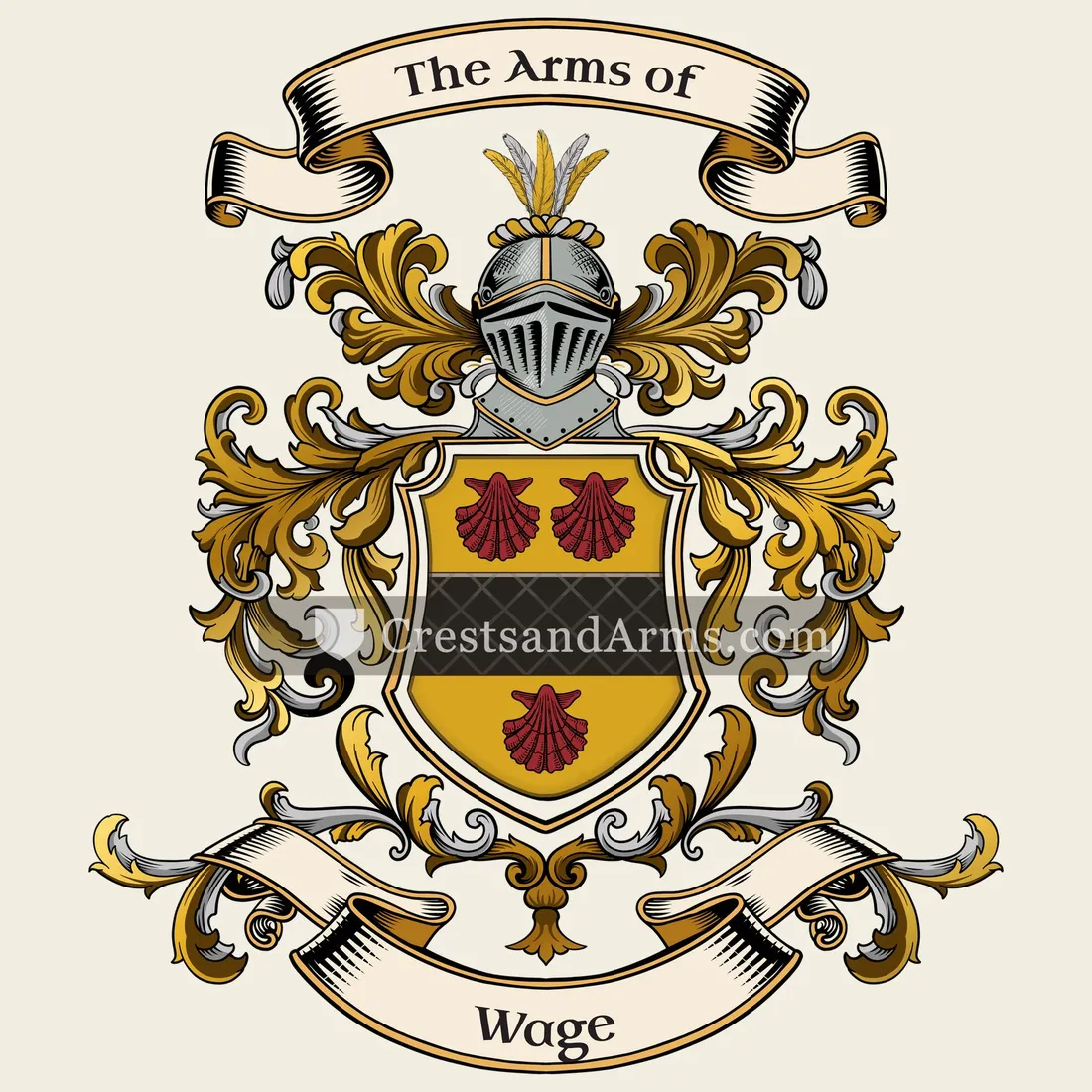
Symbols on this shield
fessThe military belt, and readiness to serve
escallopThe pilgrim's shell, and a long journey made
Colours
Gold (Or)Means: Generosity
Black (Sable)Means: Constancy
Red (Gules)Means: Military strength
Historical info
Source
J. B. Rietstap, Armorial Général, Gouda: G. B. van Goor Zonen, 1884–87
Blazon (the actual original written record)
“D'or à la fasce de sa., acc. de trois coquilles de gu. C.: deux prob. d'or, chacune ch. d'une fasce de sa. et ornée dans son embouchure de trois pl. d'aut. de gu.”
Francec. 1663
Digital archive packCoat of arms PNG, gold border print PDF, vector SVG and the certificate of authenticity. Sent to your email in minutes.
Map of France showing where the Wage arms are recorded
The Wage arms were recorded in France, c. 1663.
Arms such as these were typically recorded in Bretagne.
More families held coats of arms in Bretagne than anywhere else in France. The land was divided into many small estates rather than a few large ones, so far more households counted as gentry, and each needed a shield of its own to be told apart.
This is where the arms were entered in the register. Families often moved to other parts of the country, so the same name can turn up in more than one region.
The body that granted and recorded arms in France in this period.
Louis XIV of France
Sovereign of the period
Louis XIV of France
1643–1715
Reigning in Poland when the Wage arms are first recorded.
How Arms Worked in France
In France, a coat of arms was a mark of honor that passed down through the male line to all legitimate descendants. Families often used the same shield without changes to show their shared heritage. If a branch wanted to stand out, they could add a small mark to their shield to show their specific place in the family tree.
Granting authority
The Juge d'armes de France acted as the official authority that regulated and verified coats of arms across the country.
How they got arms
Families typically inherited their arms from ancestors, though they could also receive them through royal grants or by proving their noble status.
Where arms were recorded
Coats of arms were officially recorded in the Armorial Général de France, which began its main collection in the year 1696.
The family's standing
Recorded among the armigerous families of France.
Origin & History of the Wage Family in France
The history of the Wage family in France is deeply rooted in the rugged landscape of Brittany, where records confirm their presence as early as 1663. During this period, the region was a distinct province with its own customs and social structure, and families like the Wages often lived in rural parishes tied to the land. The name itself likely evolved from local dialects or occupational descriptions common to the western coast of France. As members of the community, these early ancestors were typically involved in agriculture or maritime trades that defined the Breton way of life. By settling in this area, the family became part of a long tradition of resilience and local identity that characterized the people of Brittany during the seventeenth century. Their presence in the parish registers of the time serves as a testament to their integration into the social fabric of the French countryside long before the modern era.
Wage Meaning & Related Branches
Root word
Waga
A Polish noun referring to a weighing scale or balance.
This name
WageLikely an occupational name for a merchant, weighmaster, or someone who operated a scale.
also spelled
Wegge
Vega
Weg
Documented Sources
J. B. Rietstap, Armorial Général, Gouda: G. B. van Goor Zonen, 1884–87
Archiwum Państwowe w Toruniu, Akta miasta Torunia (1772)
Biskup, Marian, Historia Torunia: Tom II, część I: W czasach nowożytnych (1548–1793), 1994
Kopcewicz, Jerzy, Mieszczaństwo toruńskie w XVIII wieku, 1985
Digital archive packCoat of arms PNG, gold border print PDF, vector SVG and the certificate of authenticity. Sent to your email in minutes.


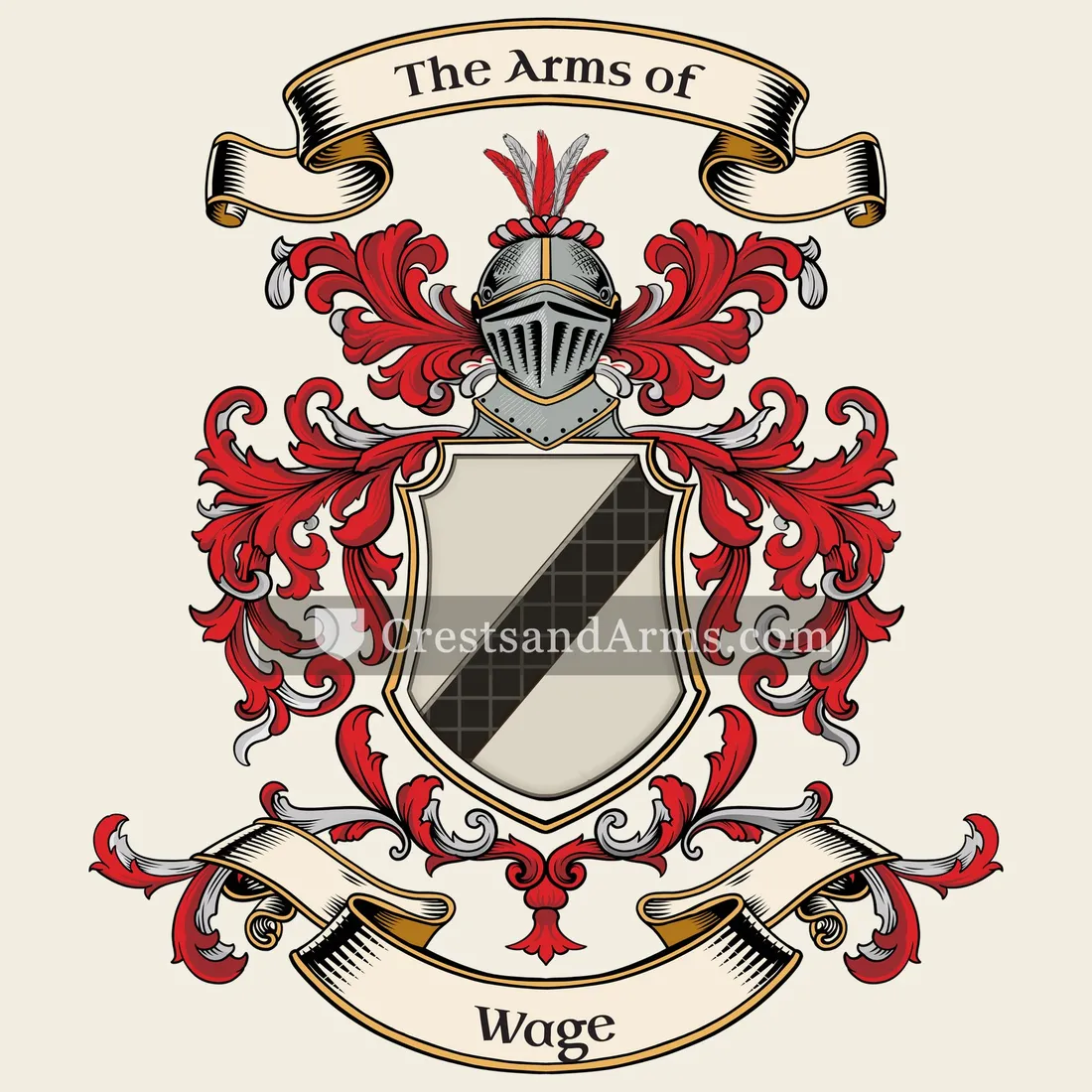


 fessThe military belt, and readiness to serve
 escallopThe pilgrim's shell, and a long journey made