A record of documented arms, meaning and origin, researched for the Waggoner family lines. Documented in 3 countries.
Reg. 0545 · German, W–Z
Coat of Arms & Family Crest Details
Symbols on this shield
fessThe military belt, and readiness to serve
lionCourage, strength and royalty
Colours
Gold (Or)Means: Generosity
Black (Sable)Means: Constancy
Historical info
Source
J. B. Rietstap, Armorial Général, Gouda: G. B. van Goor Zonen, 1884–87
Blazon (the actual original written record)
“Coupé: au 1 d'or au lion léopardé de sa., tenant de sa patte dextre levée une fleur-de-lis d'azur; au 2 fascé de sa. et d'or, de quatre pièces. Cq. cour. C.: un lion assis d'or, cour. du même, posé de front entre deux prob. d'or, ch. chacune de deux fasces de sa. et ornées à l'ext. de cinq feuilles de tilleul de l'un à l'autre, dont une dans l'embouchure.”
Germanyc. 1541
Digital archive packCoat of arms PNG, gold border print PDF, vector SVG and the certificate of authenticity. Sent to your email in minutes.
Map of Germany showing where the Waggoner arms are recorded
The Waggoner arms were recorded in Germany, c. 1541.
Arms such as these were typically recorded in Bavaria.
Bavaria was a country of old landed families and walled market towns. Estates passed down the same line for centuries, and both the landowners and the leading townsmen kept arms, which is why so many Bavarian names sit in the registers.
This is where the arms were entered in the register. Families often moved to other parts of the country, so the same name can turn up in more than one region.
The body that granted and recorded arms in Germany in this period.
Charles V
Sovereign of the period
Charles V
1519–1556
Reigning in Germany when the Waggoner arms are first recorded.
How Arms Worked in Germany
In the Holy Roman Empire, coats of arms were often granted to individuals by the Emperor or his representatives. These arms were then passed down through the generations to all legitimate descendants of the original holder. Younger branches of a family usually kept the same shield design without needing to change it, as the arms belonged to the entire lineage.
Granting authority
The Holy Roman Emperor held the sole power to grant new coats of arms throughout his vast imperial territories.
How they got arms
Families typically obtained their coats of arms through a formal imperial grant or by proving their noble status to the authorities.
Where arms were recorded
These grants were officially recorded in the Imperial Chancery registers, which began keeping formal records of such honors during the Middle Ages.
The family's standing
Recorded among the armigerous families of Germany.
Origin & History of the Waggoner Family in Germany
The surname Waggoner originates from the German word *Wagener*, which historically identified a person by their occupation as a wagon maker or a driver of horse-drawn carts. In the context of 16th-century Bavaria, this name reflected the essential role these individuals played in the regional economy, as transport and trade were vital for moving goods across the rugged landscape. By 1541, families bearing this name were already established within Bavarian society, likely serving as skilled craftsmen who maintained the wooden vehicles necessary for agriculture and commerce. Because these families were often tied to the production of transport equipment, they were frequently found living near trade routes or in growing market towns where their services were in constant demand. Over time, the name evolved from a simple job description into a permanent family identifier that tracked the movement and social standing of these workers across the German states.
Coat of Arms & Family Crest Details
Symbols on this shield
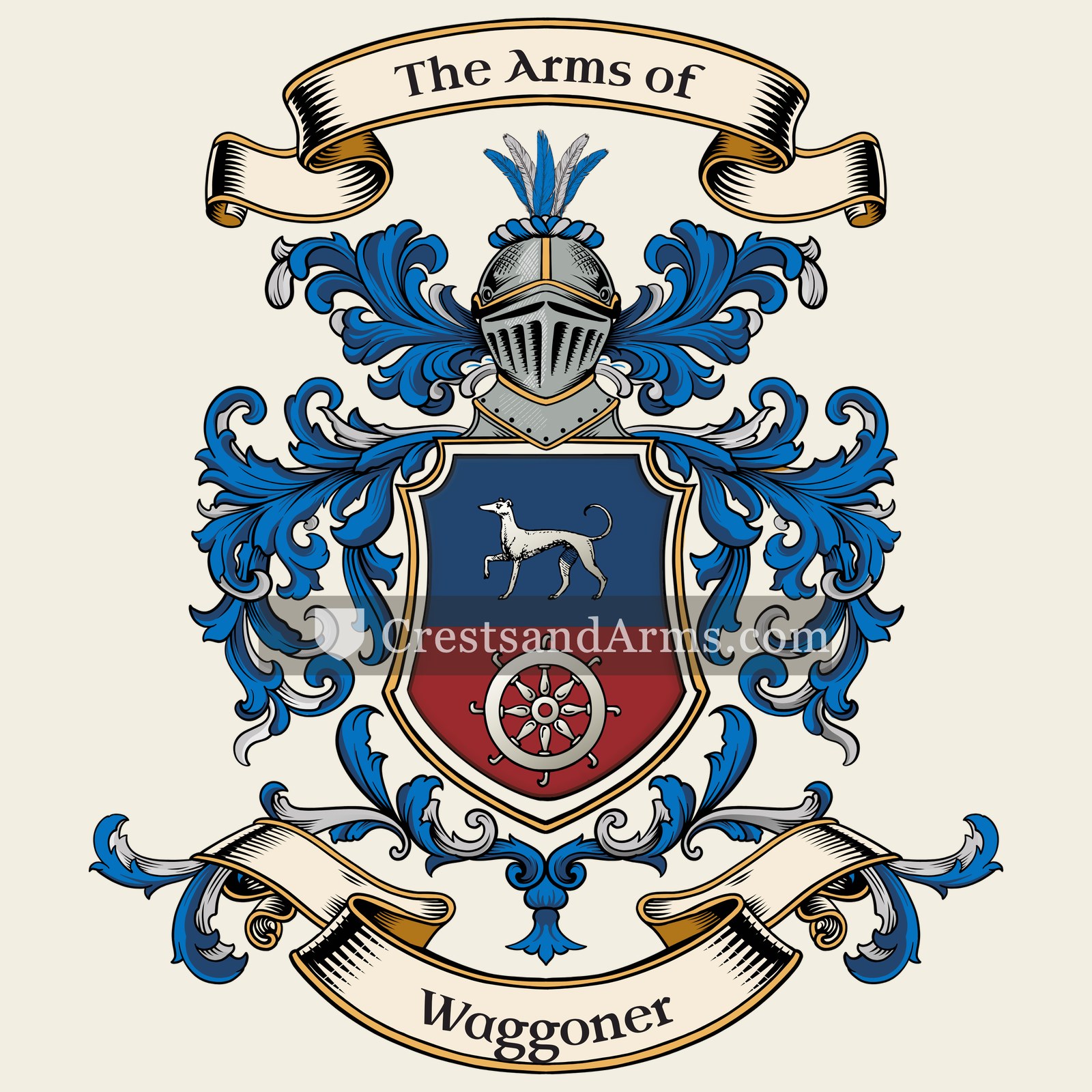
greyhoundCourage, vigilance and loyalty
wheelFortune's turning, and the carter's trade
Colours
Blue (Azure)Means: Loyalty and truth
Red (Gules)Means: Military strength
Silver (Argent)Means: Peace and sincerity
Historical info
Source
J. B. Rietstap, Armorial Général, Gouda: G. B. van Goor Zonen, 1884–87
Blazon (the actual original written record)
“Coupé: au 1 d'azur à un chien naiss. d'arg., orné d'un collier tort. de sa. et d'or; au 2 de gu. à une roue d'arg. C.: le chien, iss., entre deux prob. coupées, à dextre de gu. sur arg., à sen. d'or sur sa. L. conformes aux émaux des prob.”
AustriaVienne, c. 1772
Digital archive packCoat of arms PNG, gold border print PDF, vector SVG and the certificate of authenticity. Sent to your email in minutes.
Map of Austria showing where the Waggoner arms are recorded
The Waggoner arms were recorded in Vienne, c. 1772.
This is where the arms were entered in the register. Families often moved to other parts of the country, so the same name can turn up in more than one region.
Region
Vienne
Town
Vienne
First recorded
1772
Granting Authority for the Waggoner Arms
Imperial and Royal chancery
Sodacan · CC BY-SA 3.0
The body that granted and recorded arms in Austria in this period.
Joseph II, Holy Roman Emperor
Sovereign of the period
Joseph II, Holy Roman Emperor
1765–1790
Reigning in Germany when the Waggoner arms are first recorded.
How Arms Worked in Austria
Austrian coats of arms were often linked directly to noble titles granted by the Emperor. These symbols belonged to the entire family line rather than just one individual. When a family grew, new branches kept the original design without needing to change it. This system allowed all members of a noble house to share the same identity across many generations.
Granting authority
The Imperial and Royal chancery managed all heraldic matters and controlled the official granting of arms throughout the Austrian lands.
How they got arms
Families typically received their arms through a formal imperial decree that often accompanied the elevation of a person to noble status.
Where arms were recorded
Official records of these grants were kept in the Imperial Register of Nobility which began its formal documentation process in 1453.
The family's standing
Recorded among the armigerous families of Austria.
Origin & History of the Waggoner Family in Austria
The surname Waggoner, often appearing as Wagener or Wagner in German-speaking regions, traces its roots to the essential trade of the wagoner or carriage driver. In the bustling city of Vienna during the late 18th century, families carrying this name were often integrated into the city’s vital transportation and logistics networks. By 1772, records confirm that members of the Waggoner line were established residents of Vienna, a period when the city was expanding rapidly under the influence of the Habsburg monarchy. These early ancestors likely played a key role in the movement of goods and people across the imperial capital, serving as a link between the rural outskirts and the growing urban center. Their presence in the city archives during this time reflects a family deeply embedded in the professional life of an era defined by trade, craftsmanship, and the steady growth of Austrian society.
Coat of Arms & Family Crest Details
Symbols on this shield
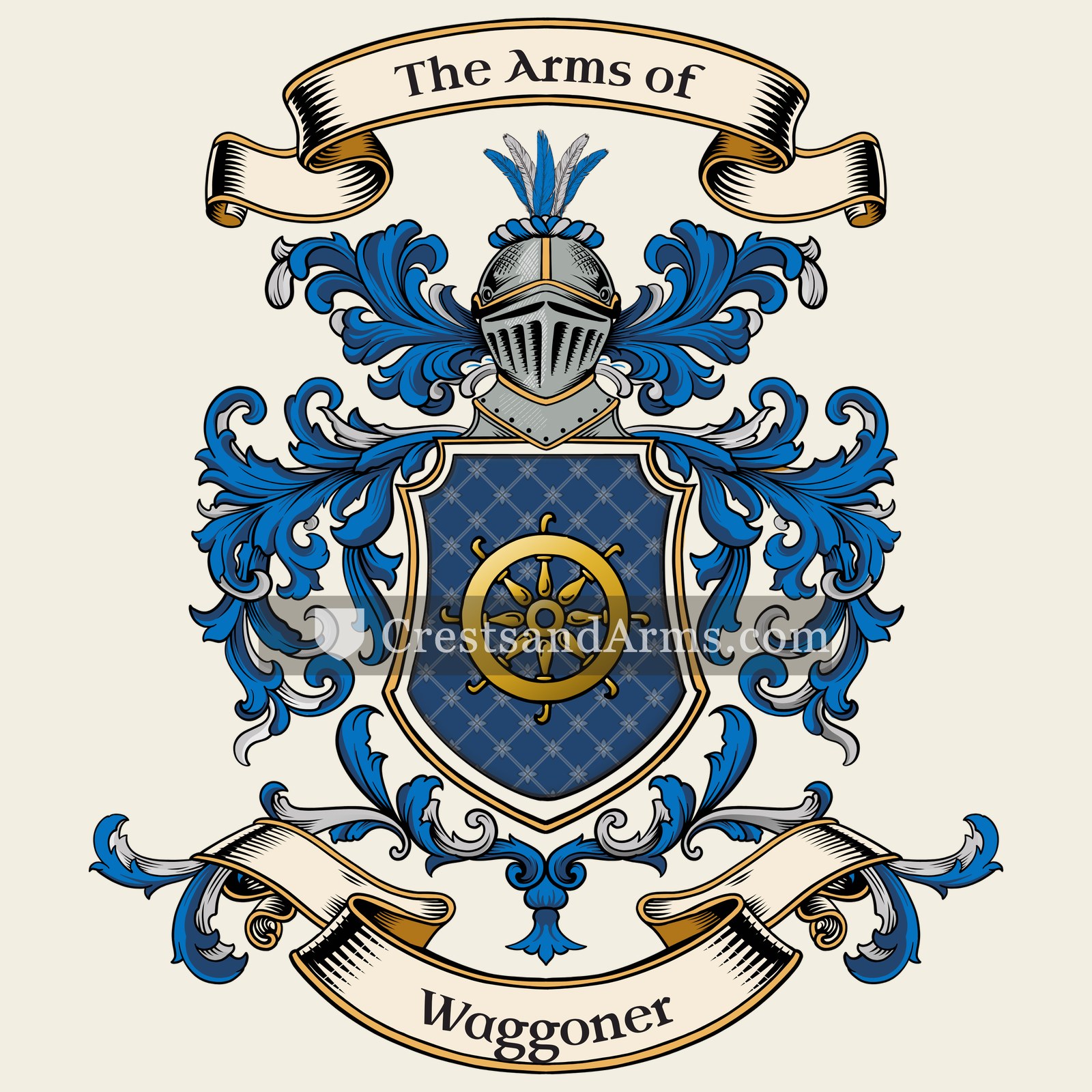
wheelFortune's turning, and the carter's trade
Colours
Blue (Azure)Means: Loyalty and truth
Gold (Or)Means: Generosity
Historical info
Source
J. B. Rietstap, Armorial Général, Gouda: G. B. van Goor Zonen, 1884–87
Blazon (the actual original written record)
“D'azur à une roue d'or. C.: un vol d'azur, chaque aile ch. d'une demi-roue d'or, celle à dextre défaillante à sen., et celle à sen. défaillante à dextre.”
SwitzerlandBâle, c. 1745
Digital archive packCoat of arms PNG, gold border print PDF, vector SVG and the certificate of authenticity. Sent to your email in minutes.
Map of Switzerland showing where the Waggoner arms are recorded
The Waggoner arms were recorded in Bâle, c. 1745.
This is where the arms were entered in the register. Families often moved to other parts of the country, so the same name can turn up in more than one region.
The body that granted and recorded arms in Switzerland in this period.
How Arms Worked in Switzerland
In Switzerland, coats of arms were not restricted to the nobility and were often adopted by common citizens and families. These symbols were passed down through generations to show family identity. When branches of a family grew, they often changed small details of the design to distinguish their own line from the original group.
Granting authority
Cantonal and civic authorities managed the use of coats of arms within their specific regions and local jurisdictions.
How they got arms
Families typically assumed their own coats of arms based on local custom rather than receiving them from a central monarch.
Where arms were recorded
Arms were recorded in various cantonal and civic registers starting from the fourteenth century throughout the Swiss region.
The family's standing
Recorded among the armigerous families of Switzerland.
Origin & History of the Waggoner Family in Switzerland
The name Waggoner is an occupational surname that originated from the Middle High German word "wagener," which described a person who built or drove carts and wagons. In the context of Switzerland, the family established a notable presence in the city of Bâle by the mid-eighteenth century. During this era, Bâle served as a major hub for trade and craftsmanship, making the role of a wagoner essential for the movement of goods across the Swiss cantons and into neighboring regions. Families carrying this name were often integrated into the local guild systems, which regulated trade standards and provided social structure for skilled workers. By 1745, records indicate that members of the Waggoner family were active participants in the urban life of Bâle, contributing to the city's reputation as a center for commerce and skilled labor. Their presence in this region reflects the broader historical trend of families settling in prosperous trade cities to utilize their specialized mechanical and transport skills.
Related Branches & Arms
Root word
Wagan
Old High German term for a vehicle or cart.
This name
WaggonerAn occupational surname for a person who drove or manufactured wagons.
also spelled
Wagener
Waggner
Waggoner
Wagnor
Documented Sources
J. B. Rietstap, Armorial Général, Gouda: G. B. van Goor Zonen, 1884–87
Bahlow, Hans, Deutsches Namenlexikon: Familien- und Vornamen nach Ursprung und Sinn erklärt, 1967
Heintze, Albert, Die deutschen Familien-Namen: geschichtlich, geographisch, sprachlich, 1903


 fessThe military belt, and readiness to serve
 lionCourage, strength and royalty
 fessThe military belt, and readiness to serve
 lionCourage, strength and royalty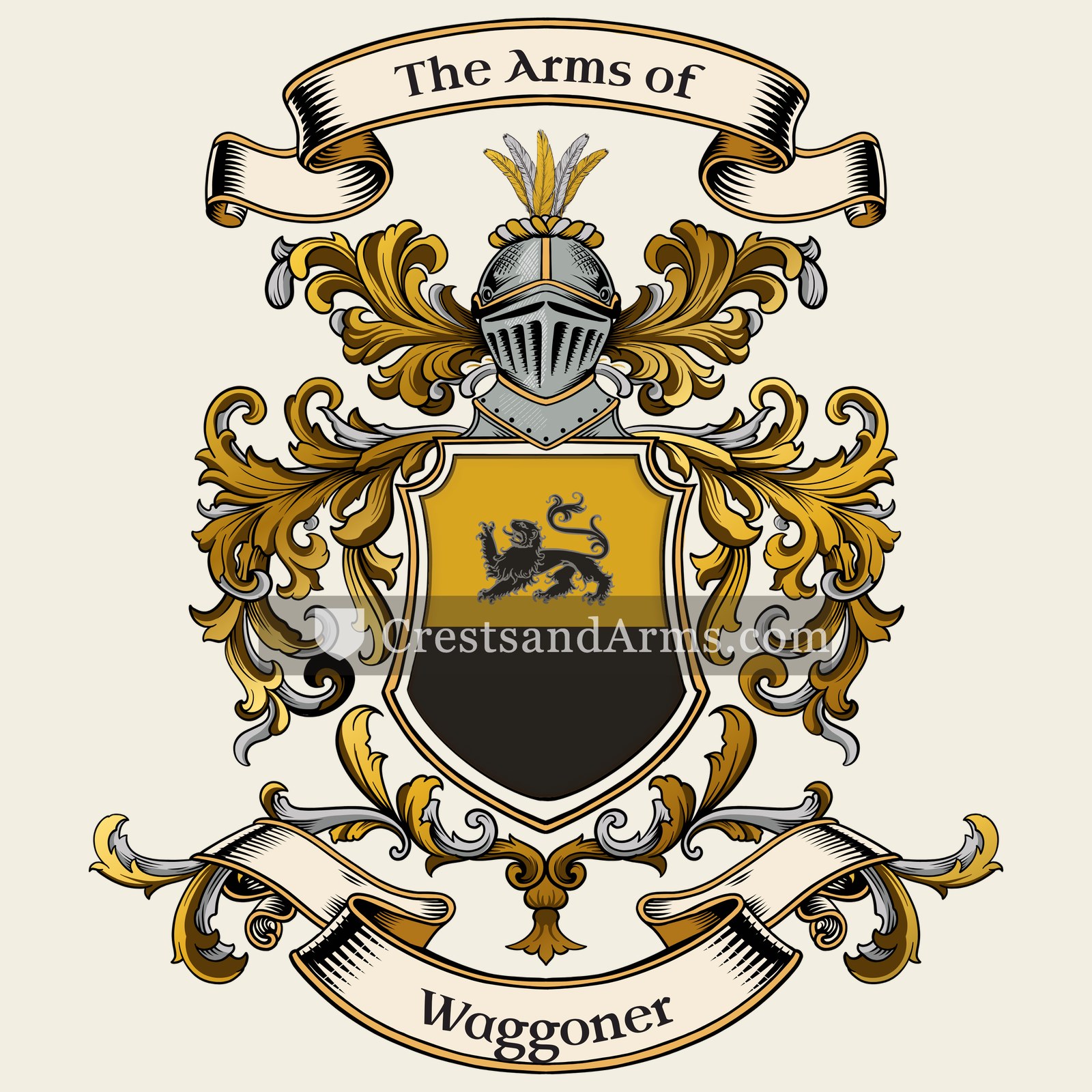


 greyhoundCourage, vigilance and loyalty
 wheelFortune's turning, and the carter's trade