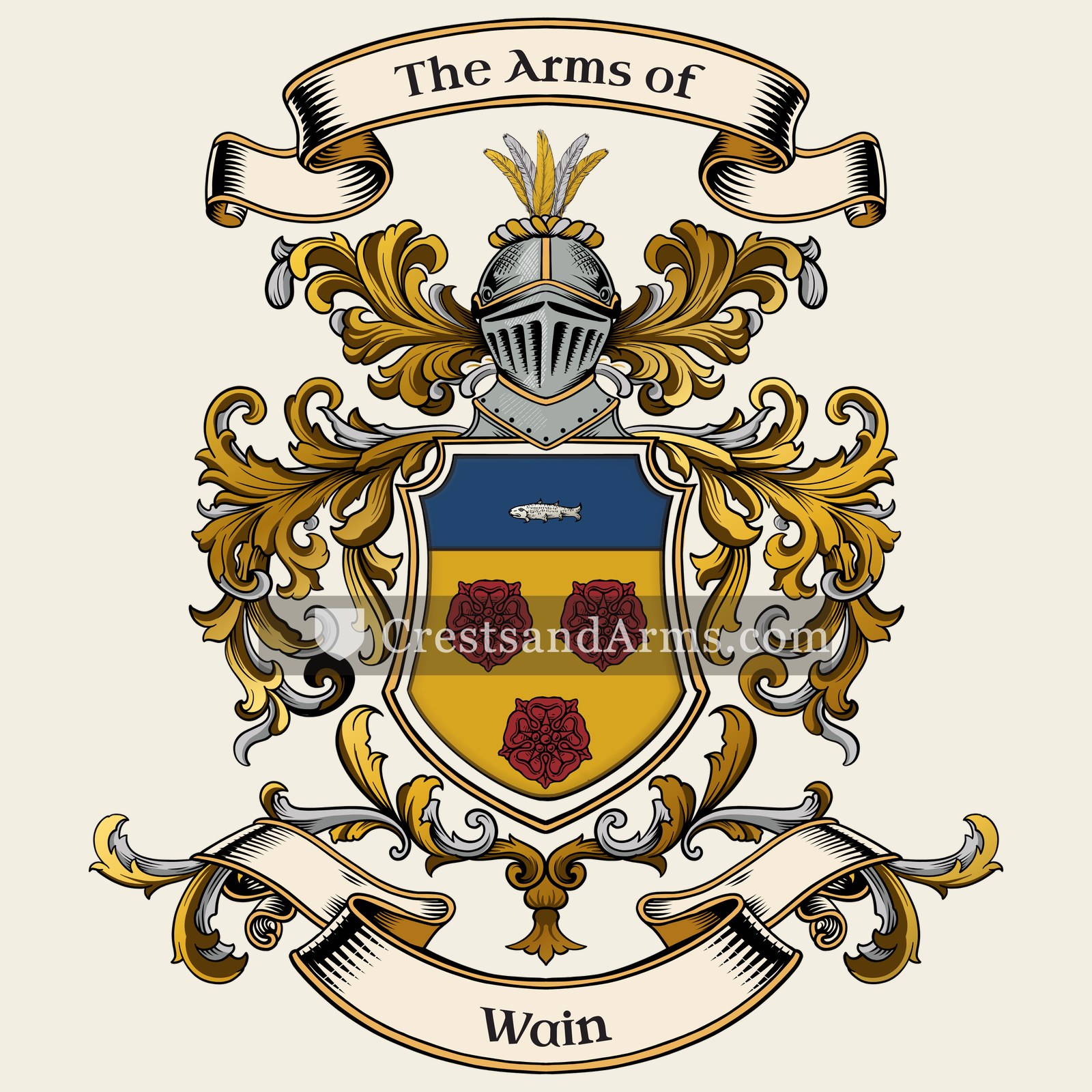
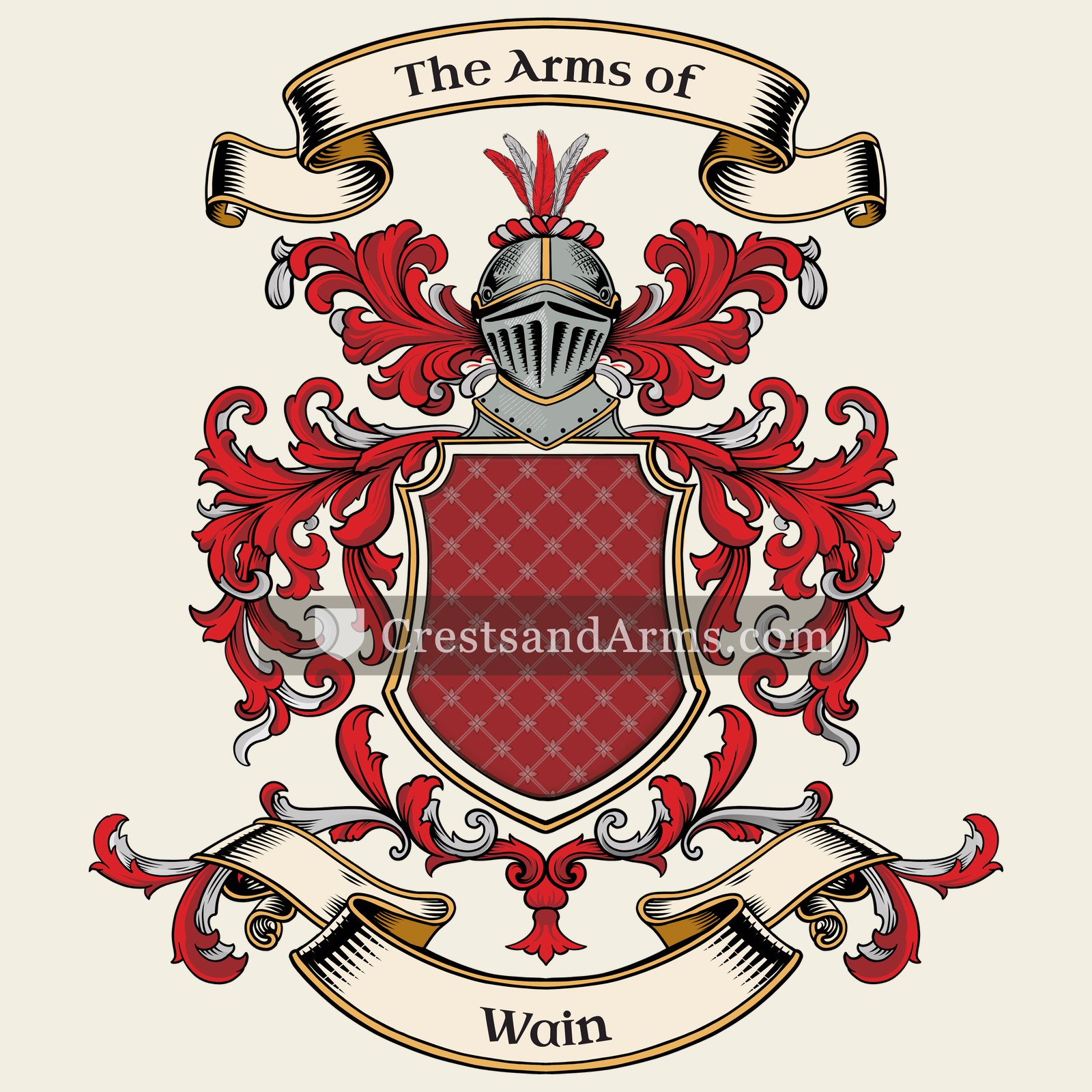
Map of Belgium showing where the Wain arms are recorded
The Wain arms were recorded in Flandre, c. 1663.
Flandre grew rich on cloth, and its towns were among the busiest in Europe. Merchant families bought land with their profits and took arms to go with it, so trade put as many names in the registers here as land did.
This is where the arms were entered in the register. Families often moved to other parts of the country, so the same name can turn up in more than one region.
The body that granted and recorded arms in Belgium in this period.
Philip IV of Spain
Sovereign of the period
Philip IV of Spain
1621–1665
Reigning in Belgium when the Wain arms are first recorded.
How Arms Worked in Belgium
In Belgium, a coat of arms is considered personal property that is passed down through the male line to legitimate descendants. Families often use the same shield design across generations to show their shared heritage. If a branch of the family wants to change the design, they must apply for an official update to their specific version of the arms.
Granting authority
The Conseil héraldique is the official body that regulates and approves all coats of arms in Belgium.
How they got arms
Families obtain their coats of arms through formal royal grants or by confirming their historical right to use existing designs.
Where arms were recorded
All approved coats of arms are officially recorded in the public registers of the Conseil héraldique since 1844.
The family's standing
Recorded among the armigerous families of Flandre.
Origin & History of the Wain Family in Belgium
The history of the Wain family in Belgium begins in the seventeenth century, specifically within the historical region of Flanders. By 1663, records confirm that members of the family were established in this area, which was then a center of trade, agriculture, and textile production. During this period, the name likely functioned as a descriptive identifier, potentially linked to the local geography or the specific trades practiced by early ancestors in the Flemish countryside. Life in Flanders at this time was defined by the complex political shifts between Spanish and French influence, which often shaped how families moved and recorded their identities in parish registers. As the family integrated into the local social fabric, they participated in the daily rhythms of Flemish life, contributing to the development of the region during a time of significant cultural transition. The presence of the Wain name in these early records provides a window into the lives of families who navigated the challenges of seventeenth-century European society while maintaining their roots in the Low Countries.
Coat of Arms & Family Crest Details
Colours
Red (Gules)Means: Military strength
Historical info
Source
Sir Bernard Burke, The General Armory of England, Scotland, Ireland and Wales, London: Harrison & Sons, 1884
Blazon (the actual original written record)
“Gu. three flowerpots, in each a lily ar”
Scotlandc. 1748
Digital archive packCoat of arms PNG, gold border print PDF, vector SVG and the certificate of authenticity. Sent to your email in minutes.
Map of Scotland showing where the Wain arms are recorded
The Wain arms were recorded in Scotland, c. 1748.
Arms such as these were typically recorded in Edinburgh.
Edinburgh was the seat of Scotland's government, its courts and its heralds. Families with business there settled nearby, and being close to where arms were recorded is exactly why so many of them appear.
This is where the arms were entered in the register. Families often moved to other parts of the country, so the same name can turn up in more than one region.
The body that granted and recorded arms in Scotland in this period.
George II of Great Britain
Sovereign of the period
George II of Great Britain
1727–1760
Reigning in Belgium when the Wain arms are first recorded.
How Arms Worked in Scotland
Scottish heraldry is unique because it treats a coat of arms as a piece of personal property protected by law. Only one person can own a specific design at any given time. When a family grows, the head keeps the original shield while other relatives must apply for their own distinct version with slight changes to prove their specific identity.
Granting authority
The Court of the Lord Lyon acts as the official body that regulates and controls all heraldic matters throughout Scotland.
How they got arms
Individuals obtain a legal right to their arms through a formal petition process that confirms their identity and family connection.
Where arms were recorded
All valid coats of arms are officially entered into the Public Register of All Arms and Bearings starting from 1672.
The family's standing
Recorded among the armigerous families of Scotland.
Origin & History of the Wain Family in Scotland
The surname Wain has roots that reach back into the industrial and social fabric of eighteenth-century Scotland. By 1748, records confirm that members of the Wain family were firmly established in Edinburgh. During this period, the city was undergoing a massive transformation as it expanded beyond its medieval walls into the New Town. Families with this name likely participated in the vibrant trade and craft guilds that defined urban life in the Scottish capital. The name itself is derived from the Old English word for a wagon, suggesting that the earliest ancestors were likely skilled wheelwrights or transport workers who moved goods across the rugged Scottish landscape. As the family settled in Edinburgh, they became part of a growing class of citizens who helped build the city into a center of commerce and enlightenment. Their presence in the city archives during the mid-1700s marks them as contributors to the steady growth of Scottish society during a time of significant national change.
Wain Meaning & Related Branches
Root word
Wagen
A vehicle or cart used for transport.
This name
WainAn occupational name for a wagoner, cartwright, or someone who transported goods.
also spelled
Waine
Wainn
Wayne
Related arms
Waynevariant spelling
Documented Sources
J. B. Rietstap, Armorial Général, Gouda: G. B. van Goor Zonen, 1884–87
State Archives in Belgium (Rijksarchief te België), Parochieregisters: Doop-, huwelijks- en overlijdensakten van de provincie West-Vlaanderen, 1663
Pirenne, Henri, Histoire de Belgique, 1900
Digital archive packCoat of arms PNG, gold border print PDF, vector SVG and the certificate of authenticity. Sent to your email in minutes.


 chiefAuthority, wisdom and dominion
 roseThe seventh son, and beauty with grace
 fishA true and generous mind, and Christian faith
 chiefAuthority, wisdom and dominion
 roseThe seventh son, and beauty with grace
 fishA true and generous mind, and Christian faith