Map of Switzerland showing where the Walser arms are recorded
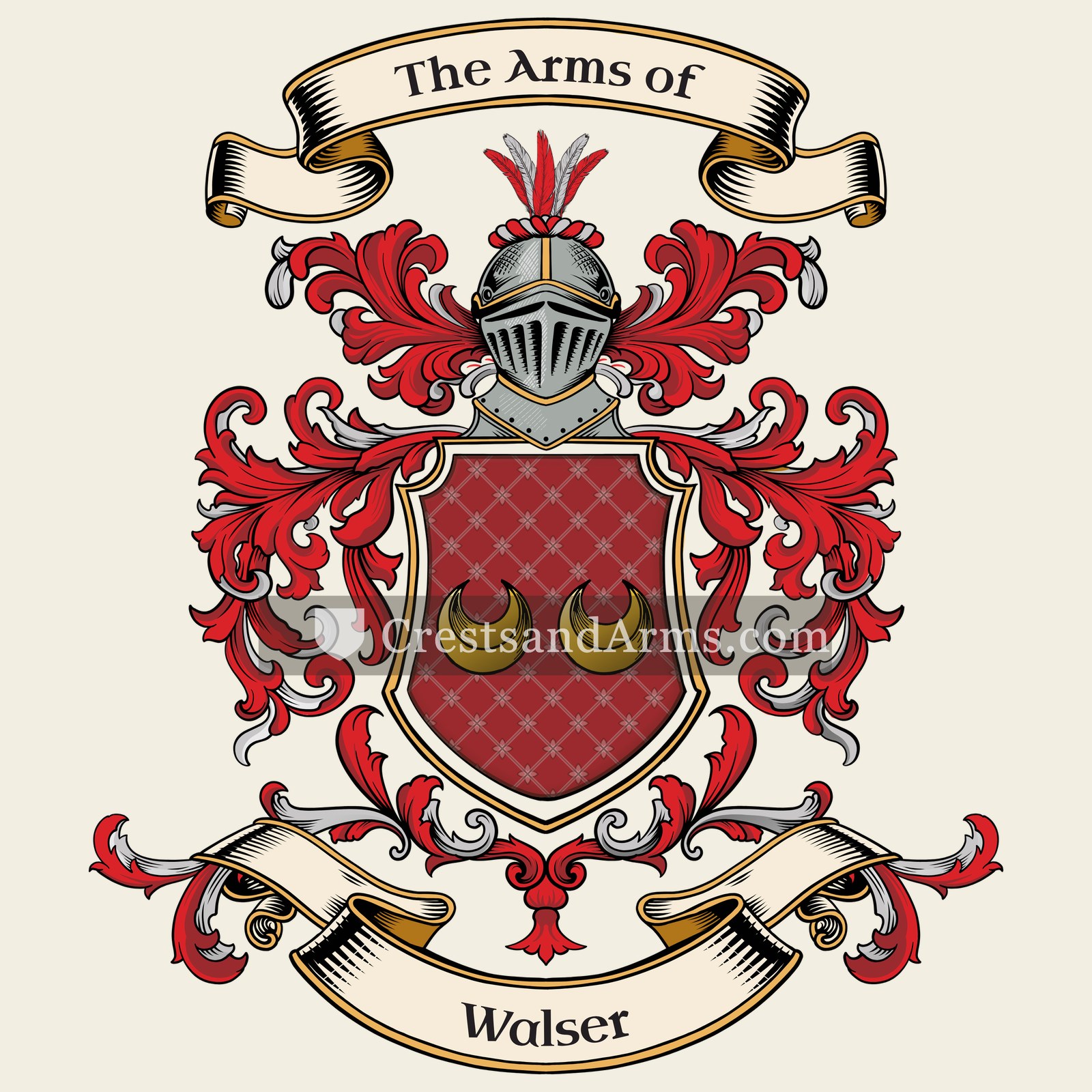
The Walser arms were recorded in Coire, c. 1725.
This is where the arms were entered in the register. Families often moved to other parts of the country, so the same name can turn up in more than one region.
The body that granted and recorded arms in Switzerland in this period.
How Arms Worked in Switzerland
In Switzerland, coats of arms were not restricted to the nobility and were often adopted by common citizens and families. These symbols were passed down through generations to show family identity. When branches of a family grew, they often changed small details of the design to distinguish their own line from the original group.
Granting authority
Cantonal and civic authorities managed the use of coats of arms within their specific regions and local jurisdictions.
How they got arms
Families typically assumed their own coats of arms based on local custom rather than receiving them from a central monarch.
Where arms were recorded
Arms were recorded in various cantonal and civic registers starting from the fourteenth century throughout the Swiss region.
The family's standing
Recorded among the armigerous families of Switzerland.
Origin & History of the Walser Family in Switzerland
The name Walser is deeply rooted in the history of the Alpine regions, specifically referring to a group of people who migrated from the Upper Valais in Switzerland during the Middle Ages. These settlers moved into high-altitude mountain valleys to establish new communities, often adapting to harsh climates and developing unique agricultural practices. By the early eighteenth century, members of the family were well-established in the city of Coire, which is known today as Chur. As residents of this important regional hub, the family likely participated in the local trade and political life that defined the Grisons canton during that era. Their presence in Coire by 1725 reflects a long history of movement and settlement across the Swiss Alps, marking them as part of a tradition of mountain dwellers who shaped the culture of the region for centuries.
Walser Meaning & Related Branches
Root word
Walh
Old Germanic term referring to a foreigner or a Roman speaker.
This name
WalserAn inhabitant of the Walser region who migrated from the Valais area.
also spelled
Walsar
Walzer
Documented Sources
J. B. Rietstap, Armorial Général, Gouda: G. B. van Goor Zonen, 1884–87
Furer, Arthur. Die Walser: Ein Volk sucht seine Geschichte. 1999
Zinsli, Paul. Walser Volkstum in der Schweiz, in Vorarlberg, Liechtenstein und Piemont. 1968
Staatsarchiv Graubünden, Kirchenbücher der Stadt Chur
Digital archive packCoat of arms PNG, gold border print PDF, vector SVG and the certificate of authenticity. Sent to your email in minutes.


 crescentHonour by the sovereign, and the second son
 crescentHonour by the sovereign, and the second son