Map of Germany showing where the Walstrom arms are recorded
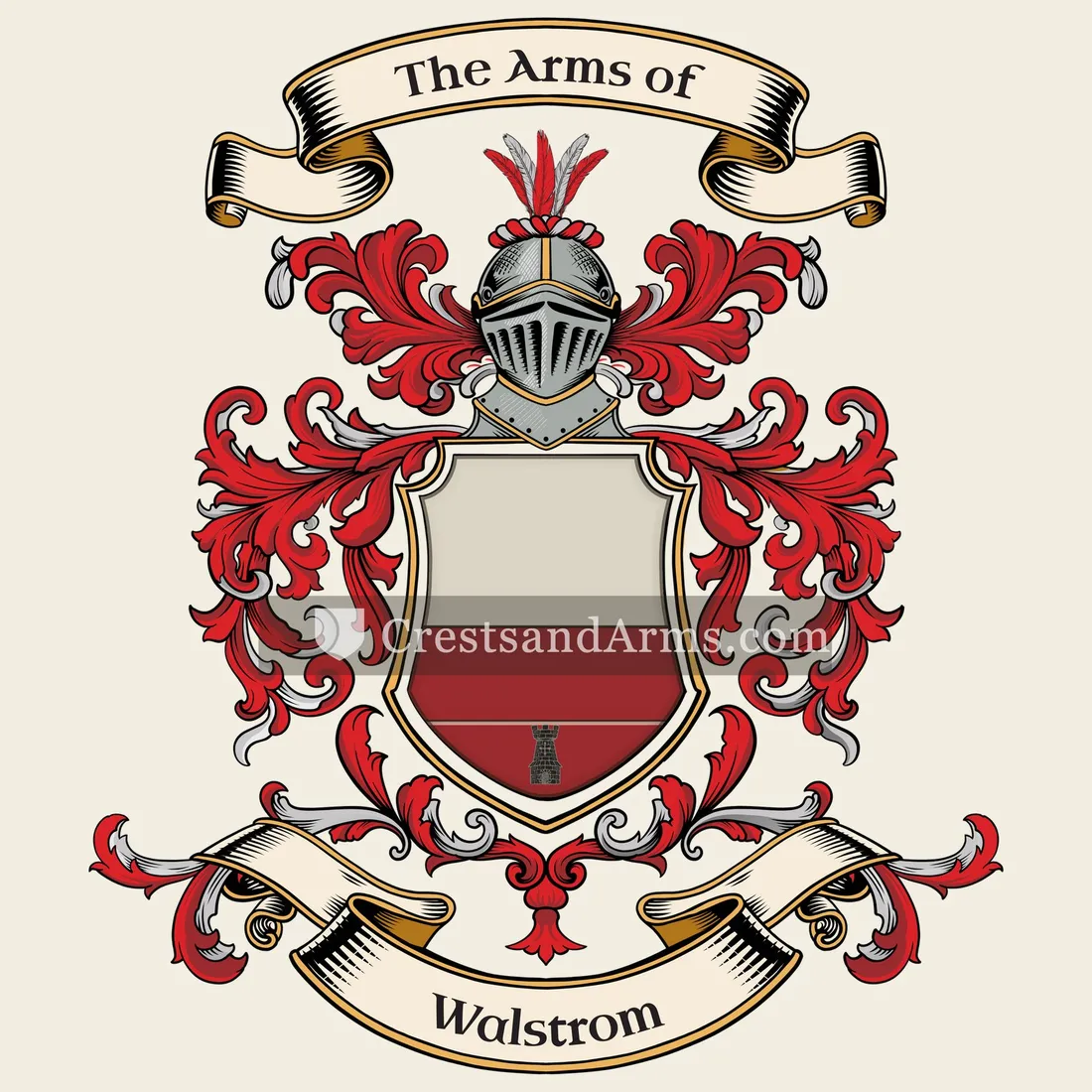
The Walstrom arms were recorded in Holstein, c. 1765.
Holstein was farming country between the North Sea and the Baltic, held in large estates. The same families kept the same land for generations, and generations of holding is what fills a register.
This is where the arms were entered in the register. Families often moved to other parts of the country, so the same name can turn up in more than one region.
The body that granted and recorded arms in Germany in this period.
Francis I, Holy Roman Emperor
Sovereign of the period
Francis I, Holy Roman Emperor
1745–1765
Reigning in Germany when the Walstrom arms are first recorded.
How Arms Worked in Germany
In the Holy Roman Empire, coats of arms were often granted to individuals by the Emperor or his representatives. These arms were then passed down through the generations to all legitimate descendants of the original holder. Younger branches of a family usually kept the same shield design without needing to change it, as the arms belonged to the entire lineage.
Granting authority
The Holy Roman Emperor held the sole power to grant new coats of arms throughout his vast imperial territories.
How they got arms
Families typically obtained their coats of arms through a formal imperial grant or by proving their noble status to the authorities.
Where arms were recorded
These grants were officially recorded in the Imperial Chancery registers, which began keeping formal records of such honors during the Middle Ages.
The family's standing
Recorded among the armigerous families of Holstein.
Origin & History of the Walstrom Family in Germany
The surname Walstrom is rooted in the linguistic traditions of Northern Europe, specifically drawing from the Swedish words "vall," meaning a field or pasture, and "ström," meaning a river or stream. While the name is distinctly Scandinavian in its construction, its presence in the region of Holstein by 1765 highlights the mobility of families across the Baltic and North Sea borders during the eighteenth century. At that time, Holstein was a territory with complex political ties to both the Danish Crown and the Holy Roman Empire, making it a crossroads for people moving between Scandinavia and Northern Germany. Families with this name likely lived in rural settings near water sources, which was a common way for people to identify their homesteads before the widespread use of formal surnames. As these individuals moved into Holstein, they carried their naming traditions with them, blending their northern heritage into the local social fabric of the region.
Walstrom Meaning & Related Branches
Root word
Wall-ström
A combination of wall or rampart and a stream or river.
This name
WalstromRefers to a person who lived near a fortified wall situated by a flowing stream.
Documented Sources
J. B. Rietstap, Armorial Général, Gouda: G. B. van Goor Zonen, 1884–87
Kruse, Friderich Carl Hermann, Chronik der Schleswig-Holstein-Lauenburgischen Lande und Städte, 1839
Rigsarkivet (Danish National Archives), Danske Kancelli: Sjællandske Registre, 1765
Schütze, Johann Friedrich, Holsteinisches Idiotikon: Ein Beitrag zur Volkssittengeschichte, 1800
Digital archive packCoat of arms PNG, gold border print PDF, vector SVG and the certificate of authenticity. Sent to your email in minutes.


 towerGrandeur and solidity, and a stronghold defended
 towerGrandeur and solidity, and a stronghold defended